Minnesota’s Three-Year ATV Registration
Alright, fellow Minnesota outdoor enthusiast! If you're anything like me, you love hitting the trails, ice fishing, or just getting some work done around the property with your ATV or UTV. But let's be honest, the paperwork side of things can feel like a tangled mess of red tape, especially when you're just trying to understand how long your registration actually lasts. It’s frustrating to think you’ve got everything squared away, only to realize you’re due for renewal again. This guide is here to untangle the specifics of Minnesota's unique three-year ATV registration cycle, explaining why it's set up this way, what it means for you, and how to navigate the process with ease, so you can spend less time worrying about forms and more time enjoying the ride.
The Logic Behind Minnesota’s Three-Year ATV Registration
Many states have annual registration, which can feel like a constant chore. Minnesota, however, has opted for a three-year cycle for off-highway vehicles (OHVs) like ATVs and UTVs. This isn't just a random number; it's a deliberate choice by the Minnesota Department of Natural Resources (DNR) designed to balance rider convenience with the critical need for funding and accurate record-keeping. It aims to reduce the administrative burden on riders while ensuring a steady stream of revenue for maintaining our incredible trail systems.
Simplifying the Rider Experience
Imagine having to renew your ATV registration every single year. It’s another date to remember, another form to fill out, another fee to pay. For folks with multiple machines, or those who simply lead busy lives, annual renewals can become a genuine headache. The three-year cycle cuts that burden down significantly. Instead of remembering to renew every 12 months, you only have to think about it every 36 months. This frees up your mental energy for planning your next adventure, checking the ice conditions, or figuring out the best route for that new hunting spot. It's a common frustration to have too many little things to remember, and this longer cycle genuinely helps alleviate some of that.
Furthermore, a longer cycle means fewer stickers to apply and fewer documents to keep track of on a yearly basis. It reduces the chance of accidentally riding with an expired sticker simply because you forgot the specific month your annual renewal was due. This streamlined approach allows you to focus on the joys of riding rather than the bureaucracy, making ownership a bit less stressful.
Funding Trail Maintenance and Conservation Efforts
The fees collected from ATV and UTV registrations in Minnesota don't just disappear into a general fund. A significant portion is earmarked specifically for the Grant-in-Aid (GIA) trail program, which is absolutely vital for maintaining and expanding the vast network of ATV and OHV trails across our state. When you pay your registration fee, you're directly contributing to the grooming, signage, bridge repair, and overall upkeep that makes our Minnesota trails some of the best in the country. [Minnesota's Grant-in-Aid Trail Funding] is a huge reason why we have such great places to ride.
A three-year registration provides a more predictable and stable funding stream for these critical efforts. Annual systems can sometimes lead to fluctuating revenue if renewal rates dip in a particular year. By collecting fees for three years at once, the DNR and the trail clubs they partner with have a more consistent budget to work with, allowing for better long-term planning for trail development and maintenance projects. This stability is crucial for ensuring that the trails we love today will be just as good, if not better, for years to come.
Comparing Minnesota’s Cycle to Other States
It's common for riders who've moved to Minnesota from other states, or even those who ride in neighboring states, to wonder why Minnesota's system is set up the way it is. While some states like Wisconsin also offer a multi-year registration option, others like Iowa typically stick to annual renewals. This variation can definitely cause confusion, especially if you're used to a different system. The idea behind Minnesota's three-year period is a balance. It's long enough to be convenient and reduce administrative overhead for both riders and the state, but not so long that it becomes difficult to track or update owner information when changes occur.
Each state has its own set of challenges and priorities when it comes to OHV management, and the registration cycle often reflects those. Minnesota's extensive public lands, diverse riding opportunities, and strong emphasis on outdoor recreation infrastructure necessitate a system that can reliably support those resources. The three-year cycle is a testament to the state's commitment to both rider convenience and sustained investment in its world-class trail system.
The Registration Process: What to Expect Every Three Years
Whether you’re registering a brand-new machine or renewing your trusty steed, the fundamental process in Minnesota revolves around this three-year cycle. It’s not overly complicated, but knowing the steps beforehand can save you a lot of grief and ensure you don’t accidentally miss a crucial detail. Think of it less as a hurdle and more as a periodic check-in to ensure everyone is on the same page.
Initial Registration Versus Renewal
The first time you register an ATV or UTV in Minnesota, whether it's brand new from a dealer or a used machine you just picked up, you'll go through the initial registration process. This involves providing proof of ownership – typically a manufacturer's statement of origin (MSO) for new machines, or a bill of sale and previous registration for used ones. You'll also pay the full three-year fee upfront. Once that’s done, you’ll receive your registration card and the all-important sticker, which clearly shows the expiration date. [Registering an ATV in Minnesota] covers this in more detail.
When that three-year period is up, you’ll then enter the renewal phase. This is usually a much simpler process, as the state already has most of your information on file. You’ll just need to verify your details, pay the renewal fee, and you’ll receive a new sticker to affix to your machine. The goal is to make renewals as painless as possible, acknowledging that you're already an established owner in the system.
Gathering Your Documents
For initial registration, you’ll absolutely need solid proof of ownership. This is non-negotiable. For a new machine, it’s the MSO or Manufacturer’s Certificate of Origin (MCO). For a used machine, you'll need a bill of sale, and ideally, the previous owner’s signed registration card. If you're ever in a situation where the ownership history is a bit murky, or the seller has lost the original paperwork, you might need to take extra steps to establish clear title, which can be a real headache. [Registering a Minnesota ATV With No Ownership History] highlights these challenges. Sometimes, you might even need to draft an affidavit. For instances where you need to create solid legal documents like a bill of sale or an affidavit of ownership, online services like LawDepot can be incredibly helpful for ensuring all the necessary legal language is included.
For renewals, the documentation required is generally much lighter. Often, all you need is your current registration number or a renewal notice from the DNR. However, it’s always a good idea to have your previous registration card handy, just in case there are any discrepancies or questions about your machine’s information. Keeping all your ATV-related paperwork organized in one place, perhaps a dedicated folder, can save you a lot of stress down the line.
What the DNR Does with Your Information
When you register your ATV or UTV, the Minnesota DNR collects basic information about you (name, address) and your machine (make, model, VIN, class). This information is crucial for several reasons. Firstly, it helps them identify owners for communication, such as sending out renewal reminders. Secondly, it contributes to overall statistics on OHV use in the state, which can inform policy decisions regarding trail development, safety programs, and resource allocation. Lastly, in the unfortunate event of theft, having your machine properly registered with its VIN on file is absolutely essential for law enforcement to track and potentially recover it. [Recovering a Stolen Machine in Minnesota] is much easier with good records.
The DNR also uses this data to ensure that registration fees are directed to the appropriate funds, primarily for trail maintenance and rider education. They don't just stash it away; they use it to manage the OHV program effectively and ensure that the funds generated by riders actually benefit the riding community. This transparency helps ensure that your investment in registration directly supports the sport you love.
Understanding Your Expiration Date
Knowing when your Minnesota ATV or UTV registration expires is fundamental to being a responsible rider. It’s not just a minor detail; it’s a legal requirement, and riding with an expired registration can lead to penalties that nobody wants to deal with. The three-year cycle means it’s easier to lose track of the exact date, so having a system in place to remind yourself is a smart move.
Locating the Expiration on Your Sticker
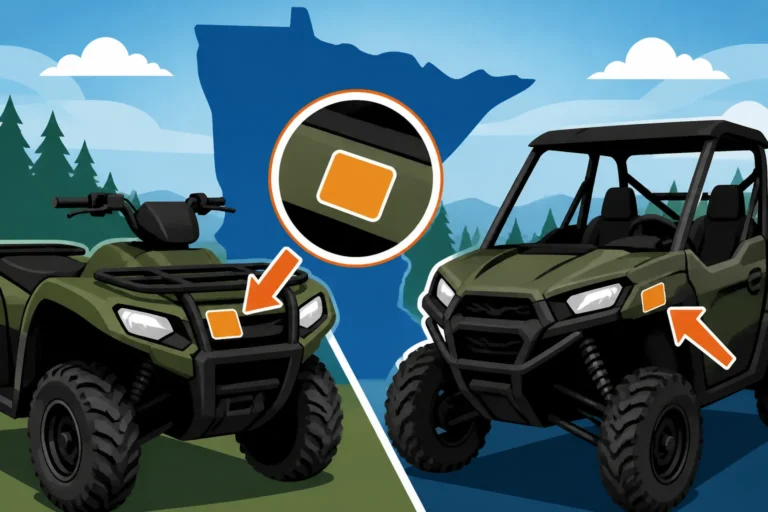
Your Minnesota ATV or UTV registration sticker is more than just a colorful decal; it’s your primary visual proof of current registration. On the sticker, you'll clearly see the month and year your registration is valid through. For example, if it says "12/2026," your registration is good until the end of December 2026. This sticker needs to be prominently displayed on your machine, usually on the front fender or somewhere easily visible, so that law enforcement or DNR officials can quickly verify its validity. [Where a Minnesota ATV Registration Sticker Goes] provides precise guidance on placement.
Make it a habit to glance at your sticker periodically, especially when you’re doing routine maintenance or cleaning your machine. This quick check can serve as a simple reminder and prevent you from accidentally letting your registration lapse. It’s much easier to renew proactively than to deal with the consequences of an expired sticker on the trail.
DNR Reminders and Notifications
The good news is that the Minnesota DNR usually does a pretty good job of sending out renewal reminders. These typically arrive in the mail a month or two before your registration is due to expire. These notices are incredibly helpful, acting as a gentle nudge to get your renewal processed. If you’ve moved recently, it’s absolutely critical that you update your address with the DNR so you don’t miss these important notifications. [Updating Your Address With the Minnesota DNR] is a quick and easy process that can prevent a lot of future headaches.
However, it's important to remember that these reminders are a courtesy, not a legal obligation for the DNR. Ultimately, the responsibility for renewing your registration falls squarely on your shoulders. While the reminders are great, you shouldn't rely solely on them. Marking your expiration date on a calendar, setting a reminder on your phone, or even making a note of it in your riding logbook are all excellent habits to adopt.
Consequences of Letting it Lapse
Riding a machine with an expired registration in Minnesota is no minor infraction; it's a violation of state law. If you're stopped by a conservation officer or other law enforcement and your registration is found to be expired, you could face fines. These penalties can range from a warning for a slightly overdue registration to a significant fine if it's been expired for a long time or if you're a repeat offender. [Penalties for an Unregistered ATV in Minnesota] can put a serious dent in your wallet and your riding fun.
Beyond the legal ramifications, an expired registration can also impact your insurance coverage or complicate things if you're involved in an accident. Many insurance policies require the machine to be legally registered. It's simply not worth the risk. The small effort and cost of renewing your registration every three years far outweigh the potential headaches, fines, and stress of riding illegally. Keep that registration current, and ride with peace of mind.
Navigating Renewal: Online, Mail, or In-Person
When it comes time to renew your Minnesota ATV or UTV registration, you’ve got a few convenient options, each with its own advantages. The state has tried to make the process as accessible as possible, recognizing that riders have different preferences and schedules. Whether you prefer the speed of the internet, the simplicity of snail mail, or the personal touch of an in-person visit, there’s a method that will work for you.
The Ease of Online Renewal
For many, renewing online is by far the quickest and most convenient option. The Minnesota DNR’s eLicense system allows you to renew your ATV or UTV registration from the comfort of your home, any time of day or night. All you typically need is your current registration number and a valid credit card. The system is designed to be user-friendly, guiding you through each step. Once completed, you’ll usually receive a temporary printable receipt, and your new stickers will be mailed to you within a few business days. [Registering Online Through Minnesota eLicense] is a fantastic resource for this method.
The big upside here is efficiency. No waiting in lines, no driving to an office, and you can get it done on your own schedule. This is especially helpful if you remember your expiration date at 10 PM on a Sunday night. Just jump online, and you're good to go. It’s a great way to handle this task quickly and move on to planning your next ride.
Visiting a Deputy Registrar
If you prefer a face-to-face interaction, have questions, or need your stickers immediately, visiting a deputy registrar office is a solid choice. These offices handle a wide range of motor vehicle and recreation vehicle transactions, and they're spread throughout the state. You can walk in, present your current registration or renewal notice, pay your fee, and often walk out with your new stickers the very same day. This can be a huge benefit if you’ve procrastinated and your registration is about to expire, or if you simply prefer the assurance of speaking with a real person. [Deputy Registrars That Handle ATV Registration] are a crucial part of the process, and their staff can often help with more complex situations too.
It’s always a good idea to check their hours of operation before you go, and sometimes calling ahead to confirm what documents you might need can save you a second trip. While it takes a little more effort than online renewal, the instant gratification of getting your stickers right away is a big draw for many riders.
Renewing by Mail for Convenience
For those who aren’t comfortable with online transactions or live far from a deputy registrar, renewing by mail remains a viable option. When you receive your renewal notice from the DNR, it will usually include instructions on how to mail in your payment. You simply fill out the necessary information on the notice, include a check or money order for the correct fee, and drop it in the mail. This method offers convenience without needing a computer or a trip to an office.
The main drawback of renewing by mail is the processing time. It takes time for the mail to reach the DNR, for them to process your payment, and then for them to mail your new stickers back to you. This means you need to plan well in advance to ensure your registration doesn’t expire while your renewal is in transit. If you choose this method, I’d recommend mailing your renewal at least a month before your expiration date to give yourself plenty of buffer time.
The Costs Involved in a Three-Year Renewal
Let's talk money, because that's always a big part of any official process. While no one enjoys paying fees, it's important to understand what you're paying for and why. The cost of your three-year ATV or UTV registration in Minnesota isn't just a random number; it's calculated to cover administrative costs and, more importantly, to fund the trail system we all enjoy.
The Base Registration Fee
The primary cost you'll encounter is the base registration fee for the three-year period. It's a single, fixed amount that covers your machine for the entire 36 months. As I can't provide current figures, please check the official Minnesota DNR website or consult a deputy registrar for the exact amount. This fee is a critical component of the state's funding model for OHV recreation. [Minnesota ATV Registration Fee for Three Years] is typically clearly stated by the DNR.
It’s an investment in your riding future, really. While it might feel like a lump sum, spreading that cost over three years makes it quite reasonable on an annual basis compared to other recreational expenses. It's a small price to pay for access to hundreds of miles of well-maintained public trails and the peace of mind that comes with legal riding.
Sales Tax and Other Potential Fees
When you initially register a machine that you just purchased, especially from a dealer, you'll also be responsible for paying Minnesota sales tax on the purchase price if you haven't already. This is separate from the registration fee itself and is a one-time cost associated with the transaction. If you're buying from a private party, you'll also owe sales tax at the time of registration if it wasn't already collected. [Minnesota Sales Tax on an ATV Purchase] is an important consideration for new buyers. For renewals, sales tax typically isn't a factor unless you've had a change in ownership that wasn't fully processed at the time.
Beyond the core registration fee, there might be small processing fees, especially if you go through a deputy registrar office. These are usually minimal and help cover the administrative costs of these independent agents. Online renewals might have a small convenience fee as well. It's always a good idea to factor in these minor additional costs when budgeting for your registration.
Understanding the Value for Your Dollar
When you look at the total cost of owning and enjoying an ATV or UTV in Minnesota, the registration fee, even for three years, represents a really good value. Consider what it grants you: legal access to state forests, Grant-in-Aid trails, and designated riding areas throughout Minnesota. It contributes directly to the very infrastructure that makes our riding experiences so great – the clear signage, the maintained bridges, the graded surfaces, and even the maps that guide your adventures. [Where Minnesota ATV Registration Money Goes] really explains the benefits.
Without these funds, our trails would quickly degrade, becoming less safe and less enjoyable. So, while paying fees might not be the most exciting part of OHV ownership, it's a direct contribution to preserving and enhancing the sport for everyone. It's a collective effort, and your three-year registration fee is your way of chipping in to keep our amazing trail system alive and thriving.
| Registration Type | Cost Structure | Typical Documentation Needed | Processing Time |
|---|---|---|---|
| Initial Registration | Three-year fee + Sales Tax | MSO/MCO (new), Bill of Sale + previous reg (used), Proof of ID | Can be instant at deputy registrar; several weeks by mail. |
| Three-Year Renewal | Three-year fee | Renewal notice or previous registration number, Proof of ID | Can be instant at deputy registrar; 1-2 weeks online; several weeks by mail. |
| Transfer | Transfer fee + Sales Tax | Signed Bill of Sale, Previous Owner's Signed Registration Card | Can be instant at deputy registrar; several weeks by mail. |
Common Missteps and How to Avoid Them
Even with a relatively straightforward three-year registration cycle, it's surprisingly easy to make a mistake that could lead to frustration or, worse, a citation. As someone who's seen it all out on the trails, I can tell you that most issues arise from simple oversight rather than deliberate rule-breaking. A little awareness goes a long way in keeping your riding experience smooth and worry-free.
Forgetting Your Renewal Date
This is, hands down, the most common mistake. That three-year gap can feel like a long time, and without an annual reminder, the exact month and year can easily slip your mind. You might think, "Oh, I just registered it a couple of years ago," only to realize you're actually riding on an expired tag. As mentioned, the DNR sends out reminders, but sometimes they get lost in the mail, or you might have moved.
To avoid this, treat your ATV/UTV registration like you would your vehicle tabs. Put a recurring reminder on your phone or calendar for a month or two before the expiration date. Jot it down on your garage whiteboard. Make a note of it when you winterize your machine. Whatever your system, establish a habit of checking that sticker. A quick check of your registration card, or a simple search on the [Looking Up a Minnesota ATV Registration] portal, can also provide you with the exact expiration date if you're unsure.
Improper Sticker Placement
Another seemingly minor detail that can cause trouble is incorrect placement of your registration sticker. The Minnesota DNR has specific guidelines on where the sticker must be affixed to your ATV or UTV to ensure it’s clearly visible to enforcement officers. Sticking it on a toolbox, under a seat, or in a spot where it’s obscured by accessories simply won't cut it. [Sticker Placement on a Minnesota Machine] isn't just about aesthetics; it's about compliance.
The sticker needs to be on a flat, visible surface, usually the front fender, rear fender, or even a visible part of the machine’s frame. Take the extra minute to clean the surface thoroughly before applying the new sticker. Peeling paint, mud, or grime can prevent it from adhering properly, leading to it falling off and creating another problem entirely. Make sure it's secure, visible, and matches the guidelines.
Riding Unregistered: The Penalties
This is the big one. Riding an unregistered or expired machine on public lands or trails in Minnesota is a direct violation of the law. The penalties for doing so can include a fine, and in some cases, if it's a repeated offense, it could even lead to your machine being impounded. Ignorance of the law is generally not considered a valid excuse. A conservation officer isn't going to be sympathetic if your only defense is "I forgot."
The point of registration is twofold: to identify the machine and its owner, and to ensure that funds are collected for trail maintenance. When you ride unregistered, you’re not only breaking the law but also not contributing your fair share to the system you’re using. It's truly a disservice to the vast network of volunteers and professionals who work tirelessly to maintain our trails. So, double-check your sticker before you head out, and avoid a costly and embarrassing encounter with law enforcement.
Special Circumstances: New Residents, Transfers, and More
Life happens, and sometimes your situation changes in ways that impact your ATV or UTV registration. Moving to Minnesota, buying or selling a machine, or even just losing a sticker are all common scenarios that require specific steps to keep your registration compliant. It’s never a one-size-fits-all process, so understanding these nuances is key.
Bringing an Out-of-State Machine to Minnesota
Welcome to Minnesota! If you're a new resident bringing an ATV or UTV from another state, you'll need to register it here within a specific timeframe after establishing residency. Your out-of-state registration typically isn't valid indefinitely once you're a permanent Minnesota resident. The process will essentially be treated as an initial registration, requiring proof of ownership and payment of the three-year fee. You’ll also need to be prepared to pay Minnesota's use tax if you haven’t already paid sales tax on the machine in another state. [Minnesota Registration for a New Resident] details all the steps you'll need to follow.
Make sure you have all your original ownership documents, like your title from the previous state (if applicable) and a bill of sale. Even if your previous state didn't require a title for an ATV, Minnesota might still want to see some proof of legal ownership. This can sometimes be a bit confusing, so don't hesitate to reach out to a deputy registrar with any questions specific to your situation.
Transferring Ownership Mid-Cycle
When you buy a used ATV or UTV in Minnesota, even if the seller’s registration isn’t expired, you still need to transfer the registration into your name. The registration isn't tied to the machine itself, but to the owner. This means the three-year cycle restarts for you when you transfer it, and you'll pay a new three-year fee. It's crucial to get this done promptly after a sale, as riding on the previous owner's registration is asking for trouble. [Transferring a Minnesota ATV After a Sale] explains the required paperwork, which typically includes a signed bill of sale and the previous owner's signed registration card.
For sellers, it's just as important to ensure the buyer completes the transfer. You don't want to remain the registered owner of a machine you no longer possess, as that could create liability issues down the road. For drafting a comprehensive bill of sale that protects both parties, especially in private sales where legal documentation can be overlooked, resources like LawDepot offer customizable templates that ensure all the necessary details are covered. This can prevent misunderstandings and provide clear proof of the transaction for registration purposes.
Lost or Damaged Registration Stickers
It happens. Your sticker might peel off on a muddy trail, fade in the sun, or get damaged in a minor fender bender. Don’t panic, but also don’t ignore it. Riding with a missing or unreadable registration sticker is essentially the same as riding unregistered. You’ll need to order a replacement from the DNR or through a deputy registrar. There’s usually a small fee for this, but it’s much less costly than a citation. [Replacing a Lost Minnesota Registration] provides the specific steps to get a new decal.
The key is to address it as soon as you notice it. Keep a copy of your registration card with you (not on the machine, in case it gets lost or stolen with the machine), as this can serve as temporary proof of registration while you await your replacement sticker. It’s a minor inconvenience, but one that’s easy to rectify if you act quickly.
The Benefits of a Three-Year Cycle for Riders
While paperwork and fees are never anyone's favorite part of a hobby, Minnesota's three-year ATV and UTV registration cycle actually offers some significant benefits to riders. It's designed with both administrative efficiency and long-term recreational enjoyment in mind, creating a system that ultimately supports the very passion we all share for off-road adventure.
Reduced Administrative Burden
Let's face it, we all have enough recurring tasks in our lives. Taxes, vehicle tabs, licenses, household bills – the list goes on. By extending the ATV/UTV registration to a three-year cycle, the state significantly reduces the frequency of this particular administrative chore for you. Instead of annual reminders, annual payments, and annual sticker replacements, you only deal with it every three years. This frees up your time and mental bandwidth to focus on what truly matters: getting out and riding.
This isn't just about saving you a few minutes; it's about making ownership less cumbersome and more enjoyable. Fewer deadlines to track means less stress, and that means you're more likely to keep your registration current without having to constantly worry about it. It contributes to a smoother, more user-friendly experience for Minnesota's vast community of OHV enthusiasts.
Consistent Funding for Trails and Programs
As we discussed, the registration fees are the lifeblood of Minnesota’s OHV trail system. A three-year cycle provides a much more stable and predictable revenue stream for the DNR and the local clubs that maintain our trails. With annual registrations, fluctuations in renewals from year to year could lead to uncertainty in funding, making it harder to plan and execute large-scale maintenance projects or expansions.
This stable funding means that when you hit a Minnesota trail, you’re more likely to find it well-maintained, properly signed, and safe for riding. It supports the volunteer efforts of countless ATV clubs who partner with the DNR to groom, clear, and repair these trails. Your three-year registration isn't just a fee; it's a consistent investment in the quality and longevity of the very trails that make Minnesota such a phenomenal place to ride.
Peace of Mind on the Trail
Perhaps one of the most underrated benefits of a longer registration cycle is the sheer peace of mind it provides. Once you’ve registered your machine for three years, you know you’re covered for a significant period. You don't have to constantly fret about whether your registration is about to expire or if you remembered to renew it this year. This allows you to truly relax and immerse yourself in the riding experience, whether you're exploring the Iron Range OHV area, cruising through a state forest, or simply enjoying a ride on your local township road.
Knowing your machine is legally registered, and that you're contributing to the upkeep of the trails, enhances the entire experience. You can ride confidently, knowing you're in compliance with state laws and doing your part for the riding community. This peace of mind is invaluable and makes the three-year registration cycle a genuinely positive aspect of ATV and UTV ownership in Minnesota. So get out there, enjoy our amazing state, and ride safe!
Disclaimer
This article is for general informational purposes only and does not constitute professional advice. Laws, prices and regulations vary by location and change over time. Consult a qualified professional for guidance on your specific situation.