Registering an ATV in Minnesota
You've just invested in a fantastic ATV or UTV, maybe it's a shiny new rig or a trusty used machine, and your mind is already buzzing with thoughts of hitting those incredible Minnesota trails. But before you can feel the wind in your hair and the dirt under your tires, there's that one often-dreaded hurdle: registration. It can feel like a maze of paperwork, fees, and rules, leaving many riders scratching their heads and wondering if it's even worth the hassle. This guide is here to untangle all that confusion, walking you through everything you need to know about registering your ATV or UTV in Minnesota so you can get out and ride with confidence, knowing you've done everything by the book.
Why Registering Your ATV or UTV in Minnesota Is Absolutely Essential
It’s easy to look at registration as just another hoop to jump through, another fee to pay. But in Minnesota, registering your ATV or UTV isn't just about adhering to the law; it's a crucial part of being a responsible rider and contributing to the very trails and resources we all love to use. Think of it as your machine's official "license plate" that lets it legally access public lands and designated trails across our beautiful state.
Ensuring Legal Operation and Avoiding Penalties
First and foremost, registration ensures you're operating your machine legally. Imagine pulling up to a trailhead, ready for a day of adventure, only to be stopped by a conservation officer. If your ATV or UTV isn't properly registered, that exciting day could quickly turn into a frustrating and expensive one. Minnesota takes its off-highway vehicle (OHV) laws seriously, and operating an unregistered machine on public land or designated trails can lead to significant fines and penalties. It’s far better to invest a little time and money upfront than to face the headache and cost of a citation later on. This legal requirement isn't meant to be punitive; it's about maintaining order, ensuring public safety, and identifying machines in case of accidents or theft.
Beyond public trails, even if you plan on using your machine primarily for ditch riding in rural areas or on certain township roads where permitted, registration is often still a non-negotiable requirement. The Minnesota DNR and local law enforcement need a way to track ownership and ensure accountability, regardless of where your wheels might take you off the beaten path. Skipping this step, even if you think your usage is minimal or confined, can still put you at risk of fines. You can learn more about specific regulations in our article on [Minnesota Penalties for an Unregistered ATV].
Supporting Trail Maintenance and Rider Safety
Another vital reason for registration, and one often overlooked, is how those fees are put to good use. A significant portion of the money collected from ATV and UTV registrations directly funnels back into the grant-in-aid program, which supports the development and maintenance of Minnesota's extensive OHV trail system. When you pay your registration fee, you’re not just paying for a sticker; you're investing in cleaner trails, safer riding conditions, better signage, and the continued expansion of access for all riders.
It's a collective effort. Without these funds, the trails we enjoy would quickly fall into disrepair, becoming less safe and less enjoyable for everyone. So, when you slap that registration sticker on your machine, you can feel good knowing you're contributing to the very infrastructure that makes Minnesota such a fantastic place to ride. It helps maintain those bridges over muddy creeks, clears fallen trees, and ensures the trails are properly marked so you don't get lost in the backwoods. It's a direct way that riders support the future of their sport.
Who Needs to Register Their ATV or UTV in Minnesota?
The question of "who needs to register" can sometimes feel a bit murky, especially if you're new to the world of off-highway vehicles or if your usage is somewhat niche. The general rule of thumb in Minnesota is that if you plan to operate your ATV or UTV on any public land, designated trail, or public frozen waters (like lakes for ice fishing), it must be registered with the Minnesota DNR. However, there are some specific nuances and exemptions worth understanding.
Public Use Versus Private Land
The distinction between public and private land use is absolutely critical for registration purposes. If you're riding on public trails, state forests, county lands with designated routes, or crossing public road rights-of-way (where allowed), your machine needs to be registered. This also extends to frozen public waters for activities like ice fishing or just joyriding. These are the areas where the Minnesota DNR's jurisdiction and enforcement truly come into play, and where a registration sticker acts as your permission slip. Many riders only think of trails, but remember those lakes in winter count too!
Now, if your ATV or UTV never leaves your own private property—meaning you only ride it within the boundaries of your own farm, acreage, or private hunting land, and it never touches a public road, trail, or lake—then you are generally exempt from state registration requirements. This is a common situation for farmers using their UTVs exclusively for work on their land or cabin owners who only ride short distances on their private roads. However, even in these cases, always double-check local ordinances, as some townships might have their own rules. It's a fine line, and any venture off your own dirt means you're entering the public domain and need to be compliant. You can dive deeper into this distinction with our guide, [Minnesota Public Use Versus Private Use Registration].
Exemptions and Special Cases
While the rule for public use is pretty clear, there are a few specific exemptions and special cases that are worth noting.
For instance, machines used exclusively for agricultural purposes on private land are typically exempt from registration if they stay within those private boundaries. However, if that farm machine needs to cross a public road or travel a short distance on a public ditch to get from one field to another, then it would need to be registered. The definition of "agricultural use" is generally tied to direct farm operations, not just recreational riding on farm property. Farmers often grapple with this, thinking their work machine is entirely exempt, but even a quick jaunt down the road for chores can trigger the registration requirement. Find more specifics in [Minnesota Exemptions for Farm Machines].
There are also machines that might fall under different categories, such as certain industrial or construction equipment that aren't primarily designed for recreational off-road use. These are usually not considered ATVs or UTVs under Minnesota's registration laws. Furthermore, some very small, low-powered youth machines or those used exclusively in sanctioned competitive events on closed courses might have their own specific rules or exemptions, though it's always wise to verify with the DNR. It’s better to make a quick call than assume and face a penalty later.
The Minnesota ATV Registration Process: A Step-by-Step Guide
So, you've decided your machine needs to be registered (good call!). Now comes the actual process. It might seem daunting at first, but if you break it down into manageable steps and have all your ducks in a row, it's actually quite straightforward. Preparing beforehand will save you a ton of time and frustration, whether you choose to do it online or in person.
Gathering Your Essential Documents
This is arguably the most critical step. Walking into a Deputy Registrar office or attempting to register online without the right paperwork is a recipe for instant rejection and a wasted trip. The documents you need will vary slightly depending on whether your machine is brand new, used, or coming from out of state, but some core items are almost always required:
-
Proof of Ownership: This is non-negotiable. For a new machine, you'll need the Manufacturer's Statement of Origin (MSO) or Certificate of Origin (MCO). For a used machine, you'll need the previous owner's signed title (if a title was issued for that machine in Minnesota or its prior state) or a properly executed bill of sale. If you bought from a dealer, they'll often handle much of this for you, but it’s still good to know what’s going on. In private sales, a robust bill of sale is paramount. Services like LawDepot can help you create a legally sound bill of sale to ensure all necessary details are included and protect both buyer and seller. Without clear proof that you legitimately own the machine, the state simply can't process your registration. Check out [Proof of Ownership for a Minnesota ATV] for more details on what counts.
-
Photo Identification: Just like any official transaction, you'll need a valid, government-issued photo ID (like a driver's license or state ID card) to prove who you are. This ensures the registration is correctly linked to you as the legal owner and operator.
-
Application Form: The Minnesota DNR has specific forms for OHV registration. While you might be able to fill out some details online, often the final signature and specific machine information will require a physical form, especially if you're completing the process in person. These forms ask for details like your name, address, machine make, model, year, and crucially, the Vehicle Identification Number (VIN).
-
Sales Tax Documentation (if applicable): If you purchased your machine recently, you'll likely need to show proof of sales tax paid or be prepared to pay it at the time of registration. This is especially true if you bought from a private seller, as dealers typically collect and remit sales tax at the point of sale. Even if you brought a machine in from out of state, Minnesota may assess a [Use Tax on a Machine Brought Into Minnesota]. Don't forget this! It's a common sticking point for many new owners.
Completing the Registration Application
Once you have your documents in hand, the next step is accurately completing the registration application form. This form is designed to capture all the pertinent information about you and your ATV or UTV. Pay close attention to details, especially when it comes to your machine's Vehicle Identification Number (VIN). The VIN is essentially your ATV's unique fingerprint, and any errors can cause significant delays or even rejection of your application. Double-check every digit!
You’ll also need to specify the make, model, and year of your machine, as well as whether it's a Class 1 or Class 2 ATV (we'll cover that distinction in more detail soon). The application will ask for your contact information, which is crucial for receiving renewal reminders and other important communications from the DNR. Don't rush through this part; a few extra minutes of careful review can prevent weeks of headaches. If you're unsure about any section, it's always best to ask the registrar or DNR staff before submitting. Taking a photo of your completed form before you hand it over can also be a good backup.
Submitting Your Paperwork and Paying the Fees
With all your documents gathered and your application carefully filled out, you're ready to submit. You generally have a couple of options here in Minnesota:
-
In Person at a Deputy Registrar Office: This is often the preferred method for many, especially if you have questions or a somewhat complicated ownership history. You can find [Deputy Registrars That Handle ATV Registration] in your area. They are trained professionals who can review your paperwork on the spot, collect payment, and often issue your temporary registration and stickers right then and there. It's a great way to ensure everything is correct before you leave. The personal interaction can be invaluable for clarifying any confusing points.
-
Online Through Minnesota eLicense: For renewals or straightforward new registrations where all your previous information is already on file, the Minnesota eLicense system can be a convenient option. This allows you to complete the process from the comfort of your home. However, for a brand new machine or one with a complex ownership transfer, an in-person visit is usually recommended. While efficient, the online system might not be equipped to handle all the nuances of new registrations that require extensive document review. You can try [Registering Online Through Minnesota eLicense] if you prefer.
Regardless of how you submit, you'll need to pay the applicable registration fees. These fees are set by the state and cover the cost of administration and, as we discussed, trail maintenance. Be prepared for the full amount, and always check the current fee structure beforehand, as these can change. Once approved, you'll receive your registration card and decals, which you'll need to properly affix to your machine. We'll talk about where those decals go next!
Understanding Minnesota ATV Classes and Their Impact on Registration
When you're filling out that registration form, you'll likely encounter a section asking about your ATV's "class." This isn't just a random classification; it's a crucial distinction that impacts where and how you can legally operate your machine on Minnesota's public lands and trails. Understanding the difference between Class 1 and Class 2 ATVs is essential for compliance and avoiding potential fines.
Class 1 ATVs: The Traditional Quad
Class 1 ATVs are what most people typically picture when they think of an "all-terrain vehicle." These are usually single-rider machines (though some are designed for two passengers) with handlebars for steering, a seat that the operator straddles, and generally a narrower profile. They are limited to a width of 50 inches or less and weigh 1,000 pounds or less. Think of your traditional quad or sport ATV.
The classification isn't just about size; it's about how the state regulates their access. Class 1 ATVs have historically enjoyed broader access to many designated ATV trails and public lands due to their smaller footprint and maneuverability. When you register a Class 1 ATV, you're confirming that your machine fits these specifications and will be expected to adhere to the rules that govern this class of vehicle on the trails. This means they are generally allowed on most grant-in-aid ATV trails across the state, and riders must be aware of specific age and safety training requirements, particularly for youth.
Class 2 ATVs: Side-by-Sides and Wider Machines
Class 2 ATVs encompass larger, wider, and often heavier machines, most commonly referred to as "side-by-sides" or UTVs (Utility Task Vehicles). These machines typically feature a steering wheel, foot pedals, and bucket or bench seating, much like a small car. They are defined as being wider than 50 inches but not exceeding 65 inches, and weighing more than 1,000 pounds but not exceeding 2,000 pounds. Some very large UTVs might exceed even these dimensions, but most common side-by-sides fall into this Class 2 category.
The registration process itself for Class 2 machines is largely similar to Class 1, but the "Class 2" designation on your registration card is important because it dictates where you can legally ride. Due to their wider stance, Class 2 ATVs may be restricted on some narrower trails that were originally designed for traditional Class 1 quads. However, many newer trail systems and some existing ones have been specifically designed or updated to accommodate these larger vehicles. It's vital to check trail maps and signage before heading out with your side-by-side to ensure you're on a trail that allows Class 2 machines. Failing to do so could result in damage to the trail or a citation. Our article, [Minnesota ATV Classes and What They Mean], offers an even deeper dive into these distinctions.
| Feature | Class 1 ATV (Traditional Quad) | Class 2 ATV (Side-by-Side/UTV) |
|---|---|---|
| Steering | Handlebars | Steering wheel |
| Seating | Straddle seat (often single or two-up) | Bucket or bench seats (car-like) |
| Max Width | 50 inches | 65 inches |
| Max Weight | 1,000 pounds | 2,000 pounds |
| Typical Use | Recreational, sport riding, light utility | Recreational, utility, farming, hunting |
| Trail Access | Generally wider access on ATV trails | May be restricted on narrower trails; check signs |
| Passenger Count | 1-2 riders (if designed for two-up) | Multiple passengers (varies by model) |
Fees, Renewal, and Sticker Placement for Your Minnesota ATV
Once you've navigated the initial registration process, understanding the ongoing requirements for fees, renewals, and correct sticker placement is key to staying compliant. These are the details that ensure your ride remains legal year after year without unexpected hiccups.
What to Expect for Registration Fees
The cost of registering your ATV or UTV in Minnesota is a flat fee that covers a three-year registration period. Unlike some other vehicle registrations, it's not typically based on the value or weight of your machine, but rather a standard rate for all OHVs falling under the Class 1 or Class 2 definitions. The exact dollar amount can change, so it's always best to check the official Minnesota DNR website or call a Deputy Registrar office for the most current figures. Be aware that if you're registering in person, there might also be a small service fee charged by the Deputy Registrar for their administrative services.
It's also important to factor in sales tax if you haven't paid it already. If you purchased your machine from a private party, you'll likely be required to pay Minnesota sales tax at the time of registration. This is calculated on the purchase price of the machine, or in some cases, its fair market value. So, while the registration fee itself is fixed, the total cost for new registrations can vary significantly depending on the purchase price and whether sales tax is due. Having this money set aside beforehand will prevent any surprises. You can find the specific [Minnesota ATV Registration Fee for Three Years] mentioned on the DNR site.
Understanding the Three-Year Renewal Cycle
Minnesota ATV and UTV registrations operate on a three-year renewal cycle. This means once you register your machine, you're good for three full riding seasons before you need to renew. This is quite convenient, as it means less frequent paperwork compared to annual renewals. The DNR typically sends out renewal reminders to the address on file as your registration expiration date approaches. However, it's ultimately your responsibility to ensure your registration is current, even if a reminder gets lost in the mail.
You can usually renew your registration online through the Minnesota eLicense system or in person at a Deputy Registrar office. The renewal process is often quicker than the initial registration, especially online, as most of your information is already in the system. Just like with the initial registration, you'll pay the current three-year renewal fee. Keeping track of your expiration date (which is printed on your registration card and sticker) is a simple habit that can save you from a potential penalty. Our guide to [Minnesota Registration Renewal Every Three Years] covers this in detail.
Proper Placement of Your Registration Sticker
Once your registration is complete and you've received your shiny new decals, where exactly do they go? This isn't just an aesthetic choice; there are specific rules for sticker placement to ensure they are easily visible and compliant with Minnesota law.
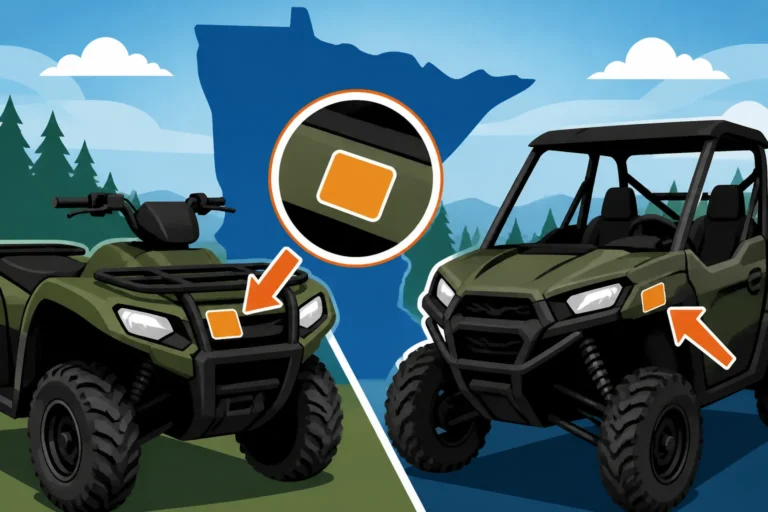
For Class 1 ATVs (the traditional quads), the registration decals must be affixed to the rear of the machine, clearly visible. Many riders choose to place them on the fender or the designated plate area. For Class 2 ATVs (side-by-sides/UTVs), the decals must be affixed to the rear of the machine, as well as on both the left and right sides, again in a clearly visible location. This typically means on the rear fender, or on the side panels or doors for a UTV. The key is visibility for law enforcement and trail managers. Don't hide them under mud flaps or in obscure locations! Improper placement can be just as problematic as not having a sticker at all. Take your time to clean the surface where you'll apply the sticker to ensure good adhesion; peeling stickers are a common nuisance. Get the full scoop on [Where a Minnesota ATV Registration Sticker Goes] to make sure you're compliant.
Special Registration Scenarios You Might Encounter
While the basic registration process covers most situations, life (and ATV ownership) can sometimes throw a curveball. What if you bought a used machine without perfect paperwork? What if you're new to Minnesota, or just bought a machine from a neighboring state? These special scenarios often cause the most confusion, but there are clear pathways to get your machine legally registered.
Registering a Used Machine from a Private Seller
Buying a used ATV or UTV from a private seller can be a fantastic way to get into the sport without the new machine price tag. However, the registration process can sometimes feel a bit more complex. The absolute most important document you need is a solid, legally binding bill of sale. This document serves as your proof of ownership, detailing the machine's VIN, make, model, year, the sale price, and most importantly, the signatures of both the buyer and seller. Without this, proving ownership can become a nightmare. I often tell folks to use services like LawDepot to generate a professional bill of sale, even for private sales, just to make sure all the legal bases are covered and it looks legitimate to the registrar.
Ideally, the seller should also provide you with the machine's previous Minnesota registration card or, if a title was issued for the machine, a properly signed-over title. Minnesota does not title all ATVs and UTVs (it varies by year and type), so don't panic if there isn't a title, but the bill of sale then becomes even more crucial. Be prepared to pay Minnesota sales tax on the purchase price at the time of registration. Always verify the VIN on the machine matches the paperwork before you hand over any money. For a deep dive into this, see [Buying a Used ATV in Minnesota: The Paperwork] and [Minnesota Registration After a Private Sale].
Moving to Minnesota with an Out-of-State Machine
Welcome to Minnesota! If you've recently moved here and brought your ATV or UTV with you, you'll need to register it in Minnesota if you plan to use it on public lands or trails. This isn't just a friendly suggestion; it's a legal requirement for new residents. The process will be similar to registering a used machine. You'll need your proof of ownership from your previous state (likely a title or prior registration and bill of sale), your valid photo ID, and you'll complete the Minnesota OHV registration application.
You'll also need to be prepared to pay any applicable Minnesota sales tax if you haven't already paid sales tax on the machine in another state, or if the sales tax paid was lower than Minnesota's rate. In some cases, a use tax might apply. There's generally a grace period for new residents to register their machines, but it's always best to take care of it as soon as possible after establishing residency. Don't assume your out-of-state registration is valid here for an extended period. Our guide [Minnesota Registration for a New Resident] has more.
Registering a Machine Bought Out-of-State
Perhaps you found a great deal on an ATV or UTV just across the border in Wisconsin, Iowa, or North Dakota. Awesome! However, when you bring that machine into Minnesota, you'll need to register it here if you intend to use it on Minnesota's public trails. The process again mirrors that of a used machine from a private seller, requiring proof of ownership (like a title or bill of sale from the selling state) and your photo ID.
The main difference here is almost certainly the application of Minnesota's sales tax. Even if you paid sales tax in another state, if that state's sales tax rate was lower than Minnesota's, you might owe the difference to Minnesota. If no sales tax was paid at all (common in some private sales or states with different tax laws), you'll definitely be paying Minnesota's sales tax or use tax at the time of registration. Make sure you understand these tax implications beforehand to avoid any sticker shock. For example, read [Paying Minnesota Tax on a Machine Bought in Wisconsin] or [Registering a North Dakota Quad in Minnesota].
Where to Get Your ATV or UTV Registered in Minnesota
Knowing what paperwork you need is one thing, but knowing where to take it is equally important. Minnesota offers a couple of convenient options for registering your ATV or UTV, each with its own advantages. Choosing the right method often depends on the complexity of your situation and your personal preference for convenience versus direct interaction.
Deputy Registrar Offices
For most people, especially those registering a machine for the first time, a Deputy Registrar office is the gold standard. These are privately owned and operated offices, often found alongside vehicle licensing services, that are authorized by the Minnesota Department of Public Safety (DPS) to process vehicle registrations, including off-highway vehicles. They are widely distributed across the state, making them accessible to most residents.
The biggest advantage of visiting a Deputy Registrar is the ability to get personalized assistance. If you have questions about your paperwork, ownership history, or tax implications, the staff there can guide you through the process. They can review your documents on the spot, ensure everything is correctly filled out, and in many cases, issue your temporary registration and decals right then and there. This immediate feedback and resolution can be invaluable, especially for more complex scenarios like registering a used machine with a less-than-perfect paper trail. It eliminates the back-and-forth that can happen with mail-in or online processes if something is missing. You can search online for "Deputy Registrars That Handle ATV Registration" near your location to find the closest office.
Minnesota eLicense System (Online)
For those who prefer the convenience of handling things from home, the Minnesota eLicense system offers an online portal for certain ATV and UTV registration tasks. This system is particularly useful for renewals of existing registrations where your information is already on file and hasn't changed. It's quick, easy, and can be done 24/7.
However, for initial registrations, especially for brand new machines or those with complex ownership transfers (like a private sale or an out-of-state purchase), the online system might have limitations. It typically requires that all the necessary documentation is already present in the DNR's records or can be easily uploaded and verified. If your situation requires a physical review of titles, bills of sale, or MSOs, an in-person visit to a Deputy Registrar is usually the more reliable and efficient route. While the online system is continuously improving, it's always wise to confirm if your specific registration needs can be met through the eLicense portal before investing your time. Check out [Registering Online Through Minnesota eLicense] for steps on how to use this service.
Consequences of Not Registering Your ATV or UTV in Minnesota
It might be tempting to skip the registration process, especially if you think you'll only use your machine occasionally or on private land. But operating an unregistered ATV or UTV on public lands or designated trails in Minnesota can lead to a host of unpleasant consequences, ranging from fines to more serious legal troubles. It's simply not worth the risk, and understanding these penalties can underscore why compliance is so important.
Fines and Citations
The most immediate and common consequence of operating an unregistered ATV or UTV on public land is receiving a fine or citation from a conservation officer or other law enforcement personnel. Minnesota takes its OHV regulations seriously, and officers regularly patrol trails, state forests, and other public areas where these machines are used. These fines can be substantial, often far exceeding the cost of the three-year registration fee itself. Getting caught even once can make you wish you'd just done the paperwork in the first place.
Beyond the initial fine, you might also face additional penalties depending on the circumstances. For instance, if you're stopped and found to be unregistered, you might be required to cease operation immediately and transport your machine off the public land. This could mean a long walk back to your truck, or needing to arrange for someone to pick up your machine, completely ruining your day of riding. This can be a significant inconvenience, especially if you're deep on a trail system miles from your vehicle. Don't risk having your adventure cut short by something so easily avoidable. Our article, [Penalties for an Unregistered ATV in Minnesota], offers more detail on potential legal repercussions.
Impoundment and Legal Troubles
While less common than a simple fine, in certain situations, law enforcement has the authority to impound an unregistered ATV or UTV. This can happen if there are repeated offenses, if the machine is involved in other illegal activities, or if there's a question of proper ownership. Recovering an impounded machine involves significant storage fees, impoundment fees, and likely requires you to prove ownership and register the machine before it's released. This process can be incredibly expensive and time-consuming, far more so than the initial registration.
Furthermore, if an unregistered machine is involved in an accident on public land, things can become even more complicated. Without proper registration, proving ownership, insurance coverage, and liability can become a legal quagmire. It could affect insurance claims, legal proceedings, and your standing as a responsible rider. While it's easy to think "it won't happen to me," being prepared for the worst-case scenario by having your machine properly registered and insured is just smart planning. It protects you legally and financially, giving you peace of mind every time you hit the trails.
Maintaining Your Minnesota ATV Registration
Getting your ATV or UTV registered is a great first step, but it’s not a one-and-done deal. There are ongoing responsibilities to ensure your registration remains current and valid throughout its three-year cycle and beyond. Thinking about what happens after you get that sticker is just as important as the initial application.
Keeping Your Registration Current and Visible
Once your machine is registered and you've affixed those decals, the key is to keep your registration current. As we discussed, Minnesota registrations are valid for three years. It's good practice to mark your renewal date on a calendar or set a reminder in your phone so you don't miss it, even if you rely on the DNR's mailed reminders. An expired registration is just as problematic as no registration at all when you're out on public trails.
Beyond keeping it current, ensuring your decals are always properly affixed and visible is also crucial. Over time, mud, dirt, branches, or even strong sunlight can cause decals to peel, fade, or become obscured. If your decals become unreadable or fall off, you'll need to order replacements. This is usually a simple process through the DNR, often available online for a small fee. Don't put off replacing a damaged decal; it's a small detail that can save you from a conversation with a conservation officer. Our guide on [Replacing a Minnesota ATV Decal That Fell Off] can help you out.
Updating Your Information with the DNR
Life happens, and sometimes your personal information changes. If you move to a new address, it's vital to update your contact information with the Minnesota DNR. This ensures you continue to receive important notices, including those crucial registration renewal reminders. You can usually update your address online through the Minnesota eLicense system or by contacting the DNR directly.
Similarly, if you sell your registered ATV or UTV, it's a good idea to notify the DNR of the change in ownership, even though the new owner will eventually register it in their name. This helps to remove your liability for the machine once it's no longer yours. While not always a strict legal requirement, taking this extra step shows diligence and can prevent any future headaches related to the machine. Clear and accurate records benefit everyone, keeping the system running smoothly for all Minnesota riders. You can read up on [Updating Your Address With the Minnesota DNR] for guidance.
Knowing Where Your Registration Money Goes
It's helpful for riders to understand that the fees collected from ATV and UTV registrations aren't just disappearing into a black hole. In Minnesota, a significant portion of these funds is dedicated to the state's Grant-in-Aid (GIA) program for OHV trails. This program provides financial assistance to local units of government (counties, cities, townships) and recognized OHV clubs to develop, maintain, and acquire land for public ATV and UTV trails.
This means your registration fee directly supports the very trails you ride on. It pays for trail grooming, bridge repairs, signage, land leases, and even new trail development, expanding opportunities for all riders. Understanding this connection can make paying that registration fee feel less like a tax and more like an investment in the future of your favorite pastime. It's a collective effort, and your contribution is a vital part of keeping Minnesota's extensive and beloved trail system thriving. Learn more in [Where Minnesota ATV Registration Money Goes].
Disclaimer
This article is for general informational purposes only and does not constitute professional advice. Laws, prices and regulations vary by location and change over time. Consult a qualified professional for guidance on your specific situation.