Minnesota License Agents That Sell Passes
Minnesota License Agents That Sell Passes
Finding a Minnesota license agent is usually easy; knowing whether that agent sells the ATV trail pass you need is the harder part. Agents do not all offer the same services, and a trail pass is not the same as vehicle registration. This guide explains how to locate a seller, what to confirm before you go, and what to do if buying in person is inconvenient.
What a Minnesota ATV Trail Pass Does
A trail pass is a permit for certain ATV riding situations. It is separate from registering the machine, and buying one does not automatically take care of registration, ownership paperwork, insurance, or rider training requirements.
For visitors, the key question is whether the machine and the trails you plan to use require a pass. Rules can depend on factors such as where the machine is registered, whether it is registered at all, the type of trail, and whether an exemption applies. Minnesota’s grant-in-aid trails are a common reason visitors check pass requirements before a trip. A pass does not give permission to ride anywhere: trail closures, landowner restrictions, machine-class rules, and other access rules still apply.
If you are unsure what applies to your machine, start with Minnesota’s Non-Resident ATV Trail Pass and Which Minnesota Trails Require a Pass. Those explain the underlying requirements; an agent is simply one way to purchase a pass when you have determined that you need one.
A pass is not the same as registration
Registration identifies a machine in the state’s system and is handled under its own rules. A trail pass is an access permit for particular riding situations. One does not necessarily substitute for the other.
This distinction matters when you are planning a trip with a machine registered outside Minnesota. It also matters if your machine is unregistered or used in a way that falls under a specific exception. If you need to sort out registration first, see Minnesota Registration for an Out-of-State Machine or Minnesota Public Use Versus Private Use Registration.
Do not assume that a receipt for registration is a trail pass, or that a pass serves as proof of registration. Keep the documents and identifiers separate when you plan your trip. If you are not sure whether your machine’s registration status affects the pass requirement, check the current Minnesota DNR guidance before heading to an agent.
A pass does not replace other riding requirements
Buying the pass is only one part of being ready to ride. Depending on the rider, machine, and location, you may also need to consider safety certification, helmets, age restrictions, machine equipment, and local trail rules. A pass is not permission to ride on a closed trail or across private property.
For a wider pre-ride checklist, read What Minnesota Riders Need Before They Ride. If someone in your group is visiting from another state, Minnesota Rules for Visiting Riders is also useful. Requirements can vary by rider and machine, so confirm the rules for each person rather than treating the group as if everyone has identical obligations.
How to Find a License Agent That Sells Passes
Minnesota license agents are independent service locations authorized to handle certain transactions. Their services are not necessarily identical. One agent may sell trail passes and other outdoor licenses, while another may handle only a narrower set of transactions. Hours, staffing, payment options, and the ability to issue a particular permit can also vary.
The most dependable approach is to use the Minnesota DNR’s official license-agent search or other official purchasing information, then contact the specific location before traveling. Search results, business listings, and old forum posts can be useful clues, but they are not proof that an agent currently sells the exact ATV pass you need.
Use the official agent search, then call
When looking for a seller, search by the town or region where you will be before the ride. If you are driving to a trail system, include nearby towns along your route rather than limiting your search to the trailhead community. You may find an agent in a larger service town where you can stop for fuel or supplies.
Before you leave, call and ask a direct question: “Can you issue the Minnesota ATV trail pass I need for this machine?” That wording is more useful than asking whether the business sells “licenses,” since a staff member may interpret that as hunting, fishing, or other licenses.
Also confirm:
- Whether the location is currently issuing ATV trail passes
- Whether it can issue the pass for your particular machine or rider situation
- What information you must provide
- Which payment methods it accepts
- Whether the pass is available during the hours you plan to visit
- Whether the agent can provide the required proof or item for carrying or displaying
- What to do if the system is unavailable or the transaction cannot be completed
If you are buying for several machines or riders, say so when you call. Avoid assuming a single transaction or pass covers everyone. See Buying Passes for a Group Trip and Minnesota Passes for a Second Machine for questions that can matter when more than one vehicle is involved.
Treat online listings as a lead, not confirmation
A business may appear in an online map or directory because it sold licenses in the past, but that listing may not show exactly which transactions it handles today. A convenience store, sporting-goods shop, or other local retailer is not automatically an ATV pass agent just because it sells outdoor supplies.
Amazon may be useful for buying riding gear or a small document pouch, but it is not a substitute for an authorized Minnesota pass seller. Do not rely on a marketplace listing, downloaded image, or seller’s claim as proof that you have a valid state-issued pass. Use an official purchasing channel and keep the confirmation it provides.
The same caution applies to social media posts and trip reports. They may identify a shop that was convenient for another rider, but the shop’s services can change. Confirm directly before you build your departure plan around a stop.
Look beyond the trailhead
A trailhead may not have a nearby license agent, and a small town may have limited business hours. If you are traveling in a remote area, locate the seller while you still have reliable phone service and enough time to adjust your route. Do not count on being able to buy a pass at the trail entrance unless official information specifically confirms that option.
If your lodging is near a trail but far from retail services, ask the host or campground staff whether they know of a nearby agent. Use that information to identify a location, then verify the service with the agent or official DNR information. Local recommendations can help with logistics, but the official source and the seller are the right places to confirm pass availability.
What to Bring and Check Before You Buy
An agent needs enough information to complete the transaction correctly. The exact details can depend on the pass and the machine, so check the current instructions rather than assuming the same documents are required for every rider.
Prepare the basics before you arrive:
- Know the machine’s registration situation. Be ready to explain where it is registered, whether its registration is current, and whether it is unregistered. If you are uncertain about the category, do not guess; verify the pass rules first.
- Have accurate machine details available. The agent may ask for information to identify the machine or complete the pass record. Bring the registration information and vehicle details you have, including the identifying number if requested.
- Know who will ride. A pass may be tied to a particular machine, rider, or other transaction details. Tell the agent how many machines and riders are involved and who will operate each one.
- Bring an accepted payment method. Payment options vary by location. Confirm them when you call, especially if you are traveling somewhere with few nearby alternatives.
- Keep the confirmation. Save any receipt, license record, or pass documentation the agent provides. If you are unsure what must be carried or attached, ask before leaving the counter.
- Check the details before you walk away. Confirm that the machine, rider, and pass information match what you intended to purchase. Correcting an error later may be more complicated than catching it at the counter.
For a deeper look at the proof and identification questions that can come up, see Carrying the Pass While You Ride. If your trip includes a borrowed machine, read Trail Passes for a Borrowed Machine before making a purchase. A borrowed machine can raise questions about who is responsible for obtaining the pass and what the operator needs to carry.
Ask how the pass must be carried or displayed
Do not assume that every pass is handled in exactly the same way. Ask the agent what you must retain, whether anything needs to be attached to the machine, and how an officer can verify the pass. Follow the instructions supplied for your specific transaction.
If the pass involves a decal or other physical item, find out where it belongs and whether there are placement instructions. Keep it visible as required without covering the machine’s registration or safety equipment. If you receive a receipt or digital confirmation, do not assume it replaces a required physical item unless the current instructions say it does.
A small waterproof pouch can help keep transaction records and machine documents together. Amazon may have general-purpose pouches, but a pouch does not make a pass valid and should not be used to cover or alter a required decal. Keep official pass materials in the form and location specified by the state.
Buy with enough time to solve a problem
A pass purchase can be delayed by incorrect machine details, an unavailable system, or a location that does not handle the transaction you need. If you leave the purchase until the final stop before the trail, you have fewer options if something goes wrong.
Plan to buy before entering an area where service is limited. If you are traveling with a group, ask each person to check their own machine and pass situation in advance. Do not assume that one rider’s paperwork covers a second machine or that a pass purchased for one machine can be shifted to another without following the official process.
Buying Through an Agent or Online
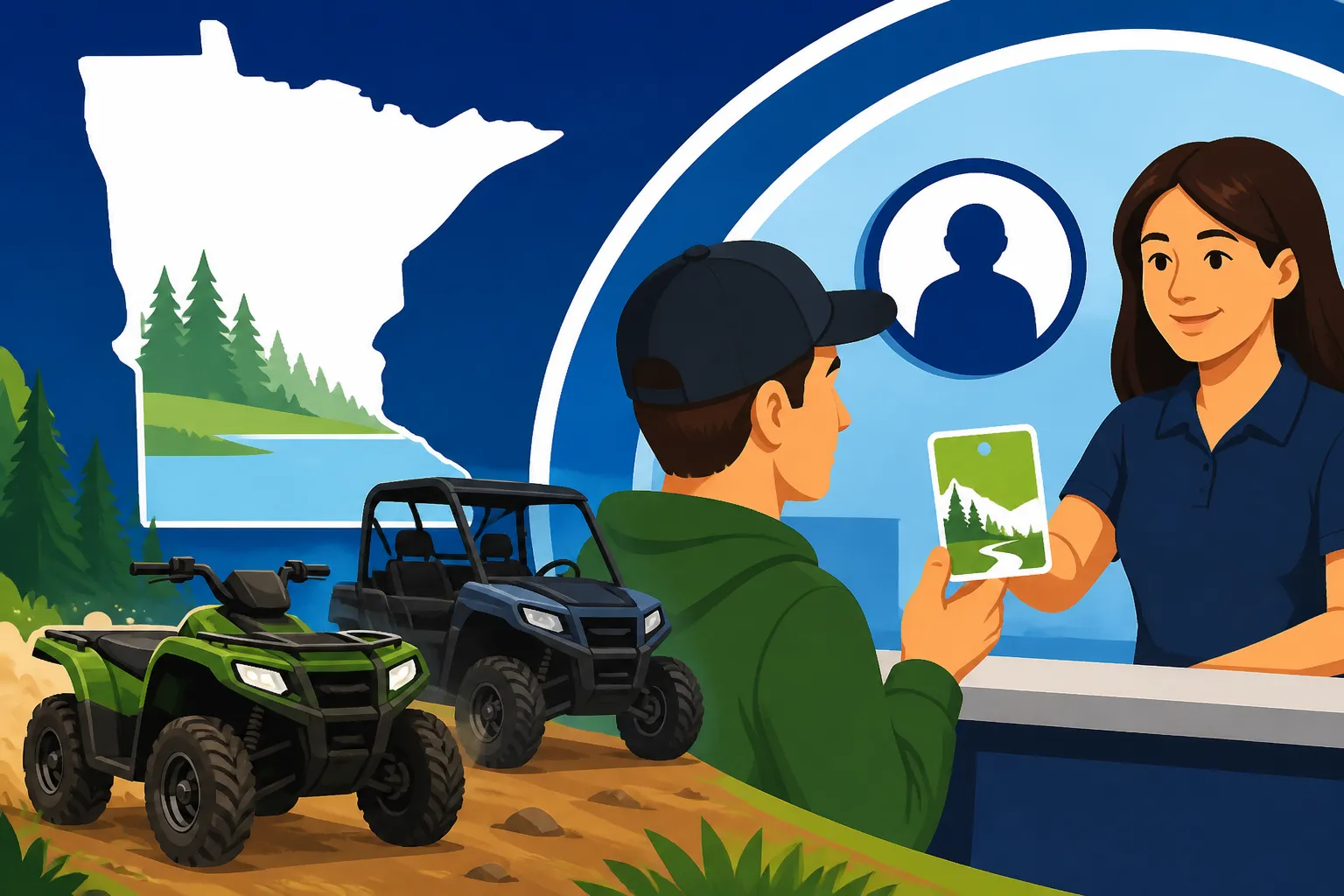
A license agent is useful when you prefer help at a counter, want to confirm a detail with a staff member, or are already passing through a town with an authorized seller. Online purchasing may be more convenient if you know what you need and want to arrange the permit before traveling.
| Option | Works well when | What to check |
|---|---|---|
| Minnesota license agent | You want in-person assistance or a local stop | The location currently sells the specific ATV pass, its hours, required information, and accepted payment |
| Official online purchasing channel | You want to prepare before traveling or avoid a retail stop | The correct pass type, the information requested, how proof is delivered, and any display or carrying instructions |
| Unverified marketplace or third-party listing | It may point you toward gear or a seller to investigate | It does not establish that the seller is authorized to issue a valid Minnesota pass |
Minnesota eLicense is one official online route for certain state transactions. If you prefer to use it, review Buying a Minnesota Trail Pass Online and Minnesota eLicense—for service details, use the official system and follow its current prompts. The title of a website or a search result alone is not enough: check that you are on the state’s official purchasing channel before entering personal or payment information.
An in-person agent can help you ask questions, but the agent cannot necessarily determine every issue about where you may ride. For example, buying a pass does not resolve whether a particular trail is open, whether the machine is allowed on it, or whether a local access restriction applies. Confirm those separately with the applicable official trail information.
If you are traveling from outside Minnesota, decide how you want to buy before leaving home. Buying online can reduce last-minute errands, while an agent can be helpful if you want assistance or need to clarify transaction details. Neither option removes the need to understand the pass requirement and carry or display the pass as instructed.
Do not buy from an unofficial seller
A person offering a “pass” through an online marketplace or social media is not necessarily authorized to issue one. Avoid buying an image, copied decal, or pass from another rider unless the state has explicitly provided a valid transfer process for that situation. A seller’s receipt does not prove that the pass is valid for your machine or trip.
Amazon can be a source for ordinary riding accessories, but it should not be treated as a state licensing channel. If a listing claims to sell an official Minnesota ATV pass, verify the claim through Minnesota’s official purchase options before paying. A genuine pass should come through the proper channel and follow the state’s instructions for identification and use.
Before You Head to the Trail
The best time to check a pass is before loading the machine, not after reaching the first trail sign. Confirm that you have the right pass for the machine and riding situation, that your registration is in order if required, and that you know how to carry or display the pass.
Use this short trip-planning sequence:
- Identify the ride. List the trails or public riding areas you expect to use. Check access rules for each one, including closures and machine restrictions.
- Check whether a pass is required. Use current official Minnesota guidance and account for the machine’s registration status and the type of riding planned.
- Choose a purchase route. Find an authorized agent or use the official online service. If choosing an agent, call ahead and confirm it can issue the pass you need.
- Complete the transaction carefully. Provide accurate machine and rider details, then review the completed information before leaving or closing the online session.
- Keep the proof accessible. Follow the state’s instructions about carrying or attaching pass materials. Keep registration and other machine documents separate and easy to identify.
- Recheck before departure. Trail access can change with conditions or closures. A valid pass does not make a closed trail open.
If you cannot locate a nearby agent, do not make a long detour based only on an old directory entry. Check official online purchase options, contact a likely agent directly, or ask the DNR through its current public contact channels for the appropriate next step. Do not ride first and plan to buy later unless official rules clearly permit that arrangement.
For questions about whether a pass is needed on a particular kind of property, start with Do You Need a Pass on Deeded Minnesota Ground? and Family Land and the Minnesota Pass Exemption. Exemptions can be limited, so do not assume that permission to ride on someone’s land automatically removes every pass or equipment requirement.
Keep records with the machine
Store the receipt or confirmation where you can retrieve it without searching through a packed trailer. If the machine is borrowed, rented, or part of a group trip, make sure the operator knows where the pass information is and what needs to be shown if asked.
Amazon sells general storage accessories, but any organizer is just a convenience. Keep official papers intact, do not alter a decal, and avoid placing a pouch where it blocks the machine’s required markings. For more on what riders may be asked to show, read What a Minnesota Conservation Officer Asks For.
If an agent cannot complete the sale
Ask whether the problem is temporary, whether the location handles a different transaction, or whether another nearby agent is available. If the issue concerns the machine’s eligibility or the pass category, pause and verify the rule through official information instead of purchasing a different pass as a guess.
If the online system or agent’s terminal is unavailable, ask for the official alternative. Save any error message or transaction reference if one is provided, but do not treat an incomplete payment attempt as proof that a pass was issued. Do not ride until you have confirmed that the required pass has been purchased and that you understand how to carry or display it.
A little checking before the trip can prevent the frustrating version of this problem: arriving at a trail area with a machine, a trailer, and no reliable place nearby to complete the transaction. The key is not simply finding a license agent. It is confirming that the seller can issue the pass you need, purchasing through an authorized channel, and checking the access rules for the trails you plan to ride.
Disclaimer
This article is for general informational purposes only and does not constitute professional advice. Laws, prices and regulations vary by location and change over time. Consult a qualified professional for guidance on your specific situation.