Riding Back to the Cabin After Dark
There’s a unique kind of peace that settles over the Minnesota woods and trails as the sun dips below the horizon, but that tranquility can quickly turn into anxiety when you realize you still have a stretch of trail or ditch to navigate back to the cabin. Many of us have been there, watching the last sliver of daylight disappear and thinking, "Oh, it's just a quick hop back." But riding an ATV or UTV in the dark, especially on unfamiliar or partially familiar terrain, presents a whole new set of challenges and risks. This guide is here to walk you through how to prepare, what to expect, and how to stay safe and legal when your ride stretches into the Minnesota night.
The Unique Challenges of Night Riding in Minnesota
Riding your off-highway vehicle (OHV) in Minnesota during daylight hours is one thing, but when darkness falls, the entire experience shifts. What was a clear trail suddenly becomes a labyrinth of shadows and hidden obstacles. It's not just about flipping on your headlights; it's about anticipating dangers you can't easily see and ensuring you're prepared for the unexpected.
Reduced Visibility and Unexpected Hazards
When you're out there under the stars, your field of vision dramatically shrinks, even with decent headlights. The depth perception that helps you judge terrain in daylight is severely hampered. Those small ruts, loose rocks, or muddy patches that were easy to spot become invisible traps. Picture this: you’re cruising a familiar forest trail, but a fallen branch that wasn’t there this morning could be lying across your path, completely swallowed by the darkness just beyond your light beam. Or perhaps a deep puddle you usually just splash through now hides a sizable rock that could easily damage a tire or rim. [Minnesota Trails That Suit a 50-Inch Machine] might feel different when you can’t see the edges of the trail as clearly.
Another common frustration is the tunnel vision created by standard headlights. They illuminate a narrow cone directly in front of you, leaving your peripheral vision almost useless. This makes sharp turns, navigating tight wooded sections, or even just scanning for trail markers far more difficult. It's a feeling many riders know all too well – the slight panic when you realize you're squinting, straining to make out what's coming next, and suddenly your enjoyable ride has become a tense journey. You might even find yourself second-guessing familiar routes because the landmarks you rely on are now just silhouettes against an inky sky.
Wildlife Encounters After Sundown
Minnesota's natural beauty comes with a vibrant ecosystem, and a lot of that wildlife becomes particularly active at dawn, dusk, and throughout the night. Deer are notorious for darting out into trails or ditches without warning, and a collision with one can be incredibly dangerous, not just for the animal but for you and your machine. I've heard countless stories from folks who were just "about five minutes from the cabin" when a deer jumped right into their path. It’s a terrifying moment that can easily be avoided with caution and heightened awareness.
Beyond deer, you might encounter other nocturnal creatures. Raccoons, skunks, foxes, and even larger animals like bears or moose (especially in northern Minnesota) are less wary of humans in the dark. Imagine rounding a bend and suddenly seeing a moose's reflective eyes staring back at you in your headlight beam – it’s a startling experience that requires quick reflexes. These animals are often harder to spot until you're very close, and their unpredictable movements in low light conditions add another layer of risk to your journey home. Remember, they don't follow trail rules, and they certainly don't have reflective tape!
Essential Gear and Machine Prep for Night Rides
Before you even think about heading out after dark, or if you know your afternoon ride might stretch into the evening, proper preparation is paramount. This isn't just about convenience; it's about safety, legal compliance, and making sure you actually get back to the cabin without a hitch. Skimping on this step is a recipe for a bad night.
Upgrading Your Lights for Better Vision
The stock headlights on many ATVs and UTVs are designed for basic visibility, not for serious night riding on challenging trails. They often lack the lumens and beam spread needed to properly illuminate a wide area, especially at speed. If you regularly find yourself riding after dark, an upgrade is not just a luxury; it's a necessity. Companies like SuperATV offer a fantastic range of aftermarket lighting solutions, from powerful LED light bars to auxiliary pod lights that can be mounted to give you a broader, brighter field of vision. Think about what truly makes a difference: a combination of spot beams to see far down the trail and flood beams to light up the immediate area and your periphery. [Lighting Rules for Minnesota Night Riding] specifically outlines what's required, but "required" doesn't always mean "sufficient."
Consider adding multiple light sources. A powerful LED light bar across the front of your machine can dramatically increase your forward visibility. Then, adding smaller, more focused pod lights to the sides or even a helmet-mounted light can help fill in shadows, especially when turning or looking off to the side for trail markers. Some riders even install rock lights under their machines to illuminate the ground directly beneath them, which is incredibly helpful when crawling over technical terrain or crossing streams in the dark. It’s an investment that pays off every time you extend your ride past sundown, transforming a stressful squint-fest into a confident cruise.
Visibility for Other Riders and Road Crossings
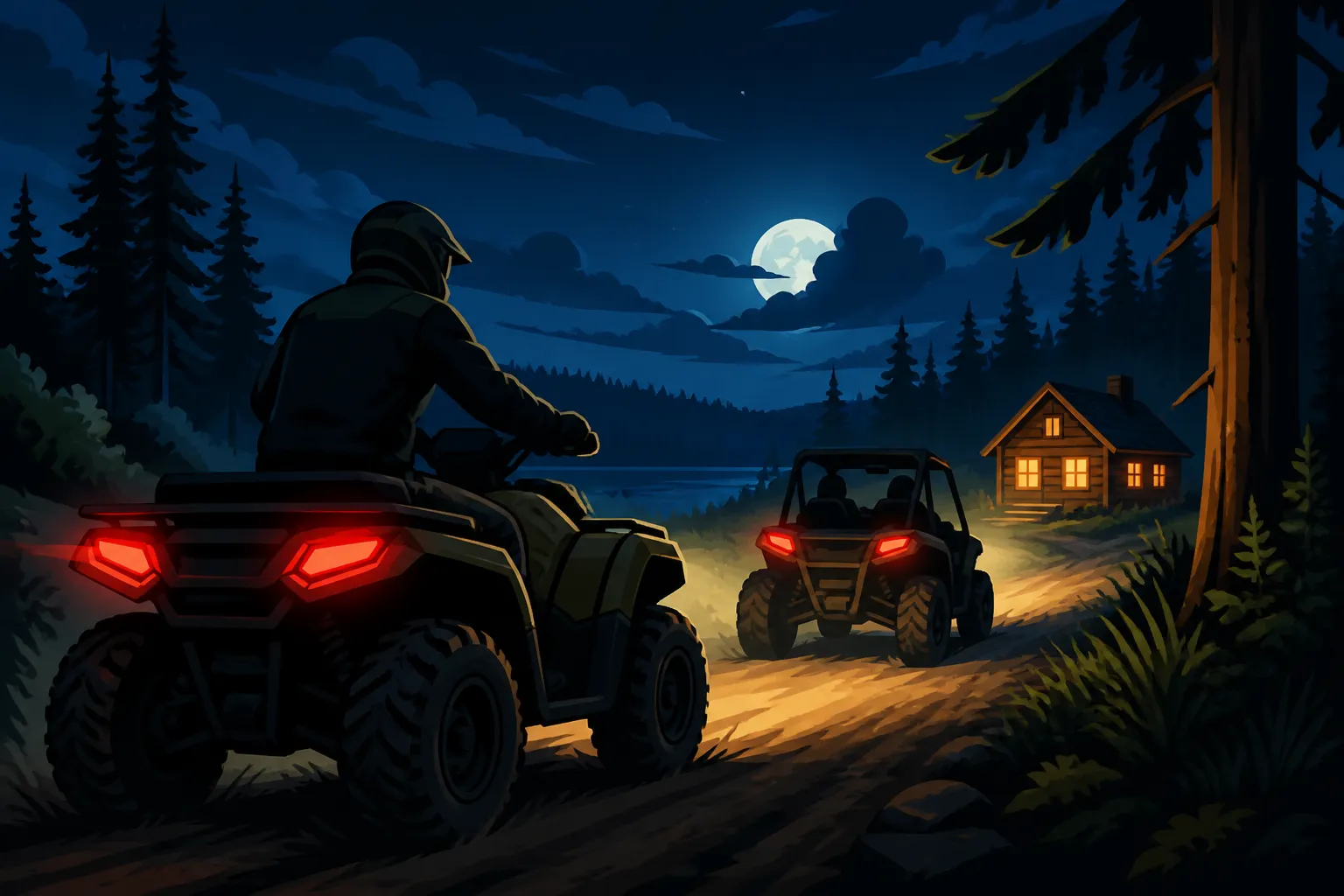
It's not just about you seeing the trail; it's equally important that others see you. Whether it's another rider coming the opposite direction, a snowmobiler on a shared trail in winter, or a motorist when you're crossing a public road, being visible is non-negotiable. Ensure your tail lights are fully functional and clean. Consider adding extra red or amber lights to the rear of your machine, especially if your stock tail lights are small or easily obscured by gear. Reflective tape strategically placed on the rear and sides of your ATV or UTV can also make a huge difference when headlights from another vehicle sweep across your machine.
When you're approaching a road crossing, your machine's standard lights might not be enough to grab the attention of an oncoming driver, especially on a dark stretch of highway. Brighter, more visible turn signals and brake lights (if equipped) become critical. A common frustration is feeling invisible when trying to [Crossing a Minnesota Road on an ATV], even in daylight. At night, this feeling is amplified tenfold. If your machine doesn't have factory turn signals, aftermarket kits are available that can improve your signaling capability. Remember, you're responsible for making your presence known, and bright, well-maintained lights are your best defense against an accident after dark.
Navigating Legally and Safely Back to Camp
Even if you know the route like the back of your hand in daylight, night riding demands a different kind of awareness. The rules of the road – or ditch, or trail – don't change just because it's dark, but how you apply them needs to adapt.
Understanding Road and Ditch Rules After Dark
Minnesota has specific rules for operating ATVs and UTVs on public lands, including ditches and designated roads. These rules apply 24/7. When riding in a road ditch, you must still adhere to "Minnesota's Ditch Riding Rules," which often dictate which side of the road you can ride on, the speed limits, and how you cross intersections. At night, these rules become even more critical to prevent collisions. For example, if you're riding a ditch that suddenly runs out, and you have to briefly enter a township road to continue, your lighting and reflective gear are your primary protectors.
Many Minnesota cities and counties have specific "Minnesota Cities That Allow ATVs on Streets" during daylight hours, but these permits and routes might have restrictions after dark, or require even more stringent lighting than state law. Always double-check local ordinances. Beyond the legalities, consider the etiquette. Blasting high-intensity light bars directly into oncoming traffic or people's driveways is not just rude, it's dangerous. Learn to dim or switch off auxiliary lights when approaching homes or other vehicles. It's about being a good neighbor and a responsible rider, ensuring that the privilege of riding these routes isn't jeopardized by careless actions after dark. [Driver's License Rules for Minnesota Road Riding] remain the same, but your responsibility to exercise caution and good judgment increases significantly.
Situational Awareness and Emergency Preparedness
Your situational awareness needs to be dialed up to 11 at night. Without the visual cues of daylight, you rely more heavily on sound and the limited view your lights provide. This means slowing down, taking turns wider, and constantly scanning for signs of obstacles, wildlife, or changes in the trail surface. What looked like a gentle rise in the daylight could feel like a steep drop-off at night if your lights aren't casting far enough.
Emergency preparedness is even more vital when the sun goes down. A breakdown that's a minor inconvenience during the day can become a serious problem at night, especially in remote areas where [Cell Service in the Minnesota Northwoods] is spotty at best. Always carry a fully charged cell phone (and perhaps a portable charger), but don't rely solely on it. Consider a satellite messenger or a two-way radio if you're in a group. Pack extra layers of clothing – temperatures drop significantly after dark, even on a warm day. A basic tool kit, tire repair kit, first-aid kit, a spare headlamp or flashlight, and enough fuel for your estimated journey are absolute must-haves. Even a small piece of brightly colored flagging tape can be invaluable if you need to mark your location for a rescue.
Common Mistakes and How to Avoid Them
Even the most experienced riders can fall prey to common pitfalls when riding after dark. Often, it's complacency or underestimation that leads to trouble. Being aware of these traps is the first step in avoiding them.
Forgetting Essentials and Overestimating Familiarity
One of the biggest mistakes riders make is assuming that because they know a trail like the back of their hand during the day, it will be the same at night. This overconfidence can lead to leaving essential gear behind, like an extra light source, warm clothing, or a basic recovery strap. "I'm just going for a quick loop," becomes "I'm stuck in a ditch, it's 30 degrees, and my phone is dead." This scenario plays out more often than you'd think. The familiar tree you always turn at looks completely different, or the subtle dip in the trail that was a non-issue suddenly feels like a canyon. [What to Carry on a Remote Northwoods Ride] details items you should always have, but they become even more crucial after dark.
Another lapse is neglecting to check your machine before a potentially dark ride. Are all your lights working? Is your battery charged? Is your fuel tank full? A quick once-over in the daylight can prevent a frustrating and potentially dangerous situation later. Many riders have pulled out of camp only to realize their taillight is out, or their high beam isn't functioning, leaving them scrambling or riding illegally. Taking five minutes to check these things before you head out is an investment in a stress-free ride home.
Respecting Noise Limits and Private Property
While not directly a safety concern for you, disrespecting local noise ordinances and private property boundaries after dark can quickly sour relations with landowners and local communities, potentially leading to further riding restrictions. The roar of an aftermarket exhaust system that sounds fine during the day can be incredibly disruptive to cabin owners trying to enjoy a quiet evening. [Minnesota Noise Rules Near Lake Homes] exist for a reason, and they apply even more stringently when residents are sleeping.
Similarly, even if a ditch or trail is legally accessible, bright, sweeping light bars can feel intrusive to adjacent landowners. Always be mindful of your surroundings. If you're riding past homes or cabins, dim your lights, reduce your speed, and keep your noise levels down. It’s about being a respectful ambassador for the sport. Many of the trails and routes we enjoy exist because of the good graces of private landowners and local communities. Abusing those privileges by being loud and disruptive after dark can lead to enforcement action, fines, or even the closure of valuable riding areas. Think about how you would feel if someone was blasting lights and noise past your bedroom window at 10 PM.
Here's a quick comparison of essential night riding gear:
| Gear Item | Purpose | Key Features for Night Riding | Why It's Important |
|---|---|---|---|
| LED Light Bar | Primary forward illumination | High lumens, combination spot/flood beam, durable | Extended visibility, illuminates wide area, reduces eye strain |
| Auxiliary Pod Lights | Supplemental spot/flood, side lighting | Compact, adjustable, focused beam options | Fills in dark spots, improves peripheral vision, helps with turns |
| Headlamp/Flashlight | Hands-free personal light, emergency | Long battery life, multiple brightness settings | Essential for repairs, reading maps, or walking if machine breaks down |
| Reflective Tape/Gear | Be seen by others, especially vehicles | High visibility, adheres to machine/helmet/clothing | Crucial for safety when crossing roads or encountering other riders |
| Warm Layers | Stay comfortable as temperatures drop | Moisture-wicking base, insulating mid, wind/waterproof outer | Prevents hypothermia, allows for longer, safer ride home |
| GPS/Map & Compass | Navigation when visual cues are lost | Pre-loaded trails, long battery, backup paper map | Prevents getting lost, especially if phone battery dies or signal is poor |
| First-Aid Kit | Treat minor injuries | Basic wound care, pain relief, emergency blanket | Critical for any incident; injuries can worsen in cold/dark |
Riding an ATV or UTV back to your cabin after dark in Minnesota can be one of the most serene and enjoyable parts of your day, as long as you treat it with the respect it deserves. By taking the time to prepare your machine, equip yourself with the right gear, and maintain a heightened sense of awareness, you can turn a potentially stressful journey into a memorable and safe experience. Enjoy those starry nights, but always ride smart.
Disclaimer
This article is for general informational purposes only and does not constitute professional advice. Laws, prices and regulations vary by location and change over time. Consult a qualified professional for guidance on your specific situation.