Minnesota Rules on Rail-Trail Corridors
It’s a familiar scenario for many Minnesota ATV and UTV riders: you’re looking at a map, eyeing those long, straight lines crisscrossing the state, marked as "rail-trails" or "multi-use trails." They look like a dream – long, uninterrupted stretches perfect for a leisurely ride or a brisk adventure. But then the nagging questions start: Can I actually ride my ATV here? Is it legal? What are the specific rules? This guide is here to untangle the often-confusing web of regulations surrounding off-highway vehicle (OHV) access on Minnesota’s rail-trail corridors, ensuring you can hit the trail with confidence and compliance.
Understanding Minnesota's Rail-Trail Landscape for OHVs
Minnesota, with its rich history of logging and mining, has a fantastic network of abandoned railroad grades that have been converted into recreational trails. These linear parks offer incredible opportunities for hiking, biking, snowmobiling, and, in many cases, ATV riding. However, the accessibility for OHVs isn't always as straightforward as it seems at first glance, leading to a lot of rider frustration.
What Exactly is a Rail-Trail, Anyway?
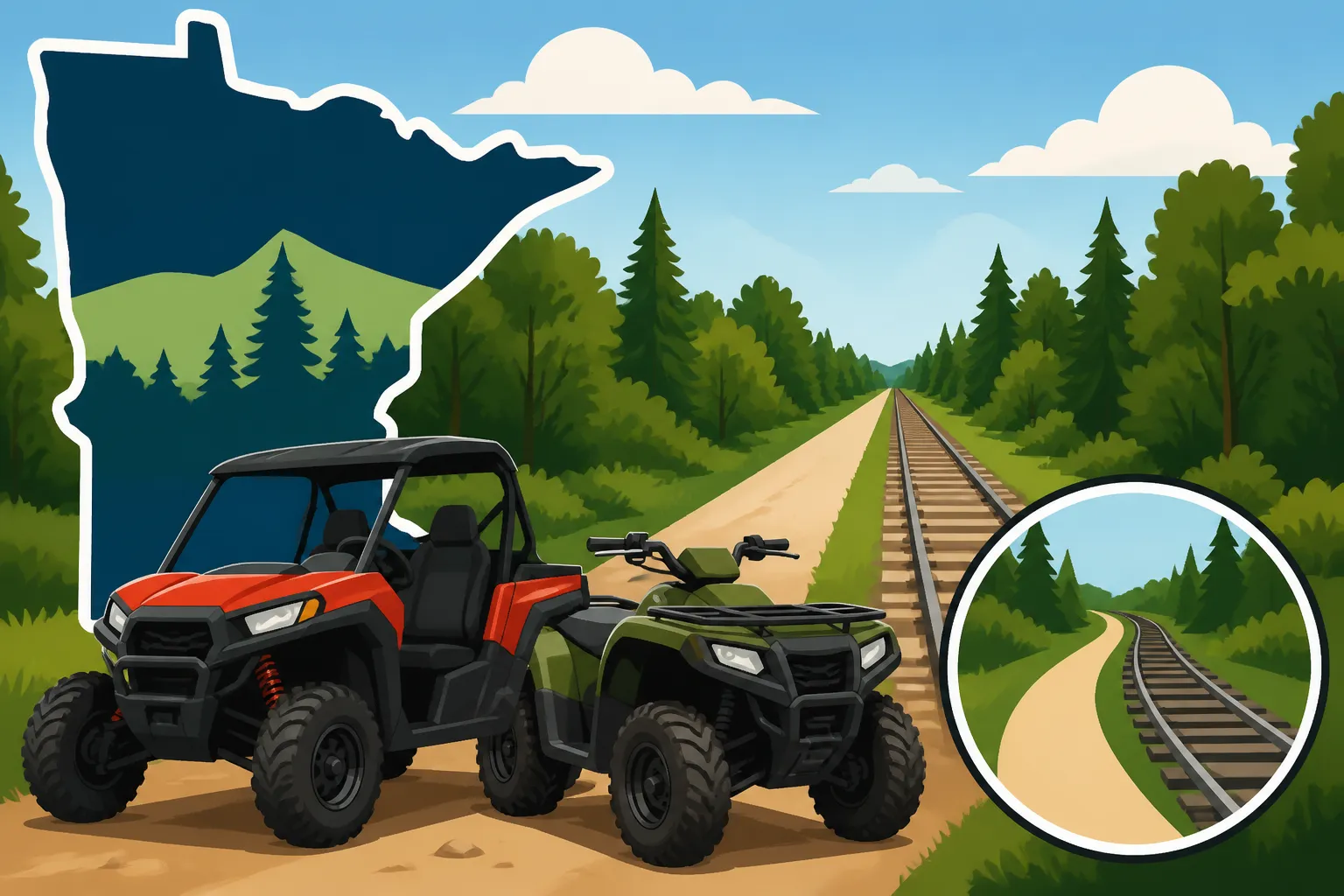
At its heart, a rail-trail is a multi-use recreational trail created from a former railway line. When a railroad company abandons a line, the corridor often gets "railbanked" or converted into a trail through a process that preserves it for potential future rail use while allowing immediate recreational access. In Minnesota, this has led to hundreds of miles of relatively flat, often straight trails, which can feel incredibly inviting for ATV and UTV riders seeking long-distance trips without the intense technical challenges of some traditional OHV parks. Think of iconic trails like the Soo Line North or segments of the Paul Bunyan State Trail; these are prime examples of former rail corridors now serving a new purpose.
The conversion process from railway to trail involves clearing tracks, preparing the surface, and often adding amenities like signage, bridges, and rest stops. While the goal is public access, the type of public access can vary wildly. Some sections might be paved for bikes, others maintained as gravel for hiking and horseback riding, and still others specifically designated for motorized use. It’s this variation that often catches riders off guard, expecting blanket access when local designations are much more nuanced.
The Allure and the Confusion for ATV Riders
For ATV and UTV enthusiasts, rail-trails present a unique appeal. Their relatively flat grades and long stretches make them ideal for covering significant distances, enjoying scenic views, and connecting towns. Imagine riding for miles through northern Minnesota's beautiful forests, knowing you're on a well-maintained path. This is a dream for many, especially those with family who might not be keen on highly technical terrain. The simplicity and accessibility are a huge draw.
However, this allure often clashes with the reality of diverse regulations. Many riders assume that if any motorized vehicle is allowed (like snowmobiles in winter), then ATVs must also be welcome year-round. This is a common and understandable misconception. What looks like a perfect riding path might actually be off-limits to OHVs, or only accessible during specific seasons, or only to specific classes of machines. The frustration of trailering your machine all the way to a trailhead, only to find a "no ATV" sign, is something most experienced riders have faced at least once. It’s enough to make you throw your hands up!
Who Manages These Corridors in Minnesota?
The management of Minnesota's rail-trail corridors is a shared responsibility, which further contributes to the patchwork of rules. The Minnesota Department of Natural Resources (DNR) oversees many state-owned trails, but counties, local municipalities, and even private organizations can manage segments. This means that a single long trail, like the [Soo Line North Trail Across Minnesota], might have different rules as it passes through various jurisdictions. One segment might be DNR-managed and open to OHVs, while the next segment, managed by a county, might be restricted to non-motorized use.
Knowing who manages a specific section of trail is crucial because they are the ones who set and enforce the specific regulations. DNR trails typically fall under state OHV laws, but county and local ordinances can add further restrictions. For example, some counties might have specific noise ordinances or curfews that apply to OHVs even on trails designated for their use. It really emphasizes the importance of doing your homework before you head out, because simply seeing "trail" on a map isn't enough to guarantee a legal ride.
Navigating the Specific Rules for ATVs on Minnesota Rail-Trails
Understanding the general landscape is one thing, but getting down to the nitty-gritty of what's allowed where is where the real work begins. Minnesota has some specific frameworks that dictate OHV access on these former railway lines. It's not always easy to figure out, but with a little guidance, you can make sense of it.
General Access: Permitted vs. Prohibited
In Minnesota, OHV access to rail-trails is generally determined by specific designations. Many rail-trails are part of the state's Grant-in-Aid (GIA) trail system, which often does allow OHVs, particularly those segments designated as "OHV trails." However, it's not a universal rule. Some rail-trails, or sections thereof, are explicitly designated for non-motorized use only, like walking, biking, or horseback riding. These are often clearly marked with signs indicating what types of users are permitted.
The key takeaway here is: do not assume. Just because a trail is a rail-trail doesn't automatically mean ATVs are welcome. You absolutely must look for official signage at trailheads, check current DNR trail maps, or consult local county maps or ordinances. A sign reading "No Motorized Vehicles" or "Non-Motorized Use Only" is your definitive answer for that section. Ignoring it can lead to hefty fines and a ruined day. It’s always better to be safe than sorry, and a little planning can save a lot of grief.
Machine Requirements and Operator Regulations
Even on rail-trail segments where ATVs and UTVs are allowed, you still need to adhere to all standard Minnesota OHV laws. This isn't unique to rail-trails but is a baseline requirement for any public land riding. First and foremost, your machine needs to be properly registered. This means displaying your [Minnesota ATV Registration Sticker Goes] in the correct location and ensuring your registration is current. [Minnesota Registration Renewal Every Three Years] is a regular part of ownership that keeps you legal.
Beyond registration, operators must comply with safety training and helmet requirements. If you were born after July 1, 1987, you must have an ATV safety certificate to operate on public lands, including designated rail-trails. Riders under 18 also typically face helmet requirements, even if the trail is relatively easygoing. Speed limits are also strictly enforced on these multi-use corridors. While they might be flat and inviting for speed, safety and shared use are paramount. Expect typical trail speed limits to be enforced, and always be prepared to slow down for other users, including hikers, bikers, and horseback riders.
Understanding Trail-Specific Designations and Signage
Navigating Minnesota’s extensive trail system requires a keen eye for detail, especially when it comes to rail-trails. Each trail or segment often has very specific designations that riders need to understand. You might encounter signs that say "ATV/OHM/Snowmobile," indicating shared motorized use, or "Non-Motorized," clearly prohibiting your machine. Sometimes, a trail might be open for OHVs in one season (e.g., spring through fall) and then convert solely to snowmobile use in winter.
Always check the current official DNR maps, often available online or at local DNR offices and popular trailheads. These maps use a color-coding or symbol system to denote permitted uses. Don't rely on outdated maps or hearsay from a buddy; trail designations can change. Furthermore, pay close attention to any supplementary signs at trail access points. These might detail specific local ordinances, temporary closures, or unique rules for that particular segment. For example, some rail-trails might have specific width restrictions, meaning your wider side-by-side might be legal on one section but too wide for another. It's truly a "read the signs" situation!
Common Pitfalls and Best Practices for Riding Rail-Trails
It's easy to make assumptions, especially when you're excited to hit a new trail. But rail-trails have their own quirks that can trip up even experienced riders. Being aware of these common issues and adopting best practices will help you have a great, legal, and respectful ride.
The "Street Legal" Myth on Rail-Trails
This is a big one that causes a lot of confusion and grief. Many riders mistakenly believe that if their ATV or UTV is "street legal" – meaning it has all the necessary lights, mirrors, and maybe even a license plate to ride on certain public roads or ditches – then it automatically grants them access to all public trails, including rail-trails. This is simply not true in Minnesota.
Being street legal allows you to operate on approved road rights-of-way, like [Minnesota's Ditch Riding Rules] or specific [Minnesota Cities That Allow ATVs on Streets]. However, a rail-trail, even if it runs alongside a road, is still considered an off-highway trail system. Your access to it is dictated by its specific OHV designation, not by your vehicle's street-legal status. You still need your Minnesota OHV registration, and you still have to abide by all the trail's OHV-specific rules, regardless of any modifications you've made to make your machine road-ready. It's a common trap, so always remember: street legal does not equal automatic rail-trail access.
Respecting Multi-Use and Adjacent Properties
Many rail-trails are true multi-use corridors, meaning you’ll be sharing the path with hikers, bicyclists, dog walkers, and sometimes even horseback riders. This requires a heightened level of courtesy and awareness. OHV riders have a responsibility to be good neighbors on these trails. Slow down significantly when passing other users, offer a friendly wave, and always yield the right-of-way. Dust, noise, and speed can quickly create negative experiences for non-motorized users, which can lead to complaints and, ultimately, more restrictions for OHVs.
Furthermore, remember that rail-trails are linear properties, often bordered by private land. While the trail itself is public, the land immediately adjacent to it almost certainly isn't. Stay on the marked trail, do not venture onto private property, and be mindful of noise levels, especially when passing residential areas. Disrespecting private landowners or other trail users is a surefire way to jeopardize future OHV access on these valuable corridors. Consider quiet-friendly upgrades for your exhaust if you frequently ride near populated areas, showing commitment to shared enjoyment.
Planning Your Rail-Trail Ride
A little planning goes a long way when it comes to rail-trail riding. Before you even load up your machine, check the current status of the trail you intend to ride. The Minnesota DNR website is the best source for up-to-date trail maps and closure information. [Checking Minnesota Trail Status Before You Drive] is not just good advice, it’s essential, especially during spring thaw or periods of heavy rain when trails might be temporarily closed to prevent damage.
Beyond legality, think about practicality. Rail-trails can be long, so ensure your machine is in good working order and you have enough fuel. [Fuel Planning for a Minnesota Trail Day] is critical. Carrying essentials like a basic tool kit, a first-aid kit, and water is always a good idea. Consider accessories that enhance your comfort and safety, especially on longer rides. For instance, a quality windshield from SuperATV can make a huge difference in deflecting wind and debris, making your ride much more enjoyable. A good storage box, also available from SuperATV, helps you organize your gear efficiently, ensuring everything you need is readily accessible. These practical considerations, alongside legal compliance, contribute to a successful and stress-free day on the rail-trail.
| Trail Type/Feature | Typical ATV Access | Key Considerations for Riders |
|---|---|---|
| DNR OHV Trail (Grant-in-Aid) | Generally Permitted | Requires MN OHV registration, safety training for post-1987 births, helmets for under 18. Follow posted speed limits. |
| Multi-Use Rail-Trail (Non-Motorized) | Prohibited | Clearly marked "No Motorized Vehicles" or "Non-Motorized Only." |
| Shared Use Rail-Trail (Seasonal) | Permitted Seasonally | Check specific dates and signage. May switch to snowmobile-only in winter. |
| County/Local Rail-Trail | Varies by Ordinance | Always check local county maps or ordinances, as rules can differ from state trails. |
| Road Right-of-Way (Ditch Riding) | Permitted (Rules Apply) | Different from rail-trail; follows [Minnesota's Ditch Riding Rules]. |
What Happens If You Break the Rules? Penalties and Enforcement
No one wants to be "that guy" who gets a ticket, especially when you're just trying to enjoy a day out. But it's vital to understand that riding where you shouldn't, or violating regulations on an approved trail, carries real consequences. Minnesota takes its OHV rules seriously, and enforcement is more common than you might think.
Enforcement by Conservation Officers and Local Authorities
In Minnesota, enforcement on public lands, including designated rail-trails, is primarily handled by Conservation Officers (COs) from the DNR. These officers are highly knowledgeable about OHV laws and regularly patrol trails, sometimes in unmarked vehicles or even on ATVs themselves. They're looking for everything from expired registrations to riders operating in restricted areas, or violating speed limits and noise ordinances. But it’s not just COs; local law enforcement, such as county sheriffs and city police, can also enforce OHV regulations, especially on trail segments that fall within their jurisdiction or when the trail interacts with local roads.
It’s easy to think you might slip by unnoticed, especially on a long stretch of trail, but these officers are well-versed in where riders might try to cut corners. They're often on patrol specifically because of resident complaints about illegal riding or excessive noise. Being polite and cooperative if you're stopped is always the best approach, but ignorance of the law is rarely an excuse that will get you out of a citation. They are there to ensure everyone's safety and the preservation of the trails.
The Consequences: Fines, Impoundment, and Loss of Privileges
The penalties for violating Minnesota's OHV rules on rail-trails can range from a warning to significant fines, impoundment of your machine, and even the loss of riding privileges. A typical first offense for something like riding in a prohibited area or operating an unregistered machine can easily result in a fine of several hundred dollars. For instance, a violation related to [Penalties for an Unregistered ATV in Minnesota] can be quite costly. These aren't just minor slaps on the wrist; they are serious financial hits that can quickly ruin your day and your budget.
Beyond the immediate financial cost, repeated or egregious violations can lead to your ATV or UTV being impounded, which involves towing fees, storage fees, and administrative headaches that will make you wish you'd just stayed home. In some cases, especially involving reckless operation or multiple offenses, you could face the suspension of your OHV operating privileges, meaning you wouldn't be allowed to ride on any public land in Minnesota for a set period. Imagine having your prized machine, perhaps outfitted with premium accessories from SuperATV like a lift kit or new tires, sitting in impound or being unable to ride it legally on public trails because of a preventable mistake. It’s a sobering thought that underscores the importance of knowing and following the rules.
Disclaimer
This article is for general informational purposes only and does not constitute professional advice. Laws, prices and regulations vary by location and change over time. Consult a qualified professional for guidance on your specific situation.