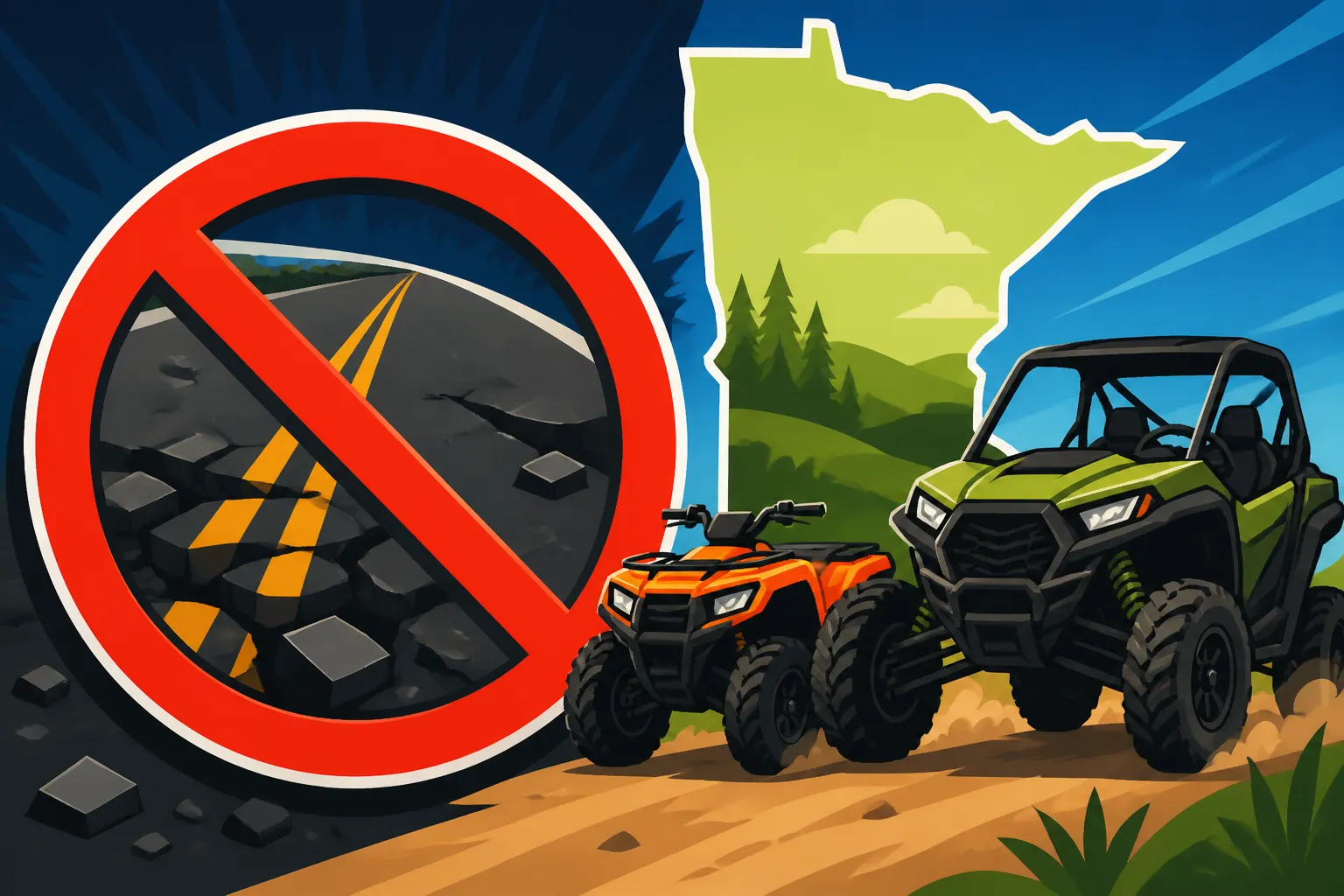
The Road Surface Minnesota Keeps Closed
It’s a frustrating truth for many ATV and UTV enthusiasts in Minnesota: you’ve got this incredible machine designed for adventure, but the rules about where you can actually ride it on public roads can feel like navigating a minefield. There’s a widespread misunderstanding, often leading to tickets or unsafe situations, about whether you can ever truly drive on the paved surface of a road. This comprehensive guide is here to cut through that confusion, clearly outlining what Minnesota law says about keeping ATVs and UTVs off the main travel lanes.
Understanding Minnesota's Core Philosophy on ATV Road Use
Minnesota's approach to allowing ATVs and UTVs near — but typically not on — public roads isn't about stifling your fun. It's rooted in very practical considerations, primarily revolving around safety and the inherent differences between an off-highway vehicle and a street-legal car or truck. Many riders feel a deep sense of injustice, wondering why their capable machine is relegated to the ditch when a tiny car can cruise the pavement. However, understanding the reasoning behind these regulations is the first step in navigating them successfully and staying on the right side of the law.
The Underlying Principle: Separation for Safety
The most fundamental reason Minnesota generally keeps ATVs and UTVs off the paved road surface is safety. Off-highway vehicles, by their very design, are not built for sustained road travel at highway speeds. They have different tire compounds, suspension systems, and braking capabilities than street-legal vehicles. Their visibility to other motorists can be significantly lower, especially a single-rider ATV, making them hard to spot in traffic, at intersections, or during lane changes. When you combine these factors with the speed differential between an ATV and a car, particularly on higher-speed roads, the risk of a serious accident skyrockets.
Imagine trying to safely share a busy county road with vehicles traveling 55 mph when your ATV is designed for 35 mph tops, and it's less stable at high speeds on hard surfaces. The authorities are trying to prevent tragic collisions that arise from these incompatible vehicle types sharing the same space. It's a preventive measure, even if it feels restrictive to the rider who simply wants to get from one trail segment to another or quickly access a gas station. The goal is to create designated spaces for off-road recreation while keeping the primary roadways clear for the traffic they were built to handle.
Distinguishing Between Ditch and Roadway
This is where much of the confusion lies. In Minnesota, when people talk about riding ATVs on roads, they are almost universally referring to riding within the road's "right-of-way," but specifically not on the "roadway" or "traveled portion" itself. The right-of-way is the entire strip of land owned or controlled by the public for transportation purposes, extending beyond the paved or graveled surface. This typically includes the ditch, shoulder, and sometimes even adjacent unpaved land. The "roadway" or "road surface," on the other hand, is the part of the highway designed for vehicular travel – the asphalt or gravel that cars and trucks drive on.
Minnesota law is quite particular about this distinction. You might be allowed to ride alongside a road in the ditch or on the shoulder, but the moment your tires hit the actual paved lane where cars are driving, you're likely breaking the law unless you're making a legal crossing or are on a specifically designated route. This differentiation is critical because many riders see ATVs in the general vicinity of a road and assume they have free rein, missing the crucial detail that they are almost always restricted to the unpaved margins. Understanding [Minnesota's Ditch Riding Rules] is paramount to avoiding citations and staying safe.
Where You Can Ride: The Ditch and Beyond
While the main road surface is generally off-limits, Minnesota does provide specific, legal avenues for ATV and UTV operation within the road right-of-way. It's not a free-for-all, but with careful attention to the rules, you can often connect trails, access services, or travel short distances. The key is knowing precisely what the law permits and where, recognizing that these allowances are often accompanied by strict conditions regarding speed, visibility, and the section of the right-of-way being used.
The Permitted Right-of-Way: Shoulder and Ditch
For most ATV and UTV riders, the "ditch" is your primary legal pathway when traveling adjacent to a road. Minnesota statutes generally permit ATVs and UTVs to operate on the far right-hand side of the right-of-way of a public highway. This usually means the ditch or the unpaved shoulder. However, this isn't a blanket permission without rules. Riders must stay on the extreme right of the right-of-way, meaning as far from the traveled portion of the road as practicably possible. It's not uncommon for a Conservation Officer to clarify [Which Side of the Ditch Minnesota Riders Use] to ensure safety.
Speed limits often apply, even in the ditch, usually aligning with safety and environmental concerns rather than posted road speeds. Visibility is also critical; you need to be seen, and you need to be able to see. This means maintaining a safe distance from other vehicles and being aware of hazards like culverts, mailboxes, and driveways. The intent is to allow passage while minimizing interaction with faster-moving traffic. Remember, this isn't a substitute for a trail; it's a limited privilege to connect points of interest. If you're wondering [What Minnesota Requires Before You Ride the Ditch], it typically includes registration, proper lighting, and often safety training.
Approved Road Routes and Crossings
While direct travel on the road surface is rare, there are two primary exceptions: legally designated road routes and sanctioned crossings. Some Minnesota towns and counties, particularly in areas with strong ATV tourism, have worked to establish specific "ATV routes" on local roads. These routes are usually clearly marked with signs indicating ATV use is permitted. They might connect trails to a gas station, a restaurant, or a lodging facility. These are not common on high-speed highways but are more likely found on quieter township or county roads. These designated routes are a fantastic development for riders, but they are the exception, not the rule. Always look for official signage before assuming a road is an approved route.
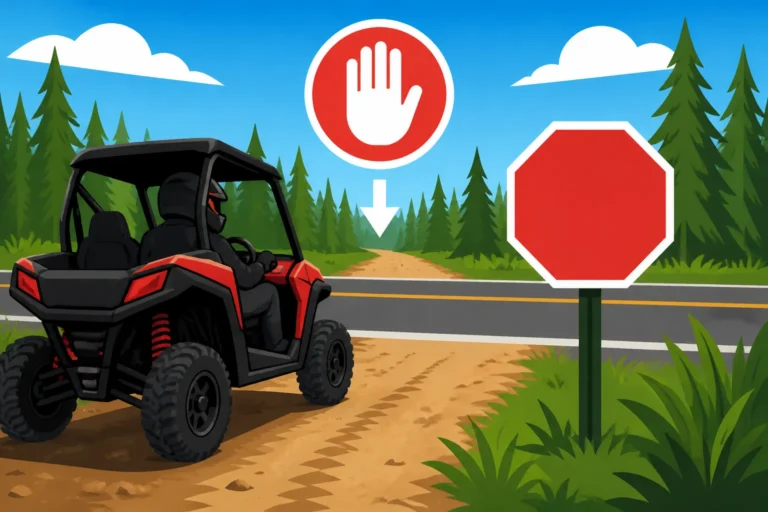
Beyond these special routes, ATVs and UTVs are generally allowed to cross public roads at approximately a 90-degree angle to the roadway, provided the crossing can be made safely. This means stopping, looking both ways, and crossing quickly and directly. You cannot travel down the road surface to find a better crossing point; you must cross at the first safe opportunity. Understanding [Crossing a Minnesota Road on an ATV] is crucial for any rider who plans to navigate public roads. This applies whether you're crossing a small township road or a busy state highway (where more stringent rules might apply, as we’ll discuss shortly).
The Absolute No-Go Zones: The Paved Surface Itself
Despite the allowances for ditch riding and designated routes, the most important takeaway for ATV and UTV riders in Minnesota is this: the vast majority of paved or otherwise improved road surfaces are unequivocally off-limits for general travel. This isn't just a suggestion; it's a legal prohibition designed to prevent accidents and maintain traffic flow. Many common riding situations, where it might seem convenient to just "hop on the pavement for a second," are exactly where riders get into trouble.
State Highways and the Hard Shoulder
When it comes to Minnesota State Highways, the prohibition against ATVs on the paved surface is almost absolute. These are typically higher-speed roads designed for efficient travel between communities. The risks associated with an ATV sharing this space are simply too high. This rule extends not just to the main travel lanes, but also to the paved shoulder. Even if it looks wide and clear, that hard shoulder is considered part of the roadway designed for vehicular emergencies or bicycles, not sustained ATV travel.
Trying to ride your ATV along the shoulder of a State Highway, even for a short distance, is a surefire way to attract the attention of law enforcement. The only time an ATV might legally touch a State Highway's paved surface is during a direct, 90-degree crossing at an intersection or a safe point where visibility is clear, and it's done without impeding traffic. For a deeper dive into these specific restrictions, check out [Minnesota Rules on State Highways]. It’s a harsh reality for riders, but safety dictates this strict separation on these major arteries.
County and Township Roads: Limited Exceptions
County roads and township roads often feel less intimidating than State Highways. They’re usually less busy, have lower speed limits, and may traverse more rural areas. This leads many riders to mistakenly believe that the rules might be relaxed here. However, the general rule still holds: the paved or graveled surface of county and township roads is closed to ATVs and UTVs for general travel, unless it has been specifically designated as an ATV route by the local authority.
While some county and township roads do feature designated ATV routes, these will be clearly marked with signage. Without such signs, you must assume the standard rules apply, meaning you’re relegated to the ditch or right-of-way. Even if you see other riders on the pavement, that doesn't make it legal or safe. Always verify the legality of a route rather than following assumptions or the actions of others. The rules for [Minnesota Rules on County Roads] and [Minnesota Rules on Township Roads] often vary slightly from the state-level highway rules, but the "keep off the main traveled portion" principle largely remains intact unless explicit signage dictates otherwise.
| Road Type | General Rule on Paved Surface | Exceptions (Must Be Marked) | General Ditch/Right-of-Way Rule |
|---|---|---|---|
| State Highway | Prohibited (main lanes & paved shoulder) | Direct 90-degree crossings only | Generally permitted if unpaved |
| County Road | Prohibited (main lanes) unless specifically designated | Designated ATV routes, direct 90-degree crossings | Generally permitted if unpaved |
| Township Road | Prohibited (main lanes) unless specifically designated | Designated ATV routes, direct 90-degree crossings | Generally permitted if unpaved |
| City Street | Prohibited unless city ordinance designates specific routes | Designated ATV routes (rare and highly localized), direct 90-degree crossings for access | Usually prohibited |
Equipment, Safety, and Compliance for Ditch Riding
Even when operating legally in the ditch or on a designated road route, having your machine and yourself properly equipped and ready is paramount. Minnesota takes safety seriously, and that extends to any interaction your ATV or UTV has with public roads, no matter how limited. Ignoring these requirements isn't just a risk for a ticket; it's a risk to your personal safety and the safety of others. Preparing your machine isn't just about compliance; it's about being a responsible rider.
Necessary Machine Modifications and Gear
For any ATV or UTV that will be operating in the road right-of-way, even the ditch, certain equipment is either legally required or highly recommended for safety. Proper lighting is non-negotiable, especially if you might be riding at dawn, dusk, or night. This includes working headlights and taillights. Many aftermarket companies, like SuperATV, offer excellent lighting upgrades that significantly enhance visibility. Reflectors can also play a crucial role in making your machine more noticeable to motorists.
Mirrors are another often-overlooked but essential piece of equipment. Being able to see traffic approaching from behind is a critical safety feature when you're operating alongside a road. Spark arresters are always required on public land and trails to prevent wildfires, so ensure your exhaust system is compliant. While not always legally mandated for ditch riding, a winch is a smart addition if you find yourself in a tricky spot in a deep ditch, and companies like SuperATV also provide these. Always check your machine's condition before heading out – tires, brakes, and fluids should be in good working order.
Rider Requirements and Conduct
Beyond the machine itself, the operator also has responsibilities. For one, if you were born after July 1, 1987, you generally need to complete an ATV safety training course to ride on public lands or public road rights-of-way. This certification ensures riders understand the basics of safe operation and rules. For younger riders, there are specific age restrictions and supervision requirements. For example, [Minnesota Helmet Rules for Riders Under 18] mandate helmet use for anyone under 18 operating an ATV or UTV. While adults might not be legally required to wear a helmet in all situations, it's always the safest choice.
When riding in the ditch, proper conduct is key. Always ride single file, on the far right of the right-of-way, and be highly aware of your surroundings. Avoid sudden movements, anticipate where driveways and culverts might be, and slow down significantly when approaching any area where cars or people might be present. Yield to pedestrian and bicycle traffic. Remember, the ditch is a shared space, and your actions reflect on the entire ATV community. Impaired driving laws apply to ATVs just as they do to cars; never operate a machine under the influence.
Penalties and Enforcement: The Cost of Ignoring the Rules
Riding an ATV or UTV on the unauthorized paved surface of a Minnesota road isn't just a slight oversight; it's a violation that can carry significant consequences. Law enforcement, particularly Conservation Officers and county sheriffs, are well-versed in ATV regulations and are actively on patrol. Ignorance of the law is rarely an excuse, and the penalties can range from hefty fines to more severe repercussions, impacting your wallet and potentially your riding privileges.
Fines and Legal Consequences
The financial impact of an illegal road riding citation can be substantial. Fines for operating an ATV or UTV on a prohibited road surface can vary depending on the county, the specific road, and whether it's a first offense or a repeat violation. These fines are designed to be a deterrent, making it clear that the state is serious about keeping off-highway vehicles off the main roadways. Beyond the base fine, you might also face court costs, surcharges, and potential increases in your insurance premiums.
In more egregious cases, or if other offenses are committed concurrently (such as reckless operation, impairment, or property damage), the legal consequences can escalate. While it's rare for a simple "on the pavement" ticket to lead to immediate impoundment, repeated violations could certainly lead to increased scrutiny or even the loss of riding privileges. For a detailed look at the financial implications, you might find information on [Minnesota Fines for Illegal Road Riding] particularly enlightening. It’s always cheaper and less stressful to know and follow the rules than to face the penalties.
Conservation Officer Patrols and Checkpoints
Minnesota's Department of Natural Resources (DNR) Conservation Officers are the primary enforcement agency for ATV laws on public lands, including road rights-of-way. They are highly trained and have a strong presence in areas popular with riders. You should expect to encounter them, especially during peak riding seasons or on busy weekends. County sheriffs and local police departments also enforce ATV laws within their jurisdictions, particularly on county and township roads.
These officers conduct routine patrols, and it's not uncommon for them to set up checkpoints, especially at popular trailheads or points where trails intersect with roads. They check for proper registration, safety certification, and compliance with all operational rules. Riding on the paved surface is a very visible violation, making it easy for officers to spot. They are there to ensure safety and preserve access for responsible riders, but they will not hesitate to issue citations for violations. Always be prepared to present your registration, safety certificate, and identification when asked.
Navigating Specific Road Features
Even when you're diligently sticking to the ditch or an approved route, the landscape isn't always a smooth, continuous path. Road features like bridges, culverts, and driveways present unique challenges and specific rules that riders must understand. These are common pinch points where an unwary rider might inadvertently stray onto the forbidden road surface or create a hazardous situation.
Bridges, Culverts, and Overpasses
This is a critical area of concern for many riders. When you're riding along a ditch and encounter a bridge or a large culvert, the ditch often disappears or becomes impassable. The natural inclination is to move onto the paved surface to cross the obstruction. However, this is where you need to be extremely careful. Generally, ATVs are not permitted to ride on the paved surface of a bridge or overpass for extended travel. The same principle of keeping ATVs off the main roadway applies here, often even more strictly due to the confined nature of a bridge and the potential for increased traffic.
In most cases, if the ditch or right-of-way becomes impassable due to a bridge, the rule is to cross the roadway at the safest, most direct point before or after the bridge, rather than riding on the bridge itself. You'd approach the road as if making a normal crossing, yielding to traffic, and then re-enter the ditch on the other side. Some bridges might have a very wide, unpaved shoulder or dedicated non-motorized path that might be used, but this is rare and should not be assumed. Always look for signage or clear indications. For more specific guidance, review [Crossing Over a Minnesota Bridge] to understand the nuances.
Driveways and Private Access Points
Riding in the ditch means you'll constantly encounter private driveways and access points. These areas require particular caution. When you cross a driveway, you should slow down significantly and be prepared for vehicles entering or exiting. The homeowner may not be expecting an ATV in the ditch, and visibility can be limited. While you're generally permitted to continue through the ditch across a private driveway, you cannot trespass onto the private property itself.
A common issue arises when a ditch becomes shallow or filled near a driveway, tempting riders to swing out onto the paved shoulder or even the road to get around it. Resist this temptation. If the ditch is truly impassable, you must consider it a temporary obstruction, and if continuing safely means entering the prohibited road surface, you should reconsider your route or, as with bridges, make a brief, direct, and safe 90-degree crossing if truly necessary to regain the legal ditch path. The rule of thumb is always to prioritize safety and legality over convenience.
Future Considerations and Advocacy
The landscape of ATV and UTV use in Minnesota is not static. Rules and regulations can evolve, often influenced by rider advocacy, safety data, and the growing popularity of these machines. While the core principle of keeping ATVs off the main road surface for safety reasons is unlikely to change drastically on high-speed roads, there's ongoing discussion and effort to expand legal and safe riding opportunities.
The Push for More ATV-Friendly Roads
Many ATV clubs and organizations in Minnesota actively work with local and state governments to identify and designate more ATV-friendly roads and routes. Their goal is to create safe connections between existing trail systems, access to amenities in small towns, and new recreational opportunities. These efforts often involve careful planning, environmental reviews, and collaboration with communities. When a road is designated, it’s usually after a thorough assessment that considers traffic volume, speed limits, and the presence of safe shoulders or alternative pathways.
While the primary focus remains on trails and the ditch, the trend in many parts of Minnesota is towards cautiously expanding designated road routes where it makes sense. These are typically on lower-speed, less-trafficked county or township roads, and they are always clearly marked. Riders should stay informed about local initiatives and check county and DNR websites for updated maps and information on new designated routes. This ongoing work is a testament to the power of responsible advocacy, showing that riders can be a force for positive change.
How Riders Can Advocate for Change
Being a responsible rider is the best form of advocacy. When you follow the rules, operate your machine safely, and respect private property and other users of the right-of-way, you build goodwill and demonstrate that ATVs and UTVs can be integrated safely into the community. Conversely, illegal or reckless riding creates a negative perception that hinders efforts to expand access.
If you're passionate about expanding ATV access in Minnesota, consider joining a local ATV club. These organizations are often at the forefront of working with local officials, volunteering for trail maintenance, and advocating for sensible regulations. They represent the collective voice of riders and are instrumental in identifying potential new routes or resolving issues. Participating in public meetings, contacting your local representatives, and supporting organizations that promote responsible ATV use are all ways to contribute to a future where riders have more, not fewer, legitimate places to enjoy their machines. It's about being part of the solution and helping to shape the future of riding in Minnesota.
Disclaimer
This article is for general informational purposes only and does not constitute professional advice. Laws, prices and regulations vary by location and change over time. Consult a qualified professional for guidance on your specific situation.