Golf Carts in a Lake Community
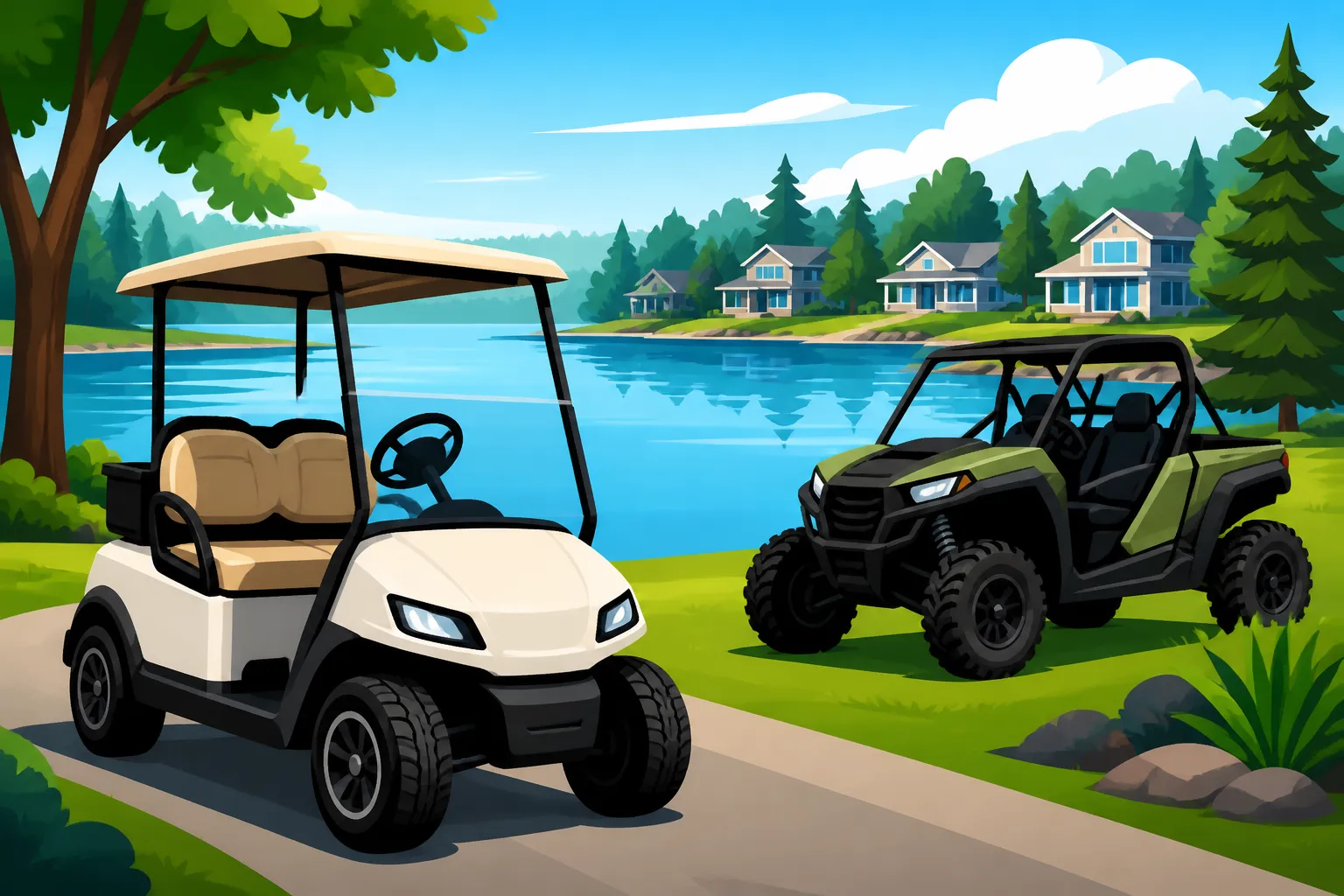
There's nothing quite like the ease of a Minnesota lake community in the summer. You're heading to the beach, grabbing groceries, or visiting neighbors, and the thought of firing up the big car for a half-mile trip just feels… excessive. Many folks dream of zipping around in a golf cart, especially in those charming lake communities where everything feels a little more relaxed. But then reality hits: can you actually take your golf cart on the street? This guide is here to untangle the often-confusing web of Minnesota laws and local ordinances surrounding golf carts, low-speed vehicles, and off-highway vehicles, helping you understand what's possible and what's definitely not.
Understanding the Legal Landscape: Golf Carts vs. The Rest
When you start thinking about driving anything other than a standard car on public roads in Minnesota, you quickly run into a maze of definitions and regulations. It’s easy to lump golf carts, ATVs, UTVs, and even those zippy low-speed electric vehicles all into one mental bucket of "things I can drive around the lake." However, the state of Minnesota views each of these very differently, and these distinctions are crucial for understanding where you can legally operate them. The biggest frustration for many lake community residents is realizing their beloved golf cart, perfect for the greens, isn't automatically street legal for a quick run to the bait shop.
The Strict Definition of a Golf Cart
In Minnesota, a golf cart is, by its very definition, primarily designed for use on a golf course for transporting golfers and their equipment. This might seem obvious, but this foundational definition is why they aren't automatically considered roadworthy. They lack many of the safety features that traditional vehicles, or even some specialized off-highway vehicles, are required to have to operate on public streets. Think about it: turn signals, headlights, taillights, seatbelts, a proper windshield, and even specific braking systems. Most standard golf carts simply weren't built with these in mind, because they weren't intended for mingling with cars and trucks. This is the first hurdle many face when trying to adapt their golf cart for street use in their lake community.
Low-Speed Vehicles LSVs and Why They Matter
This is where things get interesting for lake communities. Minnesota law does recognize a category of vehicle called a "low-speed vehicle," or LSV. Unlike a golf cart, an LSV is designed to be street-legal, but with specific limitations. To qualify as an LSV, a vehicle must be an electric-powered, four-wheeled vehicle with a top speed greater than 20 miles per hour but not greater than 25 miles per hour. Crucially, it must also have all the necessary safety equipment to be operated on public roads, including headlights, taillights, turn signals, stop lamps, reflex reflectors, mirrors, a parking brake, a VIN, and seat belts.
The distinction is vital: if you want to drive your small, electric vehicle on a public street, it almost certainly needs to meet the LSV criteria and be properly registered, rather than just being a golf cart that you've added a few lights to. Many lake community residents, thinking about replacing their golf cart, might actually be looking at an LSV without realizing the legal differences. For instance, if you're exploring options, understanding [Registering a Low-Speed Vehicle in Minnesota] is a critical first step.
ATVs and UTVs: A Different Class Entirely
ATVs (All-Terrain Vehicles) and UTVs (Utility Task Vehicles), often called side-by-sides, are an entirely separate category of off-highway vehicles in Minnesota. While some of them can be used on certain public roads or shoulders under specific conditions, they are not golf carts, nor are they LSVs. They are typically gasoline-powered, built for off-road terrain, and have different registration requirements. You wouldn't typically see a full-blown side-by-side used to putt around the golf course, just as you wouldn't take a golf cart on a rocky forest trail.
This is where many people get confused. They see a neighbor driving a UTV on the road and assume their golf cart should be allowed too. But the laws governing [Riding an ATV on the Road in Minnesota] are distinctly different from any potential rules for golf carts or LSVs. If you're considering a more robust option for traversing your lake community, perhaps something that can also handle light trail use or property maintenance, a UTV might be an option, and you could look into aftermarket accessories from brands like SuperATV to enhance its capabilities for various tasks.
The Specifics of Golf Cart Use on Minnesota Public Roads
So, after understanding the legal definitions, the burning question remains: can your golf cart actually be driven on the public roads within your cherished Minnesota lake community? The answer, like so much in life, is nuanced, frustrating, and heavily dependent on local rules.
State Law Restrictions and General Prohibitions
At the state level, the default position is that golf carts are generally not permitted on public streets or highways. This is a big hurdle for anyone hoping to simply drive their golf cart off the golf course and onto the local roads. The state views them as vehicles designed for private property (like a golf course) and not equipped for the safety demands of public thoroughfares. This means that unless a very specific exception applies, or a local ordinance explicitly allows it, your golf cart should stay off the paved roads.
Imagine you're trying to quickly ferry some towels and sunscreen from your cabin to the community beach access point, just a few blocks away. It seems harmless, right? But without specific local authorization, even this short trip could land you in trouble. This general state prohibition is why many communities have had to take specific action to even consider allowing golf carts.
The Power of Local Ordinances
Here's the silver lining, and where your lake community comes into play. While the state broadly prohibits golf carts on public roads, it does allow local units of government (cities, townships, and counties) to adopt ordinances that permit the operation of golf carts on streets under their jurisdiction. This is a critical point! It means your ability to drive a golf cart on the streets isn't determined by a blanket state rule, but by the specific decisions of your local town hall or county board.
These local ordinances often come with their own set of rules and restrictions. They might specify:
- Designated streets: Only certain low-speed streets or sections of roads are allowed.
- Hours of operation: Perhaps only during daylight hours.
- Driver requirements: Minimum age, valid driver's license.
- Equipment requirements: Often requiring certain safety features like lights, mirrors, or even turn signals, essentially pushing the golf cart closer to an LSV specification.
- Registration/Permit: The local government might require a special permit or local registration fee.
It's vital for residents to directly contact their city clerk, township office, or county auditor to ask about specific local ordinances. Don't rely on "everyone else does it," because laws can change, or "everyone else" might be operating illegally. You might also want to look up [Minnesota Cities That Allow ATVs on Streets] as a point of comparison, though golf cart rules will likely be even more restrictive.
What to Look For in a Lake Community
When investigating your specific lake community, you'll want to ask pointed questions:
- Is there an ordinance specifically allowing golf carts on public streets? Get the exact ordinance number if possible.
- What streets are designated for golf cart use? Are they the ones you actually need to use?
- What are the equipment requirements? Do you need to add safety features? This might involve looking into aftermarket parts that could adapt a golf cart, though many are designed for ATVs or UTVs.
- Are there speed limits or time restrictions?
- Is a special permit or registration required?
Without a clear, affirmative local ordinance, your golf cart should be considered for private property use only.
Navigating Local Rules and Potential Solutions
Even with local ordinances in place, operating a golf cart on public roads in a Minnesota lake community can be a tricky proposition. It's not just about what's allowed, but also about safety, insurance, and ensuring your machine meets whatever standards the local authorities have set.
Getting Your Golf Cart Up to Snuff
If your lake community does have an ordinance allowing golf carts on specific roads, chances are it will require certain modifications to ensure basic safety. This often means adding features that aren't standard on a typical golf course cart. Here's what you might need:
- Lighting: Headlights, taillights, brake lights, and turn signals are almost always a must. Imagine driving at dusk near the lake – you need to be visible.
- Mirrors: A rearview mirror, and often side mirrors, so you can see traffic around you.
- Windshield: A proper windshield (though often not requiring safety glass like a car) to protect from debris.
- Horn: A way to signal your presence.
- Reflectors: Enhancing visibility from all angles.
- Seatbelts: For all passengers, especially if the cart has multiple seating positions.
These additions can quickly add up, and some standard golf carts aren't easily retrofitted with robust, durable versions of these items. If you're looking for parts for general off-road vehicles, a place like SuperATV offers a wide range of accessories, though you'd need to carefully check compatibility for golf carts specifically, as their primary focus is ATVs and UTVs. The key is to make sure any modifications you make meet the specific requirements of your local ordinance, not just a generic "street legal kit."
Insurance and Liability Concerns
This is a frequently overlooked but critical aspect. If you're driving your golf cart on public roads, even locally designated ones, what happens if there's an accident? Most homeowners' insurance policies do not cover vehicles operated on public roads. You'll likely need a separate insurance policy specifically for your golf cart if you're using it on streets.
Talk to your insurance agent about golf cart insurance. They can explain coverage options, liability, and collision coverage. The last thing you want is a fender bender with a car on the way to the boat launch and find out you're personally on the hook for all damages. This goes for any vehicle on a public road, and the consequences of [Minnesota ATV Crash Reporting] can be significant, even for a seemingly minor incident.
Alternatives to a Golf Cart for Lake Community Cruising
If your lake community doesn't allow golf carts on the road, or if the modification requirements are too extensive or costly, you're not out of luck for convenient local transport.
- Low-Speed Vehicles (LSVs): These are specifically designed and manufactured to be street legal. They come with all the necessary safety equipment already installed and can be registered like a traditional vehicle. While they often resemble golf carts, they are built to a higher standard for road use and are subject to stricter manufacturing guidelines. This is often the ideal solution for those who want that "golf cart feel" but with legitimate street legality. Check out the rules for [Registering a Low-Speed Vehicle in Minnesota].
- Small UTVs: For some, a small UTV might be a better fit, especially if you also need a vehicle for property maintenance, light hauling, or occasional off-road use. While UTVs have different road-riding restrictions (often limited to road shoulders or designated routes), some smaller models are compact enough for lake community use. You'd need to ensure it's properly registered as an off-highway vehicle and understand [Minnesota's Ditch Riding Rules] or any local UTV ordinances. Many UTVs can be enhanced with accessories from companies like SuperATV, making them incredibly versatile for both utility and recreation.
Here's a quick comparison of the three options for navigating your lake community:
| Feature | Standard Golf Cart | Low-Speed Vehicle (LSV) | Small UTV (Side-by-Side) |
|---|---|---|---|
| Primary Design | Golf courses, private property | Street legal, low-speed public roads | Off-road recreation, utility, property work |
| Street Legality (MN) | Generally not street legal by state law; only if local ordinance allows with conditions | Yes, if registered and meets equipment standards | Limited street access (ditches, shoulders, designated routes), requires OHV registration |
| Top Speed | Typically under 20 mph | 20-25 mph | Varies widely, often 30-60+ mph |
| Required Equipment | Basic (varies by local ordinance for street use) | Headlights, taillights, turn signals, mirrors, seatbelts, windshield, VIN, etc. | Headlights, taillights, spark arrester, muffler; specific road-use requirements (lights, mirrors) |
| Registration/License | Local permit/no registration (if private use) | Required vehicle registration & license plates | OHV registration, sticker; driver's license for road use |
| Insurance | May require separate policy for road use | Required | Highly recommended, may be required for road use |
| Best For | Short trips on private property, golf courses | Short trips on local streets in communities, errands | Property maintenance, light trails, recreation, designated road sections |
Always Verify Locally
The most important takeaway for any Minnesota lake community resident is this: always verify the current rules and regulations with your local city, township, or county office. Laws and ordinances can change, and what applies in one community might be entirely different just a few miles down the road. Don't assume. A quick phone call or visit to their website can save you a lot of headache, potential fines, and even legal trouble. Knowing the specifics of your community's rules is the only way to ensure you're riding safely and legally.
Disclaimer
This article is for general informational purposes only and does not constitute professional advice. Laws, prices and regulations vary by location and change over time. Consult a qualified professional for guidance on your specific situation.