Crossing a Minnesota Road on an ATV
It's incredibly frustrating when you're out enjoying Minnesota's amazing ATV trails, only to be stopped by a paved road, unsure if you're even allowed to cross it. The rules can feel like a tangled mess, leading to a lot of second-guessing and missed connections between riding areas. This guide is here to untangle that confusion, offering clear, empathetic advice on how to safely and legally cross Minnesota roads on your ATV or UTV.
The Core Challenge of Crossing Roads on a Minnesota ATV
Navigating public roads on an ATV or UTV in Minnesota can feel like walking a tightrope. On one hand, you want to get to the next section of trail or access amenities without trailering up every few miles. On the other, the thought of breaking a rule, facing a fine, or worse, causing an accident, is always in the back of your mind. It's a legitimate concern, and it's something many riders struggle with, especially when the rules seem to change depending on who you ask or what road you're on. You just want to connect the dots and enjoy your ride, but the asphalt can feel like an insurmountable barrier.
Why Road Crossings Feel So Tricky
The primary reason road crossings feel so tricky is the fundamental difference in how ATVs and UTVs are treated compared to cars or trucks. Our machines aren't designed for sustained road use, nor are they fully licensed for it in the same way. This creates a legal gray area that can be tough to interpret. Is it okay to just zip across? Do I need to stop? Signal? Are there certain roads I absolutely cannot cross? These questions can pile up, making what should be a simple maneuver feel like a high-stakes challenge. Adding to the confusion is the varying local ordinances that some townships or cities might have, which can feel like moving goalposts when you're trying to explore a new area. It’s not just about knowing the state law, but often understanding the local flavor of those laws, which can be tough when you're just passing through.
It’s also about the safety aspect. You’re typically coming from a rugged trail environment, maybe covered in mud or dust, and suddenly you’re merging with fast-moving, heavy traffic. The difference in speed, visibility, and vehicle mass makes these crossings inherently more dangerous than simply driving a car across an intersection. Our machines are smaller, quieter, and often less conspicuous, especially to drivers who aren't expecting an ATV to pop out from a ditch line or trail access point. This disparity in expectations and vehicle dynamics is a huge part of what makes crossing roads such a mental hurdle for many riders.
The Fine Line Between Crossing and Riding the Road
One of the biggest areas of confusion is distinguishing between a legal "crossing" and illegal "operating on" the road surface. Many riders worry that if they stay on the pavement for even a few extra feet, they're breaking the law. And they're right to worry, because that's often exactly what happens. The Minnesota rules are very clear that ATVs and UTVs are not generally allowed to operate on the paved or even unpaved surface of a public road, except in very specific, designated circumstances like in certain trail towns, or for permitted ditch riding. A crossing is a temporary, direct act. It's not a shortcut along the shoulder, it's not a short ride to the gas station, and it's certainly not a way to avoid a muddy section of trail by taking to the asphalt.
This distinction is crucial, because misinterpreting it can lead to hefty fines and even loss of riding privileges. Think of it like this: a crossing is literally just getting from one side of the road to the other, or from a trail access point to a ditch line, in the most efficient and brief manner possible. Any deviation from that—lingering on the road, turning and driving down the shoulder, or attempting to use the road surface as a connector—pushes you from a legal crossing into an illegal operation. Understanding this subtle but significant difference is paramount for any rider in Minnesota, whether you're on a Class 1 machine or a Class 2 side-by-side.
Minnesota's Specific Rules for ATV Road Crossings
Minnesota law is designed to allow riders to access different segments of trails, but it does so with safety and common sense firmly in mind. It's not about being overly restrictive, but about ensuring that when an ATV or UTV intersects with vehicle traffic, it does so predictably and safely. These rules aren't just suggestions; they're legal requirements that every rider needs to understand before they even think about putting a tire on the pavement.
Understanding "Crossing" Versus "Operating"
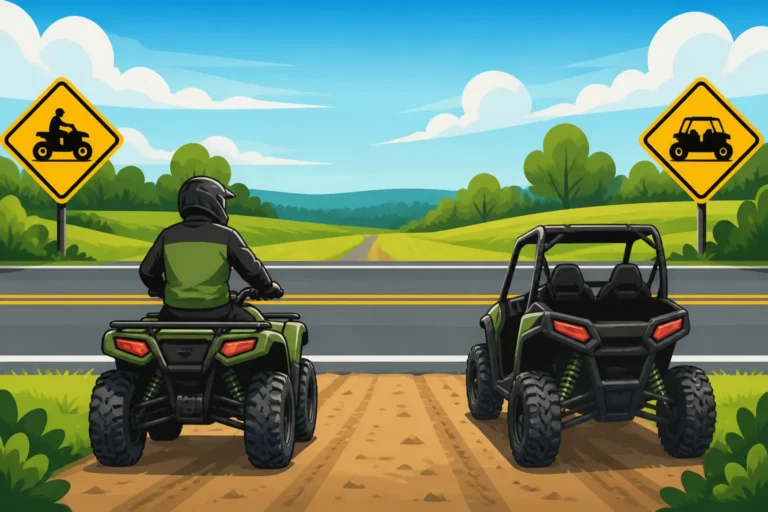
Let's really nail down the difference, because this is where most people get tripped up. When the law talks about "crossing," it means exactly that: traversing the road surface from one side to the other, or from a trail/ditch access point onto the road to immediately cross over to another trail/ditch access point. This action must be as direct and expedient as possible. You're not "operating" on the road in the sense that you're driving along it for any distance. The moment you begin to travel parallel to the flow of traffic, even for a short distance on the shoulder, you've likely transitioned from a legal crossing to an illegal operation.
Consider a situation where a trail ends abruptly at a county road, and then picks up directly across the street. A legal crossing involves stopping, checking for traffic, and then driving straight across to the other side. If, however, the trail on the other side is 50 yards down the shoulder, you cannot legally ride those 50 yards on the shoulder or road surface to reach it. That's operating on the road, not crossing. This distinction forces riders to be thoughtful about their routes and understand that sometimes, there simply isn't a legal crossing available to connect two points, no matter how convenient it might seem. This is why it’s so important to be familiar with [Minnesota Road Rules Riders Get Wrong] so you can avoid common errors.
The "Most Direct Angle" Rule
This is a key component of Minnesota's crossing regulations. When you do cross a public road, you are required to do so at an angle of approximately 90 degrees to the roadway. This "most direct angle" rule isn't just arbitrary; it's a safety measure. It minimizes the time your machine spends on the road surface and presents the side of your machine to oncoming traffic for the shortest duration, making your presence clear and your path predictable. It reduces the chance of confusion for motorists about your intended direction of travel.
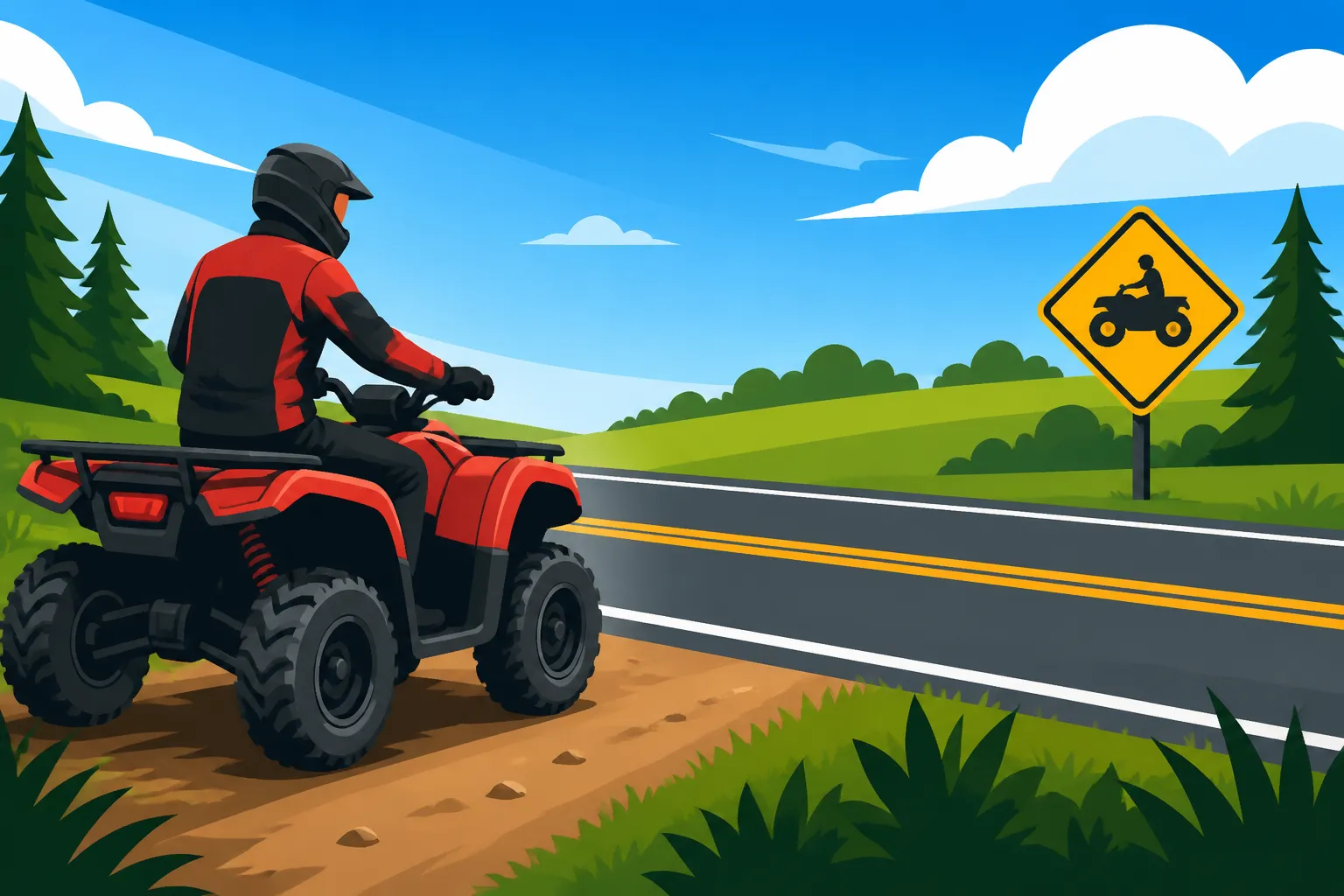
Imagine approaching a paved road. You should stop at the edge of the road, look both ways, and then proceed straight across, perpendicular to the road's center line. You shouldn't be making a sweeping turn onto the road and then turning again to cross. It’s a straight shot, as if you’re drawing the shortest possible line between the two points. This also means that if a trail or ditch line parallels the road for a bit before crossing, you need to ensure you're positioning yourself for that 90-degree angle. This rule is non-negotiable and strictly enforced, as it directly impacts traffic safety.
Visibility and Safety Requirements for Crossings
Before you even think about crossing a road, several safety requirements must be met. First and foremost, you must come to a complete stop before entering the roadway. This isn't a rolling stop; it's a full halt, allowing you to thoroughly check for oncoming traffic in both directions. You must yield the right-of-way to all vehicles on the highway. This is critical—the ATV or UTV always defers to road traffic.
Additionally, your machine needs to be properly equipped for visibility, especially if you're crossing at dawn, dusk, or night. This means having your headlights and taillights on. Many riders also add additional lighting or reflective elements, perhaps from a company like SuperATV, to enhance their visibility, making themselves more noticeable to motorists. It's also strongly recommended to wear bright, contrasting clothing. For younger riders, specific helmet and supervision rules apply, as outlined in [Minnesota Helmet Rules for Riders Under 18]. The goal here is to make sure that you are seen, and that your intentions are clear, minimizing any potential for collision with other vehicles.
Different Road Types and Their Crossing Nuances
Not all roads are created equal in Minnesota, and their classification can impact how and where you can cross them. While the general rules for stopping and crossing directly apply across the board, the volume and speed of traffic, as well as specific local regulations, can introduce different considerations for your safety and legality. Understanding these nuances is key to navigating the state's diverse road network.
Crossing County Roads on a Minnesota ATV
County roads often connect smaller communities and rural areas, making them frequent points of intersection for ATV trails and ditch routes. Generally, the rules for crossing a county road are the same as any other public road: stop, yield to traffic, and cross at a direct, perpendicular angle. However, county roads can vary greatly in terms of traffic volume and speed limits. Some might be quiet, gravel routes, while others are busy, paved thoroughfares. It's crucial not to let the perceived "rural" nature of a county road lull you into a false sense of security. Always treat every crossing with the utmost caution.
One specific consideration with county roads is that they are sometimes designated for ATV ditch riding in certain areas. This can blur the lines for some riders. Remember, even if you can ride the ditch alongside a county road, the act of crossing that road to access a ditch on the other side still requires strict adherence to the crossing rules. You cannot simply transition from ditch riding on one side to the ditch on the other by driving on the pavement or shoulder for any distance. The rules for [Minnesota Rules on County Roads] make it clear that while ditch riding may be allowed, crossing them remains a separate and distinct maneuver.
Navigating State Highways Safely
State highways present a much higher degree of risk due to typically higher speed limits and greater traffic volumes. Minnesota law is particularly strict when it comes to ATVs and UTVs interacting with state highways. While crossing a state highway is permitted under the same general conditions (stop, yield, direct angle), the practical reality is that these crossings demand an even greater level of vigilance and patience. You might find yourself waiting for a significant gap in traffic, and if visibility is poor due to hills or curves, it might be safer to find an alternative route or a designated crossing point with better sightlines.
It's also worth noting that some state highways may have limited access points, meaning that designated ATV crossings might be few and far between. You should never attempt to cross a freeway or an interstate highway; those are absolutely off-limits. When you are faced with a state highway, be incredibly conservative with your decision to cross. If there's any doubt about whether you have enough time to cross safely, or if visibility isn't optimal, it's always better to wait, find a different crossing, or even turn back. Your safety is paramount, especially on these high-traffic arteries. For detailed guidance, refer to [Crossing a Minnesota Highway Safely].
Intersecting With Township and City Streets
Township roads, being typically unpaved and less traveled, are often the most common crossing points for riders. They usually present fewer challenges than county or state roads simply because there's less traffic to contend with. The same rules apply: stop, look, yield, and cross directly. However, don't assume that because a road is small or quiet, you can be less diligent. Local residents still use these roads, and they might not expect an ATV to suddenly appear.
City streets, on the other hand, are a different beast entirely. Generally, ATVs and UTVs are not permitted on city streets, with the exception of specific, designated routes within "trail towns" that have adopted local ordinances to allow limited ATV access. Even in these trail towns, the rules for operating on streets are very specific and usually don't extend to high-speed crossings of arterial roads. If you're in a city or town and need to cross a street, ensure you are in an area explicitly designated for ATV use, and always follow the most direct crossing rule. Without explicit local permission, any operation on city streets, even a brief crossing, is likely illegal. It’s important to understand [Minnesota Cities That Allow ATVs on Streets] if you plan to explore those areas.
Essential Safety Practices for Every Crossing
Beyond the legal requirements, there are some fundamental safety practices that every Minnesota ATV and UTV rider should adopt when facing a road crossing. These aren't just good ideas; they're critical habits that can literally save lives. Even if you know the law inside and out, an unsafe crossing can still lead to disaster. It's about combining legal compliance with real-world common sense and defensive riding strategies.
Situational Awareness and Blind Spots
Before you even get close to the edge of the road, start assessing the situation. Look for blind spots created by hills, curves, trees, or buildings. Listen for approaching traffic. Is there a designated crossing sign? Are there other riders in your group? As you approach the road, slow down well in advance and start scanning both directions for traffic. Don't assume that just because you can see for a mile, there isn't a vehicle approaching at high speed that will cover that distance in a matter of seconds.
Once you've stopped, take a moment to look, listen, and process what you're seeing and hearing. Don't be rushed. Turn your head completely to check both ways, and don't rely solely on quick glances. Remember that motorists might not be looking for an ATV, so you need to be acutely aware of their presence. If there's a large truck, a slow-moving farm implement, or a distracted driver, you need to account for them. This heightened situational awareness is your best defense against unexpected dangers on a crossing.
Signaling Your Intent Clearly
Communication is key, even if you don't have turn signals on your ATV (though many UTVs do). If you're riding in a group, use established hand signals to communicate your intention to stop and cross to the riders behind you. As you approach the road, consider extending a hand signal indicating your intent to stop or, if it's safe and clear, to cross. Make eye contact with any approaching drivers if possible, to confirm they have seen you and understand your intention.
This clear communication isn't just for other riders; it's about signaling to the unknown motorist. While you should never assume a driver sees you, doing what you can to make your intentions unmistakable is vital. Before you pull onto the road, take a moment to ensure that your path is clear and that any drivers who might be in the vicinity have had every opportunity to spot you. This might mean waiting for a truck to pass and create a larger gap, rather than trying to squeeze into a smaller window of opportunity.
Group Riding and Crossing Protocols
When riding with a group, establishing clear crossing protocols beforehand is essential. The safest method is for the lead rider to stop, assess the situation, and signal to the group. The lead rider then crosses when clear, and subsequent riders cross one at a time, allowing for proper spacing and individual assessment of traffic. Never cross as a pack. This only increases the time the group spends on the road surface and creates more unpredictable movement for motorists.
A common and effective group strategy involves a lead rider scouting the crossing, then waving individual riders across when the path is clear. It's also a good idea for the last rider to signal to the leader that the entire group has made it across safely. This structured approach, where each rider takes responsibility for their own crossing while being guided by the group leader, drastically reduces the risks associated with multiple machines attempting to navigate a roadway. This kind of disciplined approach is critical for safety and is often practiced by those who take [Minnesota ATV Safety Training Requirements].
Equipment and Preparation for Safe Road Crossings
It's not just about how you ride; it's also about what you ride and how well it's prepared. Your ATV or UTV needs to be in good working order, and equipped with the right features to ensure maximum visibility and control during a road crossing. Neglecting these aspects is like asking for trouble. Before you head out on any ride that involves road crossings, give your machine a quick once-over to make sure everything is up to snuff.
Lights, Flags, and Reflectors for Visibility
Minnesota law requires ATVs and UTVs to have working headlights and taillights when operated on public land, and this is especially critical for road crossings, even in daylight. But don't stop there. Consider adding extra lighting, like bright LED accessory lights, especially if you have a larger side-by-side or often ride in challenging light conditions. Companies like SuperATV offer a range of high-quality lighting solutions that can significantly improve your visibility to other vehicles. A whip flag can also add a vertical element that catches a driver's eye, particularly in areas with tall grasses or uneven terrain leading up to a road.
Reflective tape is another inexpensive yet effective way to increase your machine's profile. Apply it to the front, rear, and sides of your ATV or UTV. Remember, the goal is to stand out, to break through the visual clutter and draw attention to your presence. The more visible you are, the better your chances of being seen by a motorist who might not be actively looking for an off-highway vehicle. Even during the day, bright lights and reflective materials can make a significant difference, especially when you're momentarily on a road surface surrounded by faster-moving traffic. [Lighting Rules for Minnesota Night Riding] goes into more depth on this for dusk and dark crossings.
Machine Maintenance for Road Use
A well-maintained machine is a safe machine, and this is never more true than when you're briefly interacting with road traffic. Before any ride, check your brakes to ensure they are fully functional and responsive. You might need to stop quickly and decisively before crossing, or even mid-crossing if an unexpected hazard arises. Check your tires for proper inflation and tread wear. Good traction is essential for stable maneuvers on pavement, especially if the road surface is wet or gravelly.
Beyond the basics, pay attention to your steering and suspension. Any looseness or play in these components can make your machine unpredictable, which is the last thing you want when you need precise control for a quick, direct crossing. If you're running aftermarket parts or accessories, ensure they're securely mounted and not interfering with your machine's operation or visibility. A well-tuned machine gives you the confidence and control you need to execute safe and legal road crossings.
What to Carry When Crossing Roads
While you don't need a full driver's license to operate an ATV or UTV in Minnesota (with some exceptions for road-legal use in certain areas or for specific age groups), you do need to carry certain documentation. This includes your ATV registration and proof of safety training, especially if you're a younger rider. A conservation officer or law enforcement official might stop you at or near a crossing point to verify your compliance. Not having this paperwork can turn a simple crossing into a legal headache.
It's also a smart idea to carry a map, especially if you're in an unfamiliar area. This can help you identify designated crossing points or alternative routes if a planned crossing proves too dangerous. A cell phone is always a good idea for emergencies, though service can be spotty in some parts of Minnesota's backcountry. Finally, wearing appropriate safety gear, including a DOT-approved helmet for all riders under 18 (and strongly recommended for everyone), eye protection, and sturdy footwear, should be a given. [Do You Carry Papers on a Minnesota Trail?] discusses this in more detail.
Common Misconceptions and Legal Pitfalls
Even with the best intentions, riders can fall prey to common misunderstandings or take shortcuts that lead them into legal trouble. The laws surrounding road crossings are designed to be clear, but a combination of rumor, anecdotal advice, and a desire for convenience can lead riders astray. Understanding these common pitfalls can help you avoid turning a pleasant ride into a frustrating encounter with law enforcement.
The Myth of "Just a Few Feet"
One of the most persistent myths is that it's okay to ride on the paved road surface or shoulder for "just a few feet" to get to the next trail segment or a designated ditch access point. This is simply not true under Minnesota law for general recreational ATV use. As discussed, a crossing is a direct, perpendicular traverse of the road, minimizing time on the surface. Any intentional travel parallel to the road, even for a very short distance, is typically considered illegal operation on the roadway.
The problem with the "just a few feet" mentality is that it's a slippery slope. A few feet can easily turn into a few hundred feet, especially if you're trying to avoid a muddy patch or navigate around an obstacle in the ditch. This creates an unpredictable situation for motorists and puts you at risk. Conservation officers and local law enforcement are well aware of this common infraction and will ticket riders who deviate from the strict definition of a crossing. Don't let convenience tempt you into breaking a rule that's in place for everyone's safety. This is precisely why [Minnesota Road Rules Riders Get Wrong] is such an important topic to understand.
Penalties for Improper Road Use
The penalties for operating an ATV or UTV illegally on a public road in Minnesota can range from fines to more severe consequences. For a first offense, you're typically looking at a monetary fine, which can quickly add up. Repeat offenses can lead to higher fines, and potentially even the loss of your ATV or UTV riding privileges. In some cases, especially if reckless behavior is involved or if an accident occurs, you could face more serious charges.
Beyond the legal penalties, there's the risk to your personal safety and the safety of others. An illegal or unsafe road crossing could lead to a collision, resulting in serious injuries or even fatalities. This is a far greater cost than any fine. Furthermore, such incidents can lead to negative public perception of ATV and UTV riders, potentially resulting in further restrictions on trail access and road crossings. Understanding these risks should reinforce the importance of always following the rules, especially when interacting with public roadways. [Fines for Illegal Road Riding] details some of the specific costs you might incur.
When In Doubt, Don't Go
This is perhaps the most important piece of advice when it comes to road crossings. If you're unsure about the legality of a particular crossing, the safety of the traffic conditions, or your ability to execute the crossing flawlessly, simply don't do it. Find an alternative route, even if it means backtracking or taking a longer path. Sometimes, the safest option is to trailer your machine to the next section of trail.
Minnesota's trails and designated ditch routes are extensive, but they don't always offer seamless connections across every road. It's better to be safe than sorry, to err on the side of caution, and to protect yourself, your passengers, and your machine. A moment of hesitation could prevent a lifetime of regret. Always prioritize safety and legality over convenience or perceived time savings. This simple rule of thumb can keep you out of trouble and ensure you have many more enjoyable rides in the future.
The Role of Road Crossings in Connecting Trails
While we've focused heavily on the challenges and rules of road crossings, it's also important to acknowledge their vital role in the larger ATV and UTV trail system in Minnesota. Without the ability to cross roads, many of the extensive trail networks we enjoy today would be fragmented and inaccessible. These crossings, when done legally and safely, are the stitches that hold the fabric of our riding opportunities together.
How Crossings Facilitate Trail Networks
Imagine a vast forest with incredible trails, but every time you hit a county road, you had to load your machine onto a trailer, drive to the other side, and unload again. It would make multi-day rides or even longer day trips nearly impossible. Road crossings allow trails to be interconnected, forming continuous routes that span miles and sometimes even counties. They enable riders to explore diverse landscapes, move between different recreational areas, and access services like fuel, food, and lodging in nearby towns.
These connections are not just for convenience; they are fundamental to the concept of a comprehensive trail system. They allow for loop rides, point-to-point adventures, and access to remote areas that would otherwise be isolated. They represent a compromise between the needs of motorized recreation and the existing infrastructure of public roads, a compromise that, when respected, benefits everyone.
Designated Crossing Points and Trail Maps
To make road crossings safer and more predictable, many trail systems in Minnesota feature designated crossing points. These might be clearly marked with signs indicating ATV crossing ahead, or they might simply be obvious points where a trail or ditch route consistently intersects a road. Using these designated points is always the preferred option, as they are typically chosen for optimal visibility and safety, sometimes even with specific signage for motorists.
Always consult current trail maps, whether paper or digital, to identify these designated crossing points. The Minnesota DNR and local ATV clubs do an excellent job of mapping out the trail system, including legal road intersections. Planning your route in advance and knowing exactly where you'll need to cross a road can significantly reduce stress and improve safety. Apps and GPS units, especially those optimized for off-road use, often include this information. Having a detailed [Minnesota DNR ATV Registration Explained] map or digital equivalent is crucial for effective trip planning.
| Road Type | Typical Speed Limit | Crossing Rule Summary | Key Considerations |
|---|---|---|---|
| Township Road | Varies, often 30-45 mph | Stop, yield, cross at 90° angle | Lower traffic, but still require vigilance. |
| County Road | Varies, often 45-55 mph | Stop, yield, cross at 90° angle | Moderate traffic, potential for ditch riding nearby. |
| State Highway | Varies, often 55-65 mph | Stop, yield, cross at 90° angle | High traffic, higher speeds, extreme caution needed. |
| City Street | Varies, often 25-30 mph | Generally NOT allowed, unless specifically designated by local ordinance | Always check local rules; most streets are off-limits. |
| Interstate/Freeway | 65-70 mph | NEVER permitted | Absolutely prohibited for ATV/UTV crossings. |
The Future of ATV-Friendly Roadways
As the popularity of ATVs and UTVs continues to grow, there's an ongoing conversation about how to further integrate these machines into the recreational landscape while maintaining safety. This includes discussions about expanding designated road routes in certain areas, improving signage at crossing points, and even exploring innovative solutions like underpasses or overpasses in high-traffic zones. The goal is to create a more seamless and safer experience for riders, allowing them to fully enjoy Minnesota's natural beauty.
Organizations like local ATV clubs play a crucial role in advocating for these improvements and working with local and state governments to identify areas where better infrastructure for crossings is needed. Riders can contribute to this effort by riding responsibly, respecting the rules, and setting a positive example. The more we demonstrate that we can coexist safely with other road users, the more opportunities for connectivity and access will open up in the future.
Navigating road crossings on your Minnesota ATV or UTV doesn't have to be a source of anxiety. By understanding the rules, practicing safe riding habits, and preparing your machine, you can confidently and legally connect those crucial trail segments. Always remember that safety and respect for the law are your best companions on any ride.
Disclaimer
This article is for general informational purposes only and does not constitute professional advice. Laws, prices and regulations vary by location and change over time. Consult a qualified professional for guidance on your specific situation.