Why Minnesota Keeps ATVs Off the Road Surface
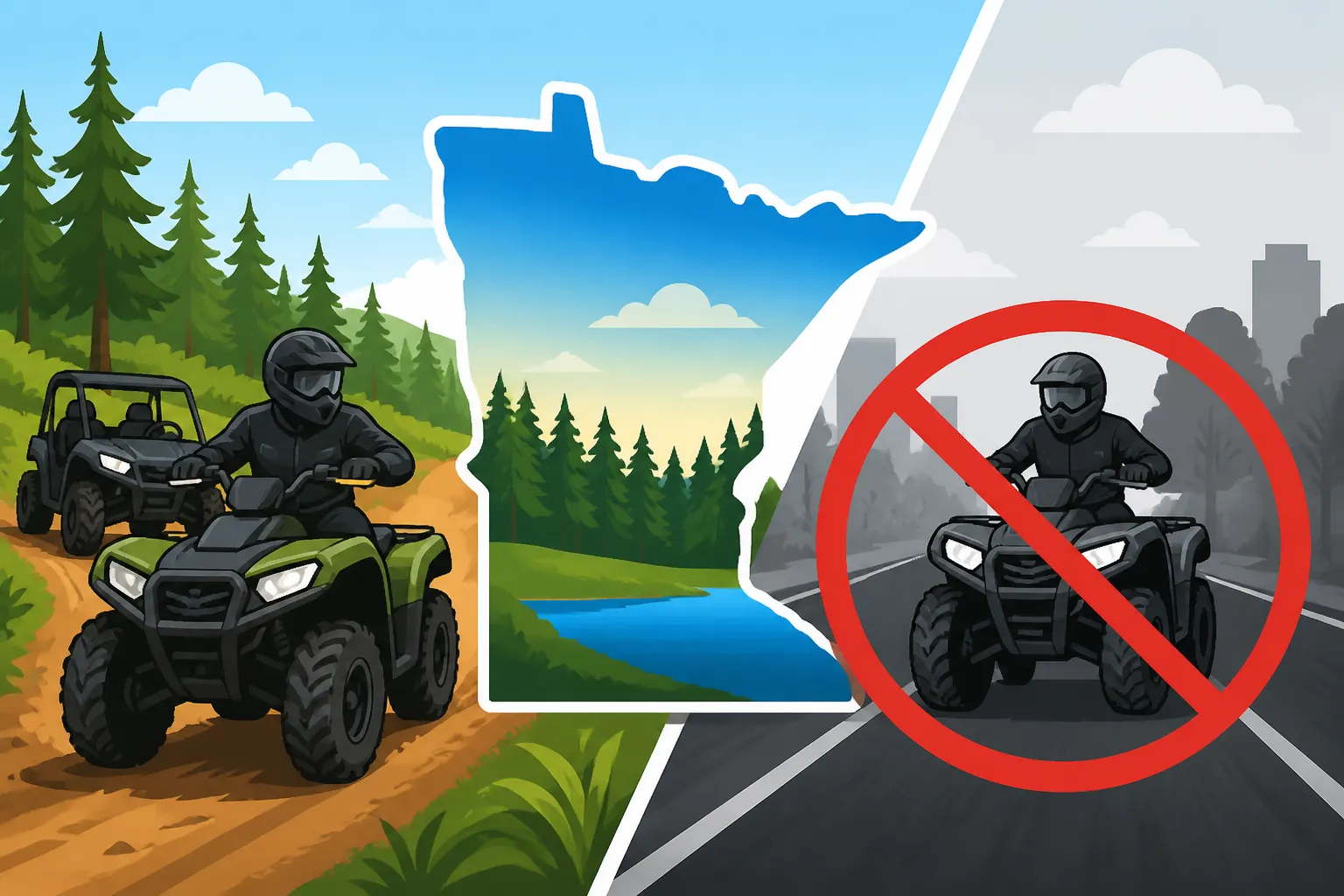
It's incredibly frustrating when you just want to get from Point A to Point B on your ATV or side-by-side, especially when that means a short hop down a paved road. You look at that perfectly good machine, designed for power and utility, and wonder why Minnesota seems so determined to keep it off the asphalt. This guide is here to shed light on exactly why our state's laws generally prevent ATVs from riding directly on the road surface, exploring the safety, design, and practical reasons behind these often-confounding regulations.
The Foundational Design: Why ATVs Aren't Road Warriors
When you buy an ATV or a UTV, you're investing in a machine built for a very specific purpose: off-road adventure, work on tough terrain, or navigating environments where traditional vehicles simply can't go. They are designed from the ground up to conquer dirt, mud, rocks, and snow, which means their characteristics are fundamentally different from vehicles meant for paved roads. Understanding this core design difference is the first step to grasping why Minnesota, like many other states, has strict rules about where these machines can and cannot operate.
Tires Built for Grip, Not Pavement
Think about the aggressive, knobby tires on your ATV. These aren't just for show; they're crucial for digging into loose soil, finding traction on slippery surfaces, and clearing mud from the tread. The deep lugs provide excellent grip when you're climbing a rocky incline or navigating a muddy trail. However, that very design becomes a liability on hard, smooth pavement.
On asphalt, those knobby tires have a much smaller contact patch than a car's tire. This means less rubber is actually touching the road, reducing overall grip. Imagine trying to make a sharp turn or brake suddenly with only a fraction of the tire gripping the pavement—it's a recipe for disaster. The soft rubber compounds and aggressive tread patterns also wear down incredibly fast on pavement, which is not only expensive but also further degrades the tire's already limited road performance. You might have seen some riders try to use specialized street-legal ATV tires, but even these can't fully overcome the inherent design limitations of the vehicle itself when it comes to road handling. It's a fundamental mismatch between the tire's intended purpose and the surface it's being asked to perform on.
Suspension and Handling: Off-Road Prowess, On-Road Weakness
The suspension system on an ATV or UTV is another prime example of its off-road specialization. It's built to absorb massive bumps, articulate over uneven terrain, and provide a comfortable ride when you're bouncing through the woods. Long travel, soft springs, and robust shock absorbers are all designed to keep the wheels on the ground and the rider in control when the ground beneath them is anything but smooth.
On a smooth, paved road, this specialized suspension can actually work against you. The high center of gravity, combined with suspension designed to allow significant body roll and lean for off-road maneuvering, makes ATVs inherently less stable at road speeds. Taking a corner too fast on pavement can lead to unsettling body roll, making the machine feel tippy and prone to flipping. Road-going vehicles, in contrast, have much stiffer suspensions and lower centers of gravity, specifically engineered for stability and predictable handling during high-speed turns. While aftermarket upgrades might offer some improvements for certain UTVs, fundamentally altering the chassis design for consistent road use isn't feasible or legally recognized in Minnesota for most machines.
Safety First: The Primary Concerns for On-Road ATV Use
Minnesota's regulations regarding ATVs and road surfaces are heavily rooted in public safety. It's not about denying riders enjoyment or convenience; it's about preventing accidents and protecting everyone on the road, including ATV operators and those in traditional vehicles. The inherent characteristics of ATVs and UTVs present significant safety challenges when mixed with conventional traffic.
Visibility: Blending In Is Not an Option
One of the biggest concerns with ATVs on roads is visibility. Compared to cars, trucks, or motorcycles, ATVs are generally smaller, lower to the ground, and often lack the sophisticated lighting and reflective elements found on street-legal vehicles. Picture yourself driving your car on a busy road. How easily would you spot an ATV, especially at dusk or dawn, or during adverse weather conditions?
ATVs are often narrower and less substantial than even small cars, making them harder to see in a rearview mirror or detect in a driver's peripheral vision. Their lights, while effective for trail riding, often aren't as bright or as strategically placed as those on road-certified vehicles to make them highly visible to oncoming or following traffic. This lack of conspicuity drastically increases the risk of other motorists simply not seeing an ATV until it's too late, leading to dangerous situations or collisions. This is a primary reason why Minnesota encourages [Lighting Rules for Minnesota Night Riding] to be robust, even for limited road use like crossing.
Braking and Acceleration: Designed for Different Demands
The braking systems on ATVs are engineered for off-road conditions, where sudden, aggressive stops often involve sliding and kicking up dirt. They typically prioritize strong, quick stopping power on loose surfaces rather than precise, stable deceleration on high-traction pavement. On asphalt, applying ATV brakes with the same force can easily lead to locking up the wheels, skidding, and a loss of control, especially given the tire characteristics we discussed earlier.
Similarly, an ATV's acceleration, while exhilarating on a trail, can be problematic on a road. While many ATVs can reach considerable speeds, they lack the smooth, controlled power delivery and gear ratios that allow cars to seamlessly merge into traffic or maintain consistent speeds. The combination of unpredictable braking and acceleration, coupled with limited stability, makes integrating ATVs into the flow of road traffic a significant safety hazard. A sudden stop or unexpected maneuver by an ATV can easily catch other drivers off guard.
Operator Safety: Unprotected in a Collision
This point might seem obvious, but it's crucial: ATV riders are largely unprotected in a collision. Unlike occupants in a car who are surrounded by a steel frame, airbags, and seatbelts, an ATV operator is exposed. Even with proper safety gear like helmets (which Minnesota mandates for riders under 18 and strongly recommends for all, covered in [Minnesota Helmet Rules for Riders Under 18]), the risk of severe injury or fatality in a collision with a much larger, heavier road vehicle is incredibly high.
The very nature of ATVs, designed for an immersive and exposed riding experience, means they offer minimal passive safety features in the event of an impact. Road safety rules are designed to minimize risks in a system where vehicles weigh thousands of pounds and travel at high speeds. Introducing a less protected, less stable, and less visible vehicle into that system inherently escalates the danger for the ATV operator and potentially for others.
Protecting Our Infrastructure: Roads and Ditches
It’s not just about safety for people; it’s also about the longevity and integrity of our public infrastructure. Minnesota invests a tremendous amount in building and maintaining its road network, and off-highway vehicles, by their very design, can cause undue wear and tear on these surfaces.
Pavement Wear and Tear
Those aggressive, knobby tires that give you so much traction in the mud can be quite destructive to paved surfaces. Unlike the smooth, even tread of a street tire, ATV tires tend to "chew" at the asphalt, especially during turns or aggressive acceleration and braking. This isn't just cosmetic; over time, it can contribute to the accelerated degradation of road surfaces, leading to potholes, ruts, and cracks.
Maintaining roads is an expensive, ongoing process for counties and the state. Allowing vehicles not designed for pavement use to routinely operate on these surfaces would only add to the maintenance burden and costs for taxpayers. The argument is that these machines are so fundamentally different in their interaction with the road surface that their widespread use would significantly shorten the lifespan of the pavement itself.
The Role of Ditches: Not Just a Convenience
You might hear a lot about [Minnesota's Ditch Riding Rules], and that's because ditched are often considered the "legal" space for ATVs next to roads. But these ditches aren't just convenient strips of land. They are critical components of our road infrastructure, designed for drainage, snow storage, and maintaining the stability of the roadbed. They prevent water from pooling on the road surface, which can cause significant damage through freeze-thaw cycles and erosion.
When ATVs repeatedly ride in ditches, especially during wet conditions, they can cause ruts, churn up soil, and damage vegetation that helps prevent erosion. This can compromise the ditch's ability to perform its essential drainage function, potentially leading to water pooling on roads, undermining shoulders, and increasing the risk of accidents for all vehicle types. So, while Minnesota allows ditch riding under specific conditions, it’s a privilege that comes with the responsibility of not damaging the underlying infrastructure.
Environmental and Noise Considerations
While often overlooked in the primary safety discussion, environmental impact and noise pollution also play a role in Minnesota's decision to keep ATVs largely off the road surface.
Noise Pollution: A Different Kind of Sound
The sound of an ATV is distinctive. Most off-highway vehicles, especially those designed for performance, produce more noise than a typical passenger car, even with factory mufflers. This is perfectly acceptable on a remote trail or an open field. However, when you bring that sound into residential areas or even alongside busy roadways, it becomes a different issue.
Minnesota has regulations concerning noise levels for all vehicles, and the cumulative effect of many ATVs regularly operating on main roads could lead to increased noise complaints from residents living along those routes. While some aftermarket exhaust systems might be quieter, many riders also opt for performance parts from brands like SuperATV that, while excellent for increasing power, might not be designed with stringent road noise regulations in mind. The rules aim to maintain a certain level of peace in communities and prevent disturbances that would inevitably arise from a new class of noisier vehicles on main thoroughfares.
Emissions and Air Quality
While modern ATVs are significantly cleaner than their predecessors, they are still designed to meet different emissions standards than road-going vehicles. Passenger cars and trucks are subject to very strict federal and state emissions regulations because they operate continuously in close proximity to populations. ATVs, designed for recreational or utility use, operate under different assumptions regarding their typical usage patterns and environmental impact.
Allowing widespread ATV use on roads would introduce a new source of emissions into an environment already carefully regulated for air quality. This isn't necessarily about individual machines, but the cumulative effect of a new fleet of vehicles operating in an unintended environment. Minnesota is committed to protecting its natural beauty, and careful consideration of vehicle emissions is part of that broader environmental stewardship.
The Exceptions: Where ATVs Can Interact with Roads
Despite the general prohibition, Minnesota law does recognize specific, limited circumstances where ATVs can use or interact with public roadways. These exceptions are carefully carved out to balance convenience for riders with overriding safety and infrastructure concerns.
Ditch Riding: The Primary Exception
As mentioned, ditch riding is the most common way ATVs interact with roads in Minnesota. State law generally permits ATVs to operate in the ditch or shoulder of a public road, provided certain conditions are met. These conditions usually include riding on the far right side of the road, having proper registration and lights, and adhering to speed limits. The intent is to allow riders to access trails, residences, or services without being directly on the main traffic lanes.
However, ditch riding is not a free-for-all. There are specific rules about which roads allow it (not state or federal highways in most cases), during what hours, and often with restrictions near private residences or within city limits. You'll find detailed guidance in resources like [Riding the Ditch of a Minnesota Right of Way]. It's a compromise that acknowledges the practical needs of ATV owners while minimizing direct interaction with high-speed road traffic.
Road Crossings: Getting From Here to There
Another crucial exception allows ATVs to cross public roads. This is absolutely essential for connecting trails, reaching private property, or navigating around obstacles. However, these crossings must be done safely and legally. Riders are generally required to stop completely, yield to all traffic, cross at a 90-degree angle, and do so only at intersections or designated crossing points. Speed must be kept to a minimum, and the crossing should be completed as quickly and directly as possible.
This is a critical rule for anyone enjoying Minnesota's extensive trail system, as many trails inevitably intersect or require crossing a road to continue. Understanding [Crossing a Minnesota Road on an ATV] safely is paramount for every rider. The law permits these brief interactions because they are often unavoidable, but they are tightly regulated to ensure they pose the least possible risk to all road users.
Designated Trail Connectors and Trail Towns
Some communities in Minnesota, recognizing the economic benefit of ATV tourism, have established "trail towns" or designated road routes where ATVs are allowed to ride directly on the pavement for short distances. These are usually on low-speed city or township roads, clearly marked with specific signage, and intended to connect riders to local services like gas stations, restaurants, or lodging, or to link different segments of a trail system.
These designated routes are exceptions to the general rule and are established through local ordinances. They often come with additional rules regarding speed, time of day, and sometimes even specific machine types. Before planning a trip that involves riding into a town, it's always wise to check with the local municipality or trail association for the most current information. These areas represent a collaborative effort between communities and riders to create safe and enjoyable experiences, but they are not the norm for most public roads.
The Broader Context: Why the Rules Protect You
It's easy to view these restrictions as arbitrary hurdles, but it's important to remember that these laws are put in place with public safety, including the safety of ATV riders, as a primary goal.
Reducing Accident Risk
By keeping ATVs off busy road surfaces, Minnesota drastically reduces the potential for collisions between these off-highway machines and traditional road vehicles. As we've discussed, the design differences, visibility issues, and handling characteristics make ATVs ill-suited for the road environment. Fewer ATVs on roads means fewer dangerous interactions, fewer serious injuries, and fewer fatalities. This directly benefits ATV riders by keeping them in environments where their machines are designed to excel and where the risks are more manageable.
Preserving the Off-Road Experience
Paradoxically, by regulating road use, Minnesota helps to preserve the integrity and availability of its vast off-road trail systems. Imagine if ATVs were fully street legal. It might lead to increased development pressure on trails, or a blurring of lines between appropriate riding areas, potentially leading to more conflicts with other land users or increased calls for stricter overall regulations.
By maintaining a clear distinction, the state can focus resources and management efforts on creating and maintaining excellent off-highway trail networks. This allows for a dedicated space where enthusiasts can fully enjoy their machines without the constant worry of high-speed traffic, offering a purer and safer riding experience. The [Minnesota's Grant-in-Aid Trail System] is a testament to this commitment.
Maintaining Insurance and Liability Clarity
When rules are clear about where and how a machine can be operated, it also helps simplify issues around insurance and liability. If ATVs were freely allowed on roads, it would dramatically alter their risk profile, potentially making insurance more complex and expensive, or leading to more disputes in the event of an accident.
Minnesota's approach helps ensure that when an ATV is on the road (in its limited, permitted ways), the expectations for operation are clear, which in turn helps insurance providers assess risk and helps courts determine liability if an incident occurs. For more on this, you might look into [Insuring an ATV in Minnesota].
A Look Ahead: Evolving Regulations and Advocacy
The world of off-highway vehicles is constantly evolving. Newer UTVs are becoming more sophisticated, some even bridging the gap between recreational and utility use, and in some states, specific categories of "street legal" OHVs are emerging. Minnesota's laws, however, are often slower to change than technology.
The Push for "Street Legal" OHVs
There's an ongoing discussion among riders and manufacturers about expanding the categories of off-highway vehicles that could be considered street legal, particularly for certain UTVs with features like turn signals, horns, and seatbelts. Proponents argue that modern UTVs, especially those designed with a strong utility focus, are capable of safely operating on specific, lower-speed roadways. They point to economic benefits for small towns and increased convenience for farmers or property owners.
However, any change to Minnesota's statutes would require careful consideration of all the safety and infrastructure issues we've outlined. It would involve extensive legislative review, public hearings, and a detailed analysis of potential impacts. It's a complex issue with strong opinions on both sides.
| Feature | Typical ATV/UTV Characteristics | Typical Road Vehicle Characteristics | Rationale for MN Road Restrictions |
|---|---|---|---|
| Tires | Aggressive knobby tread, soft compound, designed for off-road traction | Smooth tread, harder compound, designed for grip on pavement, low rolling resistance | Poor grip, rapid wear, damage to pavement |
| Suspension | Long travel, soft, high ground clearance, designed for uneven terrain | Stiffer, lower center of gravity, designed for stability at speed on smooth surfaces | Unstable at road speeds, body roll, unpredictable handling |
| Braking | Strong, often aggressive, designed for loose surfaces | Smooth, precise, ABS common, designed for controlled stops on high-traction surfaces | Prone to skidding, loss of control, longer stopping distances |
| Visibility | Smaller profile, limited reflective elements, lower lighting standards | Larger, extensive lighting, mirrors, designed for high conspicuity | Hard to see by other motorists, higher collision risk |
| Stability | Higher center of gravity, often narrow, designed for body English and varied terrain | Low center of gravity, wider track, designed for predictable high-speed travel | Prone to tipping, less stable in turns at speed |
| Emissions/Noise | Different standards, often louder than road vehicles | Strict emissions/noise standards for urban environments | Environmental impact, community disturbance |
| Protection | Rider exposed, minimal passive safety features | Enclosed cabin, airbags, seatbelts, crumple zones | High risk of severe injury in collision |
Staying Informed and Advocating Responsibly
For ATV and UTV owners, staying informed about current regulations and any proposed changes is crucial. Organizations like the Minnesota DNR and various ATV clubs are excellent resources for understanding the rules and participating in discussions about the future of OHV riding in the state. [Minnesota DNR ATV Registration Explained] is a good starting point for understanding official channels.
If you believe that certain roads or certain types of machines should be allowed on the pavement, responsible advocacy is key. This means understanding the current limitations, respecting the safety concerns that underpin them, and engaging constructively with local and state officials. It's a conversation that balances rider freedom with the collective responsibility to ensure safe roads for all Minnesotans.
Disclaimer
This article is for general informational purposes only and does not constitute professional advice. Laws, prices and regulations vary by location and change over time. Consult a qualified professional for guidance on your specific situation.