Do You Need a Trailer Title in Minnesota?
It's easy to get tangled up in all the rules and paperwork that come with owning ATVs and UTVs in Minnesota, and when you add a trailer into the mix, it can feel like you need a law degree just to haul your toys. One of the most common questions I hear from fellow riders is about trailer titles: do you even need one for that trusty rig carrying your quad or side-by-side? This guide is going to clear up that confusion, helping you understand Minnesota's specific requirements so you can hit the road with confidence, knowing all your ducks are in a row.
The Core Question: Does Your ATV Trailer Need a Title in Minnesota?
Let's cut right to the chase because this is where a lot of folks get tripped up. The simple answer for many ATV and UTV owners is: maybe not, but it depends on the trailer's weight. Minnesota has specific guidelines that determine whether a trailer requires a title or simply needs to be registered. It's a nuance that often leaves people scratching their heads, especially when they're used to buying and selling cars where a title is always the primary document.
Understanding the Weight Threshold for Titles
In Minnesota, the state generally requires a title for trailers that have a gross vehicle weight rating (GVWR) of over 4,500 pounds. This GVWR is the maximum loaded weight of the trailer, as specified by the manufacturer. So, if your trailer is designed to carry a substantial load—think enclosed car haulers, large utility trailers, or heavy-duty equipment trailers—it will almost certainly need a title, just like a car. This title is a crucial document that establishes legal ownership, and without it, you'd struggle to buy, sell, or even register the trailer. The intent behind this is to provide a clear chain of ownership for more valuable and substantial assets.
However, many of us who just haul a single ATV or a smaller side-by-side on an open utility trailer are often dealing with something well below that 4,500-pound GVWR mark. These smaller, lighter trailers are where the rules start to diverge from what you might expect for a typical vehicle. It’s a common relief for many riders to learn they might not need a title, but it's vital to know the specific limits.
What "No Title Needed" Really Means
When your ATV or UTV trailer falls under that 4,500-pound GVWR threshold, Minnesota typically considers it exempt from titling requirements. This means you won't receive a formal title certificate, nor will you need to transfer one when buying or selling. While this might sound like less hassle, it doesn't mean you can just ignore all paperwork! It simply shifts the focus from a title to other forms of documentation for proof of ownership and the ever-important registration.
For these smaller trailers, the primary document you'll rely on for proving ownership is usually a detailed bill of sale and your current registration certificate. This distinction is crucial because while the state doesn't track a chain of title for these lighter units, they still want to know who is responsible for the trailer on the road. If you're unsure about the kind of bill of sale you need, especially for a private transaction without a formal title, resources like LawDepot offer templates that can help you create a legally sound document. This is particularly useful for ensuring all the necessary details, like buyer/seller information, purchase price, and a clear description of the trailer, are included, protecting both parties.
The Critical Role of Gross Vehicle Weight Rating (GVWR)
The GVWR is the absolute linchpin in determining if your trailer needs a title. It's not the empty weight of the trailer, nor is it just the weight of your ATV or UTV plus the trailer. It's the maximum weight the manufacturer states the trailer is designed to carry safely, including its own weight (the "curb weight") plus the maximum cargo capacity. You can usually find the GVWR on a sticker or plate located on the trailer frame, often near the tongue or axle. If you can't find it, check the owner's manual or the manufacturer's website.
It’s important not to confuse GVWR with actual loaded weight. Even if you only ever put a small dirt bike on a trailer rated for 5,000 pounds, it still has a 5,000-pound GVWR and therefore needs a title. Conversely, if you load up a tiny utility trailer rated for 2,000 pounds with a heavy UTV and exceed that 2,000 pounds (which you should never do for safety reasons!), it still only has a 2,000-pound GVWR and would be exempt from titling, even if you’re overloading it. Always adhere to the manufacturer's GVWR for safety and legal compliance. Ignoring the GVWR can lead to fines, accidents, and serious liability issues, not to mention a lot of confusion when it comes to registration at the Deputy Registrar's office.
Titling vs. Registration: Clearing Up the Confusion
It's one of the most common points of confusion: "If my trailer doesn't need a title, does it still need to be registered?" The answer, almost universally, is a resounding yes! Titling and registration are two separate, though often related, processes. Think of it this way: a title proves ownership, while registration proves the vehicle (or trailer) is legal to operate on public roads.
Why Your Trailer Still Needs Registration for the Road
Even if your smaller ATV or UTV trailer falls under Minnesota's titling exemption, you absolutely must register it if you plan to use it on any public roads. Registration is how the state ensures that your trailer meets basic safety standards, that applicable taxes have been paid, and that it has a valid license plate for identification. Pulling an unregistered trailer down the highway is a surefire way to attract attention from law enforcement and can result in fines and other penalties. It's just like needing to register an ATV itself, even if you only plan to ride it on trails. The requirements are there to ensure public safety and accountability.
The registration process for trailers typically involves submitting an application, providing proof of ownership (like a bill of sale), and paying the necessary fees. The specific [Minnesota Trailer Plate Cost] will vary, but it's a relatively small investment compared to the hassle and cost of dealing with an unregistered trailer citation. Don't let the lack of a title lull you into thinking you can skip this essential step. If your trailer has wheels and you're hauling it anywhere beyond your private property, get it registered.
The Paperwork You'll Get for an Exempt Trailer
So, if you don't get a title for your small utility trailer, what do you get instead? When you successfully register an exempt trailer, you'll receive a registration card and a license plate. The registration card serves as your proof that the trailer is legally registered in Minnesota, much like the registration card for your car. It will include information about the trailer, your name, and the expiration date of the registration. The license plate, of course, must be displayed prominently on the rear of the trailer.
These two pieces of documentation are your primary proof of legal operation and ownership for an exempt trailer. You should always keep the registration card with the trailer or with the tow vehicle while it's in use, ready to present if requested by a law enforcement officer. It's a good habit to keep all your important machine and trailer paperwork organized and accessible. While it's not the same as a [Do You Carry Papers on a Minnesota Trail?] for your ATV, the principle of having necessary documents on hand is identical.
Proving Ownership Without a Formal Title
This is where things can get a little tricky, especially in private sales. For trailers that don't require a title, your proof of ownership hinges heavily on a clear and complete bill of sale. This document is your legal record of transfer from the previous owner to you. It should include:
- The date of sale.
- The full names and addresses of both the buyer and the seller.
- A detailed description of the trailer, including its make, model (if applicable), year, Vehicle Identification Number (VIN) if it has one, and any distinguishing features.
- The purchase price.
- Signatures of both parties.
Without a title, the bill of sale is your ownership document. If you're selling a trailer, you'll want to provide the buyer with a good bill of sale and your current registration card. If you're buying, insist on a thorough bill of sale and ask for any previous registration cards to help establish a clear ownership history. This can make the process of getting the trailer registered in your name much smoother. Again, using a reputable template, like those available through LawDepot, can save you a lot of headaches and ensure all necessary legal bases are covered, making the transaction clear and verifiable for both parties involved.
Practical Steps for Buying and Selling ATV/UTV Trailers
Whether you're looking to upgrade your hauling setup or clear out some space in the garage, understanding the practical steps for buying and selling ATV/UTV trailers in Minnesota is key to a smooth transaction. The presence or absence of a title significantly impacts the paperwork process.
Buying a Trailer from a Minnesota Dealer
When you purchase a new trailer, regardless of whether it requires a title, a licensed Minnesota dealer will handle most of the initial paperwork for you. For titled trailers (those over 4,500 lbs GVWR), they will usually process the title application, sales tax, and registration on your behalf. You'll leave with a temporary permit and likely receive your permanent title and plates in the mail.
For trailers that are exempt from titling (under 4,500 lbs GVWR), the dealer will still collect sales tax and process the registration application. They'll give you a bill of sale and often a Manufacturer's Certificate of Origin (MCO) which is like a birth certificate for the trailer. This MCO, combined with the bill of sale, serves as your initial proof of ownership for registration. Always double-check with the dealer what documents you should expect and confirm whether the specific trailer you're buying requires a title or falls under the exemption. A reputable dealer will be transparent about these details.
Navigating a Private Trailer Sale
Private sales are where most of the confusion and potential pitfalls lie, especially for trailers that don't have a title.
If the trailer does have a title (over 4,500 lbs GVWR): The process is similar to buying a used car. The seller must sign over the title to you, and you'll then take that title, along with a bill of sale, to a Deputy Registrar's office to transfer ownership and register it in your name. Make sure the title is clean, meaning no liens, and that all sections are properly filled out.
If the trailer is exempt from titling (under 4,500 lbs GVWR): This is the more common scenario for many ATV/UTV owners. You absolutely need a clear, detailed bill of sale signed by both parties. This is your primary proof of ownership. As mentioned before, a template from LawDepot can be incredibly helpful here, as it ensures all necessary information is included. You should also ask the seller for their most recent registration card. While it won't be transferred to you, it helps establish a clear lineage of registration for the trailer. If the seller has no paperwork whatsoever (no bill of sale, no old registration, certainly no title), proceed with extreme caution. Registering a trailer with no ownership history can be a significant challenge, potentially requiring surety bonds or other complex processes through the Department of Public Safety. Always remember what a [What a Minnesota Bill of Sale Should Carry] when you're dealing with private party transactions, titled or not.
What You Need to Provide When Selling Your Trailer
When you're the seller, you want to make the process as easy as possible for the buyer while also protecting yourself.
For a titled trailer: You'll need to sign and date the title certificate in the designated seller's section. It's also wise to provide a bill of sale, even if the title is changing hands, to clearly document the transaction date and price.
For an untitled, exempt trailer: Your bill of sale is paramount. Provide the buyer with a complete and accurate bill of sale, making sure it includes all the details we discussed earlier (description, price, buyer/seller info, signatures). You should also give them your current registration card. While they'll get a new one in their name, having the previous registration can smooth their process at the Deputy Registrar's office. Make a copy of the signed bill of sale for your own records! This protects you in case the buyer doesn't register it promptly and the trailer is later involved in an incident. Using a professionally drafted bill of sale from a service like LawDepot ensures you’re covering all legal bases, minimizing potential disputes or misunderstandings down the line.
Specific Scenarios and Avoiding Headaches
Beyond the standard buying and selling, there are a few other situations that often pop up for ATV and UTV owners in Minnesota concerning trailer titles and registration. Knowing these can save you a lot of grief.
Registering a Homemade ATV Trailer
Many resourceful riders build their own utility trailers to haul their machines, and that’s perfectly fine! However, a homemade trailer still needs to be registered for road use, even if it falls under the titling exemption. The process is a bit different because there's no manufacturer to provide an MCO or VIN. You'll typically need to:
- Get it Inspected: The trailer will need to be inspected by a certified agent (often a Deputy Registrar or law enforcement officer) to ensure it meets basic safety standards (lights, tires, frame integrity, etc.).
- Assign a VIN: If it doesn't have a VIN, one will be assigned by the state. This unique identifier is crucial for registration.
- Prove Ownership of Materials: You might need to provide receipts for major components (axle, frame material) to prove you built it from scratch.
- Certify Weight: You may need to have the trailer weighed at a certified scale to establish its curb weight and sometimes an estimated GVWR.
It's definitely more involved than registering a factory-built trailer, but entirely doable. The goal is to ensure homemade trailers are safe and identifiable on Minnesota's roads.
Bringing an Out-of-State Trailer into Minnesota
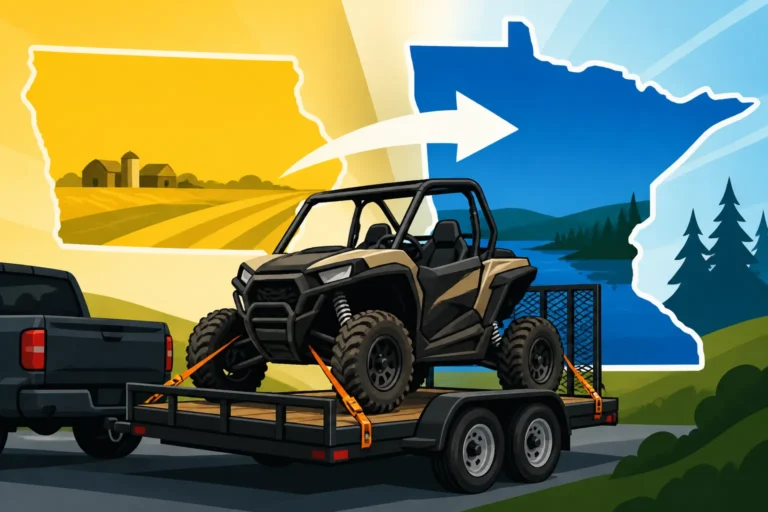
If you're moving to Minnesota with an ATV or UTV trailer, or if you've purchased one from another state, you'll need to register it in Minnesota. The process will depend on whether that trailer was titled in its previous state and whether it would require a title under Minnesota law (over 4,500 lbs GVWR).
- If it was titled elsewhere and needs a title in MN: You'll submit the out-of-state title to the Minnesota Department of Public Safety (DPS) to apply for a Minnesota title and registration.
- If it was not titled elsewhere and doesn't need a title in MN: You'll need a bill of sale and the most recent out-of-state registration card to apply for Minnesota registration.
Always bring all available paperwork—bill of sale, previous registration cards, titles (if any)—to the Deputy Registrar's office. They can guide you through the specific requirements for your situation. This is similar to the process you'd follow if you were [Moving to Minnesota With an Out-of-State Quad], making sure all your off-highway vehicles and their accessories are compliant with state law.
The Consequences of Skipping Title or Registration
Ignoring Minnesota's rules for trailer titling and registration can lead to a heap of trouble that's far more costly and frustrating than simply following the rules.
- Fines: The most immediate consequence is a fine for operating an unregistered or improperly documented trailer. These fines can quickly add up.
- Impoundment: In some cases, especially if there's no proof of ownership or the trailer is deemed unsafe, law enforcement might impound your trailer, leading to towing and storage fees on top of any fines.
- Liability Issues: If you're involved in an accident while towing an unregistered trailer, your insurance might deny coverage, leaving you personally liable for damages.
- Difficulty Selling: Trying to sell a trailer without proper documentation is a huge red flag for potential buyers and will significantly reduce its value. No one wants to buy someone else's paperwork headache.
- Future Registration Problems: If you let registration lapse for a long time, or try to register a trailer with no paper trail, you could face additional penalties or complicated procedures to get it back on the books.
It's always best to be proactive and ensure your trailer is properly registered from day one. Don't risk the [Penalties for an Unregistered ATV in Minnesota] applying to your trailer too; the state takes these regulations seriously for all vehicles on public roads.
| Trailer Type/Condition | GVWR Requirement (Minnesota) | Titling Required? | Registration Required? | Primary Proof of Ownership |
|---|---|---|---|---|
| New, from Dealer | Over 4,500 lbs | Yes | Yes | Title, Bill of Sale |
| New, from Dealer | Under 4,500 lbs | No | Yes | MCO, Bill of Sale |
| Used, Private Sale | Over 4,500 lbs | Yes | Yes | Signed Title, Bill of Sale |
| Used, Private Sale | Under 4,500 lbs | No | Yes | Bill of Sale |
| Homemade Trailer | Any | No (generally) | Yes | Inspection Cert., Bill of Sale for materials |
| Out-of-State Trailer (Moved) | Depends on MN GVWR rules | Yes/No | Yes | Out-of-State Title/Reg. |
Disclaimer
This article is for general informational purposes only and does not constitute professional advice. Laws, prices and regulations vary by location and change over time. Consult a qualified professional for guidance on your specific situation.