Deputy Registrars That Handle ATV Registration
Navigating the world of ATV and UTV registration in Minnesota can feel a bit like trying to find your way through a new trail system without a map. Many folks assume they have to go directly to a big state office, or that everything can be done online, only to find themselves frustrated by forms, long waits, or unclear instructions. This guide is here to untangle that process, specifically by highlighting the unsung heroes of local registration: Minnesota's deputy registrars, and how they make getting your off-highway vehicle street-legal (or trail-legal!) a much smoother ride.
Understanding Minnesota's ATV Registration System
When you think about getting your ATV or UTV registered in Minnesota, it's easy to feel overwhelmed. There are state agencies, online portals, and then these local offices. It's important to understand the hierarchy and why each piece plays a role in making the system work for riders across our vast state.
The Role of the DNR in ATV Registration
At the very top of the food chain, so to speak, is the Minnesota Department of Natural Resources (DNR). They are the ultimate authority when it comes to regulating and overseeing all things related to off-highway vehicles (OHVs), including ATVs, UTVs, and off-road motorcycles. The DNR sets the rules, defines the classes of machines, and ultimately issues the registration numbers and decals that prove your machine is legal for public use. They're the legislative and administrative backbone, ensuring that all riders are playing by the same rules and that funds are collected for trail maintenance and safety programs.
However, the DNR isn't set up to be a front-line customer service center for every single registration transaction. Imagine the lines if every Minnesota ATV owner had to visit a single DNR office! Their role is more about policy, enforcement, and overall management, rather than processing thousands of individual applications. Think of them as the architects and overseers of the entire system, rather than the hands-on builders of every single registration.
Why Not Just Go to the DNR Directly?
This brings us to a common point of confusion. If the DNR is in charge, why can't you just walk into a DNR office and get your ATV registered? The simple truth is that while the DNR could theoretically handle every registration, it's just not practical or efficient. Their offices are often focused on other aspects of natural resource management, like forestry, fisheries, and wildlife, or more specialized permitting. They have fewer public service counters dedicated solely to vehicle registration compared to the vast network that exists.
For the average ATV or UTV owner, trying to register directly through the DNR might mean a significant drive to a regional office, potentially limited hours, and a less streamlined process for basic transactions. The state recognized this logistical challenge years ago and developed a system that brings registration services much closer to where people live and work. This decentralization makes the process far more accessible and efficient for everyone involved. For a broader overview of the entire process, you might want to check out [Minnesota DNR ATV Registration Explained].
The Different Avenues for Registration
So, if not directly through the DNR, what are your options for registering your machine? Minnesota offers a few paths, each with its own advantages, depending on your situation and preferences:
- Online Registration: For renewals and some straightforward registrations, the Minnesota eLicense system can be a convenient option. You can handle things from the comfort of your home, often skipping the lines. However, initial registrations for a new purchase, especially if there are any complexities like missing paperwork or specific tax situations, often require an in-person touch. For more on this, you can look into [Registering Online Through Minnesota eLicense].
- Mail-In Registration: This is another option, primarily for renewals. You'll typically receive a renewal notice in the mail, which you can fill out and send back with payment. The downside here is the waiting game – you'll need to wait for your new stickers to arrive, and if there's any issue with the paperwork or payment, it can cause significant delays.
- In-Person at a Deputy Registrar: This is often the most popular and recommended method for initial registrations, transfers, and when you just need things done quickly and accurately. These offices are designed specifically to handle vehicle-related transactions, and they have trained staff who can guide you through the process, answer questions, and resolve minor issues on the spot.
Each method serves a purpose, but for many, the in-person experience at a deputy registrar's office offers a level of assurance and immediate gratification that other methods simply can't match.
Who Are Deputy Registrars and Why Do They Matter?
When you need to get your ATV or UTV registered, renewed, or transferred, the term "deputy registrar" is one you'll hear a lot. These offices are absolutely critical to the smooth operation of vehicle registration in Minnesota, serving as the accessible, local touchpoints for countless transactions every day.
The Backbone of Local Registration
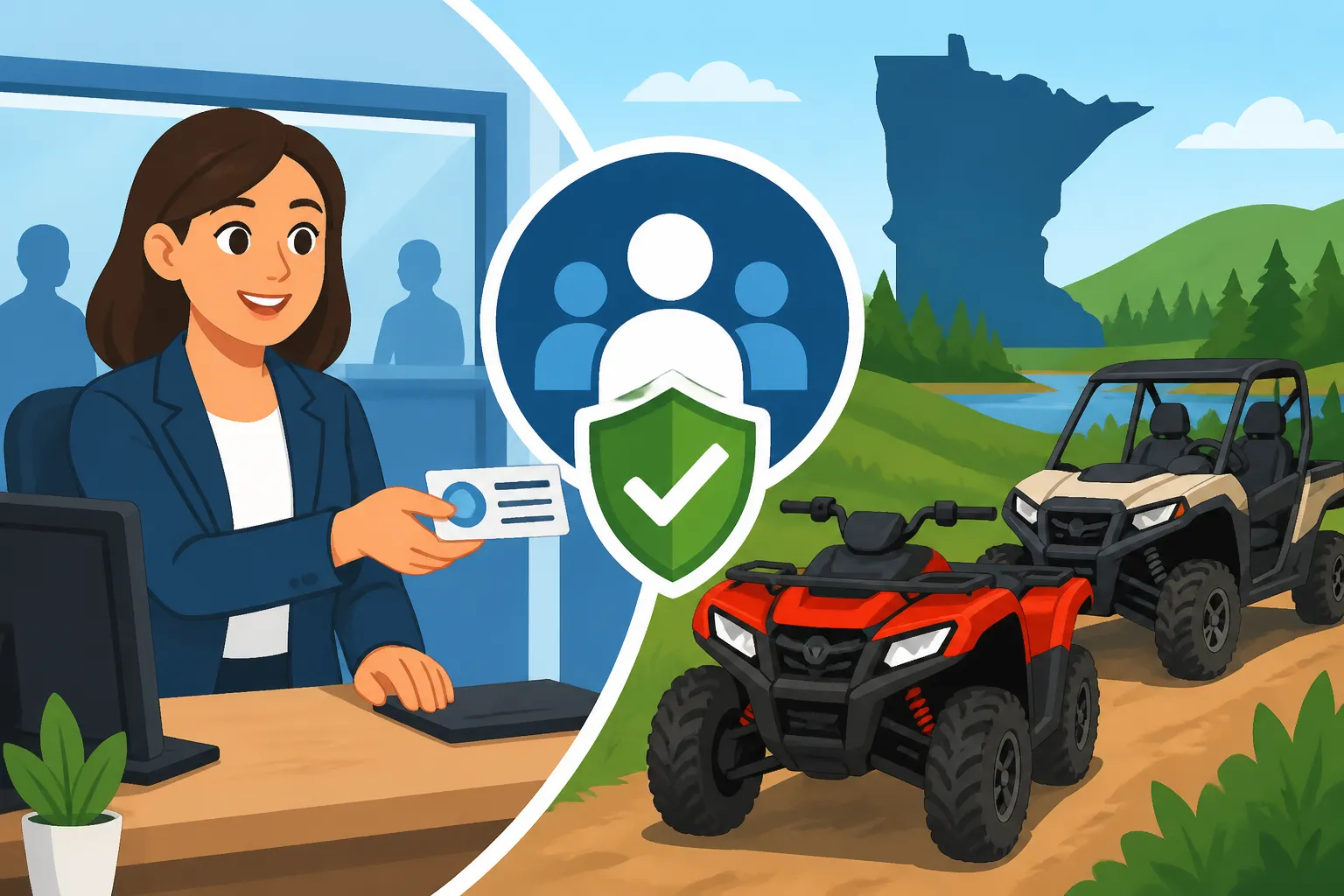
Think of deputy registrars as the local front-line offices for the state's vehicle services. While they often handle everything from car tabs to driver's licenses, they are also fully authorized by the Minnesota DNR to process ATV and UTV registrations. They aren't just independent businesses; they operate under a specific agreement with the state, ensuring they adhere to all regulations and procedures. This means that when you register your ATV at a deputy registrar, you're not going through a third party; you're essentially conducting an official state transaction.
These offices are staffed by knowledgeable professionals who are trained in the intricacies of vehicle registration, including the specific requirements for off-highway vehicles. They know what forms you need, what identification to provide, and how to calculate fees and taxes correctly. This specialized knowledge is a huge relief for many riders who might otherwise feel lost trying to decipher state regulations on their own.
Convenience and Accessibility
One of the biggest advantages of deputy registrars is their sheer number and widespread presence across Minnesota. Unlike a handful of central state offices, deputy registrars are found in almost every county, often in multiple locations within larger counties. This geographical spread means that for most people, there's a registration office conveniently located just a short drive away, perhaps in a nearby town or even your own community. This saves valuable time and gas, making the registration process less of a chore.
Beyond just location, many deputy registrar offices offer more flexible hours than traditional government offices. Some have evening or Saturday hours, accommodating those with busy weekday schedules. This accessibility is a huge benefit for anyone needing to conduct state business without taking time off work or disrupting their day significantly. When you're trying to squeeze in that last-minute registration before a big weekend ride, having a local, open office is incredibly helpful.
Beyond Just Registration: Other Services Offered
Deputy registrars aren't just one-trick ponies when it comes to your ATV or UTV. While [Registering an ATV in Minnesota] is their bread and butter, they can handle a wide array of related services, making them a true one-stop-shop for many OHV owners:
- Registration Renewals: When it's time for your [Minnesota Registration Renewal Every Three Years], a deputy registrar can process it quickly, and you'll often walk out with your new decals that same day.
- Ownership Transfers: If you've just bought a used ATV from a private seller, the deputy registrar is the place to go to get the machine officially in your name. They'll handle the necessary paperwork for [Transferring a Minnesota ATV After a Sale].
- Duplicate Documents: Lost your registration card or need a replacement decal? They can help you with [Replacing a Lost Minnesota Registration] and [Ordering a Replacement Decal Sticker], ensuring you have all the necessary proof of legal operation.
- VIN Corrections: In rare cases where a Vehicle Identification Number (VIN) might have been incorrectly recorded, a deputy registrar can assist with the process of correcting the record, though this may involve additional documentation.
- Sales Tax Collection: When you purchase an ATV, especially through a private sale, the deputy registrar will collect the applicable Minnesota sales tax at the time of registration. This ensures all the financial components are handled in one visit.
This comprehensive range of services means you can rely on your local deputy registrar for most, if not all, your ATV and UTV administrative needs, saving you multiple trips to different government agencies.
Finding Your Local Deputy Registrar for ATV Services
Okay, so we know why deputy registrars are important, but how do you actually find one that handles ATV registration, and what's the best way to prepare for your visit? It's easier than you might think, but a little planning goes a long way to ensure a smooth transaction.
Online Search Tools and Resources
The most straightforward way to find a deputy registrar in your area is to use the official online search tools provided by the state. The Minnesota Department of Public Safety Driver and Vehicle Services (DVS) division maintains an online directory of all authorized deputy registrar offices. You can usually search by county, city, or even zip code to find the locations closest to you.
When using these tools, it's a good idea to specifically look for offices that list "vehicle registration" or "off-highway vehicle services" as one of their offerings. While most deputy registrars handle general vehicle registration, it’s always wise to double-check their specific service menu to ensure they cover ATVs and UTVs. A quick search will usually bring up their address, phone number, and hours of operation. Keep an eye out for offices that might be located within county government centers, city halls, or standalone storefronts – they come in various forms!
Tips for Calling Ahead
Before you load up your ATV (or just your paperwork) and head out the door, making a quick phone call to the deputy registrar's office can save you a lot of time and potential frustration. This is especially true if your situation is a bit unique, or if you're dealing with a recent purchase.
Here are some key questions to ask when you call:
- "Do you handle ATV and UTV registrations?" This is the most crucial question, just to confirm.
- "What documents do I need to bring for [my specific situation]?" For example, "I just bought a used ATV privately," or "I need to renew my registration." This will help clarify the exact paperwork needed, such as your bill of sale, previous registration, or proof of ownership. You can find more detail on [Documents a Minnesota Registrar Wants].
- "What forms of payment do you accept?" Some offices might be cash-only, while others accept cards or checks. Knowing this ahead of time prevents an inconvenient trip to the ATM.
- "What are your busiest times?" They might be able to suggest a quieter time to visit, helping you avoid long waits.
- "Do I need to make an appointment?" While many are walk-in friendly, some might prefer appointments for certain services, especially during peak seasons.
A quick five-minute phone call can confirm you have everything you need, clarify any uncertainties, and give you a better idea of what to expect, making your actual visit much more efficient.
Understanding Location-Specific Services
While the network of deputy registrars is robust, it's important to understand that not every single office offers the exact same range of services, or they might have different procedures. For instance, some smaller, more rural offices might have more limited hours or staff, or they might focus more on standard renewals rather than complex titling issues. Larger offices in more populated areas often have multiple clerks and can handle a higher volume and wider variety of transactions.
It's rare, but sometimes a deputy registrar might primarily handle passenger vehicle services and direct you to another nearby office for off-highway vehicles if their internal systems or training aren't fully equipped for those specific transactions. This is another reason why that initial phone call is so valuable. Confirming that they specifically handle ATV/UTV registration ensures you won't be sent on a wild goose chase after you arrive. Being aware that services can vary slightly between locations helps manage expectations and ensures you pick the right office for your specific needs.
What to Bring to a Deputy Registrar's Office
Walking into a deputy registrar's office prepared is like having the right gear for a trail ride – it makes the experience much smoother and prevents frustrating delays. The exact documents you'll need can vary slightly depending on your situation, but there are some core essentials everyone should have.
Essential Ownership Documents
This is arguably the most critical category. Without proper proof of ownership, you won't be able to register your ATV or UTV.
- Bill of Sale: If you've purchased a machine from a private seller, a well-drafted bill of sale is paramount. This document should clearly identify the buyer and seller, the machine (make, model, year, VIN), the purchase price, and the date of sale. A good bill of sale protects both parties and serves as your initial proof of ownership. While some generic templates might work, using a structured template, perhaps from a service like LawDepot, can ensure all necessary details are captured accurately. For specific details on what this should contain, refer to [What a Minnesota Bill of Sale Should Carry].
- Previous Registration Card: If you bought a used ATV, the seller should ideally provide you with the most recent registration card. This helps the deputy registrar verify the machine's history and previous owner. Even if it's expired, it's valuable.
- Title Certificate (if applicable): While not all ATVs and UTVs in Minnesota are titled (especially older ones), if your machine has a title, you absolutely must bring it. This is definitive proof of ownership and is required for transfers. The seller should have signed over the title to you. Minnesota has specific [Minnesota Title Rules for an Off-Highway Vehicle] that vary by machine type and age.
- Manufacturer's Statement of Origin (MSO) or Certificate of Origin (MCO): For a brand-new ATV or UTV purchased from a dealer, this document is what the dealer provides instead of a title. It certifies that you are the first owner of the machine.
Always have the original documents, not just photocopies, unless specifically told otherwise. This ensures the deputy registrar can verify signatures and details authentically. Having all your ducks in a row with ownership paperwork will significantly speed up your visit. For a comprehensive list, consult [Proof of Ownership for a Minnesota ATV].
Personal Identification and Payment
Beyond the machine's paperwork, you'll need to prove who you are and be ready to pay the necessary fees.
- Valid Photo Identification: Your current, unexpired Minnesota driver's license or state ID card is typically required. This is used to confirm your identity as the person registering the machine and to ensure your address is accurate. If you've recently moved, make sure your ID reflects your current address or bring a separate proof of residency.
- Payment for Fees and Taxes: Be prepared to pay the registration fee, sales tax (if applicable), and any deputy registrar processing fees. As mentioned earlier, call ahead to confirm accepted payment methods. Many offices accept cash, personal checks, and credit/debit cards, but it's not universal. The [Minnesota ATV Registration Fee for Three Years] is a standard charge, and [Minnesota Sales Tax on an ATV Purchase] will apply to most transactions. If you're buying privately, the sales tax is generally collected at the time of registration.
Having your ID ready and knowing exactly how you'll pay avoids any awkward pauses or last-minute scrambles at the counter.
Specific Forms for Different Scenarios
While many deputy registrar offices have the necessary forms on hand, it can sometimes be helpful to know what to expect or even fill out certain basic forms beforehand, especially for complex transactions.
- Application for Registration: This is the standard form you'll fill out for any new registration or transfer. It asks for information about you, the owner, and details about the ATV/UTV itself.
- Bill of Sale/Transfer of Ownership Form: Even if you have a private bill of sale, some deputy registrars might have their own generic form they prefer to use to document the transaction or to attest to the sale price. Services like LawDepot offer state-specific templates for bills of sale and other legal documents that can be incredibly useful to ensure you have a comprehensive record, even if the registrar has their own. These templates can save you from trying to remember every single piece of information required by the state.
- Lien Holder Information: If you're financing your ATV or UTV, you'll need to bring information about your lien holder (the bank or lender). The deputy registrar will record this on the state's system. For details on how this works, you may want to review [Liens on a Minnesota ATV Record].
While the staff at the deputy registrar's office are there to help guide you through the paperwork, having a good understanding of what might be asked or even pre-filling basic information can make the process faster and smoother for everyone involved. For a comprehensive list of what to expect, refer to [Documents a Minnesota Registrar Wants].
Common Scenarios Handled by Deputy Registrars
Deputy registrars are the workhorses of Minnesota's ATV registration system, handling a wide variety of transactions that keep riders legal and trails funded. Let's look at some of the most common scenarios they navigate every day.
Registering a New-to-You ATV
This is one of the most frequent reasons people visit a deputy registrar, and it applies whether you've purchased a brand-new machine from a dealer or a used one from a private seller.
If you're buying from a dealer, they'll often handle much of the initial paperwork for you, including submitting the Manufacturer's Statement of Origin (MSO) and collecting sales tax. However, you'll still likely need to visit a deputy registrar to finalize the registration and receive your decals and registration card. They'll verify the MSO, process the fees, and issue your official documents. The dealer might provide you with temporary tags, but the permanent registration is usually through the DVS network.
For a private sale, the process falls entirely on you, the buyer, and the seller. You'll need to present a valid bill of sale and any previous registration or title that the seller provided. The deputy registrar will examine these documents to ensure clear ownership transfer, collect the sales tax on the purchase price (unless an exemption applies), and then process your new registration. This is where having a robust bill of sale, perhaps drafted using a reliable service like LawDepot for clarity and completeness, really pays off. They'll ensure the machine is properly transferred into your name, an essential step covered in [Minnesota Registration After a Private Sale]. For more on what to do after a purchase, explore [Buying a Used ATV in Minnesota: The Paperwork].
Renewing an Existing Registration
This is typically the most straightforward transaction and a bread-and-butter service for deputy registrars. In Minnesota, ATV registrations are valid for three years. As the expiration date approaches, you'll usually receive a renewal notice in the mail from the DNR.
When you bring this notice (or simply your previous registration card and identifying information) to a deputy registrar, they can quickly process the renewal. They'll verify your details, accept the renewal fee, and in most cases, print you a new registration card and issue you fresh decals on the spot. This immediate turnaround is a huge benefit compared to mailing in your renewal and waiting for new stickers to arrive. It ensures you can get back on the trails without delay, legally. Details on this process can be found in [Minnesota Registration Renewal Every Three Years].
Transferring Ownership After a Sale
Beyond initial registration, deputy registrars are crucial for ensuring that ownership records are properly updated when an ATV or UTV changes hands. This is vital for legal reasons, future renewals, and even in cases of theft or accident.
Whether you're the buyer or the seller (though usually the buyer initiates this), the deputy registrar facilitates the official transfer. If you're the buyer, they'll take the signed-over title or comprehensive bill of sale, process the change of ownership in the state's system, and then proceed to register the machine in your name. If you're the seller, while you won't typically need to go in person with the buyer, it's good practice to ensure the buyer completes the transfer promptly. This protects you from any liability associated with the machine once it's no longer yours. For a deeper dive into this, see [Transferring a Minnesota ATV After a Sale].
Replacing Lost or Damaged Documents/Stickers
It happens to the best of us: a registration card gets misplaced, or a decal gets torn or falls off on a rough trail. Don't worry, deputy registrars can help you get back on track.
If you've lost your registration card, you can visit a deputy registrar with your identification and machine information (like the VIN), and they can issue a duplicate registration card. This is important to have on hand, especially when riding public trails or if approached by law enforcement. Likewise, if your registration decal (sticker) needs replacing, whether it's faded, damaged, or simply lost, they can issue a new set of decals for you to place on your machine, as described in [Where a Minnesota ATV Registration Sticker Goes]. This quick, in-person service means you won't be riding illegally for long due to missing paperwork or stickers. You can find more about this in [Replacing a Lost Minnesota Registration] or [Ordering a Replacement Decal Sticker].
Troubleshooting and What to Expect
Even with all the preparation, sometimes things don't go exactly as planned. But don't let that deter you; deputy registrars are often your best resource for navigating these tricky situations. Knowing what common issues might arise and what to expect can help you handle them with less stress.
When Paperwork Isn't Perfect
This is a scenario that often causes the most anxiety for new ATV owners, especially after a private sale. What if the previous owner never signed the title? What if there's no official record of ownership? Deputy registrars are trained to handle a range of these issues, but their ability to help depends on the severity of the problem.
- Missing Signatures: If a seller forgot to sign the title or bill of sale, the deputy registrar might instruct you on how to obtain that signature, or in some very specific, limited circumstances, they might be able to help you navigate an affidavit process. But generally, getting that original signature is crucial. For guidance on this, check out [When a Seller Never Signed the Paperwork].
- No Ownership History: For very old machines or those passed down through generations without formal transfers, proving ownership can be a challenge. The deputy registrar will explain the requirements, which might involve submitting a notarized affidavit of ownership or providing other supporting documentation to establish a chain of possession. This is a more complex situation and is detailed further in [Registering a Minnesota ATV With No Ownership History].
- Illegible or Incomplete Documents: Sometimes handwriting is hard to read, or critical information is missing from a bill of sale. The registrar will point out what needs clarification, and you might need to contact the seller again.
The key takeaway here is to be honest and upfront about any paperwork issues. The staff at the deputy registrar's office are there to assist within the bounds of the law, but they cannot bend rules that are in place to prevent fraud and ensure proper ownership. They will guide you on the next steps, even if that means you need to go back and get more information or documents.
Understanding Fees and Taxes
One thing that's consistent across all deputy registrar offices is the collection of state-mandated fees and taxes. These are not arbitrary charges; they fund trail maintenance, safety programs, and the administration of the registration system.
- Registration Fee: This is a fixed fee for the three-year registration period. It goes directly to the state to support OHV programs. As noted in [Minnesota ATV Registration Fee for Three Years], this helps keep our trails open and maintained.
- Sales Tax: If you bought your ATV or UTV (new or used), Minnesota sales tax will be collected based on the purchase price you declare on your bill of sale. If you paid sales tax at a dealer, they would have sent it in. If you bought privately, the deputy registrar acts as the collection agent for the state. This is a significant part of the cost for many, and it's detailed in [Minnesota Sales Tax on an ATV Purchase].
- Deputy Registrar Fee: In addition to the state fees, deputy registrars are authorized to charge a small service fee for processing your transaction. This fee helps cover their operational costs, as they are often independent businesses or county-run entities, not directly funded by the state for their services. This fee is usually minor but is separate from the state-mandated fees.
It's always a good idea to factor in these costs when budgeting for your new ATV or UTV. Calling ahead to ask about total estimated costs can also help you prepare the correct payment method.
Here's a quick comparison of the common registration avenues:
| Feature | Deputy Registrar (In-Person) | Online (eLicense) | Mail-In (DNR) |
|---|---|---|---|
| Initial Registration | Yes, recommended for new purchases/transfers | Limited (mostly renewals) | Yes (can be slow for complex initial registrations) |
| Ownership Transfer | Yes, essential for private sales | No | Possible, but very slow & prone to errors |
| Registration Renewal | Yes, immediate decals | Yes, convenient, but wait for decals | Yes, slowest option, wait for decals |
| Immediate Decals/Card | Yes | No, mailed separately | No, mailed separately |
| Problem Resolution | Excellent, staff can guide/advise | Limited, self-service troubleshooting | Very limited, phone calls/follow-ups needed |
| Payment Options | Varies (cash, check, card – confirm) | Credit/Debit Card Only | Check/Money Order Only |
| Processing Time | Immediate | Within a few business days (plus mailing time) | Weeks, depending on mail and processing loads |
| Required Documents | Full ownership docs, ID, payment | Previous registration number, payment | Renewal notice, payment |
| Sales Tax Collection | Yes, for private sales | No | No |
The Immediate Benefits of In-Person Registration
Despite the convenience of online options, there's a unique satisfaction that comes with completing your ATV or UTV registration in person at a deputy registrar's office. The biggest benefit, by far, is walking out with your official registration card and decals in hand.
There's no waiting for the mail, no wondering if your application went through correctly, and no agonizing over whether you'll be legal for that weekend ride. You get instant verification that your machine is properly registered with the state. This immediate proof of registration is invaluable, especially if you plan to hit the trails right away. It offers peace of mind and allows you to focus on the fun of riding, rather than the anxiety of paperwork.
The expertise of the staff is another huge plus. They can answer last-minute questions, clarify any confusing aspects of the forms, and make sure everything is filled out correctly before you leave. This helps avoid common mistakes that could lead to delays if you were to mail in an incomplete application. Ultimately, deputy registrars provide a critical, accessible service that keeps Minnesota's ATV and UTV riders on the right side of the law and enjoying our fantastic trail system.
Disclaimer
This article is for general informational purposes only and does not constitute professional advice. Laws, prices and regulations vary by location and change over time. Consult a qualified professional for guidance on your specific situation.