Minnesota Sales Tax and Dealer Fees on a Machine
Buying an ATV or UTV from a Minnesota dealer can mean more than paying the advertised price: sales tax, preparation, transportation, accessories and dealer charges can all affect the final bill. The key is to separate taxable purchase-price items from service or paperwork charges, then ask the dealer to explain each line before you commit.
How Minnesota sales tax affects the purchase price
According to the Minnesota Department of Revenue, the standard Minnesota general sales tax rate for off-road vehicles such as ATVs is 6.875%, plus applicable local sales taxes. The tax applies to the total purchase price, including dealer preparation, transportation and accessory charges. This rate information is as of November 2026.
That distinction matters when you compare a machine’s advertised price with its out-the-door price. An advertised figure may describe the vehicle alone, while the final transaction may include charges for getting it ready, delivering it or adding accessories. Under the Department of Revenue rule above, those listed charges are part of the purchase price used for sales tax purposes.
A useful starting formula is:
Applicable sales tax = taxable purchase price × applicable tax rate
The formula is simple, but the number you multiply by matters. Ask the dealer to identify the complete purchase price and show how it arrived at the tax amount. If a local sales tax applies to your purchase, the total rate may be higher than the state rate alone. Confirm the applicable rate and calculation with the dealer or the Department of Revenue rather than relying on an online estimate from a different location.
When comparing dealers, look at the same things on each quote:
- The machine’s selling price
- Preparation or setup charges
- Transportation or delivery charges
- Accessories included in the transaction
- Any separate service, documentation or administrative charges
- Sales tax and any applicable local tax
- Registration-related paperwork and any other required charges
The list is not a claim that every dealer will charge every item. It is a way to make the quotes comparable. One dealer might advertise a lower vehicle price but list preparation and delivery separately. Another might present a more complete figure from the start. If you compare only the advertised price, you may miss the difference until the paperwork is in front of you.
For a closer look at how purchase tax is calculated, see Minnesota Sales Tax Rate on an ATV. If the quote includes delivery or dealer charges, Minnesota Dealer Fees and Freight Charges can help you sort out the terms you should ask about.
What the taxable total means on a quote
The taxable purchase price is not always the same as the vehicle’s base price. The Department of Revenue specifically includes dealer preparation, transportation and accessory charges in the total purchase price for the tax calculation. So, if those items appear as separate lines on an invoice, do not assume that separating them automatically makes them tax-free.
For example, a dealer may list the machine, setup work, delivery and accessories separately. The line-item format helps you understand what you are buying, but the Department of Revenue’s stated rule still includes those categories in the taxable total. Ask the dealer to show which amount it treated as the purchase price and how the sales tax was calculated.
If an accessory is optional, ask whether it can be removed from the deal and how that would change the invoice. An accessory included in the transaction is not something to overlook just because it appears below the vehicle price. If you are considering buying accessories separately later, ask the dealer and the Department of Revenue how the tax treatment applies to that separate purchase. The facts for your machine and transaction matter; do not assume the treatment is identical simply because the product is similar.
Dealer fees are not all the same thing
A dealer quote may contain charges that sound alike but serve different purposes. Sales tax is a government tax on the purchase. Preparation and transportation charges relate to preparing or delivering the machine, and the Department of Revenue includes those charges in the taxable purchase price. Other lines may describe paperwork, administration, an optional product or a service. Read each label rather than treating all charges as “tax.”
A charge’s name alone may not tell you what it covers. Ask the dealer to explain what work or service is included, whether it is required for the sale, and whether you can decline it. If a fee is described as paperwork or documentation, ask what paperwork is involved and whether the amount is separate from the sales tax. For a deeper discussion of these line items, see Dealer Documentation Fees on a Quad.
Most importantly, do not let a charge described as a registration or temporary permit fee pass without asking what it is for. According to the Minnesota Department of Revenue, when a retail dealer in Minnesota sells a new ATV, the dealer must register it for the purchaser at the point of sale, and state law prohibits the dealer from charging the purchaser a fee for providing the 21-day temporary registration permit. That rule concerns the temporary permit itself. It does not automatically answer what every other dealer charge covers, so ask for a clear description of any separate amount.
| Quote line | What to check | Tax or fee question to ask |
|---|---|---|
| Machine price | Is this the vehicle price before additional charges? | What selling price is being used in the transaction? |
| Dealer preparation | What preparation work does this cover? | Is this included in the purchase-price amount used for tax? |
| Transportation or delivery | What is being transported, and to where? | How is this included in the taxable purchase price? |
| Accessories | Which items are installed or included? | Are these part of the purchase price for tax purposes? |
| Documentation or administration | What service or paperwork is covered? | Is this separate from sales tax and any registration paperwork? |
| Sales tax | Does the calculation include applicable local tax? | What purchase-price amount and rate were used? |
| Temporary registration permit | Is the line actually a fee for providing the permit? | Why is there a charge when the permit itself cannot carry a purchaser fee? |
Use the table as a conversation prompt, not as a checklist of fees every dealer must charge. A dealer may not use these exact labels, and the name of a line does not establish whether it is required or taxable. Get an explanation of what is being charged and ask for the complete written quote.
Ask for a written out-the-door figure
A clear written quote is more useful than a verbal promise about the final amount. Ask for the total you would pay if you accepted the offer, with the machine price, charges, tax and any other amounts shown separately. If the quote changes after you choose accessories or financing, ask for a revised version so you can see what changed.
If a salesperson says a charge is mandatory, ask what makes it mandatory and whether it is a dealer charge, a government charge or part of the vehicle price. If a line is described as optional, confirm that declining it will not change the machine price or another part of the offer. These questions are practical, not confrontational: they help both sides confirm that the paperwork matches what you agreed to buy.
A written breakdown also makes it easier to compare offers. If another dealer’s quote is lower, look for missing items rather than assuming the lower number is the better deal. It may include fewer accessories, omit delivery, or simply leave taxes and charges for later. Ask each dealer to quote the same configuration and explain the same categories.
Buying new, used or from a private seller
The sales-tax questions can look different depending on who sells the machine and what the paperwork includes. The available rule here specifically establishes how the general sales tax rate applies to an off-road vehicle purchase price and includes dealer preparation, transportation and accessory charges. It also states what a Minnesota retail dealer must do when selling a new ATV. It does not provide every tax rule for every kind of transaction, so avoid assuming that a private sale, an out-of-state purchase or a trade-in works exactly like a new dealer sale.
Buying a new ATV from a Minnesota dealer
For a new ATV bought from a retail dealer in Minnesota, the dealer must register the vehicle for you at the point of sale, according to the Minnesota Department of Revenue. The same agency says the purchaser cannot be charged a fee for the 21-day temporary registration permit. Ask the dealer to identify the registration paperwork being filed and to distinguish it from other charges on the bill.
That registration step is separate from sales tax. Tax is calculated from the purchase price under the Department of Revenue rule; registration is a separate administrative requirement. A dealer might handle paperwork as part of the transaction, but the fact that a dealer files registration does not make every paperwork-related charge a tax or explain what a separate fee covers. Ask for a description of each amount.
For details about the documents and filing process, see Buying From a Minnesota Dealer: What They File. If you are looking at a used machine, Buying a Used Machine in Minnesota can help you think through condition and ownership paperwork alongside the purchase price.
Buying a used machine
A used purchase may involve both the money paid to the seller and later steps to put the machine in your name. Keep those tasks distinct in your budget. A sales-tax question concerns how the purchase is treated for tax; registration is a separate DNR matter. Do not assume that paying the seller or receiving a bill of sale completes every state requirement.
According to the Minnesota Department of Natural Resources, a purchased used ATV or off-highway motorcycle must be registered in the buyer’s name within 15 days, while a used off-road vehicle must be registered within 30 days. If your machine falls into one of those categories, confirm its classification and the current filing requirements with the DNR. These deadlines are not dealer fees, and they do not change the sales-tax calculation described by the Department of Revenue.
A dealer may handle a used-machine transaction differently from a new ATV sale. Ask who is responsible for the paperwork, what documents you will receive and whether any charge relates to the dealer’s service or to a state requirement. If the seller is private, ask the Department of Revenue how tax applies to the specific transaction rather than relying on a dealer’s invoice format. Minnesota Sales Tax on a Private ATV Sale covers that situation separately.
Buying out of state or from an individual
An out-of-state seller may present a different invoice, and a private seller may not provide the same itemized breakdown as a dealership. The price you agree to pay is only one part of the decision. Before paying, clarify what the seller is transferring, what documentation is available and which state processes you must complete after bringing the machine to Minnesota.
The facts here do not set out the tax calculation for every out-of-state purchase or private sale. Confirm how the Minnesota Department of Revenue treats your particular transaction, including whether tax is due and what amount is used. Keep the purchase agreement, bill of sale and payment records so you can answer questions about the sale price and the machine’s history.
Do not treat registration charges, a trail pass or sales tax as interchangeable. According to the Minnesota Department of Natural Resources, off-highway vehicles used in Minnesota must be registered with the DNR, or the operator must possess a trail pass when operating on state and grant-in-aid trails. The exact requirement depends on how and where the machine will be used. See Registering an ATV in Minnesota for the registration side of the process.
How to compare dealer quotes fairly
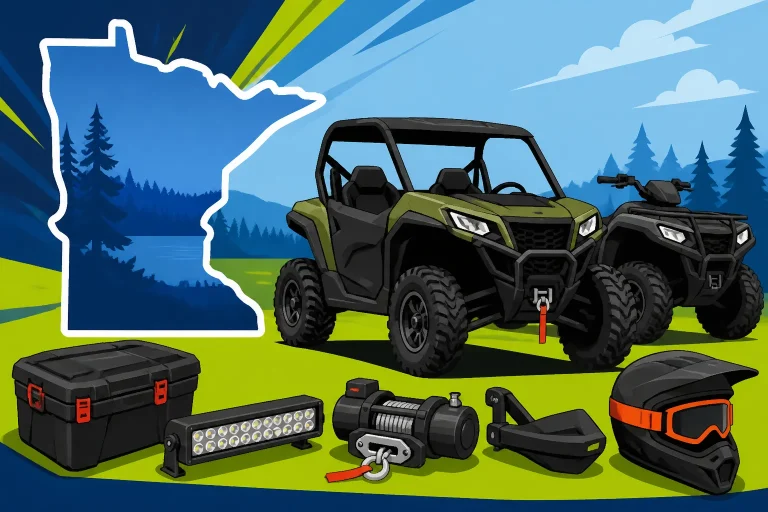
A useful comparison begins with matching the machine and the deal. If one quote includes a roof, winch or other accessory and another does not, the lower total may simply represent a different package. If one quote includes preparation and transportation in the displayed price while another shows them as separate lines, compare the complete purchase price and the tax calculation rather than just the first number on the page.
Ask each dealer for a written breakdown that answers these questions:
- What is the exact machine and configuration being quoted?
- Which accessories are included, and which are optional?
- What preparation work is covered?
- Is transportation or delivery included?
- What separate documentation or administrative charges appear?
- What amount is being used to calculate sales tax?
- Has the quote included applicable local sales tax?
- What registration paperwork will the dealer file?
- Does any line refer to the temporary registration permit?
- What is the total due, and what may change before delivery?
The goal is not to eliminate every charge. Some services or equipment may be useful, and the purchase-price rule means certain charges belong in the taxable total. The goal is to understand what you are paying for and avoid comparing incomplete figures.
Compare the machine and the package
Start by confirming that both quotes refer to the same type of machine and comparable equipment. A basic machine may be less expensive up front but require accessories you want. A package with equipment already installed may look more expensive while reducing separate shopping and installation steps. Compare the items themselves, not just the bundle price.
If you plan to buy accessories after the sale, think about fit, installation and warranty questions as well as the price. For instance, you might compare an accessory from the dealer with an aftermarket option available through Amazon or another retailer. Do not assume that a separately purchased item has the same tax treatment as an accessory included in the dealer’s transaction; ask the retailer or the Department of Revenue about the specific purchase.
Ask whether the quote includes installation or only the part. A lower accessory price may not be a lower finished cost if installation is separate. Likewise, an installed item may be included in the dealer’s purchase price and therefore included in the taxable total under the Department of Revenue rule. Get the details in writing before deciding.
Compare the tax calculation, not just the tax line
If two dealers show different tax amounts, first check whether they used the same purchase-price total and applied the same local tax treatment. The taxable total may differ because one quote includes transportation or accessories and the other does not. The Department of Revenue’s rule includes preparation, transportation and accessory charges in the purchase price, so a quote that leaves those out of its tax calculation deserves a clear explanation.
If the quote gives one combined figure for taxes and fees, ask for those amounts to be separated. Sales tax is not a dealer service charge; a combined label makes it harder to tell what you are paying and whether the calculation is correct. You should be able to see the purchase-price basis, tax rate and final tax amount on the paperwork or have the dealer explain them.
If the explanation is unclear, pause before signing and confirm the tax treatment with the Department of Revenue. This is especially useful when the transaction includes a trade, an out-of-state seller, a private sale or a special arrangement that is not reflected in an ordinary new-machine quote. For a trade-in question, see Trade-In Credit at a Minnesota Dealer, and confirm how the details apply to your transaction.
Build a realistic budget beyond the tax line
A purchase budget should cover the full cost of getting the machine ready for the way you intend to use it. Tax is important, but it is not the only possible line on the invoice. Include accessories you genuinely need, delivery or preparation if charged, any dealer services you choose, registration-related tasks and the costs of transporting or storing the machine.
Do not mix those categories together. Sales tax is calculated on the purchase price as described by the Minnesota Department of Revenue. Registration and trail access requirements are separate. Insurance, maintenance and riding equipment are also separate ownership considerations. A clean budget makes it easier to see what is due at purchase and what you may need to pay later.
If you plan to ride public trails, check the DNR requirements before buying. According to the Minnesota Department of Natural Resources, an off-highway vehicle used in Minnesota must be registered with the DNR, or the operator must have a trail pass when operating on state and grant-in-aid trails. The DNR also says a trail pass is not needed when the machine being ridden is registered in Minnesota. Verify the requirements that apply to your vehicle and riding plans; trail access is not part of the dealer’s sales-tax calculation.
A machine’s classification also matters when you are checking registration or operating requirements. Ask the seller to identify whether the vehicle is an ATV, off-highway motorcycle or off-road vehicle, and confirm that description against the paperwork. The category can affect the registration process, so do not rely only on a casual name such as “quad” or “side-by-side.”
If the purchase involves a used machine, include the paperwork timeline in your plan. The DNR deadlines for registering a purchased used ATV or off-highway motorcycle and a used off-road vehicle are separate from the sale itself. Keep the signed documents, verify that the vehicle identification details match, and follow up with the DNR if the seller’s paperwork is incomplete. Documents a Minnesota Registrar Wants and Proof of Ownership for a Minnesota ATV may help you prepare.
Decide what you want included before negotiating
It is easier to evaluate an offer when you know which equipment matters to you. Make a short list of items you need immediately, items you would like but could add later, and items you do not want. Then ask the dealer to quote the machine with and without optional accessories where possible.
This helps you avoid paying for equipment you will not use simply because it appears in a package. It also lets you compare the dealer’s installed option against an aftermarket alternative on the same basis. Include installation, compatibility and any effect on the final invoice in the comparison. A lower part price is not necessarily a lower total cost if the work or supporting hardware is separate.
Be specific about whether an accessory is part of the sale. If it is, the Department of Revenue says accessory charges are included in the total purchase price for sales-tax purposes. If you are unsure whether an item on the quote is an accessory, a service or something else, ask the dealer to explain the line and confirm the tax treatment with the Department of Revenue.
Keep room for the unexpected
A quote can change if the selected machine, accessories or delivery arrangement changes. Before agreeing, ask how long the quote is valid and whether the total could change before the sale is completed. Those details are dealer-specific, so get them directly from the seller rather than assuming a quoted figure is fixed.
Also leave room in the budget for ownership expenses that do not appear on the purchase invoice. Depending on the machine and your plans, you may need riding gear, a trailer, storage, maintenance or insurance. These are not sales taxes or dealer fees, but they affect whether the purchase is affordable in practice. A low monthly payment or attractive base price cannot tell you the complete cost of ownership on its own.
A practical checkout process
Use a repeatable process before you sign. It keeps the conversation focused on the numbers and gives you a record of what the dealer explained.
- Confirm the machine. Check the vehicle type, configuration and included equipment against the quote and the paperwork.
- Request the itemized total. Ask for the selling price, preparation, transportation, accessories, dealer charges, tax and other amounts to appear separately.
- Review the taxable purchase price. Make sure the quote reflects the Department of Revenue rule that includes dealer preparation, transportation and accessory charges.
- Ask how local tax was handled. Confirm whether applicable local sales tax is included and what rate the dealer used.
- Question unclear charges. Ask what each fee pays for, whether it is required and whether it is separate from a government tax or registration charge.
- Check the temporary permit line. For a new ATV sold by a Minnesota retail dealer, confirm that no purchaser fee is being charged for the 21-day temporary registration permit.
- Review registration responsibilities. For a new ATV, confirm the dealer’s point-of-sale registration filing. For a used machine, confirm what you must file and the applicable DNR deadline.
- Compare the final version. If the accessories or terms changed, ask for an updated written quote before signing.
- Keep the records. Save the signed agreement, invoice, payment record and documents related to registration and ownership.
This process does not require you to challenge every line. It simply makes the deal understandable before money changes hands. If the dealer cannot explain a charge or the tax calculation, ask for clarification before signing rather than trying to resolve it after the sale.
Frequently Asked Questions
Are dealer preparation and transportation charges included in the taxable price?
Yes. According to the Minnesota Department of Revenue, the total purchase price used for sales tax includes dealer preparation and transportation charges, along with accessory charges. Ask the dealer to show how these items appear in the taxable total.
Can a Minnesota dealer charge for the temporary registration permit on a new ATV?
No. According to the Minnesota Department of Revenue, a retail dealer selling a new ATV in Minnesota must register it for the purchaser at the point of sale, and state law prohibits charging the purchaser a fee for providing the 21-day temporary registration permit. Ask the dealer to explain any separate paperwork charge rather than assuming it is the permit fee.
Does a used ATV purchase involve registration steps beyond paying the seller?
It can. According to the Minnesota Department of Natural Resources, a purchased used ATV or off-highway motorcycle must be registered in the buyer’s name within 15 days. Confirm the paperwork and requirements for the specific machine with the DNR.
Should I assume a private sale has the same tax calculation as a dealer sale?
No. The rules stated here do not cover every detail of private-sale tax treatment. Confirm with the Minnesota Department of Revenue how tax applies to your transaction, and keep your purchase documents.
Sources
- Minnesota Department of Natural Resources — Off-highway vehicle registrations & fees | Minnesota DNR (checked November 3, 2026)
- Minnesota Department of Natural Resources — Off-highway vehicle (OHV) trail planning | Minnesota DNR (checked November 3, 2026)
- Minnesota Department of Revenue — Off-Road Vehicles (checked November 3, 2026)
Disclaimer
This article is for general informational purposes only and does not constitute professional advice. Laws, prices and regulations vary by location and change over time. Consult a qualified professional for guidance on your specific situation.