Handing the Keys to a Visiting Rider
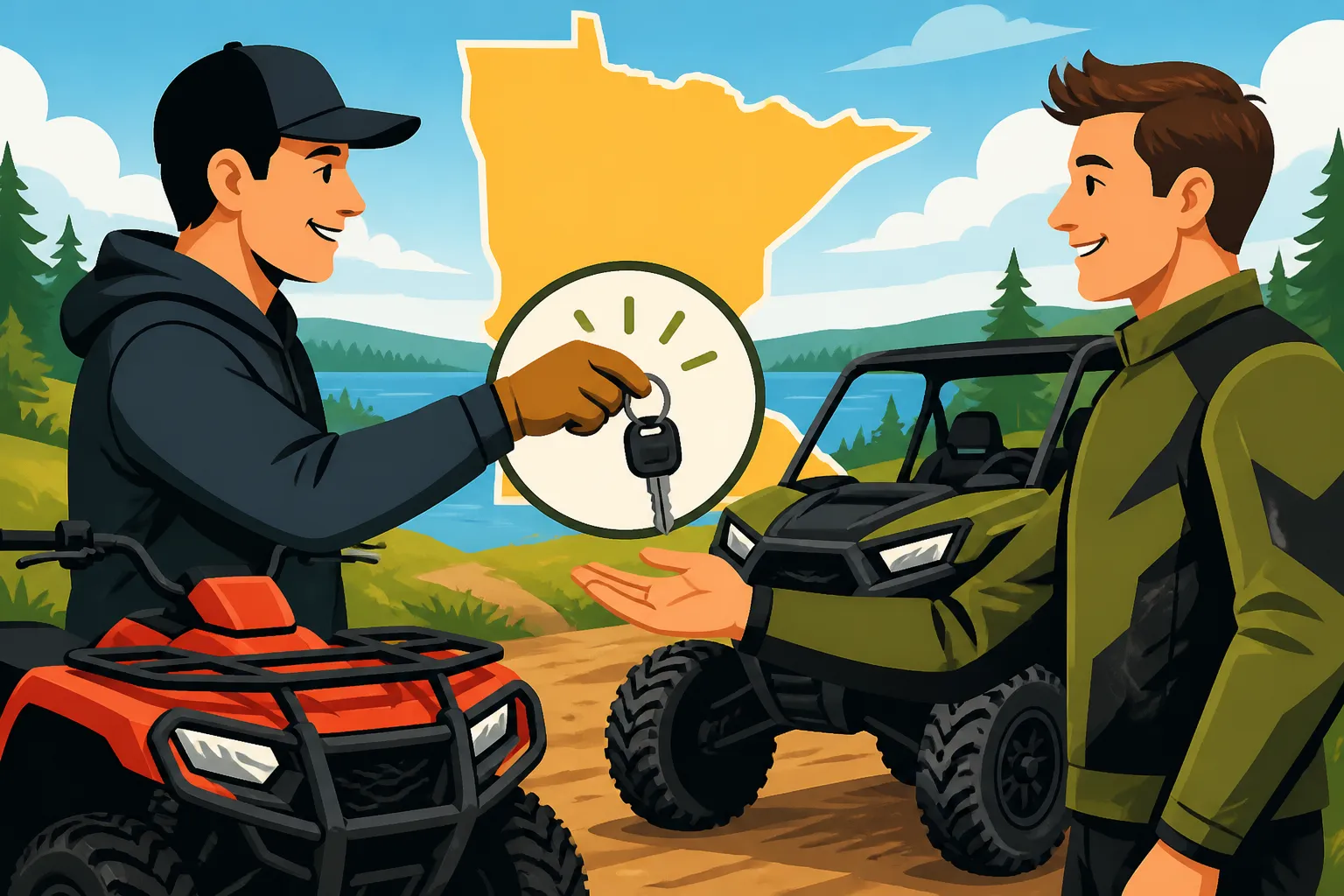
Handing an ATV or UTV to a visiting rider involves more than getting permission and passing over the keys. In Minnesota, the machine’s registration and trail-pass status matter, but so do the rider’s age, training, intended route, and insurance coverage. A few checks before the ride can prevent a visitor from reaching a trailhead with a machine they cannot legally use there.
Start with the machine and the planned ride
Before deciding what the visitor needs, identify the machine and where it will go. Rules can differ depending on whether the ATV or UTV is Minnesota-registered, registered in another state, or unregistered, and whether it will stay on private land or enter public riding areas.
Ask the visiting rider what they plan to do. “Ride around the property” and “take the trail into town” are not the same trip. A route might include a state or grant-in-aid trail, a forest road, a road right-of-way, a crossing, or private land. Each can have its own access rules. Do not assume that permission to borrow the machine also grants permission to ride wherever the owner normally goes.
Use this checklist to establish the basics:
| Check | What to confirm before the ride |
|---|---|
| Machine identity | Make sure the VIN and registration information match the ATV or UTV being borrowed. |
| Registration | Check that the machine has current registration appropriate to its status and intended use. |
| Trail pass | Confirm whether the machine needs a Minnesota nonresident ATV trail pass for the planned public trails. |
| Rider eligibility | Check age, safety-training requirements, and any applicable helmet rules. |
| Route access | Confirm that each trail, road section, and private property segment allows this machine and rider. |
| Insurance | Ask the insurer whether the policy covers a permitted visiting operator and the planned use. |
A visiting rider may have a valid registration from home, but that does not automatically settle every Minnesota trail-pass question. Conversely, a visitor borrowing a Minnesota-registered machine should not assume the machine needs the same pass as a visiting rider’s out-of-state ATV. Check the exact machine and route against current Minnesota requirements. Minnesota Rules for Visiting Riders
If the visitor is bringing their own ATV or UTV from another state, check how its registration and any Minnesota trail-pass requirement apply before the trip. Minnesota’s Non-Resident ATV Trail Pass If they are borrowing your machine, use the guidance for borrowed machines rather than relying on what applies to their own. Trail Passes for a Borrowed Machine
Check registration and trail-pass status
Registration and a trail pass are separate things. Registration identifies the machine under the applicable registration system; a trail pass may be needed for certain riding on Minnesota public trails. A registration sticker, number, or card should not be treated as proof that every pass requirement has been met.
Start by checking the machine’s registration record and decal. Confirm that the identifying information belongs to the machine being loaned, and that the registration is current for the planned use. If it is registered outside Minnesota, do not assume its home-state registration alone gives it access to every Minnesota trail. Out-of-state machines can have additional requirements. Minnesota Registration for an Out-of-State Machine
Then check whether a Minnesota nonresident trail pass applies. The answer can depend on the machine’s registration status and where it will be operated, so do not decide based only on the visitor’s address or the owner’s usual riding habits. In particular, a trail pass for one ATV should not be assumed to cover a different machine. Verify the current rules for the exact machine and riding location through the Minnesota DNR before setting off.
If a pass is required, make sure it is valid and attached or carried as directed. A photo of a pass or paperwork left at home may not satisfy a requirement to display or carry it. Keep the registration and pass information accessible, but store documents so they are not lost or damaged. The article on Carrying the Pass While You Ride covers practical ways to keep proof available.
Also tell the visiting rider whose machine they are operating and what registration information is with it. A rider who is stopped may need to explain the machine’s status. A simple handover note with the owner’s contact information and permission to use the ATV can help clear up confusion, though it does not replace required registration or a pass.
For a visiting rider who will use a machine on private property only, trail requirements may not apply in the same way as they do on public trails. But private land access is not a blanket exemption from every rule. The landowner must have authority to allow the ride, and the rider still needs to follow applicable safety and property rules. Minnesota Rules on Private Land
Confirm the rider is eligible and prepared
Minnesota’s ATV safety requirements depend on factors such as the rider’s age, birthdate, and where the machine will be operated. A visitor should not assume that a training card from another state is automatically accepted, or that no training is needed because they have ridden for years. Check the current requirements for the specific rider and riding area before handing over the keys. Minnesota ATV Safety Training Requirements
If the rider has an out-of-state certificate, confirm that Minnesota accepts it for the planned use. Keep proof available during the ride if it is required. Out-of-State Certificates Minnesota Accepts Training rules and age restrictions are especially important when the visiting rider is a youth. Do not let a young rider use an adult-sized machine just because they are experienced on a smaller one; their ability to control the machine matters as much as their familiarity with riding.
Before the trip, ask whether the rider understands the machine’s controls and features. A UTV may have a different gear selector, parking brake, differential setting, seat belt, or cab restraint from the vehicle the visitor normally uses. An ATV may have engine braking, four-wheel drive, or a winch that operates differently. Show the rider how to:
- Start and stop the machine, including how to use the engine stop switch.
- Select forward, reverse, and neutral, and engage the parking brake.
- Use the headlights and other controls they may need on the route.
- Operate four-wheel drive or other traction settings, if fitted.
- Stop safely if the machine stalls, overheats, or becomes stuck.
- Use seat belts, nets, and other restraints on a UTV, if equipped.
Have the visitor check the machine before leaving: tires, brakes, lights, fuel, and visible damage. Point out any known issue rather than assuming it will be obvious. Set a simple rule for stopping if something feels wrong. A borrowed machine is not a good place to test unfamiliar limits or keep riding through a warning light.
Discuss protective gear as part of the handover. Helmet requirements can apply based on the rider’s age and where they operate, and eye protection, gloves, and sturdy footwear are sensible even where not specifically required. Make sure the helmet fits the rider and is suitable for the activity. A helmet that belongs to the owner but does not fit the visitor is not a useful substitute.
If the rider is a minor, confirm who is supervising them and whether the law allows them to ride the proposed machine and route. A parent’s permission does not override age, training, passenger, or supervision rules. For youth details, check Minnesota Age Rules for Young Riders.
Set boundaries for the route, insurance, and return
Give the visitor a specific plan rather than a broad instruction to “stay on the trails.” Identify approved trails, access points, private-property boundaries, and any places the machine must not go. Explain that a trail shown on a map may be closed, restricted, or unsuitable for the machine. The rider should check current trail status and signs, and turn around if access is unclear.
Road riding deserves particular care. Minnesota rules for operating in a road right-of-way, crossing a road, and riding on the road surface are not interchangeable. A route that requires a short road section can have requirements the visitor does not expect. Do not let the rider assume that a road is open to ATVs simply because another local rider uses it. Check the route and applicable rules before departure. Riding an ATV on the Road in Minnesota
Make clear what the visitor is allowed to do. For example, specify whether they may carry a passenger, tow a small trailer, use a plow, or leave the designated route. The machine may not be designed or equipped for all of those activities. On a one-seat ATV, allowing a passenger can create an obvious safety problem as well as a potential rule violation. On a UTV, explain the required seating and restraint setup and do not allow more occupants than the machine is designed to carry.
Insurance is another separate check. Do not assume that a homeowner’s, auto, or ATV policy covers every situation just because the owner is lending the machine. Coverage can depend on the policy, the operator, the machine, and what the rider is doing. Contact the insurer or review the policy to confirm whether a visiting operator has coverage and whether the planned route or activity is covered. If the visitor is bringing their own machine, they should check their own coverage too. Is a Borrowed Machine Covered?
Agree on what happens if the machine breaks down, gets stuck, or is involved in a collision. Give the rider a working contact number and explain whether they should call before attempting a recovery. Make sure they know the location or trail name, and consider whether the route has reliable cell coverage. For a remote ride, a basic plan for getting help matters more than a vague promise to check in later.
Before the rider leaves, go through a short handover:
- Confirm the rider is allowed to operate this machine and understands its controls.
- Verify registration and any required trail pass for the machine and route.
- Check age, training, helmet, and passenger requirements.
- Point out the approved route, property boundaries, and road restrictions.
- Confirm insurance and explain what to do if there is a problem.
- Agree on when the machine must be returned and what condition it should be in.
When the ATV or UTV comes back, check for damage, missing equipment, or changes to the registration decal or pass. Ask about any issue the rider noticed, even if the machine still runs normally. If a problem arose, address it before the next person uses the machine.
Disclaimer
This article is for general informational purposes only and does not constitute professional advice. Laws, prices and regulations vary by location and change over time. Consult a qualified professional for guidance on your specific situation.