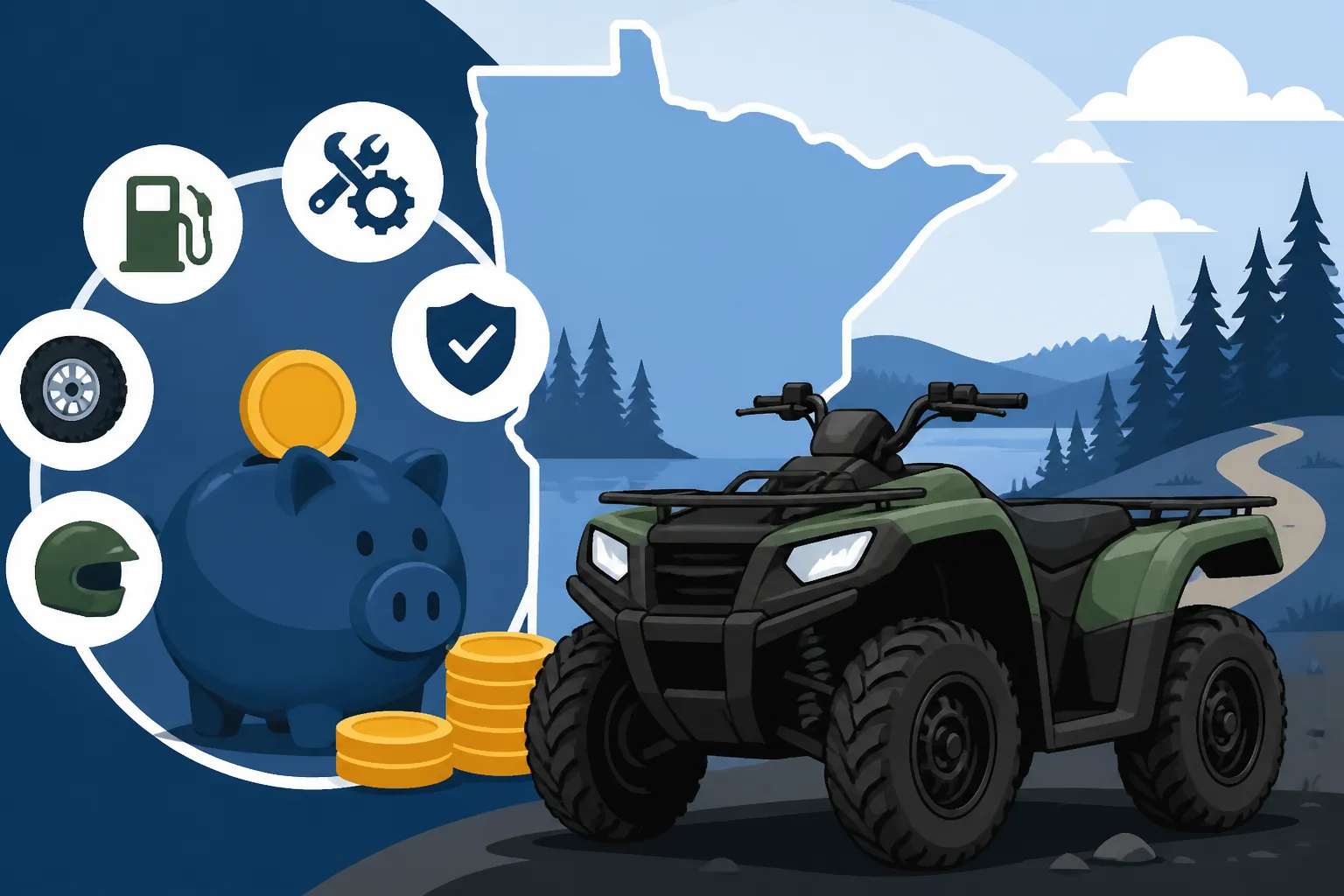
Yearly Cost of Owning an ATV in Minnesota
Owning an ATV in Minnesota costs more than the purchase price: registration, insurance, fuel, maintenance, storage and trail riding can all add to the bill. The total depends heavily on how often you ride, where you keep the machine and whether you do your own repairs. Here’s how to build a realistic yearly budget before you buy.
Start with the costs that repeat every year
A useful ownership budget separates costs you’re likely to face every year from costs that depend on use, damage or a major repair. That makes it easier to compare machines and to avoid treating an unusually quiet year as the normal cost of ownership.
Your recurring costs may include registration, insurance, routine maintenance, storage and any trail passes needed for the places you ride. Fuel, tires and repairs are more closely tied to how much and where you ride. A machine that spends most of its time in a garage can still have insurance or storage costs, while a heavily used trail machine may need more frequent maintenance and replacement parts.
The purchase price is only the starting point. If you finance the machine, include interest and any required insurance in the cost of owning it. If you pay cash, account for the money tied up in the machine and the value it may lose before you sell it. For a broader look at purchase costs and ownership expenses, see What an ATV Costs in Minnesota.
A simple annual budget can use this formula:
Yearly ownership cost = fixed costs + use-based costs + repair reserve + depreciation or financing costs
You won’t know every expense in advance. The point is to make the predictable parts visible and set aside money for the uncertain ones. A practical budget should also distinguish between the cost of owning a machine and the cost of taking it on a particular trip. Fuel, lodging and meals for a riding weekend may belong in a trip budget rather than the basic cost of keeping the ATV.
| Cost category | What to include | What makes it change |
|---|---|---|
| Registration and permits | Registration, trail passes or other required permissions | Machine type, where you ride and current rules |
| Insurance | Coverage appropriate to the machine and its use | Machine value, coverage choices, location and rider details |
| Fuel | Gas used for riding, hauling or work | Distance, terrain, machine, load and riding style |
| Maintenance | Fluids, filters, inspections and scheduled service | Hours, mileage, conditions and maintenance history |
| Repairs and wear parts | Tires, belts, brakes, batteries and unexpected work | Terrain, use, age and care |
| Storage and winter preparation | Space, cover, battery care and winterizing supplies | Storage setup, climate exposure and DIY choices |
| Ownership cost over time | Financing costs or depreciation | Purchase price, loan terms, condition and resale demand |
For a first estimate, list the items you know you’ll pay, then add a separate reserve for maintenance and repairs. Don’t use the reserve as a promise that repairs will cost a particular amount. It is a safeguard against treating a repair bill as a surprise that cannot be budgeted for.
Registration, permits, taxes and insurance
Registration and insurance are easy to overlook because they don’t always happen at the same time as a fuel stop or repair. They still belong in the annual budget. Check current requirements for the machine and the places you expect to ride; a machine used only on private land may have different needs from one used on public trails. The rules can also depend on its classification and use.
For registration, identify whether you need public-use registration and how often it must be renewed. A renewal interval longer than a year does not make the cost disappear from your yearly budget. Divide the amount you pay over the renewal period into an annual planning figure, and set that portion aside each year. The details are covered in Minnesota ATV Registration Fee for Three Years and Minnesota Public Use Versus Private Use Registration.
Trail access is a separate question from machine registration. Some riding areas have pass requirements, and the requirements may depend on the machine and the trail. Don’t assume that a registration decal automatically covers every pass or permission you need. Check the current rules for your planned routes. Minnesota’s Non-Resident ATV Trail Pass is aimed at visitors, while Minnesota Trail Pass and Fuel Costs for a Season discusses seasonal planning.
Taxes matter most when you acquire the machine, but they can affect your yearly ownership picture if you’re comparing the total cost of a new purchase, a used machine or a trade-in. Taxes and dealer charges are not recurring maintenance costs, so keep them separate in your first-year budget. A first year can cost substantially more than a later year simply because of the purchase and setup expenses. For purchase-tax details, see Minnesota Sales Tax on an ATV.
Insurance depends on what you want protected and how you use the machine. Liability coverage, physical damage coverage, theft protection and coverage for accessories are different considerations. A policy that works for a machine kept at a cabin may not fit a machine used for frequent trail riding, plowing or hauling. Ask the insurer what the policy covers, where it applies, what exclusions matter and whether you must report a change in use. Don’t assume a homeowners or auto policy covers an ATV just because it is stored at your home or transported on a trailer. For more on this cost category, see Minnesota ATV Insurance Cost.
A few practical steps help keep these costs under control without cutting corners:
- Confirm the machine’s classification and intended use before buying, since registration and trail access can depend on them.
- Ask the relevant office or provider what documents are required and whether a renewal notice is available.
- Keep registration, insurance and permit expenses in their own budget lines rather than folding them into “miscellaneous.”
- Recheck requirements when your riding plans change, such as moving from private land to public trails.
- Confirm current amounts and rules with the appropriate official source or provider before you pay.
Fuel, trail riding and getting to the trail
Fuel is one of the most visible costs of riding, but it’s hard to estimate accurately from a machine’s advertised capacity or an occasional short ride. Actual use depends on terrain, speed, payload, tire setup, temperature, machine condition and how much time the engine spends idling. Soft ground, steep terrain and frequent stops can use more fuel than steady travel on easier surfaces.
Start with the riding you actually expect to do. Estimate the hours or distance you’ll ride in a typical month, then use your own experience to estimate fuel use after you have the machine. Until then, budget conservatively and revise the estimate after several rides. Track fuel purchases for a season rather than relying on memory; one long weekend can distort your impression of an average month.
Trail riding can also bring costs that do not show up in a fuel estimate. Depending on where you ride, you may need a trail pass, pay for parking or staging, or travel far enough to make hauling a meaningful expense. If you ride near home on land where you have permission, those expenses may be limited. A weekend away from home can bring fuel for both the ATV and tow vehicle, lodging or camping costs, and meals.
Make a separate trip budget if you ride away from home regularly. It helps answer two different questions: “What does it cost to keep the ATV?” and “What does this ride cost?” For a seasonal estimate that considers trail passes and fuel together, use Minnesota Trail Pass and Fuel Costs for a Season.
Hauling can be a significant part of ownership. If you already own a suitable truck and trailer, include the related costs you actually incur, such as fuel, maintenance and storage. If you don’t own a trailer, compare buying one with renting or borrowing one when practical. A purchase adds its own maintenance, registration and storage considerations. Make sure the trailer is suitable for the machine’s weight and dimensions and that you can secure the load correctly. Buying a Trailer Versus Renting One can help frame that decision.
It’s also worth budgeting for the equipment used to transport the ATV. Tie-downs, ramps and trailer maintenance can wear out or need replacement. The initial setup may happen only once, but it should not be confused with the recurring cost of a normal ride. If the ATV is too heavy for a trailer you already own, the cost of upgrading can change the economics of buying a larger machine.
To get a realistic fuel and riding estimate:
- Write down the trails or riding areas you expect to use and how often you’ll go.
- Separate local rides from trips that require a tow vehicle or overnight stay.
- Include any required passes or permissions in the budget for the relevant riding area.
- Track machine fuel and towing fuel separately.
- Review the total after a month or season and adjust your next estimate.
If you use the ATV for work as well as recreation, keep a note of each kind of use. That can help you understand whether the machine is paying for itself in practical utility or whether most of the expense supports recreational riding. It can also help you plan maintenance around actual hours and conditions rather than guessing.
Maintenance, repairs and wear parts
Routine maintenance is predictable enough to plan for, but the schedule depends on the machine and its use. Follow the owner’s manual for service intervals and use the correct fluids and parts. Don’t assume two machines in the same general class have identical service needs. A dealer or qualified mechanic can explain which items are due based on the specific model, hours and condition.
Common maintenance items include engine oil and filters, air-filter cleaning or replacement, drivetrain inspection, lubrication and checks of brakes, steering, suspension, tires and electrical connections. Mud, dust, water and heavy loads can make maintenance more demanding. Riding in dusty conditions, for example, makes air-filter care especially important. If a machine is frequently submerged or used in deep mud, inspect it carefully afterward and follow the manufacturer’s guidance for cleaning and service.
The yearly cost depends partly on who does the work. Doing routine service yourself can reduce labor charges, but it still requires tools, fluids, parts and time. It also means taking responsibility for correct procedures. A shop may cost more for the same basic service but can be the sensible choice if you lack the tools, experience or time. For either approach, keep receipts and a service log. A record helps you spot recurring problems and can support resale value by showing that the machine was maintained.
Wear parts are less predictable than oil and filters. Tires, brake components, drive belts, batteries and suspension parts wear according to the machine, terrain and use. A tire that sees abrasive rock, sharp debris or frequent pavement contact may wear differently from one used on less demanding surfaces. A machine that plows or carries heavy loads can place additional stress on parts. A deep-tread tire may suit muddy conditions but have different wear and handling characteristics than a tire chosen for mixed trail use.
Set aside a repair reserve rather than assuming every season will be trouble-free. That reserve can cover small failures and help you manage a larger repair without relying on credit. The appropriate amount depends on the machine’s age and condition, your mechanical skills and whether it is a primary tool or an occasional recreational vehicle. A used machine with unclear maintenance history usually deserves a larger cushion than a newer machine with documented care.
When comparing a repair with replacement, look at more than the current bill. Consider the machine’s condition overall, whether parts are available, the likelihood of additional repairs and how much you rely on it. Replacing one worn component does not necessarily make an older ATV a poor purchase, but a pattern of repeated failures can change the calculation. A mechanic’s inspection can help you distinguish a normal repair from a symptom of broader wear.
Use a maintenance log with the date, machine hours or mileage, work completed and parts used. This is useful even if you do all the work yourself. It can show whether a component is wearing unusually quickly, help you follow service intervals and keep maintenance from being postponed because you can’t remember when it was last done.
For a more detailed way to think about routine service in relation to the purchase price, see Annual Maintenance as a Share of Purchase Price. For tires and the way riding conditions affect replacement needs, see Tire Replacement Costs for Minnesota Riders.
Storage, winterizing and accessories
Where you keep the machine affects both convenience and cost. Indoor storage can protect it from weather and reduce exposure to theft, but it may require paying for space or giving up room at home. Outdoor storage can be less expensive if you already have a suitable secure location, but a cover is not a substitute for good preparation and theft precautions. Think about ventilation, access for maintenance, security and whether the machine can be stored without blocking other equipment.
Minnesota winters make storage planning especially important. Follow the manufacturer’s recommendations for long-term storage, fuel handling, battery care and protection from moisture. If you prefer not to do this work yourself, ask a shop what its storage or winterization service includes. Don’t assume a brief wash and a cover are enough if the machine will sit unused for an extended period. See Winterizing a Machine in Minnesota for a closer look at preparation.
The storage bill may include more than rent. You might need a battery maintainer, a safe place for fuel or supplies, a cover, or pest protection. Outdoor storage can also mean more cleaning and inspection before the first ride. If your garage is shared with a vehicle, mower or other equipment, consider whether the ATV can be stored without creating a safety or access problem. A low-cost storage arrangement that makes maintenance difficult may not be the best choice.
Accessories are another area where a budget can grow quickly. Some items protect the rider or make basic operation safer; others improve convenience or suit a particular job. A helmet and suitable protective gear deserve priority. A winch, plow, hand guards, storage box or windshield may be useful, but the right choice depends on how you’ll use the ATV. Avoid buying a collection of accessories before you have a clear sense of what the machine needs.
Separate equipment into three groups:
- Safety and basic operation: protective gear and items needed to use or transport the machine safely.
- Use-specific equipment: items for plowing, hauling, hunting or a particular kind of trail riding.
- Comfort and convenience: upgrades that can wait until you know what bothers you during real use.
When shopping for parts or routine accessories, compare fitment, warranty and return terms from a dealer, parts retailer or Amazon. Verify compatibility using the machine’s exact make, model and year rather than relying on a broad product description. A low-cost accessory that doesn’t fit or withstand the intended use can become a more expensive purchase.
Accessories may affect resale, but it’s risky to assume that every dollar spent will be recovered. A buyer may value a practical plow or winch, while another may prefer an unmodified machine. Keep receipts and original parts when reasonable, and distinguish useful equipment from changes that are personal preferences. This makes it easier to price the machine honestly if you sell it later.
Build a yearly budget for your kind of riding
There is no single yearly cost that fits every Minnesota ATV owner. A rider who uses a machine occasionally on land they can access without trail travel has a different budget from someone who rides public trails often, travels to trail systems and maintains a trailer. A side-by-side used for regular work may also have a different wear pattern from a recreational quad.
Use a budget worksheet with separate lines. Avoid writing one large estimate called “ATV expenses”; it hides the costs that are easy to underestimate.
| Budget line | How to estimate it |
|---|---|
| Registration and permits | Check current requirements, then spread multi-year charges across the period they cover |
| Insurance | Request a quote for the machine and its intended use; revisit it if use changes |
| Fuel for the ATV | Estimate after tracking actual use across several rides |
| Fuel for hauling | Record towing trips separately from ordinary vehicle use |
| Trail access and parking | Check the requirements and charges for the places you plan to ride |
| Routine service | Use the owner’s manual and choose DIY or shop service based on your ability |
| Wear parts and repairs | Set aside a reserve based on machine condition and riding intensity |
| Storage and winter care | Include rent, supplies, battery care and any paid winterizing |
| Accessories and transport gear | List the initial setup separately from recurring replacement costs |
| Financing or depreciation | Include loan costs if applicable, or consider likely loss in resale value |
You can then build three versions of the budget:
Low-use year: This is a useful baseline if you expect only occasional rides, already have storage and do not need to buy much equipment. Don’t remove required insurance or registration simply because you ride less; verify whether those costs still apply to your situation.
Typical year: Base this on the rides you realistically expect, not the busiest season you can imagine. Include routine service, planned trail access, transport and a repair reserve. This is usually the most useful number for deciding whether ownership fits your household budget.
Heavy-use year: Include more fuel, more frequent service, greater wear on tires and brakes, and the possibility of extra repairs. If you ride in difficult conditions or use the machine for work, this scenario can be more informative than an optimistic average.
For a household with more than one machine, budget each machine separately. Some costs may be shared, such as a trailer or storage building, but fuel, service, insurance and wear are still tied to individual machines. A shared garage does not make the machines’ maintenance needs identical. Registering Several Machines Together may be useful when you’re organizing registration paperwork, but keep the cost calculations distinct.
First-year costs deserve their own column. The first year may include taxes, purchase paperwork, protective gear, tie-downs, a trailer or setup work that will not repeat every year. Later years may have lower startup costs but higher maintenance as the machine ages. If you’re comparing ownership with renting or borrowing, compare a realistic multi-year total rather than treating the first year as a typical one.
Review the budget after each season. Replace estimates with actual receipts, fuel records and maintenance history. If the ATV was used less than expected, don’t assume next year will automatically be cheaper; registration, storage and insurance may continue. If you rode more, note which costs changed and whether the extra use was worth it. The goal is not perfect forecasting. It’s knowing which parts of ownership are fixed, which are optional and which can surprise you.
New and used machines, financing and resale
A lower purchase price does not always mean a lower yearly cost. A used ATV may be an excellent value if it has a sound maintenance history and passes a careful inspection. It may also need tires, a belt, brakes or other work soon after purchase. A new machine may have fewer immediate repair needs but can cost more upfront and lose value as it ages. Compare the machine’s condition and expected use, not only the asking price.
Before buying used, inspect the machine in person and ask about hours, service, damage, storage and prior use. Look for leaks, damaged plastics, worn tires, loose steering, unusual noises and signs of water or mud exposure. Check that ownership paperwork is in order and that the identification information matches the records. A seller’s description is not a substitute for an inspection. See Buying a Used Machine in Minnesota and Inspecting a Used Machine in Minnesota for more on due diligence.
Financing changes cash flow, but it doesn’t reduce the true cost of ownership. Add the amount you will pay over the loan period to the purchase and running costs, and check whether the loan requires particular insurance coverage. Make sure the payment fits alongside fuel, maintenance and repairs. A payment that uses the whole monthly ATV budget leaves little room for the costs that arise after the sale.
Depreciation is easy to ignore because it isn’t a bill you pay each month. It still matters if you plan to sell or trade the machine. The amount depends on the machine, age, condition, service records and local demand. Accessories may help a sale if they are useful and well installed, but they rarely guarantee that you’ll recover their full cost. A clean, maintained machine with clear paperwork is generally easier to explain to a potential buyer than one with unknown history.
When deciding between a quad and a side-by-side, include the ongoing costs of the actual machine you want. A larger or more complex machine may need different tires, more storage space or more expensive repairs. It may also be better suited to passengers, hauling or work. A smaller machine may be easier to transport and store, but it may not meet your needs. The cheapest machine is not a bargain if it cannot safely or practically do the job you bought it for.
Before committing, write down your intended use and answer these questions:
- How often will you ride, and how much of that riding involves public trails?
- Do you have secure storage and a way to transport the machine?
- Will you do routine maintenance yourself, or pay a shop?
- Can you handle a repair without disrupting essential household expenses?
- Are you buying equipment that solves a real need or one you may not use?
- If you finance the machine, can you afford its running costs as well as its payment?
A practical purchase decision accounts for the full first year and a typical year afterward. If the numbers only work when there are no repairs, no extra fuel and no unexpected costs, the budget is too tight. Consider a less expensive machine, a slower accessory rollout or a different way to access riding before stretching your finances.
Frequently Asked Questions
What is the biggest yearly cost of owning an ATV in Minnesota?
It depends on the machine and how you use it. For some owners, fuel and trail access are major recurring costs; for others, insurance, storage or repairs matter more. Track each category separately to see what drives your actual total.
Does owning an ATV mean I need a trail pass?
Not necessarily. Requirements depend on where and how you ride, and registration is not the same as permission to use every trail. Check current rules for the specific riding area and machine before heading out.
Is a used ATV always cheaper to own?
No. A used machine can cost less to buy but need repairs or replacement parts sooner. Condition, maintenance history, inspection results and intended use matter more than age alone.
Should I budget for repairs even if the ATV is new?
Yes. New machines still need scheduled maintenance and can incur unexpected costs. A repair reserve also helps cover wear items and damage that may not be covered by a warranty.
Disclaimer
This article is for general informational purposes only and does not constitute professional advice. Laws, prices and regulations vary by location and change over time. Consult a qualified professional for guidance on your specific situation.