Taillight Requirements on a Quad
There’s nothing quite like hitting the trails or cruising a ditch in your ATV or UTV, especially as the sun begins to dip below the horizon or on a cloudy, low-visibility day. But one crucial piece of equipment that often gets overlooked, until a conservation officer flags you down, is your machine's taillight. It's easy to assume your factory setup is good to go, but Minnesota has specific rules, and not knowing them can lead to tickets, safety hazards, and even serious accidents. This guide is here to demystify Minnesota's taillight requirements for your quad, making sure you stay visible, safe, and on the right side of the law.
Understanding Minnesota's Taillight Mandates for ATVs and UTVs
When you're out riding, especially in areas where you might encounter other vehicles or even pedestrians, being seen is paramount. It’s not just about what you can see in front of you with your headlights; it’s equally, if not more, important that everyone else can see you from behind. This is where your taillights come into play, serving as your machine’s primary beacon to the rear.
Why Taillights Aren't Just for Looks And Why They're Crucial
Let's be honest, shiny new taillights can certainly add to the aesthetic appeal of your machine, especially if you've invested in some cool aftermarket LEDs. However, their primary purpose is far from cosmetic. They are a critical safety feature, acting as a constant visual warning to anyone approaching from the rear, whether they're on another ATV, in a pickup truck, or simply walking a trail at dusk. Without properly functioning taillights, your machine essentially becomes invisible in low-light conditions, turning a fun ride into a dangerous game of chance.
Think about riding a gravel road or a ditch as evening settles in. Dust kicked up by your machine or others, shadows from trees, and even just the natural dimming of light can dramatically reduce visibility. A bright, red taillight cuts through these conditions, giving drivers and other riders precious extra seconds to react. It’s not just about avoiding a collision; it's about signaling your presence, your speed, and your position, which is fundamental to safe operation on shared paths and public lands. From the perspective of law enforcement, a missing or inadequate taillight isn't a minor infraction; it's a significant safety violation that puts everyone at risk.
The Specifics: What Minnesota Law Says About Taillights
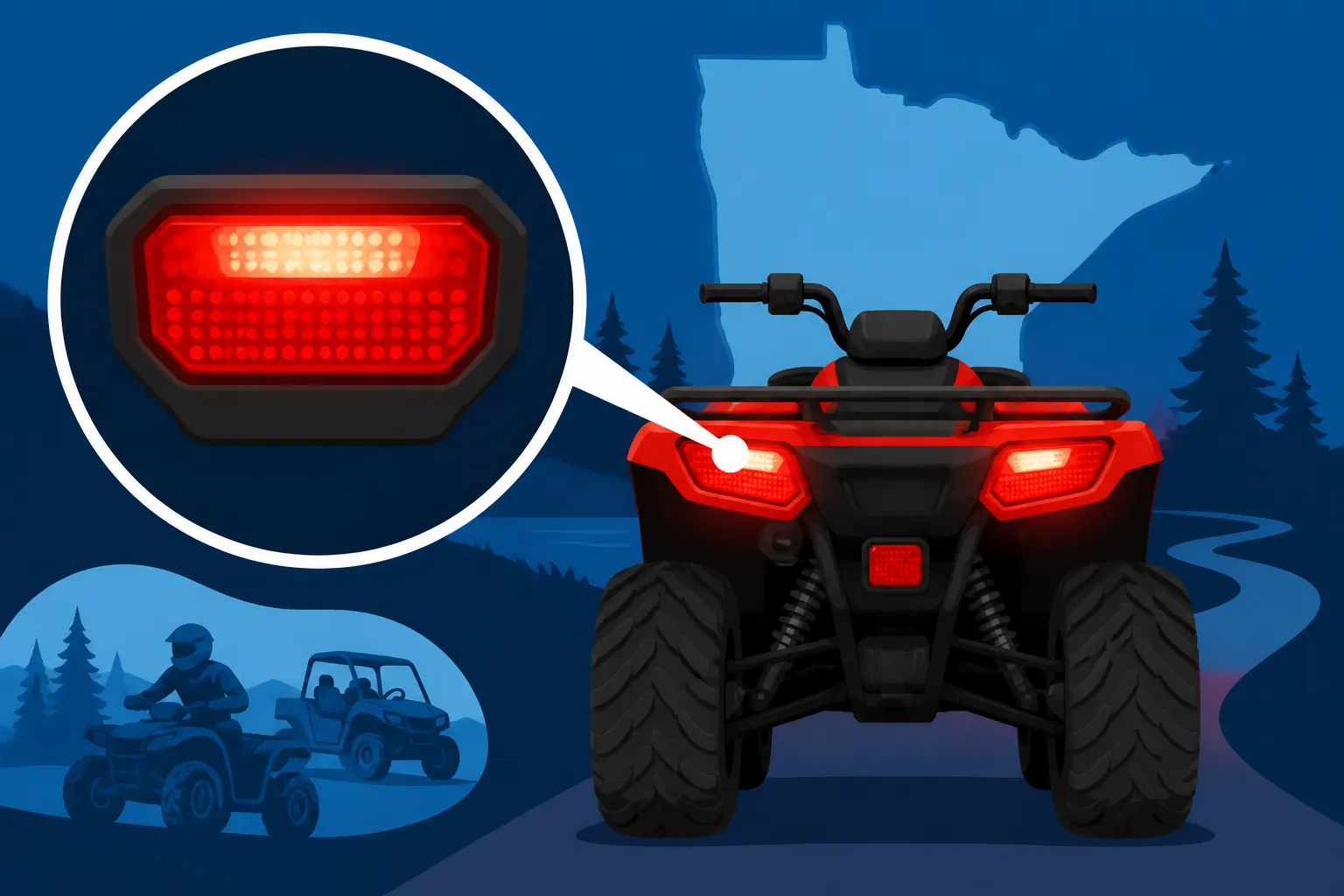
Minnesota statutes are pretty clear when it comes to what's expected of your ATV or UTV's taillights. The law specifies that all off-highway vehicles (OHVs) operated on public lands or public roads and ditches during hours of darkness or reduced visibility must be equipped with at least one taillight. This taillight must display a red light visible from a distance of 500 feet to the rear. It's not enough for the light to just "be there"; it has to be effective and easily seen.
While "at least one taillight" is the minimum, many modern machines, especially side-by-sides, come equipped with two. Having two functional taillights is always a better option, as it provides redundancy and a wider, more noticeable presence. The color is non-negotiable: it must be red. White or amber lights to the rear (other than reverse lights, when activated) are not compliant and can confuse other operators. It's also worth noting that some vehicles might have combination lights that include brake lights. These must also be red and significantly brighter when the brakes are applied. For more details on what other lights you need, check out [Lighting Rules for Minnesota Night Riding].
When and Where Taillights are Absolutely Required
It’s crucial to understand that taillight requirements aren't just for designated "night riding." Minnesota law broadly applies these rules to "hours of darkness" or "reduced visibility." This means if you're riding at dawn, dusk, in heavy fog, rain, or even under a dense tree canopy where natural light is limited, your taillights need to be on and fully functional. This applies across the board, whether you’re exploring trails in Nemadji State Forest, navigating a county ditch, or making a quick crossing over a public road.
Specifically, any time you're operating on a road right-of-way, like a ditch or shoulder, whether crossing a highway or just riding a gravel township road, your taillights are legally mandated if visibility isn't optimal. This requirement is especially critical when you're riding through towns that allow ATV access on certain streets. Even on private property, if you're riding with others or near public access points, having your taillights on is a smart safety practice. Conservation officers and local law enforcement are vigilant about these rules, especially in popular riding areas. A quick glance over your shoulder before you head out is a simple way to ensure you're compliant and safe.
| Taillight Feature | Minnesota Legal Requirement | Best Practice for Safety |
|---|---|---|
| Number | At least one | Two for redundancy |
| Color | Red only | Bright, vivid red |
| Visibility | 500 feet to the rear | Visible from wider angles |
| Function | Always on in low light/dark | Includes bright brake light |
| Condition | Clean, unbroken, working | Fully integrated, durable |
Choosing and Maintaining Your ATV/UTV Taillights for Minnesota Compliance
Once you understand the "why" and "what" of Minnesota's taillight rules, the next step is ensuring your machine is properly equipped and maintained. This involves not just having lights, but having the right lights and keeping them in top condition.
Factory vs. Aftermarket: Ensuring Your Lights Meet the Grade
Most new ATVs and UTVs come straight from the dealer with taillights that meet Minnesota's minimum legal requirements. These factory-installed lights are generally designed for basic compliance and are often sufficient for typical riding. However, "minimum" doesn't always mean "best," especially if you find yourself frequently riding in challenging conditions or if your stock lights have seen better days. Over time, plastic lenses can fade or crack, bulbs can burn out, and wiring can become compromised, especially with all the jostling and mud we put our machines through.
If your factory taillights are damaged, dim, or you simply want to enhance your visibility, the aftermarket offers a wealth of options. Brands like SuperATV, for instance, offer a wide range of LED taillight assemblies, light bars, and even complete street-legal kits that often exceed factory specifications in terms of brightness, durability, and visibility. Upgrading to LED taillights can be a game-changer; they consume less power, last significantly longer than incandescent bulbs, and are generally much brighter, making your machine far more noticeable. When shopping for aftermarket lights, always confirm they are "DOT compliant" or specifically state they meet visibility requirements, such as "visible for 500 feet." Don't just pick something because it looks cool; verify its functionality and legal compliance.
Installation Tips and Common Pitfalls
Installing new taillights, whether replacing damaged ones or upgrading, can be a straightforward DIY project if you have basic mechanical skills. The key is to ensure secure mounting, proper wiring, and a watertight seal. Most aftermarket kits come with instructions, but here are a few universal tips: always disconnect your battery before starting any electrical work. Use proper connectors (crimp-on, heat-shrink types are excellent for off-road use) to prevent corrosion and ensure a solid electrical connection. Mount the lights securely to prevent vibration from loosening them or causing premature failure. Remember, these lights will be subjected to bumps, mud, and water, so durability in installation is key.
Common pitfalls often involve sloppy wiring. Exposed wires can fray, short out, or become damaged by debris, leading to intermittent light function or complete failure. Forgetting to ensure a good ground connection is another frequent issue that can make even the best lights perform poorly. Lastly, neglecting to test your lights thoroughly before you head out is a mistake many riders make. Turn on your machine, activate the lights, and walk around to the rear to confirm they're working correctly and are clearly visible. If you're unsure about your electrical skills, don't hesitate to take your machine to a qualified service center. It’s a small investment for your safety and to avoid potential fines.
Troubleshooting and Routine Maintenance for Longevity
Even the best-installed taillights won't last forever without a little TLC. Routine maintenance is key to ensuring they're always ready when you need them. After every ride, especially through mud or water, take a moment to wipe down your taillight lenses. Mud and grime can significantly reduce light output, making even bright LEDs appear dim. Regularly check for cracks in the lenses, which can allow water intrusion and damage the internal components.
If a taillight isn't working, start with the simplest checks: is the bulb burnt out (for incandescent types)? Is the fuse blown? Check the wiring for any obvious breaks or loose connections, especially where wires might rub against the frame or other components. Corrosion on terminals is a common culprit, particularly in wet environments like Minnesota. A quick spray with electrical contact cleaner can often resolve these issues. Always carry spare fuses and, if your machine uses them, spare bulbs in your toolkit. Knowing how to quickly replace a fuse or bulb on the trail can save you from being stranded or receiving a ticket. For guidance on getting a replacement sticker if yours falls off, you might want to read [Replacing a Minnesota ATV Decal That Fell Off].
Consequences of Non-Compliance and Staying Visible
Ignoring Minnesota's taillight requirements isn't just a minor oversight; it carries real risks, from legal penalties to significant safety concerns. Understanding these consequences can serve as a strong motivator to ensure your machine is always properly equipped.
What Happens If Your Taillights Aren't Up to Snuff in Minnesota
Let’s not sugarcoat it: riding without a functional, compliant taillight in Minnesota can land you in hot water. A conservation officer or local sheriff deputy will not hesitate to pull you over, especially if you're riding in low-light conditions. The immediate consequence is usually a citation for operating an improperly equipped off-highway vehicle. Fines can vary, but they're certainly more expensive than the cost of a new bulb or a decent set of aftermarket lights from a brand like SuperATV. Moreover, repeated violations or particularly egregious safety issues could lead to more severe penalties or even having your riding privileges revoked for a period. For a broader look at the penalties, check out [Minnesota Penalties for a Missing Sticker].
Beyond the legal ramifications, the biggest "consequence" is the increased risk to your personal safety and the safety of others. A rear-end collision on a trail, ditch, or road can result in serious injuries, extensive machine damage, and significant medical bills. If you're involved in an accident and your taillights were found to be non-compliant, you could face increased liability, regardless of who was primarily at fault. Insurance companies can and do look at factors like equipment compliance when assessing claims. It's a risk simply not worth taking.
Beyond Taillights: Other Visibility Enhancements for Minnesota Riding
While taillights are non-negotiable, savvy Minnesota riders know that visibility is a multi-faceted approach. To truly maximize your presence, especially when sharing public ways or trails, consider augmenting your taillights with other enhancements. Reflective tape, particularly on the rear and sides of your machine, can dramatically increase your visibility, catching light from other vehicles even if your electrical system temporarily fails. Many riders apply reflective tape to their helmets, too. [Reflectors for a Ditch Ride] offers more ideas on this.
Whip flags are another excellent addition, especially when riding in dusty conditions or areas with varying terrain where your machine might dip below the line of sight. These tall, brightly colored flags make your presence known even when your actual machine isn't directly visible. For yourself, bright, contrasting riding gear, particularly in fluorescent colors, enhances your daytime visibility significantly. Don't forget proper eye protection, as clear vision is also part of being safe and seen. For related safety gear, consider [Eye Protection on a Minnesota Ride] or [Minnesota Helmet Rules for Riders Under 18]. The more layers of visibility you add, the safer you and your riding companions will be.
Real-World Scenarios: Taillights on the Trail, Ditch, and Road
Let’s imagine a few common Minnesota riding scenarios to underscore the importance of functional taillights.
Scenario 1: Dusk Ride on a State Forest Trail. You're deep in Nemadji State Forest, enjoying the last rays of sunlight on a winding trail. As you head back to the trailhead, the light fades quickly under the dense pine canopy. Suddenly, another rider, pushing hard to beat sundown, comes up behind you on a blind curve. If your taillights are bright and steady, they'll see your red glow long before they see your machine, allowing them to slow down and approach safely. Without them, you're a dark shape that only becomes visible at the last second, potentially leading to a collision.
Scenario 2: Ditch Riding Near a County Road. You're enjoying a permitted ride along a county road ditch, heading to a local gas station. It’s late afternoon, and the sun is low in the sky, creating glare for oncoming traffic. Farm equipment, pickups, and cars are using the road. Your taillights, particularly with a strong brake light function, communicate your presence and intentions to everyone sharing the right-of-way. As you approach a drive-way, your brake lights flash, clearly indicating you're slowing down, even if the driver behind you can't see the rest of your machine due to brush or the angle of the ditch. For more on these rules, read [Riding the Ditch of a Minnesota Right of Way].
Scenario 3: Crossing a Minnesota Highway. This is one of the most critical times for visibility. Minnesota law allows for crossing highways in designated areas, but it requires extreme caution. As you stage to cross a busy two-lane highway, your taillights, along with your headlights, signal your presence to fast-moving traffic. The steady red glow helps drivers perceive you as a vehicle, not just a patch of color, giving them time to adjust their speed or move over. Without proper taillights, you're an ambiguous object that could suddenly dart across their path, a recipe for disaster. This is where compliance isn't just a suggestion; it's a life-saving measure.
Disclaimer
This article is for general informational purposes only and does not constitute professional advice. Laws, prices and regulations vary by location and change over time. Consult a qualified professional for guidance on your specific situation.