Minnesota’s No Registration Weekend
Minnesota's vast network of trails and scenic natural beauty makes it an incredible place for ATV and UTV enthusiasts. However, navigating the rules and regulations can sometimes feel like a muddy trail ride in itself, especially when it comes to registration. This guide will cut through the confusion surrounding Minnesota's "No Registration Weekend," explaining what it is, what it isn't, and how you can make the most of this unique opportunity to explore the great outdoors.
Understanding Minnesota's No Registration Weekend
For many, the idea of hitting Minnesota's gorgeous trails without worrying about official registration sounds like a dream. And while it's not quite a free-for-all, the state's "No Registration Weekend" offers a fantastic, temporary reprieve from the usual paperwork. It's a special occasion designed to encourage greater participation in off-highway vehicle (OHV) recreation, welcoming new riders and allowing others to experience the thrill of the trails without the immediate commitment of a three-year registration fee.
What is "No Registration Weekend" Exactly?
Imagine a weekend, typically in early June, where the usual requirement for your ATV or UTV to be registered with the Minnesota DNR is temporarily lifted. That's essentially what No Registration Weekend is all about. This initiative is a statewide event, usually coordinated by the Minnesota Department of Natural Resources (DNR), to promote safe and responsible OHV use. The primary goal is to remove a common barrier to entry—the initial registration process and associated fees—for a brief period, encouraging people who might be on the fence about getting into the sport to give it a try. It’s also a perfect chance for someone who has just acquired a machine and is waiting for their registration to fully process to get out and enjoy it legally.
It’s crucial to understand that this isn’t a permanent change, nor does it mean all rules go out the window. It's a specific, designated period, usually a Saturday and Sunday, where the requirement to display a current registration decal is waived for all ATVs and UTVs. This means you won't get cited for an unregistered machine on public trails or designated riding areas during these specific days. It’s a wonderful gesture from the state to foster community and introduce more people to the incredible outdoor opportunities available on Minnesota's extensive trail system.
Who Benefits Most from This Opportunity?
While everyone can certainly appreciate a break from paperwork, "No Registration Weekend" particularly shines for a few specific groups of riders. First and foremost, new potential buyers stand to gain immensely. Perhaps you've been eyeing a new side-by-side or a beefier ATV, but you're not entirely sure if the commitment is right for you. This weekend offers a golden opportunity to test drive a machine on actual trails, whether it's one you're borrowing from a friend or one you've just purchased and haven't had a chance to register yet. It provides a real-world trial without the immediate financial outlay of registration.
Families looking to introduce younger members to the joys of off-road riding also find this weekend incredibly useful. If you have a youth machine that’s been sitting in the garage, or a teenager who’s finally old enough to try a full-size ATV, this is a low-stakes way to get them some supervised trail time. It helps gauge their interest and comfort level before you invest in a full registration. Moreover, out-of-state visitors who might be considering buying land in Minnesota or relocating here can experience the trails firsthand, getting a feel for the riding culture and opportunities, without needing to worry about [Minnesota Registration for an Out-of-State Machine] right away. Even those who have recently bought a used ATV in Minnesota and are waiting for the [Transferring a Minnesota ATV After a Sale] paperwork to clear can take advantage of these days to hit the dirt legally.
What "No Registration" Truly Means (and Doesn't Mean)
The name "No Registration Weekend" can be a bit misleading if you don't delve into the specifics. It's easy to assume it means absolutely no rules or requirements apply, but that's far from the truth. While the registration requirement is indeed lifted for a brief window, many other crucial laws and safety regulations remain firmly in place. Understanding these distinctions is paramount for a safe, enjoyable, and legal riding experience.
Machines That Are Exempt During This Period
During Minnesota's No Registration Weekend, the exemption applies specifically to off-highway vehicles (OHVs), which include both all-terrain vehicles (ATVs) and utility task vehicles (UTVs), commonly known as side-by-sides. This means that if you own one of these machines, you do not need to have a current DNR registration decal displayed to ride on designated public trails or public lands that are open to OHV use. It's a temporary waiver of the registration fee and the visual proof of registration.
However, it's vital to remember that even though your machine is temporarily exempt from registration, it must still be in proper working order and meet all other equipment requirements. This includes having functioning headlights, taillights, a spark arrestor, and a proper muffler. The DNR isn't giving you a pass on basic machine safety or environmental considerations. The intent is to encourage new riders and allow casual use, not to permit unsafe or non-compliant machines on the trails. If your machine is typically subject to [Minnesota ATV Classes and What They Mean] or [Class 1 and Class 2 Machines in Minnesota] regulations, those classifications still hold regarding where you can ride.
Key Exemptions and Important Caveats
The biggest exemption during this special weekend is, of course, the state registration requirement itself. This means you won't be ticketed for not having your current registration sticker affixed to your machine. It essentially gives you a free pass on the state registration fee for that specific weekend. It’s an opportunity to ride without the typical state bureaucracy.
However, and this is a huge "however," the No Registration Weekend does not waive several other critical requirements:
- Safety Training: This is probably the most commonly misunderstood aspect. Even if your ATV or UTV doesn't need to be registered, all riders born after July 1, 1987, must still have a valid ATV safety certificate to operate on public lands, including during No Registration Weekend. There are no exceptions to this rule. [Minnesota's ATV Safety Training Requirement] remains firmly in place.
- Trail Pass for Non-Residents: If you are visiting from another state, while your machine may not need to be registered for the weekend, you will still need to purchase a [Minnesota's Non-Resident ATV Trail Pass] if you plan to ride on Minnesota's Grant-in-Aid trails or state forest trails. This pass helps fund the maintenance and development of these trails, and the No Registration Weekend does not exempt out-of-state riders from this fee.
- Rules of the Road/Trail: All other laws pertaining to safe operation, speed limits, passenger restrictions, helmet use, and where you can legally ride are still in full effect. You can't just take your unregistered machine anywhere you please. [Minnesota's Ditch Riding Rules], for instance, still apply, as do [Minnesota Helmet Rules for Riders Under 18].
- Proof of Ownership: While you don't need registration, it's always a good idea to have some form of [Proof of Ownership for a Minnesota ATV] with you, such as a bill of sale, especially if you're riding a newly acquired machine. This can help clear up any questions if you encounter a conservation officer.
In essence, think of it as a brief holiday from one specific piece of paperwork, not a blanket waiver of all rules governing ATV and UTV use in Minnesota.
Safety and Legal Requirements That Still Apply
Even when the registration requirement is temporarily suspended for a special weekend, the core principles of safe and legal ATV/UTV operation in Minnesota remain unchanged. It's not a free-for-all; it's an invitation to ride responsibly. Ignoring these ongoing requirements can lead to dangerous situations, hefty fines, and can undermine the very spirit of the No Registration Weekend. The DNR emphasizes safety above all else, and these rules are in place for a reason.
Mandatory Safety Training for Riders
One of the most crucial requirements that never takes a holiday, even during a No Registration Weekend, is ATV safety training. In Minnesota, if you were born after July 1, 1987, you absolutely must have a valid ATV safety certificate to operate an ATV or UTV on public lands, including designated trails and public ditches. This rule applies regardless of whether your machine is registered or not, and it's something conservation officers will check for.
The purpose of this training is to equip riders with essential knowledge about safe operation, trail etiquette, environmental protection, and basic machine maintenance. It covers everything from how to handle different terrains to understanding state laws. You can typically complete the training online through an approved course, followed by a hands-on riding component for younger riders, or attend in-person classes. This certification is a one-time requirement and does not expire, making it a critical investment for any rider who falls under the birthdate rule. Even if you're an experienced rider, refreshing your knowledge through the training can be beneficial. Don't let the excitement of a "no registration" ride make you forget this fundamental step; without it, you're not riding legally. For more details on certification, see [Minnesota ATV Safety Training Requirements].
Helmet Laws and Eye Protection
Another non-negotiable aspect of ATV and UTV riding in Minnesota, regardless of registration status, involves helmets and eye protection. These aren't just suggestions; they are laws designed to protect riders from serious injury in the event of an accident. The rules are particularly strict for younger riders, but highly recommended for everyone.
Specifically, any person under the age of 18 operating or riding as a passenger on an ATV or UTV on public lands or trails in Minnesota must wear a DOT-approved helmet. This isn't a recommendation; it's a legal mandate. The helmet must be properly fitted and securely fastened. While adults over 18 are not legally required to wear a helmet, it is strongly, strongly advised. A helmet can be the difference between a minor bump and a life-altering head injury, even at low speeds or during seemingly innocuous tip-overs. Beyond helmets, all riders and passengers must wear eye protection while operating or riding an ATV or UTV. This can be goggles, a face shield on a helmet, or shatter-resistant glasses. This protects against dust, debris, insects, and low-hanging branches that can cause serious eye damage. You can read more about this in [Minnesota Helmet Rules for Riders Under 18] and [Eye Protection on a Minnesota Ride]. Prioritizing safety gear shows respect for yourself, your fellow riders, and the sport itself.
Age Restrictions and Accompanied Riding
Minnesota has clear age restrictions and supervision requirements for ATV and UTV riders, which are absolutely enforced during No Registration Weekend. These rules are in place to ensure that young riders have the necessary physical and mental maturity, as well as supervision, to operate these powerful machines safely.
For instance, children under the age of 12 are generally restricted from operating ATVs and UTVs on public lands, with very limited exceptions for youth models on private land under direct supervision. Riders between the ages of 12 and 15 face specific requirements: they must have passed an approved ATV safety training course, and they must be accompanied by an adult who is at least 18 years old. This adult must ride a separate machine and maintain visual contact. The purpose of this accompanied riding rule is to provide immediate guidance and intervention if a young rider encounters difficulty or makes an unsafe decision. Once a rider turns 16, and if they have completed their safety training, the accompanied riding requirement typically lifts, granting them more independence. However, even then, exercising good judgment and riding within one's skill level is always paramount. Understanding and adhering to these [Minnesota Age Rules for Young Riders] is essential for both the safety of the young rider and for staying compliant with state law, ensuring a positive experience for everyone on the trails.
Where You Can (and Cannot) Ride During the Weekend
Just because your machine doesn't require registration for a specific weekend doesn't mean the entire state becomes your personal playground. Minnesota has a meticulously planned system of trails and regulations governing where off-highway vehicles can operate. Disregarding these rules, even unknowingly, can lead to fines, environmental damage, and erosion of public access for all riders. Understanding designated riding areas and prohibited zones is critical for responsible recreation.
Approved Riding Areas
During Minnesota's No Registration Weekend, you are encouraged to ride on the vast network of designated OHV trails throughout the state. This primarily includes the extensive [Minnesota's Grant-in-Aid Trail System], which are trails maintained by local clubs with DNR funding, as well as trails within Minnesota's State Forests. Locations like [Nemadji State Forest and Its 200 Miles] or the [Iron Range OHV Area at Gilbert] are prime examples of places where you can legally and safely enjoy your ATV or UTV. These areas are specifically designed and managed for off-highway vehicle use, offering a variety of terrain and experiences for riders of all skill levels.
Additionally, riding on private land is permissible, but only with the express permission of the landowner. It is absolutely essential to secure this permission beforehand to avoid trespassing issues. Some landowners might even provide a written permission slip, and if you're ever in a situation where you need to formalize agreements, tools like LawDepot can assist in creating basic property use documents. Always look for signage indicating where OHV use is allowed and respect any posted closures or restrictions, which might be in place due to weather, maintenance, or fire danger. The goal is to explore these areas responsibly, leaving no trace and respecting both the environment and other trail users. For a comprehensive overview of where to find these trails, check out [Where to Ride an ATV in Minnesota].
Restrictions on Roadways and Private Property
The freedom of No Registration Weekend does not extend to public roadways. In Minnesota, ATVs and UTVs are generally prohibited from operating on the paved surface of public streets, roads, and highways. This is a crucial distinction to understand. While there are some very specific exceptions, such as crossing a road at a 90-degree angle, operating on an approved municipal ATV route, or using the extreme right-hand shoulder or ditch in certain circumstances, these are not blanket permissions. You cannot simply ride your machine down a county road or state highway during the No Registration Weekend, or any other time, for that matter. [Riding an ATV on the Road in Minnesota] provides a detailed breakdown of these highly restrictive rules.
Furthermore, straying onto private property without explicit consent is strictly forbidden. The concept of "no registration" applies to the machine itself, not to the land you're riding on. Just because you don't need a registration sticker doesn't give you license to trespass. This includes ditches that run alongside private land if they are not part of an officially designated public route. Always be aware of your surroundings, look for "No Trespassing" signs, and when in doubt, assume private land is off-limits unless you have direct permission. Violating trespass laws can lead to severe penalties, strained relationships with landowners, and can jeopardize future access for all riders. Remember, [Minnesota Trespass Rules Along Ditches] are always in effect, and an unregistered machine doesn't make you exempt from them.
| Rule Category | During No Registration Weekend | During Regular Riding (Registered Machine) |
|---|---|---|
| ATV/UTV Registration | NOT required (for the weekend) | REQUIRED for public land/trails |
| DNR Registration Decal | NOT required to display | REQUIRED to display |
| Non-Resident Trail Pass | REQUIRED (if riding Grant-in-Aid trails) | REQUIRED (if riding Grant-in-Aid trails) |
| ATV Safety Training | REQUIRED (if born after 7/1/87) | REQUIRED (if born after 7/1/87) |
| Helmet (Under 18) | REQUIRED | REQUIRED |
| Eye Protection | REQUIRED | REQUIRED |
| Age Restrictions | Apply as usual | Apply as usual |
| Accompanied Riding | Apply as usual (for minors) | Apply as usual (for minors) |
| Public Trail Access | Permitted on designated trails | Permitted on designated trails |
| Roadway Access | Very limited exceptions apply | Very limited exceptions apply |
| Private Property | Permission REQUIRED | Permission REQUIRED |
| Proof of Ownership | Recommended to carry | Recommended to carry |
Essential Gear and Preparations for the Weekend
The allure of "No Registration Weekend" might tempt you to just grab your keys and go, but that would be a mistake. Regardless of whether you're legally registered or temporarily exempt, safe and enjoyable riding always hinges on proper preparation. This means not only ensuring your machine is ready but also equipping yourself with the right personal gear and having a solid plan for potential contingencies. A little forethought goes a long way in preventing breakdowns, injuries, or getting lost in Minnesota's beautiful, but sometimes vast, backcountry.
Pre-Ride Machine Checks and Maintenance
Before you even think about hitting the trail for No Registration Weekend, give your ATV or UTV a thorough once-over. This pre-ride inspection is crucial for your safety and to prevent unexpected mechanical failures that could leave you stranded. Start with your tires: check the pressure, look for any cuts, bulges, or punctures, and ensure they have adequate tread. Next, inspect your brakes; test both front and rear to make sure they are responsive and effective. You don't want to discover a brake issue when you're barreling down a hill.
Check all your fluid levels – oil, coolant, and brake fluid – and top them off if necessary. Ensure your lights, including headlights, taillights, and brake lights, are all functioning correctly, especially if there's any chance you'll be riding near dusk or in low-light conditions. A quick look at your chain or drive belt for proper tension and wear is also a good idea. Beyond that, make sure your spark arrestor is clean and your muffler is intact and quiet. These checks aren't just for registered machines; they're fundamental to responsible operation and will help you avoid fines for equipment violations. Carrying a small tool kit with basic wrenches, zip ties, and a tire repair kit can also be a lifesaver far from the trailhead.
Personal Protective Equipment
Your personal safety gear is just as important as the machine itself, if not more so. While helmets are legally mandated for riders under 18 in Minnesota, they are a non-negotiable recommendation for every rider and passenger, regardless of age. A high-quality, DOT-approved helmet fits snugly and provides vital protection in a crash. Pair this with proper eye protection – goggles or a face shield – to keep dust, debris, and insects out of your eyes, ensuring clear vision on the trail.
Beyond the head, consider full-body protection. Long-sleeved shirts and pants, preferably made of durable material, protect your skin from scrapes, sun exposure, and insect bites. Sturdy, over-the-ankle boots provide ankle support and grip on the footpegs, while gloves protect your hands from blisters, impacts, and brush. Layer your clothing appropriately for Minnesota's often unpredictable weather, especially in early June when temperatures can fluctuate. Even on a warm day, a sudden rain shower can drop temperatures quickly. Being prepared with the right gear not only enhances your safety but also significantly improves your comfort and enjoyment on the trail.
Navigation and Emergency Planning
Hitting the trails, especially in Minnesota's more remote northern regions, requires a solid plan for navigation and emergencies. Even during No Registration Weekend, you could find yourself far from civilization or cell service. Always carry a detailed trail map of the area you plan to ride, even if you also use a GPS device. Technology can fail, batteries die, or signals can be lost, especially in dense forests or deep valleys. Apps like onX Offroad are popular among riders for their detailed maps and satellite imagery, but a physical map is a reliable backup.
Before you head out, inform someone of your riding plans – where you're going, your intended route, and when you expect to return. This "float plan" is critical in case you don't show up when expected. Consider carrying a fully charged cell phone (though be aware of [Cell Service in the Minnesota Northwoods] limitations), a first-aid kit, and enough water and snacks for your entire trip, plus a little extra. For truly remote areas, a satellite messenger or personal locator beacon (PLB) can literally be a lifesaver, allowing you to call for help even without cell service. Don't forget bug spray, especially during late spring and early summer rides when ticks and mosquitoes are plentiful. Being prepared for the unexpected ensures that a minor setback doesn't turn into a serious emergency, allowing you to fully enjoy your time outdoors.
Planning for Future Rides: Beyond the Free Weekend
Minnesota's No Registration Weekend is a fantastic temporary reprieve, a taste of the freedom and fun that ATV and UTV riding offers. But like any good sample, it eventually runs out. Once the special weekend concludes, the regular rules and regulations for off-highway vehicle operation snap back into place. For those who enjoyed the experience and want to continue exploring Minnesota's trails, understanding and fulfilling these ongoing requirements is essential. It's about moving from a trial period to becoming a fully compliant and responsible member of the riding community.
Regular Registration Requirements
After the "free" riding weekend, if you plan to continue using your ATV or UTV on public lands, trails, or even on designated ditch routes in Minnesota, you will need to formally register it with the state DNR. This isn't just a suggestion; it's a legal requirement. [Registering an ATV in Minnesota] ensures that your machine is properly documented, and the fees collected go directly towards maintaining and expanding the very trail systems that you enjoy.
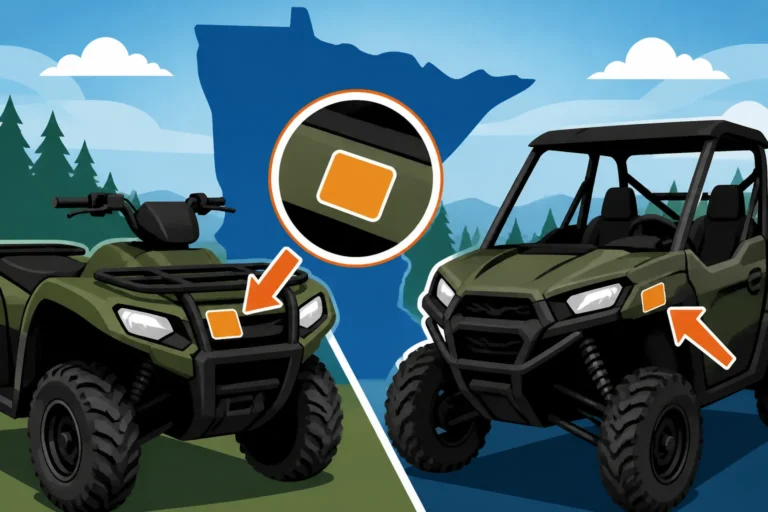
The registration process typically involves providing proof of ownership (like a bill of sale or previous title), paying a registration fee, and receiving a registration card and a decal. This decal must then be affixed to your machine in a visible location, usually on the front or rear, as outlined in [Where a Minnesota ATV Registration Sticker Goes]. Registrations are usually valid for three years, and you'll receive renewal reminders from the DNR when it's time to update. You can typically register your machine through the [Registering Online Through Minnesota eLicense] system or by visiting one of the many [Deputy Registrars That Handle ATV Registration] offices across the state. Don't wait until the last minute; get your machine registered promptly to avoid penalties and ensure uninterrupted access to Minnesota's incredible riding opportunities. For a full breakdown, check out [Minnesota DNR ATV Registration Explained].
Understanding Trail Passes and Other Permits
Beyond basic registration, there's another layer of authorization that riders, particularly non-residents, need to be aware of: the Minnesota ATV Trail Pass. As mentioned, during No Registration Weekend, non-residents still need this pass if they ride on Grant-in-Aid or state forest trails. This requirement continues year-round. If you're an out-of-state rider planning a trip to Minnesota outside of the special weekend, purchasing a [Minnesota's Non-Resident ATV Trail Pass] is mandatory. These passes are usually affordable and valid for one year, with funds directly supporting trail maintenance and improvements.
Even Minnesota residents, whose registered machines generally don't require an additional "trail pass" (as the registration fee contributes to the trail system), might encounter other permit requirements for specific situations. For example, organized club events, guided trips, or special use of state forest lands might necessitate additional permits. It's always a good practice to check with the DNR or the specific land management agency if you're planning an activity that deviates from typical recreational riding. Being informed about these various passes and permits ensures you're always riding legally and contributing to the continued health of Minnesota's OHV trail system.
Considering Insurance for Your Machine
While Minnesota does not mandate insurance for ATVs and UTVs operated on private land or public trails (unlike street-legal vehicles), it is a highly, highly recommended consideration. No Registration Weekend might give you a taste of riding, but it doesn't protect you from the financial aftermath of an accident. [Insuring an ATV in Minnesota] offers crucial protection for both you and your investment.
A good insurance policy can cover damage to your machine in an accident, theft, or even natural disasters. More importantly, liability coverage protects you financially if you're at fault in an accident that causes injury to another person or damage to their property. Imagine accidentally colliding with another rider, or damaging a fence on private property—without insurance, you could be facing significant out-of-pocket expenses. Some homeowners' insurance policies might offer limited coverage for ATVs, but often only for incidents on your own property. A dedicated ATV/UTV policy provides comprehensive protection wherever you ride. Talk to an insurance provider to understand your options; it's a small annual cost compared to the potential financial burden of an uninsured incident. It offers peace of mind, allowing you to truly relax and enjoy your time on Minnesota's fantastic trails.
Disclaimer
This article is for general informational purposes only and does not constitute professional advice. Laws, prices and regulations vary by location and change over time. Consult a qualified professional for guidance on your specific situation.