Minnesota Paperwork for a Machine Bought at Auction
Buying an ATV or UTV at an auction in Minnesota can feel like you've scored a fantastic deal, but the excitement often quickly turns to anxiety when you realize the paperwork situation might be a tangled mess. So many folks jump on a great price, only to find themselves completely bewildered about how to actually get that machine legally registered and ready for the trails. This guide is here to walk you through the often-confusing process of navigating the Minnesota paperwork requirements for an off-highway vehicle (OHV) you've purchased at an auction.
The Unique Challenges of Auction Purchases in Minnesota
Let's be honest, auctions are exciting! The thrill of the bid, the rush of getting a machine for a great price – it's all part of the fun. But that same environment, by its very nature, can also create some significant headaches when it comes to the legal documentation needed to prove ownership and register your new-to-you ATV or UTV in Minnesota. It's not like buying from a reputable dealer where everything is neat and tidy.
Why Auctions Can Be a Paperwork Minefield
One of the biggest frustrations buyers face at auctions is the sheer lack of consistent paperwork. You might win a bid on a fantastic quad, only to be handed a scribbled receipt that barely identifies the machine, let alone provides clear proof of previous ownership. This isn't just a minor inconvenience; it's a huge hurdle for registration. Often, the previous owner might have lost the title years ago, or perhaps the machine was part of an estate sale where the executor didn't fully understand the importance of proper titling for an ATV or UTV.
Then there's the issue of the auction house itself. While some larger, more professional auctioneers might have a dedicated process for obtaining and transferring titles, many smaller, local auctions are simply facilitators. They sell what's brought to them, and their primary concern is moving inventory, not necessarily ensuring perfect title chains. This leaves you, the buyer, in a precarious position, trying to piece together a history for a machine that might not have a clear paper trail. You're left wondering if you truly own it, or if you've just bought yourself a very expensive paperweight that can't legally hit the trails.
Understanding Different Types of Auctions
Not all auctions are created equal, and understanding the type of sale you're participating in can sometimes give you a heads-up about the potential paperwork challenges.
- Public Auctions (Government Surplus, Sheriff Sales, Tow Lots): These often involve machines that have been seized, abandoned, or are surplus from government agencies. While these sales can sometimes come with clear chain-of-custody documents, they are equally likely to have machines with no prior title or registration. The selling entity (e.g., a sheriff's department) will typically issue a certificate of sale or similar document. This document, while official, isn't always a direct replacement for a clean title in the DNR's eyes, and you might still need to jump through some hoops. The good news is that these sales are often transparent about the "as-is" nature, including documentation.
- Private Auctions (Estate Sales, Business Liquidations, Farm Sales): These are perhaps the most common places to find ATVs and UTVs. In an estate sale, for example, the family might simply be clearing out belongings and may not even realize the machine had a separate title or current registration. The paperwork might be an old, expired registration card, or just a handwritten note from Grandpa saying he owned it. For business liquidations, there might be a bulk sale of assets, and individual machine titles might not be prioritized. In these scenarios, obtaining a robust bill of sale from the person or entity conducting the auction is absolutely paramount. It's often your best, and sometimes only, shot at establishing ownership.
Essential Documents You Need (or Should Try to Get)
When you're dealing with an auction purchase, your goal is to assemble as much documentation as possible, even if it feels like you're playing detective. The more official-looking papers you have, the smoother your registration process will be.
The Bill of Sale: Your Most Crucial Document
In Minnesota, for an ATV or UTV, a well-executed bill of sale can be an absolute lifesaver, especially when a traditional certificate of title is nowhere to be found. For an auction purchase, this document becomes your primary proof of ownership. It can't be just any old scribble on a napkin, though. A strong bill of sale should contain specific, detailed information.
First and foremost, it needs to clearly identify the seller. Was it the auction house? Or were they merely facilitating a sale for an individual or estate? You need the full legal name and contact information of the actual selling entity. Second, it must accurately describe the ATV or UTV. This means the make, model, year, and, critically, the Vehicle Identification Number (VIN). Without the VIN, you have no way to definitively link the machine to the paperwork. Also, include the purchase price and the date of sale. The condition of the machine and any known defects can also be useful to include, but the core elements are identification of seller, buyer, machine (with VIN), price, and date. For more details on what to include, you might find [What a Minnesota Bill of Sale Should Carry] helpful. If you’re ever in a pinch and need to create a rock-solid bill of sale, or perhaps an affidavit of ownership to accompany your other documents, services like LawDepot can be incredibly useful for generating legally sound templates. They help ensure all the necessary details are included to satisfy the DNR.
Remember, the DNR wants to see a clear transfer of ownership. A comprehensive bill of sale, even from an auction, helps establish that.
The Elusive Certificate of Title
This is often where the rubber meets the road with auction purchases. Many ATVs and UTVs, especially older ones, were never titled in Minnesota, or the title might have been lost years ago. Unlike cars, where a title is always mandatory, Minnesota's titling requirements for OHVs have evolved, and some older machines may simply not have one. Even if a machine should have a title, auctions are notorious for selling machines where the title is missing, or the seller simply doesn't have it.
If a title is present, great! That simplifies things immensely. The previous owner or the auction house should sign it over to you. However, if it's missing, don't despair immediately. The Minnesota DNR does have procedures for registering machines without a traditional title, provided you can establish ownership through other means, primarily that detailed bill of sale. Sometimes, they might require an affidavit of ownership where you swear under oath that you are the rightful owner and explain the circumstances of the purchase. In some cases, for particularly problematic situations, you might even need to look into a bonded title, though this is less common for ATVs/UTVs than for cars. Understanding [Registering a Minnesota ATV With No Ownership History] can provide deeper insight into how the DNR handles machines without a title.
Other Supporting Documents
While not strictly required, any other documents you can get with the machine can bolster your claim of ownership. This might include:
- Expired registration cards: Even if it's an old, expired card in the previous owner's name, it shows a past registration history and can help verify the VIN.
- Maintenance records: Receipts for repairs, oil changes, or accessory purchases that include the VIN or machine description can further link the machine to its history.
- Original owner's manual: While not a legal document, it can contain the VIN and shows a complete package.
Every little bit of paper helps paint a clearer picture for the deputy registrar.
Navigating Registration with Auction Paperwork
Once you have your bill of sale and any other supporting documents, the next step is to actually get your machine registered. This is where you'll interact directly with the Minnesota Department of Natural Resources (DNR) system, typically through a local deputy registrar's office.
The Minnesota DNR's Stance on Missing Titles
The Minnesota DNR understands that not every off-highway vehicle comes with a perfectly clear title. Their primary goal is to ensure legitimate ownership and to get machines properly registered so they can contribute to trail maintenance through registration fees. Because of this, they are generally more flexible with ATVs and UTVs than the Department of Public Safety might be with automobiles.
For an auction purchase where a title is missing, the DNR will heavily rely on your bill of sale. They need to see that you legally acquired the machine and that there isn't a cloud on the title, like it being stolen. If your bill of sale is comprehensive and signed by the appropriate party (the auction house or the previous owner's estate), it usually serves as sufficient proof of ownership for registration purposes. However, be prepared for some questions, especially if the bill of sale is vague or incomplete. They may ask for additional declarations or affidavits if they have any doubts about the legitimacy of the transfer.
Steps to Register Your Auction-Acquired ATV/UTV
Here's a breakdown of the typical steps you'll follow:
- Gather All Your Documents: This includes your detailed bill of sale, any expired registration cards, and any other supporting paperwork you managed to acquire.
- Locate Your VIN: Double-check the VIN on your paperwork against the actual VIN stamped on the machine. This is crucial. If there's a discrepancy, you'll need to resolve it before proceeding. [Where the VIN Sits on a Quad] can help you find it.
- Visit a Deputy Registrar's Office: You can't usually register an auction-bought machine with complex paperwork online. You'll need to go in person to a deputy registrar's office. Many [Deputy Registrar Offices That Register ATVs] are available throughout Minnesota. Bring all your documents with you.
- Complete the OHV Registration Application: The registrar will provide you with the necessary forms. You'll fill out your personal information and details about the ATV or UTV.
- Present Your Proof of Ownership: Hand over your bill of sale and any other supporting documents. Be prepared to explain the auction process and why a title might be missing.
- Pay the Registration Fee: The Minnesota ATV registration fee is typically a three-year fee. The registrar will calculate this for you.
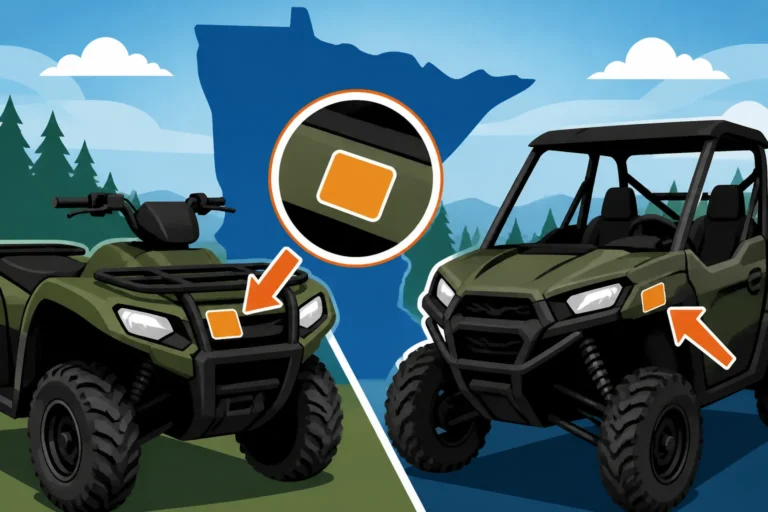
- Receive Your Registration Card and Decal: Once approved, you'll get a new registration card and decals that you'll need to affix to your machine. For guidance, see [Where a Minnesota ATV Registration Sticker Goes].
While the process might sound intimidating, the registrars are there to help. Be patient and bring all the information you have.
Dealing with Sales Tax on an Auction Purchase
Sales tax can be a bit tricky with auction purchases, and it's essential to understand your obligations to avoid surprises. In Minnesota, sales tax applies to the purchase of ATVs and UTVs.
- Auction House Collection: If you bought your machine from a professional auction house that regularly sells vehicles, they might collect sales tax directly from you at the point of sale. If they do, they should provide you with documentation showing the sales tax was collected. This will then be presented at the deputy registrar's office.
- Private Party Auction (Sales Tax Due at Registration): If the auction was more like a private sale (e.g., an estate auction not run by a licensed dealer), it's highly likely that the sales tax was not collected by the auctioneer. In this scenario, you will be responsible for paying the Minnesota sales tax on the purchase price when you go to register the machine at the deputy registrar's office. Make sure your bill of sale clearly states the purchase price, as this will be the basis for calculating the tax. [Minnesota Sales Tax on a Private ATV Sale in Minnesota] offers more insights into private sale tax rules.
Always clarify with the auction house before you bid whether sales tax will be collected by them or if it will be your responsibility at registration. No one likes an unexpected bill!
Avoiding Pitfalls and Protecting Your Investment
Buying at auction comes with inherent risks, but a little pre-planning and caution can go a long way in protecting your investment and preventing future headaches with paperwork.
Before You Bid: Due Diligence is Key
The excitement of an auction can make you overlook critical details. Before you even raise your hand, do your homework on the machine and the process.
- Inspect the Machine Thoroughly: Look for physical damage, signs of neglect, and modifications. Check the engine, tires, and suspension. A machine that looks great might have hidden issues. It's also a good idea to identify the VIN (Vehicle Identification Number) on the machine itself. Knowing [Where the VIN Sits on a Quad] can help you find it quickly.
- Check the VIN for Red Flags: If you can get the VIN before the auction, run a quick check. There are online services that can sometimes tell you if the machine has been reported stolen or has a salvage history. While not always foolproof for ATVs, it's a good first step. Knowing [Checking Whether a Quad Was Reported Stolen] can save you a lot of grief. Don't be afraid to ask for the VIN, or to quickly note it down when inspecting the machine. You definitely want to be [Checking a Serial Number Before You Pay].
- Ask About Documentation: Don't assume. Directly ask the auctioneer or seller what documents will be provided. Will there be a title? A formal bill of sale? Understanding this upfront can temper your bidding enthusiasm or give you the confidence to move forward.
- Read the Auction Terms and Conditions: Every auction has rules. Understand their policies on "as-is" sales, payment methods, and especially how they handle documentation and title transfers.
| Document Type | Ideal Scenario (Private Sale) | Realistic Scenario (Auction) |
|---|---|---|
| Certificate of Title | Signed over by previous owner | Often missing, declared "not available" |
| Bill of Sale | Detailed, signed by seller & buyer, notarized (optional) | Handwritten, generic, or provided by auction house as "receipt" |
| Previous Reg. Card | Sometimes provided as a courtesy | Rare, but a bonus if included |
| Lien Release | If applicable, provided by former lienholder | Highly unlikely at auction; buyer assumes risk |
| VIN Verification | Typically done by buyer post-purchase | Crucial for buyer to perform pre-bid if possible |
| Sales Tax Payment | Handled by dealer, or paid at registration | Often paid by buyer at registration unless auction house collects |
When to Walk Away
Sometimes, the best deal is the one you don't make. If you inspect a machine and find:
- A missing VIN or an altered VIN: This is a huge red flag and could indicate a stolen machine. Walk away immediately. Correcting a VIN on a Minnesota Record is a pain and likely indicates bigger problems.
- The auctioneer or seller is evasive about paperwork: If they can't give you a clear answer on what documentation you'll receive, or if their response makes you uneasy, it's a sign to reconsider.
- The price is too good: While auctions are known for deals, an unbelievably low price with no paperwork should trigger alarm bells. It often means the seller knows there's a problem they don't want to disclose.
Trust your gut. If something feels off, it probably is.
Post-Purchase Actions
Congratulations, you won the bid! Now, immediately after the hammer falls, secure your ownership.
- Get Your Bill of Sale: Ensure you receive a bill of sale or official receipt from the auction house that clearly states your name, the machine's VIN, the purchase price, and the date. Make sure it's signed by an authorized representative of the auction. If the auction house uses a simple receipt, ask if they can add the VIN and explicit wording that it serves as a bill of sale for an OHV. Again, LawDepot provides excellent templates if you ever need to formalize a document after a purchase, which can be invaluable when dealing with the DNR.
- Take Photos: Take clear photos of the machine, especially the VIN plate. This serves as additional proof of the machine's condition at the time of purchase and verifies the VIN.
- Keep All Correspondence: Any emails, flyers, or printouts from the auction detailing the machine or the terms of sale should be kept with your other documents. The more information you have, the better.
Buying an ATV or UTV at auction in Minnesota can definitely be a rewarding experience, but it requires a proactive approach to paperwork. By understanding the potential challenges, knowing which documents are vital, and doing your due diligence, you can minimize stress and get your new machine out on the trails much faster.
Disclaimer
This article is for general informational purposes only and does not constitute professional advice. Laws, prices and regulations vary by location and change over time. Consult a qualified professional for guidance on your specific situation.