Does a Homeowners Policy Cover a Quad?
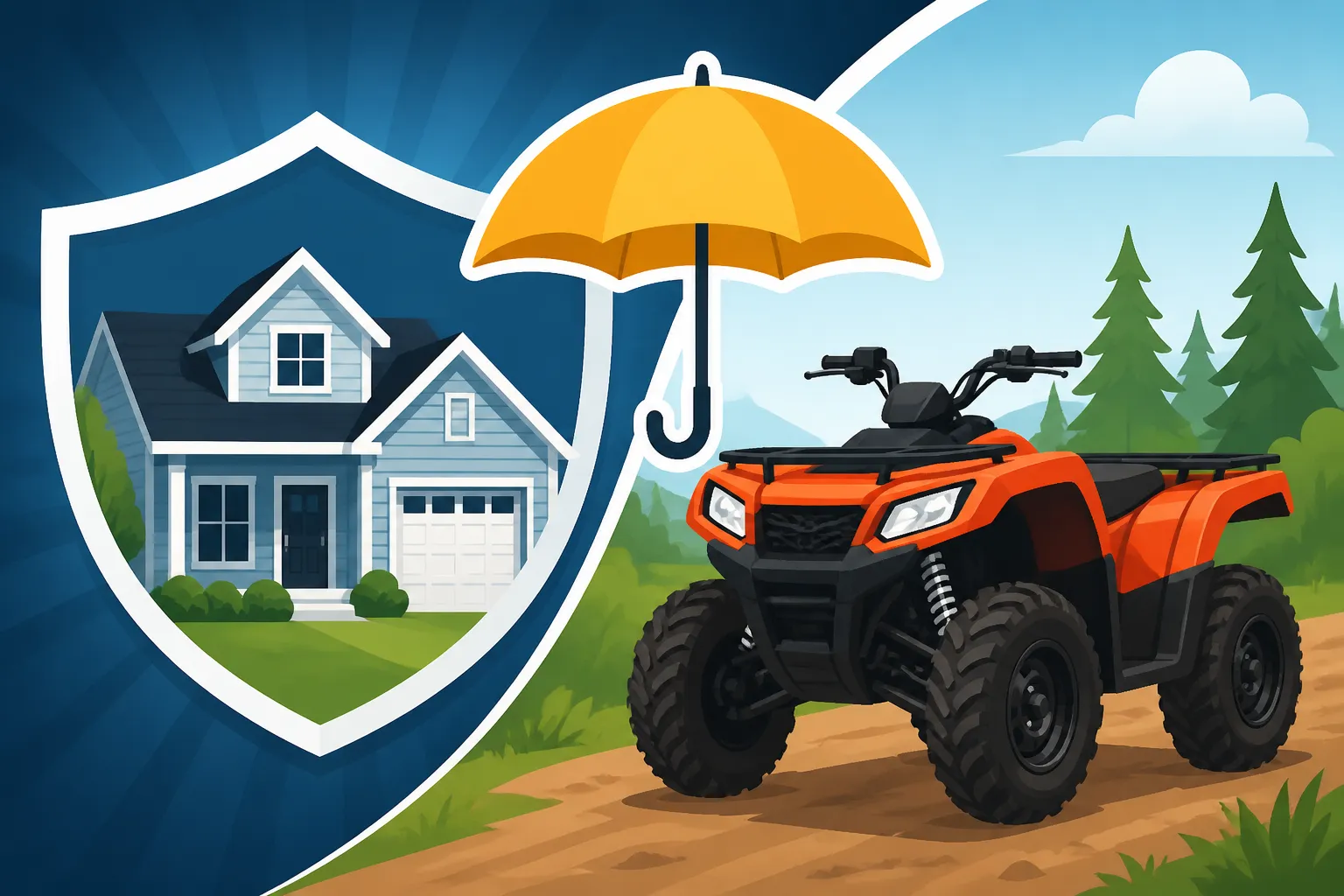
It’s a common assumption many of us make when we invest in something substantial for our property: "My homeowners insurance will cover it, right?" You drag that shiny new ATV or rugged side-by-side home to your Minnesota acreage, envisioning years of trail riding, plowing snow, or just zipping around the back forty, and you might naturally assume your comprehensive homeowners policy will have your back if anything goes sideways. Unfortunately, that assumption can lead to a really painful and expensive surprise down the road, especially when you're facing a damaged machine or, worse yet, liability for an accident. This guide is here to clear up that often-confusing situation and help you understand precisely what your homeowners insurance typically does – and doesn't – cover when it comes to your beloved off-highway vehicles in Minnesota.
The Core Misconception: Why Homeowners Insurance Usually Falls Short
Let's face it, your homeowners insurance policy is a thick stack of paper, full of dense legalese that most of us skim at best. It’s designed primarily to protect your dwelling and personal property from risks like fire, theft, vandalism, and liability for accidents that occur on your premises. The problem arises because ATVs and UTVs, while often stored on your property, are fundamentally vehicles. And most standard homeowners policies have very specific exclusions for motorized vehicles.
Imagine you're out enjoying a beautiful Minnesota afternoon, cruising your side-by-side through a forest trail not far from your cabin in Grand Rapids, maybe even on a designated grant-in-aid trail. You hit a patch of unexpected mud, lose control, and roll the machine, causing significant damage to the bodywork and perhaps even yourself. When you call your homeowners insurance company, hoping they’ll cover the repair costs, you’re almost certainly going to hear a disheartening "no." Why? Because most policies consider ATVs and UTVs to be "recreational vehicles" or "motorized vehicles," which are typically excluded from personal property coverage, especially when they're being operated away from your immediate residence. They're simply not the same as your lawnmower or snowblower, which might see some limited coverage under certain circumstances.
Furthermore, the liability aspect is a huge concern. If that same accident involved another rider, or you accidentally damaged someone else's property off your land, your homeowners policy is unlikely to step in. It's built to protect you from liability for incidents that happen at your home – a guest slipping on your icy sidewalk, for example. The moment your ATV or UTV leaves the confines of your immediate private property, the rules change dramatically, and your homeowners policy often offers little to no protection. This is a critical distinction that many Minnesota riders only learn after a costly incident.
What a Typical Homeowners Policy Might Cover (and its limits)
While the general rule is "no coverage for vehicles," there are extremely narrow circumstances where your homeowners policy might offer a tiny sliver of protection for your ATV or UTV. It’s important to understand these are usually highly restrictive and come with significant limitations.
Limited Coverage While Stored on Your Property
If your ATV or UTV is stolen right out of your locked garage in Brainerd, or if your barn catches fire and the machine is destroyed along with it, there's a small chance your homeowners policy might offer some compensation. This is because, in these specific scenarios, the machine is being treated more like "personal property" that just happened to be on your premises when the covered peril (theft or fire) occurred. However, don't expect full replacement value. Most homeowners policies have very low sub-limits for vehicles, often just a few thousand dollars, which won't come close to replacing a modern side-by-side. You might get a fraction of what your machine is actually worth, and then you'll still have your deductible to pay.
Also, consider the type of incident. If your ATV is damaged by a tree falling on your shed during a storm, that might be covered as property damage to the shed and its contents. But if the damage occurs because you were riding it during that same storm and crashed, that’s almost certainly excluded. The key differentiator is almost always whether the machine was being operated or simply stored. If you're wondering [What an Insurer Wants After a Minnesota Theft] of your ATV, they will meticulously investigate the circumstances to determine if it falls within these very tight parameters.
Liability for Incidents Exclusively on Your Own Property
The other extremely limited scenario involves liability. If a guest is riding your ATV on your property and has an accident, causing them injury, there's a slim chance your homeowners liability coverage could apply. This is because the incident occurred within the boundaries of your insured premises. However, even this isn't a guaranteed safety net. Many policies have clauses that specifically exclude liability arising from the operation of recreational vehicles, even on your own land, particularly if the vehicle is not insured separately. Furthermore, if you’re using your ATV for specific tasks like farming, there might be different exemptions or requirements. Understanding [Minnesota Rules for Farm and Utility Machines] can be crucial in these scenarios, as some policies might differentiate between recreational and utility use.
The moment you venture off your land, even to cross a public road or use a short section of a ditch, this limited liability coverage evaporates. If you let a friend borrow your machine and they get into an accident, you might find yourself in a very difficult position if you only rely on your homeowners policy. It's often asked, [Is a Borrowed Machine Covered?] and the answer is typically "no" by your homeowners, emphasizing the need for dedicated insurance.
Dedicated ATV/UTV Insurance: The Smart Choice for Minnesota Riders
Given the significant gaps in homeowners coverage, getting a separate, dedicated ATV or UTV insurance policy is almost always the smartest, most responsible choice for Minnesota riders. These policies are specifically designed to cover the unique risks associated with off-highway vehicle ownership and operation, both on and off your property.
Comprehensive Protection Tailored to Your Machine
Unlike a homeowners policy, an ATV/UTV insurance policy offers a full suite of coverage options. You can typically choose from:
- Collision Coverage: This pays for damage to your own ATV or UTV if it collides with another vehicle, an object, or rolls over. This is the coverage that would kick in if you hit that tree on the trail or roll your side-by-side.
- Comprehensive Coverage: This covers damage to your machine from non-collision events like fire, theft, vandalism, falling objects, or even hitting an animal on the trail. If your machine is stolen from your driveway or damaged by hail, this is what would protect your investment.
- Liability Coverage: This is arguably the most crucial part. It protects you financially if you're at fault for an accident that causes injury to another person or damage to their property. This covers medical bills, lost wages, and repair costs for others, up to your policy limits. When you're out riding the [Nemadji State Forest Trail Network] or traversing other public trails, this coverage is non-negotiable.
- Uninsured/Underinsured Motorist Coverage: This protects you if you're involved in an accident with another ATV or UTV operator who doesn't have insurance or doesn't have enough to cover your damages.
- Medical Payments Coverage: This can help cover your own medical expenses if you or your passengers are injured in an ATV accident, regardless of who was at fault.
- Accessory Coverage: Many policies allow you to specifically insure aftermarket parts and accessories like winches, plows, lights, stereos, or custom wheels that you’ve added to your machine. These are often not covered by standard property insurance, or only to a very limited extent.
Getting dedicated insurance gives you peace of mind that your investment is protected and, more importantly, that you won't face financial ruin if a serious accident occurs. If you're curious about the general costs, reading up on [Minnesota ATV Insurance Cost] can give you a good starting point. For UTVs, specific articles like [Minnesota UTV Insurance Cost Per Year] will be more relevant.
Meeting Minnesota's Requirements and Trail Access
While Minnesota doesn't mandate ATV/UTV insurance for all private land use, it does require liability insurance if you operate your machine on public lands or grant-in-aid trails. This is a big one! Without it, you could face penalties and be denied access to some of the incredible riding opportunities Minnesota offers. So, beyond protecting your assets, a dedicated policy helps ensure you're compliant with state laws. If you're exploring [Where to Ride an ATV in Minnesota], you'll quickly discover that many of the best public trails require this insurance.
Furthermore, many financing companies will require you to carry full coverage insurance (collision and comprehensive) if you're still making payments on your ATV or UTV. This protects their investment as much as yours. Taking the time to properly insure your machine is just part of responsible ownership in the North Star State.
Navigating Claims and Paperwork When Things Go Wrong
Even with the best preparation, accidents can happen. Knowing what steps to take after an incident and how to manage the paperwork can make a stressful situation a little bit easier. Having a dedicated policy is the first step, but how you handle the aftermath is equally important.
What to Do Immediately After an Accident
If you're involved in an ATV or UTV accident in Minnesota, whether it’s a single-machine incident or involves another party, your actions immediately afterward can significantly impact your insurance claim:
- Ensure Safety: First and foremost, check for injuries. If anyone is hurt, call 911 immediately.
- Move to Safety (if possible): If the machine is blocking a trail or road and can be moved safely, do so.
- Contact Authorities: Even if there are no serious injuries, it’s often wise to contact local law enforcement or a Minnesota Conservation Officer, especially if the accident involves another party, significant property damage, or occurs on public land. A police report can be invaluable for your insurance claim. Information on [Minnesota ATV Crash Reporting] can guide you.
- Exchange Information: If another party is involved, exchange names, contact information, insurance details, and machine identification numbers (VINs).
- Document the Scene: Take photos and videos of the accident scene, including machine damage, surrounding conditions, and any injuries. Note the date, time, and location.
- Don't Admit Fault: Stick to the facts. Don't speculate or admit fault at the scene.
Filing Your Insurance Claim
Once the immediate aftermath is handled, contact your dedicated ATV/UTV insurance provider as soon as possible. They will guide you through their specific claims process. You’ll typically need to provide:
- Your policy number.
- Details of the accident (date, time, location, description of what happened).
- Information about any other parties involved.
- Photos and any police report numbers.
An insurance adjuster will then be assigned to your case to investigate the claim, assess damages, and determine coverage. This is where having a clear, comprehensive policy makes all the difference. They’ll assess [Who Pays After a Minnesota ATV Collision] based on fault and coverage.
Dealing with Paperwork and Documentation
Throughout the claims process, you’ll likely need to provide various documents. This could include repair estimates, medical records, and potentially even legal documents if the situation is complex. For personal records or if you need to formalize agreements related to machine ownership or sale, services like LawDepot can be helpful for creating templates for a bill of sale or other legal forms that might arise in conjunction with insurance claims or subsequent actions. For example, if your machine is totaled and you sell the salvage, having a clear [What a Minnesota Bill of Sale Should Carry] is crucial, and LawDepot provides customizable forms for such needs, ensuring proper legal documentation beyond the insurance claim itself. Always keep meticulous records of all communications, expenses, and documents related to the accident and your claim. This organized approach can help streamline the process and ensure you receive all entitled benefits.
| Coverage Type | Typical Homeowners Policy | Dedicated ATV/UTV Policy |
|---|---|---|
| Damage to Your ATV/UTV | Extremely limited (e.g., fire/theft while stored, low sub-limits) | Yes (Collision, Comprehensive, Accessory coverage options) |
| Liability for Accidents on Your Property | Very limited (may be excluded for vehicles, high deductible) | Yes (Specific liability limits, may apply on and off property) |
| Liability for Accidents Off Your Property | No (Standard exclusion for motorized vehicles away from premises) | Yes (Covers injury/damage to others, on or off public trails) |
| Medical Expenses (Yourself) | No (Generally requires separate health insurance or specific vehicle MedPay) | Yes (Medical Payments coverage option) |
| Uninsured/Underinsured Motorist | No | Yes (Specific coverage option) |
| Plow/Winch/Accessories Coverage | No or very minimal | Yes (Specific accessory coverage options available) |
| Trail Use Requirements | Does not fulfill | Yes (Meets Minnesota public land liability requirements) |
| Peace of Mind | Minimal, leaves large gaps | High, covers specific risks of riding |
This table clearly illustrates why relying solely on your homeowners policy for your ATV or UTV in Minnesota is a gamble that most riders can't afford to take. A little bit of upfront planning for dedicated insurance can save you a mountain of headaches and financial strain later on.
Disclaimer
This article is for general informational purposes only and does not constitute professional advice. Laws, prices and regulations vary by location and change over time. Consult a qualified professional for guidance on your specific situation.