What a Minnesota Bill of Sale Should Carry
A Minnesota ATV and UTV bill of sale requires specific buyer details to prevent registration delays and legal liability.
Start here, or nothing else is legal.
Resident registration, titling and renewal, and public-use versus private-land fees — plus the age and safety-course rules that decide who may ride.
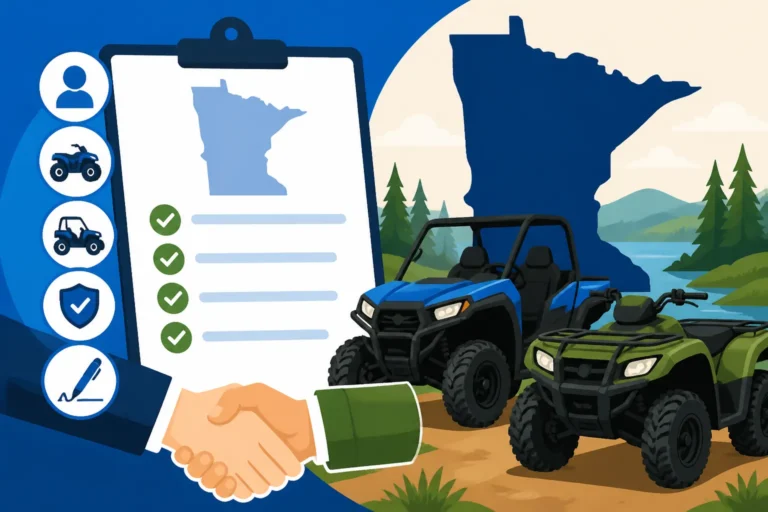
A Minnesota ATV and UTV bill of sale requires specific buyer details to prevent registration delays and legal liability.
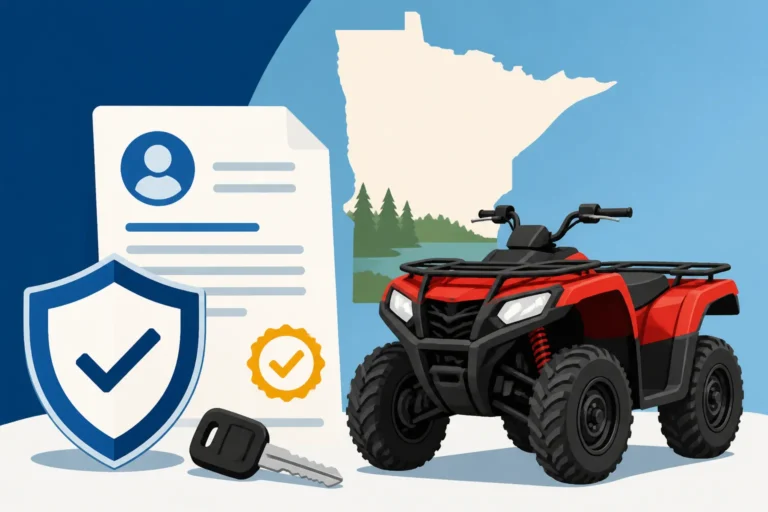
Minnesota ATV ownership documents help you register vehicles, prevent theft, file insurance claims, and legally transfer machines.
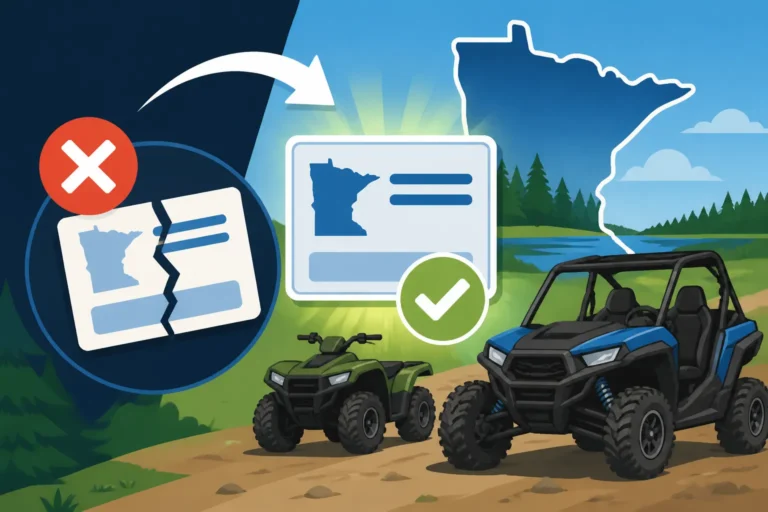
A lost ATV registration card can lead to questions, delays or a citation from a Minnesota conservation officer, so a physical copy still matters on the trail.
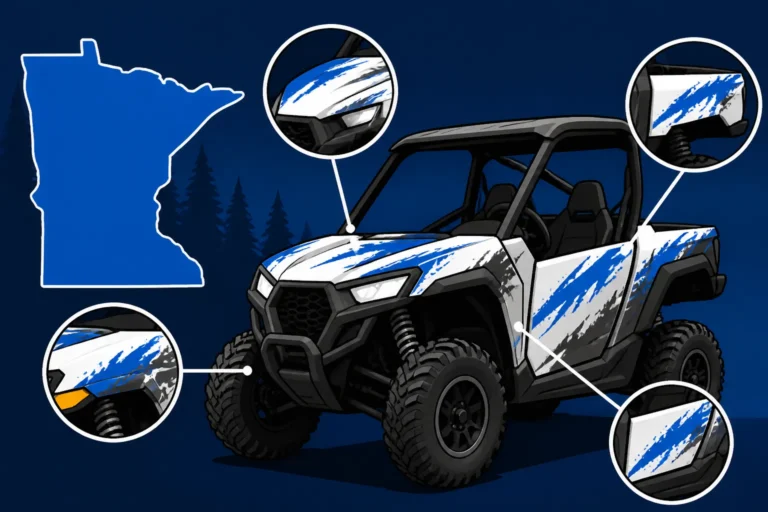
Minnesota ATV and UTV registration sticker placement rules explained, showing where to put decals for DNR legal compliance.
Minnesota ATV and UTV registration expires every three years, funding state trails and maintaining legal riding privileges.
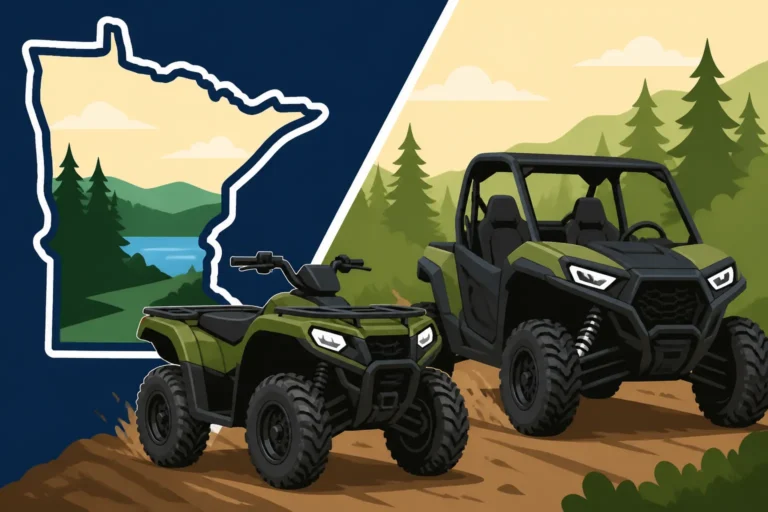
Minnesota off-highway vehicle rules define Class 1 and Class 2 ATV and UTV trail access limits by width, dry weight, and steering style.
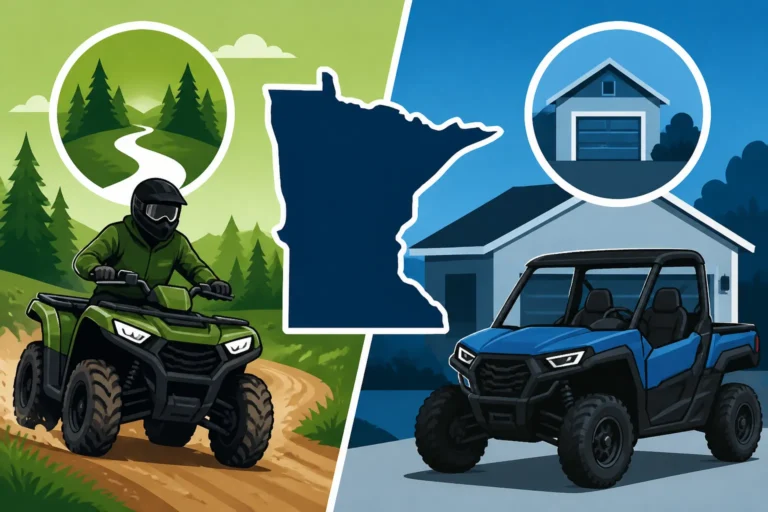
Minnesota ATV and UTV public and private use registration rules determine where riders can operate off-highway vehicles.
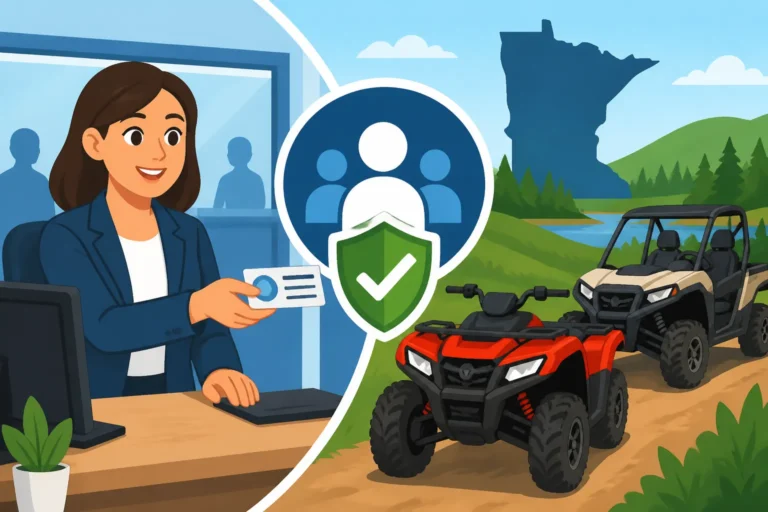
Minnesota deputy registrars process off-highway vehicle paperwork so owners can register ATVs and UTVs locally instead of visiting the state DNR office.
Minnesota eLicense portal allows ATV and UTV owners to complete vehicle registration online without visiting deputy registrar offices.
Minnesota DNR ATV registration rules, fees, machine classes, and public versus private use guidelines explained clearly.