Minnesota Hands-On Riding Clinics
A hands-on riding clinic can make an ATV feel less intimidating and help a new rider build safer habits. But finding a suitable clinic in Minnesota—and knowing whether it meets a state safety requirement—can be confusing. The key is to treat practical instruction and official certification as separate questions, then check the clinic’s format, instructor, machine requirements, and proof of completion before signing up.
What a hands-on riding clinic can teach
A hands-on clinic gives riders a chance to practice on a machine, not just read or watch instructions. Depending on the provider and course, the session may cover basic controls, safe starts and stops, turning, braking, riding over uneven ground, and making decisions around obstacles. Some clinics focus on children or beginners; others are aimed at adults who want a refresher or a more advanced skill session.
The value is supervised practice. A rider can work through a skill at a controlled pace, ask questions, and get feedback before trying it on a trail. That can be especially helpful for someone who has only ridden in a yard, borrowed a machine once or twice, or recently moved from a youth ATV to a larger model.
A good clinic is not simply a group ride with a few tips along the way. Look for a clear lesson plan and a practice area suited to the intended skills. Riders should be told what they will work on, what protective equipment they need, and whether they must bring a machine or can use one supplied by the provider.
Skills vary by clinic
A beginner session may emphasize where the controls are, how to mount and dismount safely, and how to start, stop, and turn without rushing. A more experienced rider’s clinic might work on terrain choices, controlled braking on a slope, or keeping a safe distance from other riders. A side-by-side session may address cab-specific safety, including seat belts and keeping arms and legs inside the vehicle.
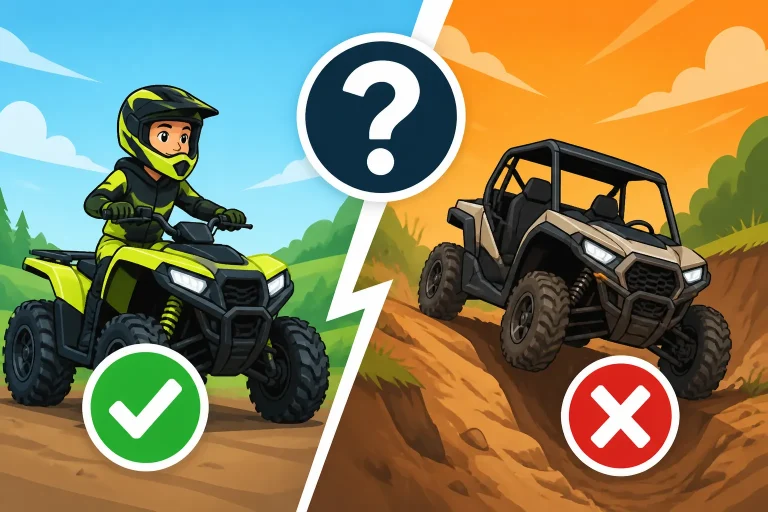
The machine matters, too. The balance, steering, braking, and turning characteristics of an ATV differ from those of a side-by-side. A session for one type of vehicle may not be a useful substitute for instruction on the other. Ask which machines the clinic covers and whether riders practice on the same type they expect to operate.
A hands-on session can also teach habits that are difficult to develop from a checklist alone: scanning ahead, slowing before a turn, leaving space between machines, and stopping when a route becomes unsafe. The particular exercises depend on the instructor and site. Do not assume that a clinic covers every condition a rider might encounter in Minnesota, such as mud, deep ruts, steep slopes, or winter surfaces.
Practical instruction is not automatic certification
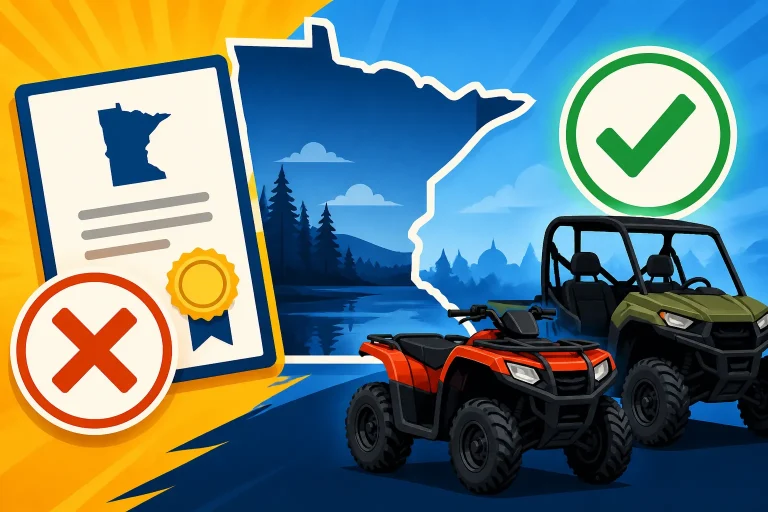
The most important distinction is that a hands-on clinic does not automatically count as Minnesota safety certification. Some courses may be designed to satisfy an official training requirement; others provide practical instruction but no state-recognized certificate. The word “safety” in a course name is not enough to tell you which it is.
Before enrolling, ask the provider in plain terms:
- Is this course intended to meet a Minnesota ATV safety certification requirement?
- What certificate or record will the rider receive?
- Is there an online or classroom portion as well as the riding session?
- Does the provider explain how completion is recorded or verified?
- Is this a skills clinic only, with no official certification?
Minnesota’s requirements depend on the rider and where the machine will be used. Start with Minnesota ATV Safety Training Requirements and confirm current details with the Minnesota DNR before relying on a course to meet a legal requirement. For a general explanation of the online option, see Minnesota Online Safety Training.
How to choose a clinic in Minnesota
Clinic availability can vary by region, season, age group, machine type, and provider. A course that suited a friend’s child may not suit an adult beginner, and a listing that says “ATV training” may refer to a classroom or online course rather than supervised riding. Compare the actual instruction and logistics, not just the event title.
Check the instructor and course structure
Ask who teaches the course and what experience or training the instructor has. A provider should be able to describe the format, the number of riders, the practice location, and how instruction is delivered. Smaller groups can make it easier for participants to get individual feedback, though the right group size depends on the course and setup.
Find out how much of the session is spent riding versus listening to instruction. Some explanation is necessary before people start moving, but a clinic marketed as hands-on should include meaningful supervised practice. Ask whether riders receive feedback as they work, and whether the instructor can adjust an exercise for a nervous or inexperienced participant.
It is also reasonable to ask what happens if a participant is not ready to continue. A responsible instructor should make clear that riders can stop, take a break, or decline an exercise. A clinic should build control and judgment, not pressure participants into attempting a maneuver beyond their ability.
Match the clinic to the rider and machine
Be candid about the rider’s experience. A person who has never operated an ATV may benefit from a fundamentals course, while someone with regular trail time may want focused coaching in a particular skill. A child who is comfortable on a small youth machine may still need new instruction when moving to a heavier or more powerful model.
Ask whether participants need to bring their own machine. If they do, confirm that the clinic accepts its size and type and ask what condition it must be in. A machine that starts unreliably, has damaged controls, or is poorly matched to the rider is not a good training tool. If the provider supplies machines, find out how it handles fit, helmets, and protective gear.
The distinction between a Class 1 and Class 2 machine can affect both the riding experience and applicable rules. If the rider is unfamiliar with the machine category, Minnesota ATV Classes and What They Mean can help clarify the terminology. Do not assume an ATV clinic covers side-by-sides or vice versa.
| Question | Why it matters | What to confirm |
|---|---|---|
| Is the session instruction or certification? | A practical clinic may not meet a state training requirement. | Whether it provides recognized certification and how completion is documented. |
| What vehicle type does it cover? | ATVs and side-by-sides have different controls and safety considerations. | Which machine types and sizes are included. |
| Who is the intended rider? | A beginner, child, or experienced rider may need different instruction. | Age range, experience level, and any prerequisites. |
| Who provides the machine and gear? | Participants may need to bring a suitable vehicle and protective equipment. | What is supplied, required, or prohibited. |
| Where does the session take place? | The practice surface affects which skills can be taught safely. | Site conditions, access, permission, and weather arrangements. |
| What happens after the clinic? | Skills need practice, and any certificate should be kept accessible. | Completion records, follow-up advice, and next steps. |
Verify the location and operating permissions
A clinic may take place on private land, at a designated practice area, or at another site arranged by the provider. Ask whether the provider has permission to use the location and whether the riding area is supervised and clearly defined. Do not assume that an open field, trailhead, or public trail is an approved training site.
Also ask what happens if weather changes the conditions. Rain, standing water, snow, or thawing ground can make a practice area unsafe or vulnerable to damage. A provider should explain how it decides whether to proceed, adjust the lesson, or reschedule.
If the clinic is held on private property, the clinic’s permission to use that site does not automatically grant participants permission to ride there at another time. For the difference between permission, access, and rules on privately owned ground, see Minnesota Rules on Private Land.
What to bring and expect on clinic day
A little preparation makes a practical session safer and more useful. Check the provider’s instructions first; equipment and machine rules can differ. If anything is unclear, ask before arriving rather than assuming ordinary trail gear will meet the clinic’s requirements.
Protective gear and clothing
Wear a properly fitting helmet and eye protection, along with sturdy clothing that covers exposed skin. Gloves and over-the-ankle footwear can help protect hands and feet. The instructor or event organizer may specify particular equipment, especially for a youth course or a clinic using provider-supplied machines.
For a side-by-side, confirm that the vehicle’s restraints and protective features are in working order and that participants will be instructed to use them. A helmet does not replace a seat belt, and a seat belt does not make it safe to ride with arms or legs outside the cab.
Avoid clothing that can snag on controls or moving parts. Bring water and dress for the conditions, including changes in temperature or wet ground. If the clinic takes place in a remote area, check the provider’s arrival instructions and allow time to get there without rushing.
Prepare the machine
If you are expected to bring a machine, check it before the session. Follow the owner’s manual and the clinic’s instructions. At a minimum, the vehicle should start and stop reliably, steer normally, and have functioning brakes and controls. Tires should be appropriate for the machine and in usable condition. Do not bring a vehicle with an obvious mechanical fault and hope the instructor can work around it.
Ask whether the provider has machine-size or equipment restrictions. A machine that is too large or powerful for a beginner can make basic exercises harder and less safe. For young riders, the adult responsible for choosing the vehicle should check its fit and the applicable age and operating rules. See Minnesota Age Rules at Twelve and Sixteen for related age questions.
If you are borrowing a machine, get the owner’s permission and confirm that the clinic allows borrowed vehicles. The owner should be comfortable with the rider operating it in a practice setting. A training session is not the place to discover that the controls are unfamiliar or that the machine has not been checked.
Tell the instructor about the rider’s experience
Before the session begins, explain whether the rider is new, has had limited practice, or has experience only on a different vehicle. Mention relevant concerns, such as difficulty reaching controls or anxiety around slopes. This helps the instructor judge where to start and what modifications may be appropriate.
Do not downplay a rider’s inexperience to keep up with a group. A careful instructor can adjust the pace or recommend a beginner session. If the clinic seems to move too quickly, ask for clarification or pause. The goal is to leave with better judgment and control, not to finish every exercise.
Parents and guardians should ask how supervision works for youth participants. Confirm who is responsible for the rider during instruction, whether adults must remain on site, and what the provider expects if a child becomes tired or uncomfortable.
From clinic skills to Minnesota riding rules
A rider can learn useful control skills at a clinic and still need to meet separate requirements before riding on public land or a trail. Training, machine registration, trail passes, age rules, and local access restrictions are different issues. Completing one does not automatically satisfy the others.
Confirm whether certification is required
Minnesota’s safety training rules depend on factors such as the rider’s age and birth date, and on the kind of land or route where the ATV will be operated. Because those details can affect whether a course is required, use the state’s current guidance rather than relying on a clinic advertisement or a friend’s interpretation.
If a clinic provider says it awards certification, ask what form of proof the rider receives and how to confirm the record. Keep the certificate or completion information where it can be found later. If the clinic is only a skills session, it may still be worthwhile, but plan separately for any required training.
Riders visiting from outside Minnesota should check whether an existing certificate is accepted for the activity they plan to do. Do not assume that having a certificate from another state automatically resolves every Minnesota requirement. The details are covered in Out-of-State Certificates Minnesota Accepts.
Check registration and trail-pass requirements separately
A clinic is not a substitute for the machine’s required registration or any trail pass that applies to the ride. Requirements can differ by machine use, location, and rider status. Check the route and land manager’s rules before leaving the practice site.
For information about trail access, start with Which Minnesota Trails Require a Pass and Minnesota’s Non-Resident ATV Trail Pass if you are visiting from another state. These are separate from questions about certification. A completed clinic does not make an otherwise restricted route open to riding.
The same distinction applies to registration. A machine’s status for use on a particular property does not necessarily answer whether it can be used on a public trail or other regulated area. Review the relevant rules for the planned use, rather than assuming that the course provider has checked every participant’s paperwork.
Practice the skills before a demanding ride
A clinic is a starting point, not proof that a rider is ready for every trail. After training, practice basic control in an appropriate, permitted area before joining a busy group or tackling difficult terrain. Begin with simple starts, stops, and turns, and progress only when the rider can do them consistently without rushing.
On a trail, conditions change. A route that seemed manageable in dry weather may become slippery, rutted, or blocked after rain. Riders should slow down when visibility is poor, leave room for the vehicle ahead, and stop before a hazard if they cannot assess it safely. If the rider feels overwhelmed, turn back or choose an easier route.
For a child or novice, an adult should set a conservative pace and keep the ride short enough to avoid fatigue. Tired riders can lose focus and make poor decisions. A useful clinic should reinforce that stopping is a sensible choice, not a failure.
Frequently Asked Questions
Does a Minnesota hands-on clinic satisfy the state ATV safety requirement?
Not automatically. Some courses may be designed to meet an official training requirement, while others teach riding skills without issuing state-recognized certification. Ask the provider what the course qualifies the rider to receive, then verify the requirement with the Minnesota DNR.
Can a beginner attend a clinic without owning an ATV?
Possibly. Some providers supply machines, while others require participants to bring their own. Confirm vehicle availability, age and size limits, protective-gear requirements, and whether the rider needs prior experience before registering.
Are ATV clinics suitable for children?
Some clinics are designed for youth, but age ranges, machine requirements, and supervision arrangements vary. Confirm that the course suits the child’s experience and size, and ask who supervises participants during instruction. A child’s ability to ride a particular machine does not by itself establish that the machine or route is appropriate under Minnesota rules.
Can I use a hands-on clinic as a substitute for a trail pass?
No. A clinic teaches skills; it does not replace a trail pass where one is required. Check the rules for the specific trail and machine before riding.
Disclaimer
This article is for general informational purposes only and does not constitute professional advice. Laws, prices and regulations vary by location and change over time. Consult a qualified professional for guidance on your specific situation.