Winching Out of a Bog
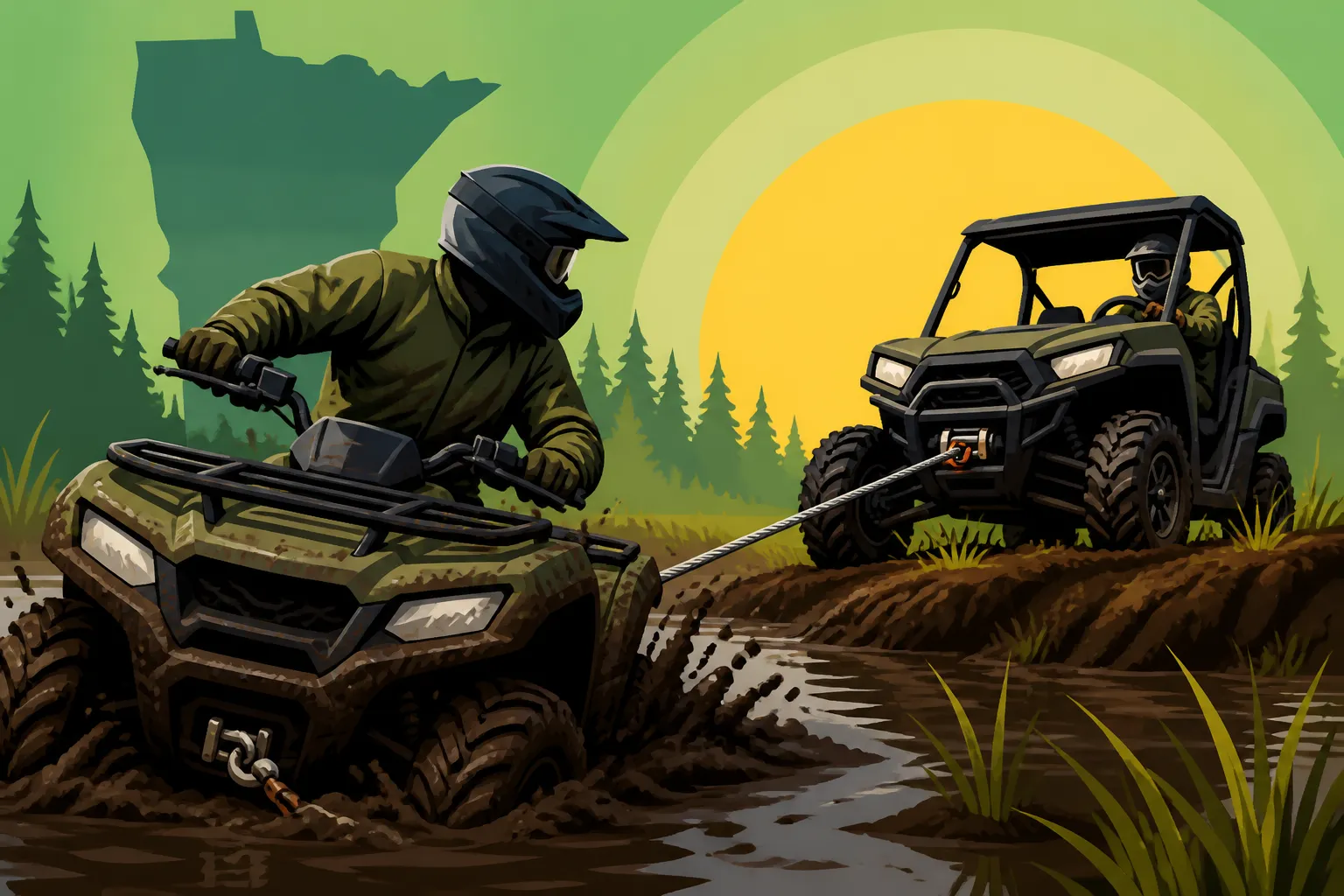
A Minnesota bog can turn a fun trail ride into a stressful recovery fast: tires spin, mud pulls at the machine, and every extra throttle burst can sink it deeper. This guide explains how to assess the situation, use an ATV or UTV winch safely, protect the trail, and decide when it’s smarter to stop and get help.
Before You Winch, Assess the Bog
Stop spinning and check the machine
As soon as the tires lose traction, ease off the throttle. Spinning can dig a deeper hole, bury the chassis, and pack mud around the tires. What looked like a shallow wet patch can quickly become a recovery problem, especially after a wet spring or on a trail with soft shoulders.
Before touching the winch, look around the machine. Check whether it is leaning, whether water or mud is near the air intake, and whether the tires are trapped against roots, logs, or the edge of a rut. If the machine is stable and the water is shallow, you may be able to clear mud from around the tires and use traction boards. If it is leaning sharply, partly submerged, or resting on its frame, a direct pull could make things worse.
Ask passengers and bystanders to move well away from the machine and the planned recovery path. A winch line under tension can cause serious injuries if a line, strap, or anchor point fails. Keep everyone out of the space between the stuck machine and the anchor, and never let anyone stand over or step across a loaded line.
Take a moment to identify the safest direction out. The shortest route is not necessarily the best one. A gradual pull toward firm ground is usually preferable to dragging the machine sideways across a rut or pulling it farther into wet ground. If the bog is on a public trail, stay on the marked route and avoid widening it by steering around the problem area. For context on changing trail surfaces, see Minnesota Trail Conditions After a Wet Spring and Minnesota Trail Closures in Spring Thaw.
Decide whether the recovery is within your limits
A winch is useful, but it does not make every recovery safe. If the machine is close to water, has rolled or is at risk of rolling, has a person trapped, or is stuck on a steep or unstable slope, stop and seek qualified help. The same goes for a vehicle that is badly submerged or may have taken water into its intake or electrical components. A routine pull is not worth risking a rollover or damaging the machine further.
Look at the anchor before committing. A small sapling, dead tree, loose stump, fence post, or thin branch may not withstand the force of a pull. Avoid using a tree that could uproot or snap, and do not attach a winch line to a tree without a suitable tree-saver strap. If you cannot identify a stable anchor or a safe pulling direction, don’t improvise with whatever is closest.
If you’re riding in a remote area, let someone know your route and expected return time before the ride. A map app such as onX Offroad can help with route planning, but it should not be your only navigation tool in a forest with patchy reception. Carry an offline map or paper backup, and check access information before leaving. Reading a Minnesota OHV Trail Map and Checking Minnesota Trail Status Before You Drive can help you prepare.
How to Winch an ATV or UTV Out Safely
Choose a secure anchor and suitable connection point
For a self-recovery, a healthy tree may serve as an anchor if anchoring to it is allowed where you are and you can protect the bark with a proper tree-saver strap. Wrap the strap around the trunk, connect the winch line to the strap using the appropriate rated hardware, and keep the pull as straight as practical. Don’t wrap a bare cable around a tree: it can damage the tree and may not make a safe connection.
Use a manufacturer-approved recovery point on the stuck machine. A frame-mounted recovery point is generally a better choice than a tow ball, rack, bumper accessory, axle, or suspension component. Those parts may not be designed to handle a winch pull. If you are uncertain which points on your specific machine are rated for recovery, check its owner’s manual before a ride rather than guessing while stuck.
A second vehicle can sometimes provide a stable anchor, but only if both vehicles and their attachment points are suitable for the load. Keep the anchor vehicle secured according to its manufacturer’s guidance, and make sure its operator understands the plan. A tow hitch receiver may have limits; a hitch ball is not a recovery point. If you cannot establish a reliable anchor, do not substitute a person holding a strap or another improvised setup.
Set up the line, then pull steadily
Put on gloves before handling the winch line. Keep your hands away from the fairlead and never guide a moving line by gripping it. Remove slack carefully, then make sure people are clear of the line and its path. A line dampener can help reduce the danger if a line or connection fails, but it does not make standing near a tensioned line safe.
Operate the winch according to its instructions. Use short, controlled pulls and pause if the line begins to pile up unevenly on the drum, the anchor shifts, or the machine starts to tip or move unpredictably. Keep the pull as straight as possible and steer gently toward firmer ground. Avoid sudden throttle bursts that can make the tires dig in or cause the machine to lurch.
Do not exceed the winch’s rated capacity or operating limits. A snatch block can change the direction of pull and, when used properly, can provide a mechanical advantage, but it also adds equipment and requires secure connections. Use only components rated for the job, and follow their instructions. For basic recovery equipment planning, see Recovery Gear for Deep Mud.
| Situation | Safer next step | Avoid |
|---|---|---|
| Tires are spinning but the machine is stable | Stop, clear loose mud if safe, and consider traction boards or a controlled winch pull | Repeated high-throttle attempts |
| Machine is stuck on its frame | Identify a rated recovery point and a stable anchor before pulling | Attaching the line to a rack, axle, or hitch ball |
| Machine is leaning or near deep water | Keep people clear and get experienced help | A hard, sideways pull that could cause a rollover |
| No suitable anchor is available | Stop and arrange assistance | Using a small tree, fence post, or person as an anchor |
| Trail surface is soft or damaged | Stay on the route and minimize disturbance | Driving around the bog and widening the trail |
After the Machine Comes Free
Check for damage before riding away
Once the machine is on firm ground, stop and inspect it before riding. Look at the winch line, hook, fairlead, anchor strap, and connection points. If a component is frayed, bent, cracked, or otherwise damaged, don’t trust it for another pull. Rewind the line evenly under light tension, following the winch manufacturer’s instructions, and keep hands away from the drum and fairlead.
Check the machine for packed mud around the wheels, brakes, cooling areas, and undercarriage. If it was in deep water or mud, inspect the air intake and other vulnerable areas before restarting or continuing. If you suspect water entered the intake, engine, or electrical system, avoid trying to ride it out; get appropriate mechanical help. A machine that seems fine at first can suffer additional damage if contaminated fluids or electrical problems are ignored.
If the pull was difficult, take a short break and reassess the route and the group. A bog may be a sign that the trail is too soft for conditions. Continuing through similar sections can lead to another recovery, increased trail damage, or a group member getting stranded. Check route information again if needed; onX Offroad can be useful for reviewing your planned route, but don’t rely on a phone signal being available in remote areas.
Keep the trail from becoming a bigger problem
Avoid making a second route around the bog. Driving off the established trail can crush vegetation, widen the damaged area, and create a new rut that other riders may mistake for a legitimate route. If the trail is visibly damaged or unsafe, note the location and report it through the appropriate trail or land-management channel. Reporting Trail Damage in Minnesota covers why those reports matter.
Trail systems can cross different types of land and have different rules, so don’t assume that a route shown on a map is open or suitable in every condition. Check posted signs and local notices, and follow closures. For example, the Nemadji State Forest Trail Network is one place riders may research before planning a trip, but conditions can vary along a route. A map app such as onX Offroad can support planning, while signs and official closure information should guide decisions on the ground.
For a remote ride, carry enough basic gear to handle a delay: gloves, a first-aid kit, drinking water, a charged phone, a navigation backup, and recovery equipment suited to your machine. The exact kit depends on the route, group, weather, and distance from help. What to Carry on a Remote Northwoods Ride offers more preparation ideas. If the trail is too wet or a safe recovery is beyond your equipment or experience, turning back is a reasonable choice—not a failed ride.
Prepare Before Your Next Muddy Ride
Practice with your own winch and equipment
A bog is a poor place to learn where your winch controls are or which recovery points the manufacturer approves. Before heading out, read the machine and winch manuals, inspect the line and hardware, and practice a controlled pull in a clear, familiar area. Make sure each rider knows how to stop the winch and understands where to stand while it is operating.
Check that the winch is mounted securely and that the battery and electrical connections are in good condition. Inspect straps and hardware for wear, and replace damaged gear rather than hoping it will hold once loaded. Store gloves where they are easy to reach, and keep recovery equipment from getting tangled beneath cargo.
If you ride with a group, agree on who will operate the winch and who will act as a spotter. The spotter should stand well clear of the line and be able to communicate with the operator. Stop the pull if the operator cannot see the spotter or if anyone enters the recovery area. Winching Out of a Bog is a situation worth discussing with your group before it happens, not while everyone is standing in the mud.
Plan around conditions, not just the route
A route that was manageable on a dry day may become slick or deeply rutted after rain or snowmelt. Check trail status before driving to the staging area, watch for closure signs, and be prepared to change plans. Keep a paper map or offline navigation available in case your phone loses service. onX Offroad may help you review routes in advance, but local signs and current trail information should take priority.
Think about the whole group when choosing a route. A larger or heavier UTV may behave differently in soft ground than a smaller ATV, and a machine with a passenger or cargo can be harder to recover. If riders have different experience levels, select a route that gives everyone room to turn around safely rather than pressing on toward a difficult section.
The best recovery is often the one you avoid. Slow down when the ground changes, avoid entering an uncertain bog at speed, and don’t follow another machine into a rut just because it made it through. If the surface looks unstable or the route is closed, turn around while the machine is still on solid ground.
Disclaimer
This article is for general informational purposes only and does not constitute professional advice. Laws, prices and regulations vary by location and change over time. Consult a qualified professional for guidance on your specific situation.