Iron Range Sand and Mud Drags
Sand and mud drags are a different kind of day out from following a forest trail: the focus is short, demanding runs, changing track conditions, and careful machine preparation. Around Gilbert’s Iron Range riding area, the event details and access rules can vary. This guide explains how to plan, what to bring, and how to enjoy the action safely without confusing event access with ordinary trail riding.
What to expect at Iron Range sand and mud drags
Drag events are not the same as trail riding
On a trail ride, you’re usually covering distance, navigating turns, and sharing the route with other riders. At a drag event, the main attraction is watching machines make short runs through a designated course. Sand can shift between passes, while mud may become deeper or slicker as more machines travel through it. That makes a drag area a place to pay attention to event boundaries and instructions, not a shortcut onto a trail.
The Iron Range OHV area near Gilbert is known for off-road riding and organized activities. Sand and mud drag access, event dates, spectator arrangements, and machine requirements depend on what is scheduled. Before making the drive, check with the event organizer or venue for current details. Don’t assume that a drag course is open for casual practice just because the surrounding area has riding trails.
If you’re hoping to add trail time before or after watching the drags, plan those as separate activities. Confirm which routes allow your machine and whether any passes or other requirements apply. The guide to [Which Iron Range Trails Allow ATVs] can help you understand why “the trails are open” doesn’t necessarily mean every route is suitable for every vehicle.
Sand and mud create different challenges
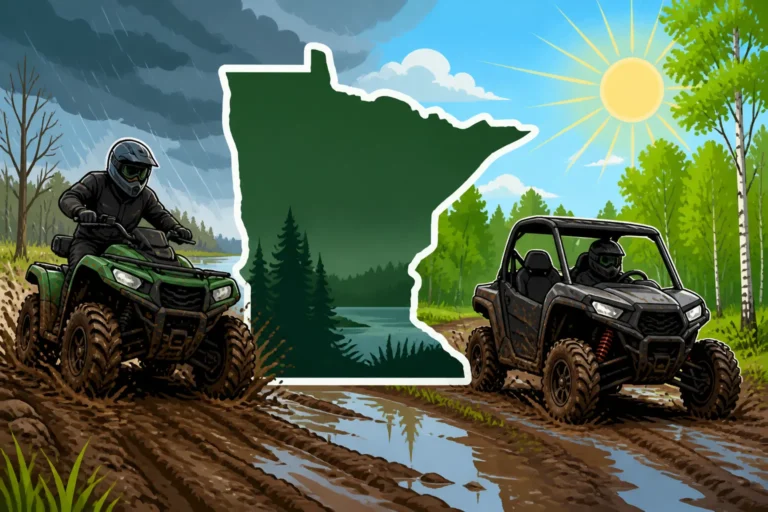
Sand often rewards steady momentum and smooth inputs. A sudden throttle change or sharp turn can unsettle a machine, especially when the surface is soft or rutted. Mud presents another set of problems: traction can change abruptly, standing water can hide ruts, and a machine may lose forward movement before the rider realizes how deep the ground is.
Neither surface is predictable from appearance alone. A firm-looking strip may give way under a heavy UTV, and a shallow puddle can conceal a rut or an obstacle. At a public event, use the designated course and follow staff directions rather than trying to judge an alternate route from the spectator area. If you’re riding, wait until the course is open to your class and use the start procedure the organizer provides.
For a broader sense of the terrain and riding style in the area, see [Riding the Iron Range Rock Crawl]. Rock crawling and drag runs are different activities, but both make clear why matching your pace and machine to the course matters.
Check event details before you travel
A drag day can involve more than watching a few runs. You may need to account for parking, spectator areas, entry procedures, machine inspection, noise expectations, and the possibility of weather-related changes. Ask whether spectators can attend, where trailers should be left, and whether riders need to register or check in before accessing the course.
A simple planning call or check of the organizer’s event notice can save a frustrating trip. Confirm the event location rather than relying on a general map pin for the Iron Range area, and make sure you understand whether the event is at the OHV area or another nearby venue. Also check what the organizer says about helmets, protective equipment, passengers, and machine modifications.
For general background on the riding site, [Iron Range OHV Area's 36 Miles] offers a useful companion read. Treat general area information as a starting point, though; event-specific instructions should take priority on drag day.
Plan the ride and get your machine ready
Choose a machine and setup that suit the course
A machine that works well on a forest trail may not be set up for repeated runs through sand or mud. Before entering an event, read the organizer’s requirements and consider the condition of your tires, brakes, throttle, steering, and drivetrain. If you’ve recently made repairs or installed accessories, test them in a controlled setting before relying on them during a busy event.
Tire choice and pressure affect how a machine behaves, but there is no single setup that suits every course. A setup that works in loose sand may feel different in wet, churned-up mud. Follow the vehicle manufacturer’s guidance and the event’s rules rather than copying another rider’s settings without understanding the trade-offs. More aggressive throttle or a high-performance setup is not a substitute for knowing the course.
It also helps to be realistic about the limits of your experience. If you’re new to drag-style riding, watch a few runs first and ask event staff how the staging and course procedures work. A cautious first pass can tell you more about the surface than an aggressive launch—and gives you a chance to stop if the machine doesn’t feel right.
Inspect the machine before loading it
A quick inspection at home is easier than discovering a loose part in a crowded staging area. Check tire condition, wheel fasteners, brakes, steering, lights, and fluid levels. Look for damaged guards, loose straps, and anything that could catch debris. If a machine has been stored since winter, give yourself time to check the battery and start-up condition before the event morning.
After a muddy run, inspect the radiator area, air intake, and moving components for packed material. Mud buildup can affect cooling or conceal damage. Clean the machine according to its manual and avoid directing high-pressure water at seals, bearings, electrical connections, or other sensitive areas. If the machine starts running hot, makes an unfamiliar noise, or handles differently, stop and investigate rather than trying to finish another run.
For deep mud, bring appropriate recovery equipment and learn how to use it before you need it. The guide to [Recovery Gear for Deep Mud] can help you think through what belongs in your kit. A winch or tow strap is only useful when it’s rated and used correctly, with a safe anchor point and people kept clear of the line.
Use maps for planning, not as a substitute for signs
A map can help you understand where the riding area sits in relation to Gilbert, identify access roads, and avoid arriving at the wrong entrance. The onX Offroad app can be useful for reviewing off-road routes and planning a broader trip, especially when you want to see how riding options connect around an area. Check the map details before setting out, then follow posted signs and event staff directions on site.
Offline planning matters if your phone loses service. Download or save the information you need before leaving town, and carry a backup navigation option if you’ll ride beyond the event grounds. A digital map can help with orientation, but it cannot tell you that a route has just been closed, that a drag course is reserved, or that conditions have changed since you checked.
If you’re adding trail riding to the visit, check official status information shortly before departure. [Checking Minnesota Trail Status Before You Drive] is a practical next step, particularly after heavy rain or during seasonal closures. You can also use [Minnesota Trail Difficulty Ratings] to compare routes with your machine and experience level. The onX Offroad map is most helpful as one part of the plan—not a replacement for local rules, closure notices, or trail markers.
| Planning question | What to confirm | Why it matters |
|---|---|---|
| Is the event happening? | Date, location, and organizer’s latest notice | Event schedules and access can change |
| Can spectators attend? | Spectator access, parking, and viewing areas | You may not be able to watch from the riding area |
| Can you ride the course? | Entry steps, machine rules, and class procedures | Drag access may be controlled or limited |
| Are nearby trails open? | Route access, closures, and any pass requirements | Event access and trail access are separate |
| Is your machine ready? | Tires, brakes, steering, fluids, and recovery gear | Repeated runs and rough surfaces add strain |
Stay safe around the course and make a full day of it
Treat the spectator area as an active motorsports setting
A drag course brings together machines, spectators, event staff, and moving support vehicles. Stay behind the marked barriers, keep children close, and don’t walk across a course or staging lane unless an official directs you. Even a machine moving slowly can throw sand, mud, or stones, so keep a safe distance and wear eye protection where the organizer recommends it.
Pay attention to announcements and flags. If staff pause the event, remain outside restricted areas until they say it is safe to move. Avoid standing behind a machine that is preparing to launch or near a recovery operation. A stuck vehicle may need a tow or winch, and those situations can become dangerous if bystanders gather too close.
For riders, the safest choice is to make each run only when the course is clear and you understand the start signal. Don’t follow another machine onto the track, and don’t assume the surface will be the same as it was a few minutes earlier. If weather worsens or visibility drops, ask staff whether the course remains open.
Prepare for weather, delays, and changing conditions
A sunny morning can turn into a muddy afternoon, and a popular event may involve waiting between runs. Bring water, weather-appropriate clothing, eye protection, gloves, and footwear that can handle wet ground. A change of clothes and a bag for muddy gear make the drive home more comfortable. If you’ll be outside for several hours, plan for shade or rain protection as the forecast requires.
Pack basic supplies even if the event is close to town. Useful items may include a first-aid kit, phone charger or power bank, drinking water, and a small set of tools suited to your machine. If you plan to ride into more remote terrain, consider what you would need if you had a flat, got turned around, or had to wait for assistance. [What to Carry on a Remote Northwoods Ride] covers the kind of preparation that also helps on longer off-road days.
Crowds can affect the pace of the day. Parking may take longer than expected, and course access may be organized in waves. Arrive with enough time to check in, unload safely, and understand where riders and spectators should go. If the area is busy, be patient with staff and give other visitors room to maneuver trailers.
Combine the drags with trail riding thoughtfully
If the event is only part of your trip, decide in advance whether you have time and energy for a separate trail ride. Drag runs can be demanding on both riders and machines, while trail riding may require a different setup and additional planning. Don’t assume you can move freely from one activity to the other; check whether the event’s access arrangements allow it and whether trail rules apply.
For a trail outing, choose a route that matches the least experienced person in your group and the least capable machine. Keep the group together, agree on stops, and avoid pushing into mud or water simply because another rider made it through. A trail map and a clear turnaround plan are especially useful when conditions are changing.
Busy weekends also call for extra patience at entrances, staging areas, and trail junctions. [Busy Minnesota Trails on a Holiday Weekend] offers useful planning advice for crowded riding days. Whether you’re there for the drag action, a trail loop, or both, checking local instructions and leaving room for other riders helps keep the day enjoyable.
Disclaimer
This article is for general informational purposes only and does not constitute professional advice. Laws, prices and regulations vary by location and change over time. Consult a qualified professional for guidance on your specific situation.