Minnesota Rules Near a Snowmobile Corridor
A snowmobile corridor can look like an inviting shortcut when you’re riding an ATV or UTV, especially where it runs beside a road or connects familiar trail sections. But proximity does not mean access: a route may be open to snowmobiles and closed to ATVs, or subject to seasonal restrictions. This guide explains how to check the route, handle crossings, and avoid riding where you shouldn’t.
Can ATVs and UTVs Ride Near a Snowmobile Corridor in Minnesota
Being near a corridor is not permission to use it
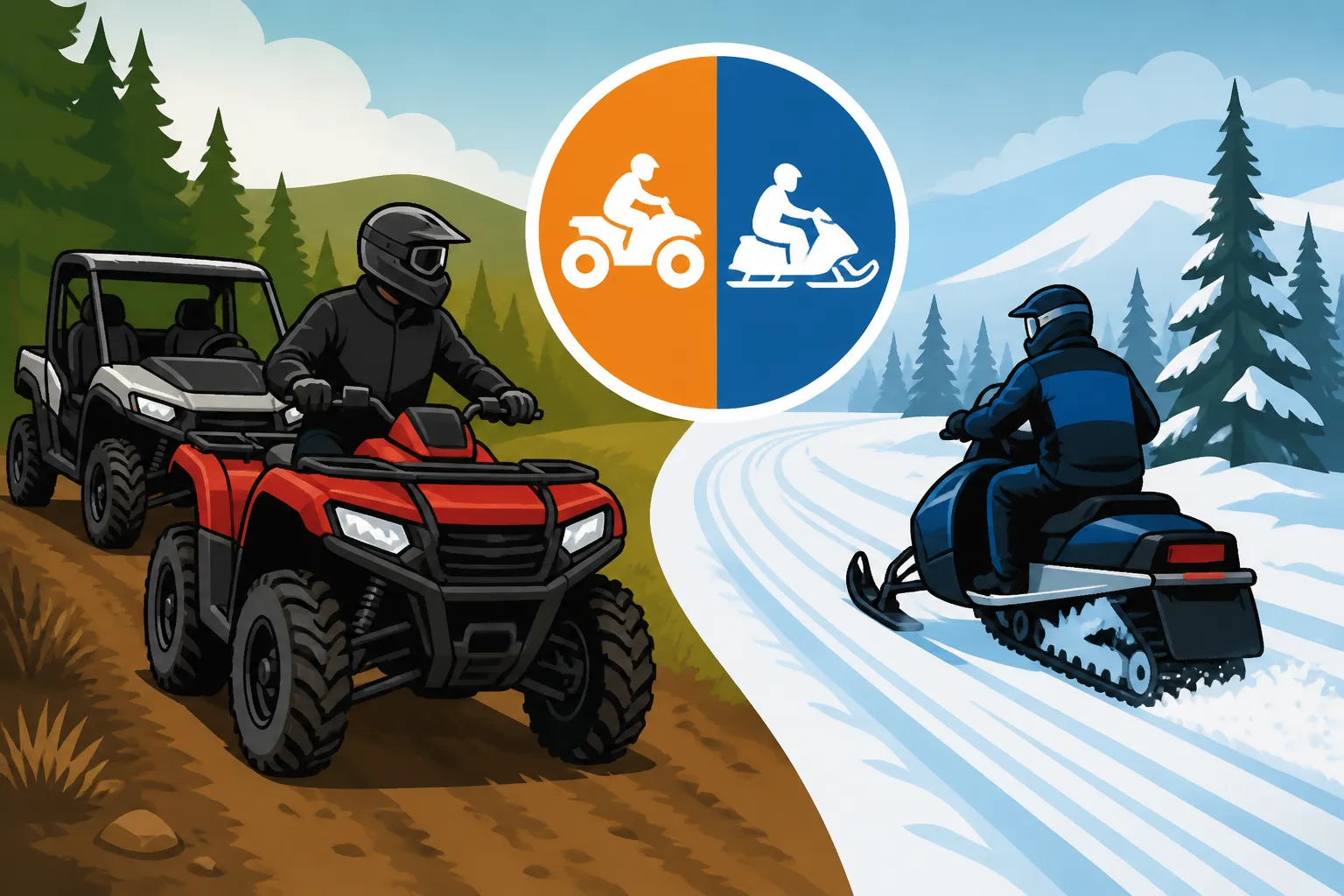
A snowmobile corridor may run alongside an ATV trail, cross a road, or pass through the same forest as a motorized route. Those routes can look connected on the ground while having different rules. A snowmobile trail marker does not, by itself, authorize ATV or UTV use.
The key question is not simply whether you are near a snowmobile corridor. It is whether the specific route is open to your machine, for your intended use, at that time. A trail may be designated for snowmobiles only, shared with other motorized users, or closed to ATVs during a particular season. Land ownership and management also matter: rules can differ on state forest land, county land, private property, and locally managed trails.
This is where riders can get caught out. You may follow a legal ATV route and reach a snowmobile corridor that appears to continue in the same direction. Unless signs, an official map, or the responsible land manager confirms that ATVs are allowed on the next section, don’t assume the route is shared. Stop and check rather than treating tire tracks or an open-looking path as proof.
For a broader look at how designated routes are managed, read [Minnesota's Grant-in-Aid Trail System](Minnesota's Grant-in-Aid Trail System). To understand why routes can change use by season, see [Minnesota Trail Rules Once the Snow Arrives](Minnesota Trail Rules Once the Snow Arrives).
Check the route, land manager, and current conditions
Before heading out, identify the exact corridor or trail segment on an official map and check its posted status. A general map of the area may show a snowmobile trail without making it clear whether ATVs are allowed. Look for the map legend, machine-use designations, seasonal notes, and any closure notices. If the route crosses more than one land jurisdiction, check the rules for each section.
Signs at the trailhead and along the route matter too. A sign may identify a snowmobile route, prohibit other motor vehicles, warn of a crossing, or indicate a temporary closure. If a sign conflicts with what you expected from a map, take the more restrictive direction and confirm the situation with the land manager before proceeding. Conditions can change after a map is printed or after a storm, thaw, maintenance project, or land-management decision.
A useful planning habit is to save the relevant route information before leaving home. Cell service can be limited in some northern Minnesota riding areas, and an online map may not load when you need it. Carrying a downloaded or paper map can help you recognize a junction and turn back before you enter an unauthorized section. For map-reading basics, see [Reading a Minnesota OHV Trail Map](Reading a Minnesota OHV Trail Map) and [Minnesota Trail Closures in Spring Thaw](Minnesota Trail Closures in Spring Thaw).
What to Do When an ATV Route Meets a Snowmobile Corridor
Stop at junctions and follow the signs
At a junction, slow down enough to read signs before choosing a direction. Snowmobile trail markers can help snowmobilers follow their route, but they are not a substitute for an ATV-use designation. If the sign says snowmobile trail, and there is no clear indication that the segment is open to ATVs, don’t continue onto it just because you can see tracks or another rider has gone ahead.
This can be frustrating when a legal ATV route seems to stop a short distance from where you want to go. Turning around may add time, but it is safer than guessing and risking a trespass or trail-use violation. If you cannot tell whether the route is shared, pause at a safe place, consult the map or posted information, and contact the relevant land manager if needed. Avoid blocking a trail entrance or standing where approaching riders cannot see you.
Also pay attention to temporary signs. A familiar trail can be closed for maintenance, damage prevention, or other management reasons. A route that was open on your last visit may not be open on this ride. Conditions can be especially changeable during spring thaw, when a wet or soft trail may be more vulnerable to damage. The practical choice is to respect the closure and use a confirmed open route instead.
Cross carefully, but do not travel along a route unless allowed
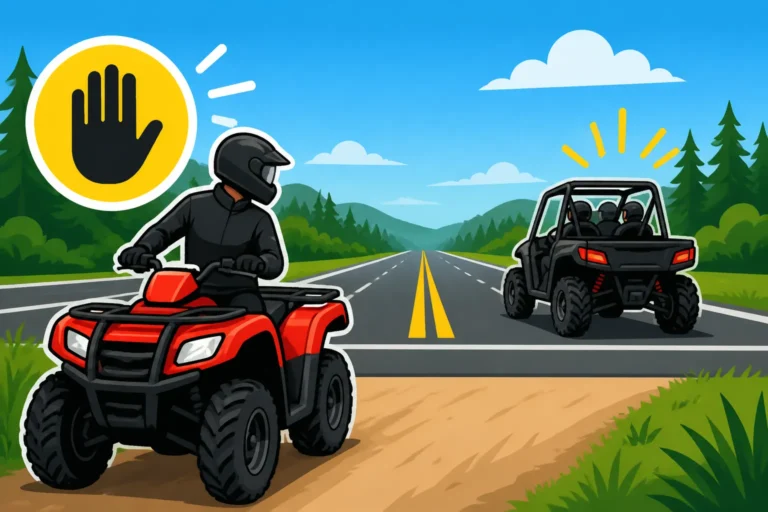
A legal ATV route may cross a snowmobile trail, and a snowmobile route may cross a road or another motorized trail. A crossing is different from permission to ride along the corridor. If you are on a designated ATV route and reach a signed crossing, slow down, look for approaching snowmobiles or other users, and cross where the route indicates. Do not stop in the crossing or turn onto the snowmobile trail unless that section is also open to your machine.
Use extra care where sightlines are limited by trees, snowbanks, brush, or a bend. Snowmobiles may approach faster than you expect, and a group can follow close behind the lead rider. Come to a controlled stop where you can see and be seen, check both directions, and cross without lingering. If you are riding with others, make sure the whole group clears the crossing before anyone assumes it is safe to move.
Some routes intersect public roads or railroad corridors as well. Road-crossing rules and trail-crossing rules are not interchangeable, so follow the markings and applicable local requirements at each location. See [Where a Minnesota Trail Meets a Road](Where a Minnesota Trail Meets a Road) for more on trail-to-road transitions, and [Minnesota Rules for Crossing a Railroad Grade](Minnesota Rules for Crossing a Railroad Grade) for railroad crossings.
| What you encounter | Safer next step |
|---|---|
| A snowmobile trail marker with no ATV designation | Stop and verify that ATVs are allowed before proceeding |
| A signed crossing on an approved ATV route | Slow down, check for other users, and cross without stopping in the crossing |
| A closed-route sign or barrier | Turn around and use a confirmed open route |
| A map and a trail sign that do not appear to match | Follow the more restrictive instruction and confirm with the land manager |
| A corridor crossing private property | Check posted rules and obtain permission where required |
Seasonal Rules and Shared-Use Confusion
Snow season does not automatically open a corridor to ATVs
When snow arrives, the appearance of a trail can change quickly. A snow-covered path may hide ordinary trail signs, drainage features, or the boundary between a designated ATV route and a snowmobile route. It may also look like an inviting, continuous track even though it is not open to your machine.
Do not treat snow cover as a change in legal access. The season, land designation, posted restrictions, and machine type still matter. Some routes are managed for snowmobiles during winter, while other routes may have separate rules or seasonal closures. Check the official information for the specific trail rather than assuming that a route is open because it is groomed, packed, or being used by others.
The same caution applies during warm spells and spring thaw. A trail can be closed to protect the surface even if it looks firm enough to ride. Driving around a closure or onto a parallel corridor can damage the trail and create problems for other users. Check [When Minnesota Trails Open Each Spring](When Minnesota Trails Open Each Spring) and [State Forest Rules Minnesota Riders Follow](State Forest Rules Minnesota Riders Follow) when planning a ride that may cross seasonal boundaries.
Shared routes need extra courtesy
On a route that is confirmed open to both ATVs and snowmobiles, ride as if you may meet someone around the next bend. Keep a controlled speed, stay on the designated tread, and avoid sudden stops in narrow areas. Give other users room to pass where the route allows it, and follow any posted direction-of-travel or speed rules.
In winter, visibility and stopping distance can be affected by snow, glare, and trail conditions. A UTV cab or windshield may change how wind and snow feel, but it does not replace attentive riding or compliance with route rules. If you use accessories from a brand such as SuperATV, treat them as equipment choices—not as evidence that a trail is open or that a machine meets every requirement for a particular route.
Groups should agree on a plan before reaching a junction. The lead rider can stop in a visible, safe area and make sure everyone understands whether the group is crossing, turning around, or continuing on a confirmed shared route. A rider who is unsure should not feel pressured to follow the group onto an unverified trail. SuperATV accessories may be part of a machine setup, but route maps, signs, and land-manager instructions should guide the access decision.
A Practical Checklist Before You Ride
Plan the route before unloading
Before you leave, identify your intended ATV or UTV route and any places where it meets a snowmobile corridor. Confirm that each segment is open to your machine and check for seasonal closures. If your route crosses state forest, county, private, or locally managed land, find out who manages each section and whether the rules change at the boundary.
At the trailhead, compare posted signs with the route information you brought. Take a moment to check that you have the right junction in mind, particularly if several trails begin in the same staging area. If a route marker is unclear, stop before entering the questionable segment and turn back if you cannot confirm access. You can review additional route-season guidance in [Minnesota Trails That Switch to Snowmobiles](Minnesota Trails That Switch to Snowmobiles).
Keep the group informed. A simple pre-ride agreement—stop at signed junctions, don’t split up, and don’t follow an unmarked route—can prevent one rider’s guess from sending everyone onto a closed corridor. SuperATV products or other aftermarket equipment may help tailor a machine to a rider’s preferences, but the legal route decision still depends on land rules and official designations.
Use this quick decision process at the trail
When you reach a corridor, use this sequence:
- Stop somewhere visible and safe. Avoid blocking the trail entrance or standing in a crossing.
- Read the signs. Look for machine-use designations, closures, and crossing instructions.
- Check your map and the route status. Make sure the segment is open to ATVs or UTVs, not just snowmobiles.
- Consider land ownership and seasonal rules. A trail may cross into a different jurisdiction or be subject to a temporary closure.
- Proceed only when access is clear. If it is not clear, turn around and confirm with the relevant land manager.
This approach may feel overly cautious when the corridor looks familiar or other riders are using it. But a visible track is not an authorization, and a snowmobile trail sign does not automatically mean the route is shared. A short pause can prevent an accidental trespass, an avoidable ticket, or damage to a closed trail.
Disclaimer
This article is for general informational purposes only and does not constitute professional advice. Laws, prices and regulations vary by location and change over time. Consult a qualified professional for guidance on your specific situation.