Stopping Where a Minnesota Road Crosses a Trail
There's a unique knot of anxiety many Minnesota ATV and UTV riders feel when a beautiful, winding trail suddenly spits them out at a road. It's that moment of hesitation, the quick glance left and right, the internal debate: "Do I stop completely? Is anyone coming? Can I just roll through?" It feels like a quick decision, but the stakes are incredibly high, and the rules are not just suggestions – they're laws designed to keep everyone safe. This guide is here to untangle that knot, walking you through exactly what Minnesota law expects when your off-highway vehicle encounters a roadway, ensuring you can navigate these crossings with confidence and, most importantly, safely.
Understanding the Rules at Road Crossings
Minnesota's trails are a fantastic resource, connecting riders to incredible natural beauty and adventure. But these trails often intersect with roads, from quiet township gravel to bustling state highways. These intersections are not just minor inconveniences; they are critical points where two very different types of traffic — fast-moving road vehicles and slower, often less visible, off-highway vehicles — must safely coexist. Ignoring the rules here can have serious consequences, not just for your wallet, but for your safety and the safety of others.
Why Road Crossings are Such a Big Deal
Think about it: a car or truck traveling at 55 mph needs a significant distance to stop. An ATV or UTV, while capable of speed on the trail, is often much slower to accelerate from a stop and has a smaller profile, making it harder for drivers to spot. This speed differential, combined with differing expectations (road drivers expect other road vehicles, not ATVs appearing from the brush), creates a high-risk environment. The frustration is understandable; you're in the rhythm of the trail, and suddenly you have to reorient yourself to road rules. It can feel like an abrupt halt to the fun, but it's paramount for preventing accidents.
Beyond the immediate physical dangers, there are significant legal ramifications. Minnesota statutes are quite clear about how off-highway vehicles must interact with public roadways. These aren't just polite suggestions; they carry the weight of law. Failure to adhere to them can result in citations, fines, and even more severe penalties if an accident occurs. It's not just about avoiding a ticket; it's about being a responsible trail user and protecting the future of motorized recreation in our state.
The Basic Stop and Yield Requirements
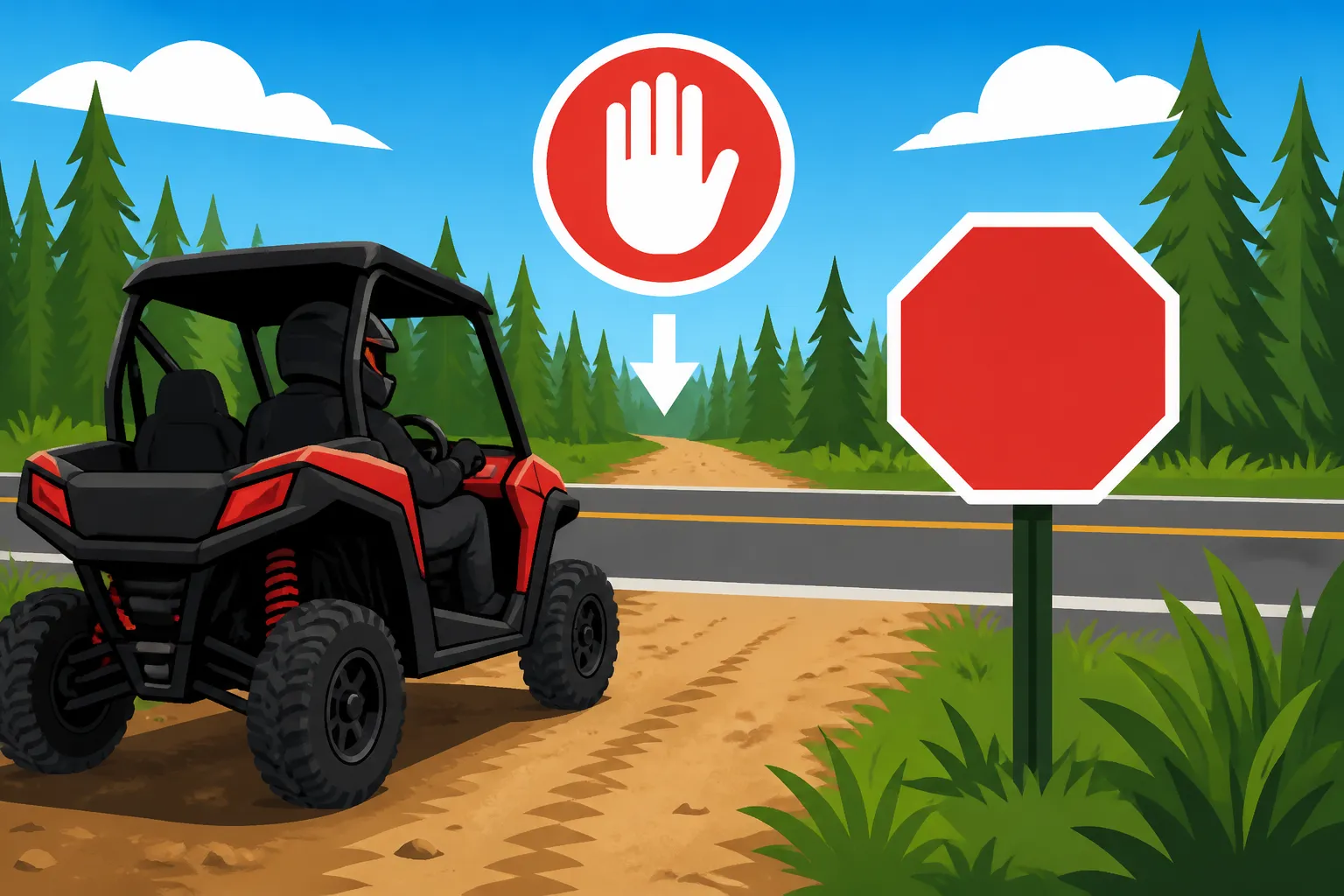
At its core, the rule for most trail-to-road crossings in Minnesota is straightforward: you must come to a complete stop before entering the roadway. This isn't a "rolling stop" or a "slow down and look" situation; it means your machine's wheels must cease rotation entirely, and you must pause momentarily. This complete stop gives you the crucial time to properly assess the situation and ensure the way is clear.
Once you've stopped, the next step is to yield to cross traffic. This means that any vehicle already on the roadway, or approaching so closely as to constitute an immediate hazard, has the right of way. You cannot proceed until you can do so safely, without interfering with the flow of traffic. This often means patiently waiting for a gap in traffic that is large enough for you to accelerate, cross the road, and clear the other side without causing drivers to brake or swerve. Always remember the "left, right, then left again" rule for looking for traffic, as situations can change quickly.
Identifying a Legal Crossing Point
It's tempting to think that wherever a trail visually meets a road, it's a designated crossing point. This simply isn't the case. You cannot just cut across any road you encounter. Minnesota law specifies where ATVs and UTVs are permitted to cross public roads. These locations are almost always marked with official signage. You'll typically see stop signs, yield signs, or specific "ATV CROSSING" signs indicating a legal intersection.
If you arrive at a point where a trail meets a road and there are no such signs, you should assume it is not a legal crossing point. Attempting to cross an undesignated area is illegal and incredibly dangerous. In such situations, your options are to turn around, find a designated crossing point, or in very specific circumstances, if it's a type of road that allows [Riding an ATV on the Road in Minnesota] (which is rare and heavily restricted), you might be able to ride a short distance on the ditch or shoulder to reach a legal crossing. However, ditch riding has its own stringent rules, so always prioritize legal and clearly marked crossings.
The Mechanics of a Safe Crossing
Knowing the rules is one thing, but actually executing a safe and legal crossing in the heat of the moment takes practice, awareness, and a methodical approach. It's about developing habits that prioritize safety above all else, ensuring you don't become a statistic or contribute to negative perceptions of ATV and UTV riders.
Approaching the Roadway Safely
The approach to any road crossing should begin well before you actually reach the edge of the pavement or gravel. As soon as you see signs of an approaching road—whether it's an "ATV CROSSING AHEAD" sign, the sound of traffic, or simply the trail opening up—it's time to slow down significantly. Reduce your speed, shift your weight, and prepare to come to a full stop. This gives you time to react to any unexpected situations, like another rider speeding up behind you or a sudden dip in the trail before the road.
As you approach the actual edge of the road, be acutely aware of your surroundings. Look for other trail users who might be attempting to cross, as well as potential blind spots created by vegetation, hills, or parked vehicles. Position your machine so that you have a clear view of oncoming traffic from both directions, but ensure your ATV or UTV is entirely off the main road surface. You want to be at a complete stop, wheels static, at the very edge of the road, ready to proceed but not impeding or creating a hazard for passing vehicles. Visibility is key here; bright riding gear and even aftermarket accessories like SuperATV whip flags can make a difference, especially if you're emerging from dense woods or an area with limited sightlines.
Making the Stop and Looking for Traffic
The "complete stop" rule means just that. Come to a full, unequivocal halt. If there's a white stop line painted on the trail surface, stop before it. If not, stop at the very edge of the road surface itself. From this vantage point, execute the critical "left, right, then left again" scanning pattern, thoroughly checking for oncoming traffic. Don't just glance; actively look. Pay close attention to the speed and distance of any approaching vehicles. A car that looks far away on a straight road can cover a lot of ground in a short amount of time.
If you're riding in a group, communication is vital. The lead rider should signal clearly to those behind them. While waiting, maintain proper spacing from other machines, allowing everyone a clear line of sight. Rushing this step is a recipe for disaster. Patience is your best friend here. Remember that ignoring this fundamental rule can lead to serious consequences, including [Minnesota Fines for Illegal Road Riding]. It's always better to wait an extra minute or two for a clear opening than to risk a collision.
Proceeding Across the Roadway
Once you've identified a clear, safe gap in traffic, it's time to proceed decisively. Accelerate smoothly and maintain a steady path straight across the road. The goal is to minimize the amount of time your machine spends on the actual road surface. Avoid any sudden stops, swerves, or changes in direction once you've committed to crossing, as this can confuse drivers and create an unpredictable situation.
If you're pulling a trailer, be extra mindful of its length and weight. Ensure that your entire machine-and-trailer unit can clear the roadway quickly and safely within the traffic gap you've chosen. For some crossings, like [Crossing a County Road on a Minnesota ATV], the traffic might be lighter, but the principles remain the same. When dealing with a major thoroughfare like a [Crossing a Minnesota State Highway], the urgency to clear the road safely is even greater due to higher speeds and traffic volume. Always be aware of the trail surface on the other side as well; sometimes there's a dip or bump that requires a slight adjustment as you leave the pavement.
Specific Scenarios and Advanced Considerations
While the basic rules of stopping and yielding are universal, the real world presents a variety of situations. Understanding these nuances can help you apply the rules more effectively and stay safer on the trails.
Crossing Different Types of Roads
Not all roads are created equal, and your strategy for crossing them might need slight adjustments, even though the "stop and yield" rule remains constant.
- Township/Gravel Roads: These are often the most common type of road crossing for trail riders. While traffic may be lighter and speeds lower, they still require a full stop. Be mindful of dust, especially on dry days, as it can significantly impair visibility for both you and oncoming drivers. Farmers and rural residents often drive these roads quickly, so never assume they're empty.
- County Roads: These typically carry more traffic and higher speeds than township roads. The sightlines might be better, but the flow of vehicles will demand more patience. Always remember to check far down the road for vehicles approaching at speed.
- State Highways: Crossing a state highway is the most challenging and potentially dangerous scenario. Traffic is heavy, and vehicle speeds are much higher. Many state highways are not legal crossing points, and [Minnesota Rules on State Highways] are very strict about where OHVs can even interact with these roads. If you encounter a state highway, be prepared for longer waits for a safe gap, and make absolutely sure it's a designated crossing point. These are often clearly marked with substantial signage.
Group Riding and Communication at Crossings
Riding with friends adds a layer of fun, but also a layer of complexity at road crossings. Clear communication is absolutely paramount to ensure everyone in your group crosses safely.
The designated lead rider has a significant responsibility. They should be the one to assess the traffic, make the initial stop, and signal when it's safe for the group to proceed. Many groups use a "follow the leader" approach, where each rider waits until the one in front of them has successfully crossed before they assess the traffic for themselves and make their own crossing. This prevents a chain reaction if the lead rider makes a questionable decision. Some riders even invest in helmet communication systems from brands like SuperATV to ensure real-time verbal communication, especially in noisy or high-traffic areas.
Discuss your crossing strategy before you even hit the trails. Will you cross one by one? Will the leader wait on the other side until everyone is clear? What if the group gets split by traffic? Clear hand signals are essential, and everyone should understand them. When riding through small towns that have designated ATV routes, [Group Etiquette Through a Quiet Town] also applies at any road intersections within those towns. Remember, the goal is for everyone to get across safely, not to set a speed record.
Special Situations and What to Avoid
Some situations demand extra caution, and some actions should be avoided entirely.
- Blind Corners/Hills: Never, ever attempt to cross a road if your view of oncoming traffic is obscured by a blind corner, a hill, or dense vegetation. This is an invitation to disaster. If the crossing is at such a location, find an alternative route, even if it means backtracking. Your safety is not worth the risk.
- Weather Conditions: Rain, fog, heavy snow, or even a low sun angle can dramatically reduce visibility for both you and road drivers. In these conditions, you need to exercise extreme caution, extend your waiting time, and ensure an even larger gap in traffic before crossing.
- What Not to Do: Do not creep slowly onto the road surface to get a better view; this is dangerous and illegal. Do not assume that traffic will stop for you, even if you are at a designated crossing. Road drivers may not be expecting you. And certainly, do not attempt to cross a major roadway that is not specifically marked as an ATV crossing point. Doing so could not only lead to an accident but also to significant fines, or even something like [Minnesota Penalties for an Unregistered ATV in Minnesota] if you're found to be operating recklessly or illegally.
| Crossing Type | Traffic Volume | Speed Limit Range | Recommended Caution Level | Key Considerations |
|---|---|---|---|---|
| Township/Gravel | Low to Moderate | 30-55 mph | Moderate to High | Dust, rural traffic, potential blind spots, loose surface |
| County Road | Moderate to High | 45-65 mph | High | Higher speeds, more consistent traffic flow, visibility |
| State Highway | High | 55-70+ mph | Extreme | Very high speeds, heavy traffic, limited legal crossings |
| Designated Crossing | Varies by road type | Varies | Always High | Look for clear signage, follow stop/yield rules strictly |
Legal Ramifications and Your Responsibility
Navigating road crossings isn't just about personal safety; it's about adhering to the law and upholding the privilege of off-highway vehicle use in Minnesota. Violations can lead to consequences that impact your riding career and potentially, your financial well-being.
Fines and Penalties for Non-Compliance
Failing to come to a complete stop or yield to cross traffic at a designated road crossing is considered a moving violation. These aren't trivial tickets. The fines can be substantial, and accumulating multiple violations could even impact your driver's license record, depending on the severity and specific circumstances. Beyond the immediate financial penalty, there's the very real risk of causing an accident, which opens the door to much more serious legal and financial liabilities. This is where you might face not just a ticket for [Minnesota Fines for Illegal Road Riding], but potentially charges related to reckless endangerment or even criminal negligence if an injury or fatality occurs.
It's also worth remembering that conservation officers and local law enforcement are vigilant about ATV and UTV compliance, especially at road crossings. They are trained to observe for violations and will not hesitate to issue citations. Understanding [What a Minnesota Conservation Officer Asks For] during a stop can help you be prepared, but the best preparation is always adherence to the law.
Safety Training and Best Practices
Minnesota takes ATV and UTV safety seriously, and for good reason. Riders born after July 1, 1987, are required to complete [Minnesota's ATV Safety Training Requirement] before operating an ATV or UTV on public lands, which includes designated trail systems that incorporate road crossings. This training is not just a hoop to jump through; it's designed to equip you with the knowledge and skills to navigate situations like road crossings safely and confidently.
Even if you're not legally required to take the safety course, adopting its principles and continuously practicing defensive riding is a best practice. This means always being aware of your surroundings, anticipating potential hazards, and never assuming other drivers see you. Patience, clear communication (especially in groups), and a thorough understanding of the road rules, including [Minnesota Road Rules Riders Get Wrong], are hallmarks of a responsible and safe rider.
Being a Responsible Minnesota Rider
Ultimately, being a responsible Minnesota ATV and UTV rider extends beyond just obeying the law at a specific moment. Every time you fail to stop or yield correctly at a road crossing, you contribute to a negative perception of all riders. This can lead to public complaints, calls for stricter regulations, and even the closure of valuable trail access points. We all share the responsibility of protecting access to our incredible trail systems.
By setting a good example, especially for younger riders who look up to experienced operators, you help ensure the future of the sport. The rules are in place not to restrict your fun, but to keep you, your passengers, and the general public safe. When [Conservation Officer Enforcement in Minnesota] is seen, it should be met with confidence that you are doing everything by the book. Safe and courteous riding at road crossings is a small price to pay for the continued enjoyment of Minnesota's vast and beautiful off-highway vehicle opportunities.
Disclaimer
This article is for general informational purposes only and does not constitute professional advice. Laws, prices and regulations vary by location and change over time. Consult a qualified professional for guidance on your specific situation.