Minnesota Winter Road Riding Rules
Riding your ATV or UTV in Minnesota during the winter can be an absolute blast, a truly unique experience. There's nothing quite like cruising through a fresh blanket of snow, the crisp air biting at your cheeks, or plowing your own driveway with your trusty machine. But the moment you consider taking your off-highway vehicle (OHV) onto or alongside a public road when the snow flies, things can get a little murky. Many riders struggle with understanding what's actually allowed when the ditches are full and the temperatures drop. This guide is here to cut through the confusion and help you understand the specific rules and regulations for winter road riding in Minnesota, ensuring your winter adventures are both fun and legal.
The Basics of Winter Road Riding in Minnesota
Minnesota's landscape transforms into a winter wonderland, and with that transformation comes a distinct set of challenges and considerations for ATV and UTV riders. While the thrill of winter riding is undeniable, the rules governing where and how you can operate your machine on public roads become even more critical for safety and legality.
Why Winter Riding on Roads is Different
Winter conditions bring a whole new dynamic to riding on or near public roads. Instead of dusty trails or dry gravel, you're dealing with snow, ice, slush, and reduced visibility. These aren't just minor inconveniences; they fundamentally change how your machine handles and how other vehicles perceive you. Traction becomes a paramount concern, as even a slight patch of ice can send an unsuspecting rider sliding. Reduced daylight hours mean you'll often be riding in dusk or darkness, compounded by blowing snow or fog that can severely limit your ability to see and be seen.
The cold itself impacts both the rider and the machine. Engines need to warm up properly, and components like tires can become stiff. Riders need to bundle up, but also maintain dexterity for controls. These unique environmental factors are precisely why Minnesota has specific considerations, even if they aren't entirely separate laws, for winter operations. What might be perfectly safe on a summer trail could be outright dangerous or illegal on a snowy roadside.
General Rules for ATV/UTV Road Use Year-Round Context
Before we dive into the winter specifics, it's crucial to remember that the foundational rules for ATV/UTV road use in Minnesota don't magically disappear when the snow falls. These are the bedrock principles that apply year-round. For instance, you still need to ensure your machine is properly registered with the Minnesota Department of Natural Resources (DNR). An unregistered machine, even if it's just being used to plow your driveway and briefly cross a township road, can lead to fines.
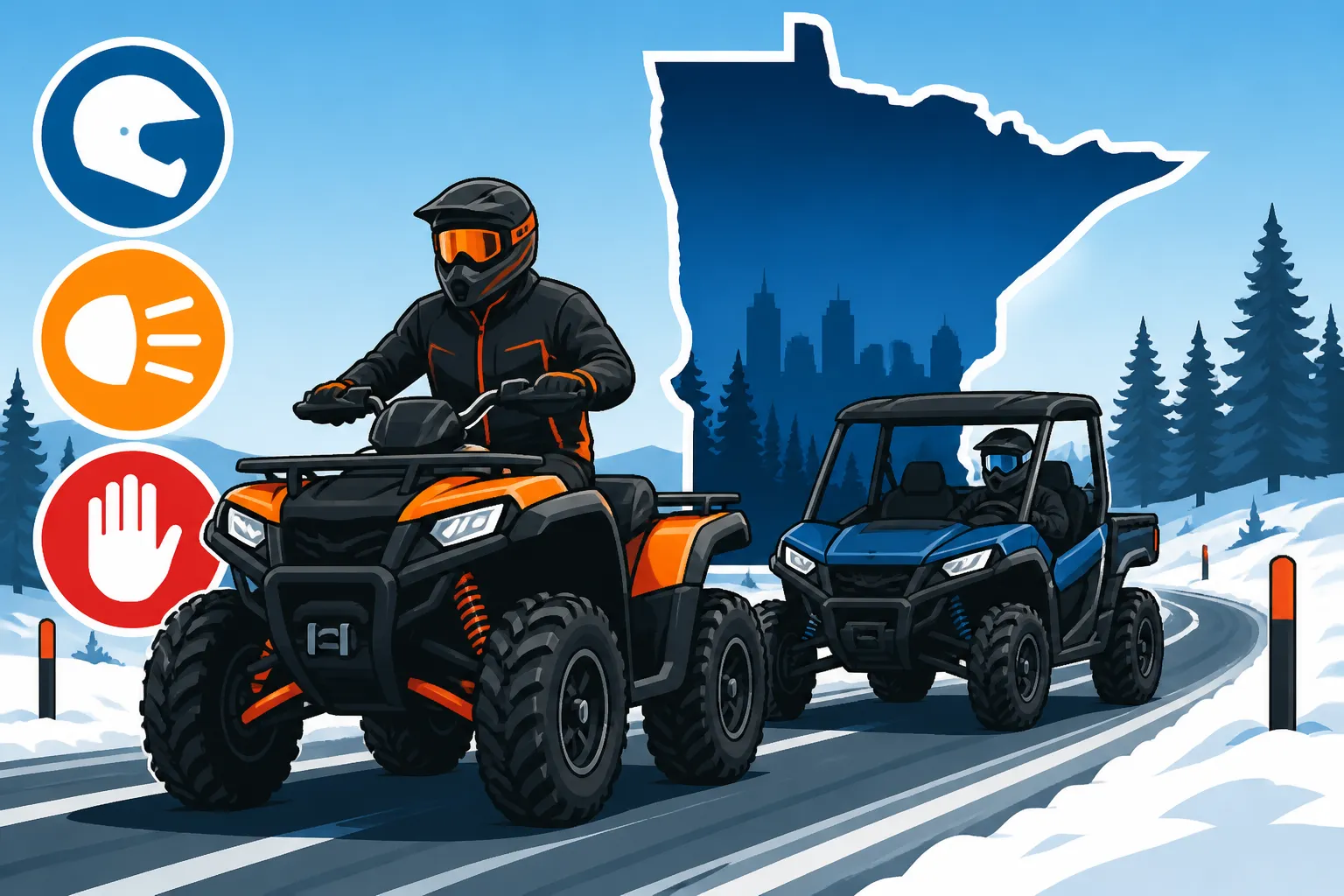
Likewise, general operational rules like proper lighting, spark arresters, and muffler requirements remain in effect. If you're riding after dark – which is much more common in winter – your headlights and taillights must be operational. Passenger restrictions, machine width limits for certain rights-of-way, and rules regarding [Driver's License Requirements on Minnesota Roads] are also constant. For younger riders, the [Minnesota Helmet Rules for Riders Under 18] continue to apply, regardless of whether it's July or January. Think of these as the unchanging constants that are then layered with winter-specific nuances.
Where Winter Road Riding is Typically Permitted Ditches and Shoulders
When we talk about "road riding" for ATVs and UTVs in Minnesota, we're almost always referring to operating within the road right-of-way, specifically in the ditch or on the shoulder, not typically on the paved or graded surface itself. This is a critical distinction. Even in winter, the general principle of staying off the main travel lanes holds true. [Minnesota's Ditch Riding Rules] form the backbone of where you can legally operate.
During winter, these ditches can be filled with snow, creating what feels like an entirely new trail system. However, the legal definition of the "right-of-way" still applies, usually extending from the edge of the traveled portion of the road to a certain distance out, encompassing the shoulder, ditch, and often a portion beyond that. It's essential to understand that just because there's a smooth blanket of snow over the ditch doesn't mean it's an open invitation to ride anywhere. You must still adhere to the right-of-way boundaries and avoid trespassing on private property that abuts the road. Knowing where the ditch begins and ends, and where private land starts, is paramount, even when everything is covered in white.
Specific Winter Riding Requirements and Restrictions
Winter riding in Minnesota isn't just about bundling up; it's about making sure your machine is equipped for the conditions and that you're operating it safely and legally. The challenges of snow, ice, and reduced visibility demand extra attention to detail.
Equipment and Visibility in Snow and Ice
When the snow is flying or the ground is covered in white, visibility becomes a primary concern for everyone on the road. For ATV and UTV riders, this means ensuring your machine is a beacon in the winter landscape. Your standard headlights and taillights are absolutely crucial, but in blowing snow or low light, you might consider adding auxiliary lighting. While not always mandated, brighter LED light bars can make a significant difference in both seeing and being seen, especially if you're out after dark, which often comes early in Minnesota winters. Reflectors are also key, particularly on the side of your machine, to catch the light from other vehicles.
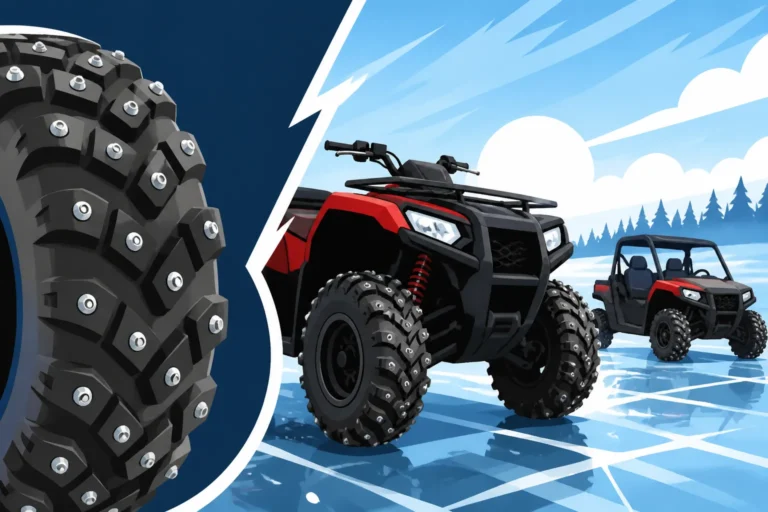
Another piece of safety equipment that's sometimes overlooked but especially vital in winter is a safety flag, particularly if you're riding in tall snow or in areas where your machine might be obscured from view by snowbanks or terrain. The flag should be brightly colored and mounted high enough to be seen over obstacles. When it comes to traction, your tires are your primary point of contact. Standard ATV tires may struggle on slick ice or deep, powdery snow. Many riders opt for specialized winter tires with aggressive treads or even studded tires for better grip, especially if they plan on riding on frozen lakes or very icy ditches. Some enthusiasts even consider track systems, which fundamentally transform your ATV/UTV for deep snow navigation. While tracks offer incredible flotation, remember that they change the footprint and handling of your machine, and you still must adhere to all other operational rules. When equipping your machine for winter, many riders look to aftermarket providers for robust lighting kits, sturdy plows, or specialized tires that can tackle Minnesota's toughest winter conditions.
Speed Limits and Safe Operation in Winter Conditions
While specific speed limits for ATVs and UTVs on road rights-of-way are often lower than those for cars (typically 30 mph or less, depending on the municipality), the practical reality of winter riding means you should almost always be traveling at a much slower pace. The legal speed limit is the absolute maximum, not a recommendation for all conditions. On a slick, icy patch or through deep snow, even 10-15 mph can be too fast. [Speed on a Minnesota Road Right of Way] is a year-round concern, but it's amplified in winter.
Safe operation in winter means anticipating hazards. Snowdrifts can conceal obstacles, ice can form unexpectedly under a light dusting of snow, and visibility can change in an instant. Maintain ample distance from other vehicles, and be aware that braking distances are significantly increased on slippery surfaces. Gentle acceleration, smooth steering, and controlled braking are not just good practice; they are essential for avoiding accidents. Remember that conservation officers and local law enforcement will be looking for safe operation, and speeding or reckless riding in winter conditions can lead to citations, regardless of the posted limit.
Special Considerations for Frozen Lakes and Ice Roads
Minnesota's "Land of 10,000 Lakes" truly shines in winter, with frozen lakes becoming popular recreational areas and even temporary transportation routes. While not strictly "road riding" in the traditional sense, operating on frozen lakes often involves accessing them via road rights-of-way, and the rules share some common threads. [Minnesota Rules on Frozen Lakes and Ice Roads] are comprehensive and designed to keep everyone safe. Key aspects include being aware of ice thickness, which is paramount – never assume the ice is safe. Check with local resorts, bait shops, or the DNR for current conditions.
While on the ice, you must still have proper lighting. Some rules regarding speed and reckless operation also apply. Many counties and towns designate official "ice roads" or access points, particularly for ice fishing or cabin access, which may have their own specific regulations or recommendations. It's crucial to understand that driving on a frozen lake is inherently risky and requires due diligence, distinct from simply riding along a snowy ditch. It's a privilege, not an inherent right, and disrespecting the ice or the rules can have severe consequences.
| Aspect | General Road/Ditch Riding (Any Season) | Winter Road/Ditch Riding (Specific Considerations) |
|---|---|---|
| Registration | Required, valid DNR sticker | Required, valid DNR sticker |
| Driver's License | Varies by age/road type, often required | Same requirements apply |
| Helmet | Under 18 years old | Under 18 years old (and highly recommended for all) |
| Lighting | Headlight, taillight, reflectors | Absolutely critical; consider auxiliary lighting |
| Speed Limit | Max 30 mph (often less by local ord.) | Often requires much slower speeds for safety |
| Traction | Standard ATV/UTV tires suffice | Winter/studded tires, tracks recommended for ice |
| Visibility | Adequate for conditions | Reduced by snow, fog; require bright flag |
| Passengers | As per machine design, age rules apply | Same, but increased risk in slippery conditions |
| Plows/Attachments | Generally allowed for work/access | Common for snow removal, must not impede vision |
| Frozen Lakes | Not applicable | Specific rules apply; check ice thickness |
Navigating Local Ordinances and Exemptions in Winter
Understanding Minnesota's statewide ATV and UTV laws is a great start, but it's only part of the picture, especially when it comes to riding on roads in winter. Local municipalities, from bustling cities to quiet townships, often have the authority to establish their own, more specific regulations.
Understanding Local Control and Designated Routes
While state law provides the overarching framework for ATV and UTV operation, individual counties and cities in Minnesota have significant control over road access within their boundaries. This means that a ditch that's perfectly legal to ride in one township might be off-limits just across the county line. This local control is particularly relevant for [Minnesota Cities That Allow ATVs on Streets], as these cities typically designate specific routes or areas where OHV use is permitted, often with additional rules regarding speed, hours of operation, and equipment.
In winter, these local ordinances can dictate things like whether ATVs are allowed to plow certain public sidewalks or if certain roads are open to OHV traffic when snow-covered. Always, always check with the local city or county clerk's office, or their website, for specific ordinances before planning a ride. Ignorance of a local rule isn't an excuse, and a fun winter outing can quickly turn into a costly one if you're not aware of the nuances of local control. It's often the smaller, more rural communities that embrace winter OHV use, sometimes even providing groomed ditch routes that connect to larger trail systems.
Farm and Utility Exemptions in Winter
Minnesota's laws often recognize the practical needs of agricultural and utility operations, and this extends to ATV and UTV use, especially during winter. For many rural Minnesotans, an ATV or UTV isn't just a recreational vehicle; it's a vital piece of equipment for daily tasks. [Minnesota Rules for Farm and Utility Machines] provide certain exemptions that can be incredibly helpful in winter, allowing farmers, ranchers, or utility workers to use their machines on public roads for specific purposes like moving equipment between fields, checking livestock, or accessing utility lines.
These exemptions are not a blanket permission to joyride on public roads. They typically apply only when the machine is being used directly for agricultural or utility purposes, and often come with conditions such as flashing lights, slow-moving vehicle signs, or specific hours of operation. For example, using your UTV to plow a township road to get to your barn is likely covered, but using the same UTV to go to the gas station for recreational purposes might not be. Always carry proof of your agricultural or utility use if relying on these exemptions, and be prepared to explain your purpose to law enforcement. These exemptions are about functionality and necessity, not casual convenience.
Penalties for Non-Compliance
Ignoring Minnesota's ATV/UTV road riding rules, especially in winter, can lead to more than just a stern talking-to. The penalties for non-compliance can range from minor fines to more severe consequences, depending on the nature and severity of the violation. For example, operating an unregistered ATV in winter, even if just plowing your own driveway and crossing a road, can still result in fines under [Penalties for an Unregistered ATV in Minnesota]. Lack of proper lighting, riding in prohibited areas, or operating recklessly on slippery surfaces can also lead to citations.
If you're caught without the required safety equipment (like a helmet for minors), or if you're operating under the influence of alcohol, the penalties escalate significantly, potentially including license suspension and substantial fines. Law enforcement, including conservation officers, are active year-round in enforcing these rules to ensure public safety. A moment of disregard for the rules can not only put yourself and others at risk but also lead to a hefty bill or even the temporary loss of your riding privileges. Always prioritize knowing and following the rules to avoid these unpleasant consequences and ensure your winter riding remains a source of enjoyment.
Disclaimer
This article is for general informational purposes only and does not constitute professional advice. Laws, prices and regulations vary by location and change over time. Consult a qualified professional for guidance on your specific situation.