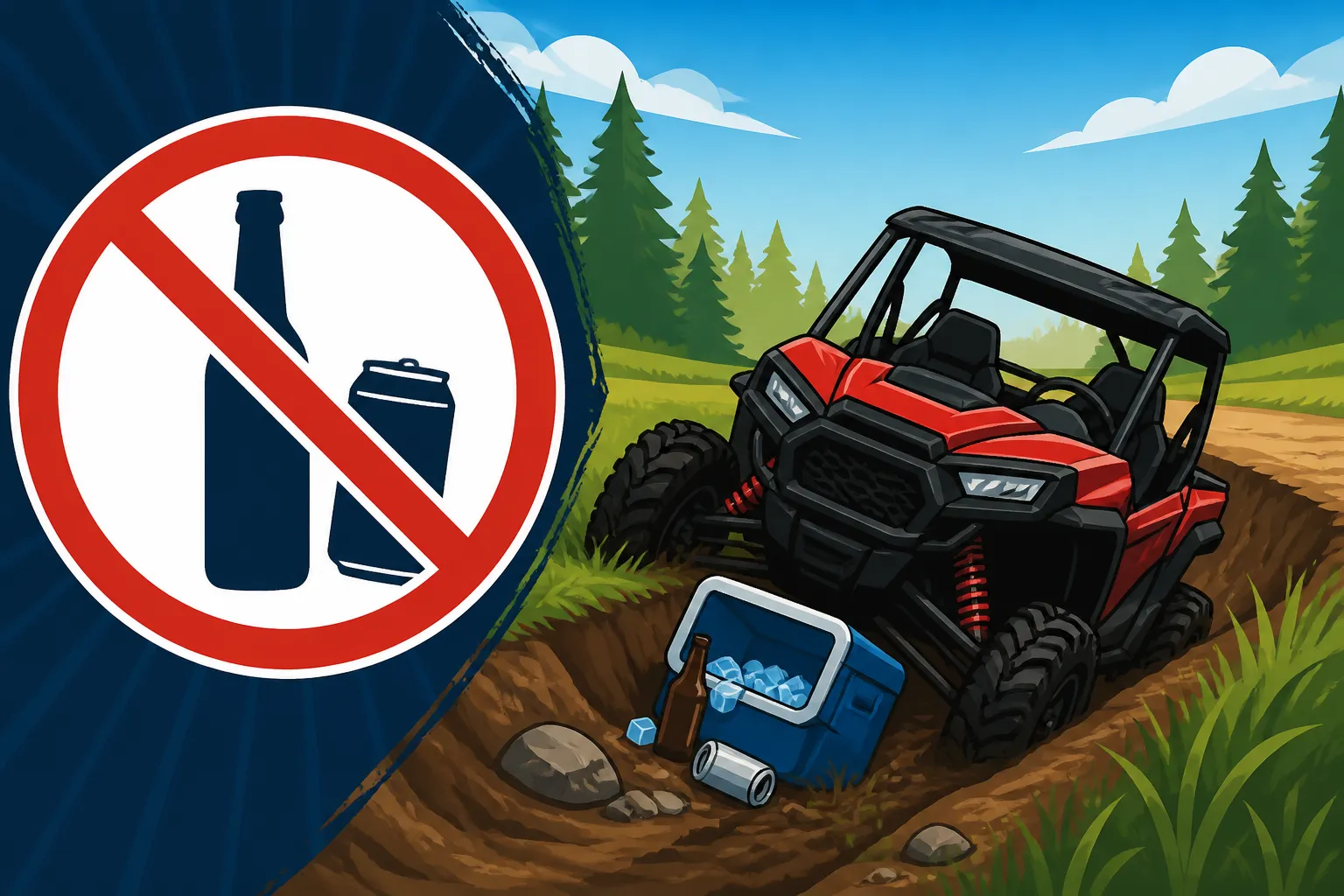
Open Container Rules in the Ditch
There's nothing quite like heading out on your ATV or UTV for a day of ditch riding across Minnesota. The sun's shining, the trails (or ditches!) are calling, and you're making memories. But as you plan your adventure, you might find yourself wondering about those seemingly simple things that can quickly become a big headache – like what to do about beverages. Specifically, you might be asking: are open containers allowed when you're riding your machine in the ditch? It's a question many riders ponder, often assuming the ditch is a free-for-all, but the reality is much more nuanced and carries real consequences. This guide is here to clear up that confusion, explaining Minnesota's open container rules for ATVs and UTVs, especially when you're cruising those roadside ditches, and help you stay on the right side of the law.
The Basics: What Minnesota Law Says About Alcohol and ATVs
It's easy to think of your ATV or UTV as a recreational toy, separate from your car or truck. But when it comes to alcohol and operating a vehicle, Minnesota law often treats off-highway vehicles (OHVs) with the same seriousness as any other motor vehicle. This is where a lot of riders get tripped up, assuming that because they're not on a paved road, the rules are different. Unfortunately, that's not always the case, and understanding these foundational principles is key to avoiding trouble.
The "Motor Vehicle" Definition and Off-Highway Vehicles
In Minnesota, the legal definition of a "motor vehicle" is pretty broad, and it often encompasses ATVs, UTVs, and other off-highway machines, especially when they're being operated on public lands or within public rights-of-way. This means that many of the same laws that apply to someone driving a car on a highway, such as those concerning driving while impaired (DWI) or open containers, can and do apply to you when you're operating your quad or side-by-side. It’s not just about what kind of vehicle it is; it’s about where you’re operating it. If you're out on a designated trail, a public ditch, or crossing a road, you're generally subject to these broader motor vehicle laws. This framework is designed to promote safety for all users of public spaces, regardless of whether they're in a car, on a motorcycle, or riding an ATV.
Many riders, especially those new to the sport or visiting from out of state, might not realize the implications of this broad definition. They might assume that because their machine isn't "street legal" in the traditional sense, or because they're on an unpaved surface, they're somehow exempt from certain rules. However, the state's intent is clear: operating any motorized vehicle, including OHVs, requires sobriety and adherence to open container laws when in public areas. This means that a conservation officer or sheriff's deputy has the authority to enforce these regulations just as they would for a car on the highway.
Understanding "Open Container" in a Ditch Setting
So, what exactly does "open container" mean in Minnesota, and how does it apply to riding in a ditch? Simply put, an open container is any bottle, can, or other receptacle containing an alcoholic beverage that has been opened, has a broken seal, or has had its contents partially removed. It doesn't matter if it's a can of beer, a bottle of wine, or a mixed drink in a thermos. If it's open and contains alcohol, it's an open container. The crucial part for ATV and UTV riders is understanding that roadside ditches in Minnesota are generally considered part of the public right-of-way, and thus, open container laws apply there.
This can be a tough pill to swallow for some riders who see the ditch as a convenient, often unpatrolled, place to kick back. Imagine you're riding with friends, and someone has a cooler with a mix of soda and a few beers. If all the beer cans are sealed and unopened, you're generally in the clear (though some laws might require them to be stored in an inaccessible area like a trunk, which can be tricky on an ATV). But if even one can has been popped open, or a cap twisted off, and it's readily accessible to the operator or passengers, that's an open container violation. This isn't just about drinking while driving; it's about the mere presence of an open alcoholic beverage in the operating area of the machine. The intention behind these laws is to prevent impaired operation and maintain public safety, which extends to all areas where motor vehicles, including ATVs and UTVs, are permitted to operate.
Where the Ditch Riding Rules Come In
Ditch riding is a quintessential Minnesota experience for many ATV and UTV enthusiasts. It's a way to connect towns, access trails, or just enjoy the countryside. However, the "ditch" isn't a legal gray area. It's a specific part of the public infrastructure, and understanding its legal status is crucial to navigating rules like those for open containers. Just because you're off the pavement doesn't mean you're off the hook when it comes to alcohol laws.
Public Right-of-Way vs. Private Property
This is perhaps the biggest misconception for riders: the idea that a ditch is somehow "private" or "unregulated" simply because it's not a paved road. In Minnesota, roadside ditches are almost universally considered part of the public right-of-way. This means they are public land, managed and overseen by state, county, or township authorities, just like the road itself. As such, any public use of these ditches, including ATV and UTV riding, is subject to the same general laws that apply to public roads and lands, including those pertaining to open containers and alcohol consumption. This distinction is vital because while you might have different rules when [Riding a Friend's Property in Minnesota] or when a machine is [Registering a Machine Kept Only on Your Land], the ditch is not private property.
Consider the practical implications: a sheriff's deputy or a Minnesota DNR conservation officer has the full authority to patrol these ditches and enforce all relevant state and local laws. They aren't just looking for speeding cars; they're ensuring safe and legal operation of all vehicles in their jurisdiction, including your off-highway machine. This is why you need to be just as mindful of open container laws in the ditch as you would be on a highway. The only exception would be if you are absolutely certain you are on private land with the owner's permission, and even then, operating a machine while impaired is never a good idea. But for the vast majority of ditch riding, you are on public ground where the rules of the road, including alcohol regulations, largely apply.
Enforcement and Consequences
So, what happens if you're caught with an open container while riding your ATV or UTV in a Minnesota ditch? The consequences can range from a hefty fine to more severe penalties, depending on the circumstances and whether other offenses (like impaired driving) are involved. Law enforcement officers, whether from the Minnesota DNR, county sheriff's offices, or local police departments, are trained and equipped to enforce these regulations. They understand that ditch riding is popular, but they also prioritize public safety. An open container violation, even without evidence of impairment, can lead to a citation and a fine that can really put a damper on your riding season.
Beyond monetary penalties, repeated offenses or a combination of open container and impaired driving charges can lead to the suspension or revocation of your ATV operating privileges, and potentially even your regular driver's license. Your machine could also be impounded, leaving you with the hassle and expense of retrieving it. It's a stark reminder that what might seem like a minor infraction can quickly escalate into a significant legal and financial headache. Minnesota takes operating any motor vehicle, including OHVs, under the influence very seriously. For more detailed information on penalties related to alcohol, you can check out [Minnesota Alcohol Limits for ATV Operators] or [A DWI on an ATV in Minnesota]. These rules are in place not to spoil your fun, but to ensure everyone's safety, including yours, on public thoroughfares and trails. Even for simple violations, understanding [Minnesota Fines for Illegal Road Riding] is important, as the ditch is often treated similarly to a road right-of-way.
Practical Advice for Responsible Riding
Knowing the rules is one thing, but actually incorporating them into your riding habits is another. It's all about planning ahead and making smart choices so you can enjoy your time on the trails and in the ditches without unnecessary stress or legal trouble. Responsible riding isn't just about safety; it's about respecting the law and ensuring you can continue to enjoy your machine for years to come.
Best Practices for Carrying Beverages
If you're going to carry alcoholic beverages on your ATV or UTV, the absolute best practice is to keep them sealed, unopened, and stored in a place that is not readily accessible to the operator or passengers. Think of it like transporting alcohol in your car – it generally needs to be in the trunk or a cargo area, not in the cup holder. For an ATV or UTV, this might mean a secured cargo box or a storage compartment where it's out of reach and not easily opened while riding. Items like a rear cargo box or even a well-designed cooler that securely fastens to your rack can be incredibly useful here.
Many riders invest in accessories from brands like SuperATV, which offer robust cargo boxes and storage solutions that can be locked or securely fastened to your machine. These aren't just for keeping your gear dry; they're perfect for ensuring any beverages you carry remain sealed and out of the passenger compartment until you're at your destination and the machine is parked. Furthermore, if your group plans to consume alcohol at any point during your outing, it's always wise to designate a sober driver. This person commits to staying clear of alcohol entirely, ensuring everyone gets to and from their destination safely. Remember, the goal is to prevent any appearance of illegal activity and to avoid giving law enforcement a reason to stop you.
Planning Your Stops and Socializing
One of the best ways to enjoy both your ATV/UTV and a beverage is to separate the two activities. Instead of trying to manage open containers while you're riding, plan your route to include stops at ATV-friendly establishments, such as small-town restaurants or bars, where you can legally purchase and consume alcoholic beverages. Many Minnesota trail towns welcome riders and have places where you can park your machine and enjoy a meal and a drink. [Riding Into a Minnesota Trail Town] can be a fantastic experience, offering a chance to refuel both yourself and your machine, as detailed in [Fueling an ATV in a Minnesota Small Town].
Alternatively, save any alcohol consumption for after your ride is completely finished, and your machine is safely parked for the day or evening at your cabin, campground, or home. This eliminates any ambiguity and ensures you're not operating your ATV or UTV under the influence or with an open container. It might require a bit more planning, but it's a small price to pay for peace of mind and staying within the bounds of the law. Think of your ride as the main event, and any social drinking as the celebratory conclusion once the keys are out of the ignition.
Common Misconceptions and Clarifications
The world of ATV and UTV laws can be a bit of a maze, especially when it comes to specific scenarios like open containers in roadside ditches. Many riders operate under assumptions that, while well-intentioned, don't align with Minnesota's legal framework. Let's tackle some of these common misunderstandings head-on to ensure you have the clearest picture possible.
"It's Just a Ditch, Not a Road!"
This is perhaps the most prevalent misconception we encounter. Riders often think, "I'm not on the paved road, so the rules are different." While it's true that the experience of riding in a ditch is vastly different from driving a car on the pavement, legally speaking, the ditch along a public roadway in Minnesota is generally considered part of that public right-of-way. This means that many of the same laws that apply to the road surface, including open container laws, extend to the ditch. For a deeper dive into the specific rules for ditch riding, you might find [Minnesota's Ditch Riding Rules] helpful.
The state's perspective is rooted in safety and public order. Even though it's an unpaved shoulder, it's still accessible to the public, and operating any vehicle there, including an ATV or UTV, carries responsibilities. Law enforcement doesn't draw a sharp line between the asphalt and the gravel when it comes to fundamental safety laws like those governing alcohol. The intent is to prevent impaired operation and the public consumption of alcohol in areas where motorized vehicles are in motion. So, while it may feel like a wilderness trail, the ditch is viewed legally as a functional part of the transportation corridor, not a separate, unregulated zone. You can further understand this distinction by looking at resources like [The Road Surface Minnesota Keeps Closed], which highlights specific areas where even ditch riders need to be careful.
What About Passengers?
Another common question is whether open container rules apply only to the operator or also to passengers on an ATV or UTV. In Minnesota, generally, if an open container is accessible within the operating area of the machine, it can lead to a violation, regardless of who is holding it. This means if your passenger has an open beer in their hand or in a cup holder accessible to them, it's likely considered an open container violation for the machine. The law aims to prevent the presence of open alcohol in vehicles, as it can encourage consumption and lead to impairment, affecting both the operator and the safety of the entire party.
This is especially relevant for side-by-sides (UTVs) which often have multiple seats and more car-like cabins. Just as a passenger in a car isn't allowed to have an open container, a passenger in a UTV operating in a public right-of-way typically faces the same restriction. The rules are designed to prevent the appearance of or temptation for on-the-go drinking. While [Passengers on a Minnesota Road Section] might focus more on carrying capacity, the overarching theme of safety and legal compliance extends to what those passengers can legally possess in their immediate vicinity. Even if you're riding a two-up ATV, as discussed in [Doubling Up on a One-Seat Machine in the Ditch], the same principles regarding open containers apply to both individuals on the machine. Always err on the side of caution: if you're operating the machine on public land, keep all alcohol sealed and stowed away.
Here's a quick summary of dos and don'ts for carrying beverages on your Minnesota ATV or UTV ditch rides:
| Action | Do | Don't |
|---|---|---|
| Alcohol Transport | Keep all alcoholic beverages sealed and unopened in a secured, inaccessible cargo box. | Carry open alcoholic beverages in cup holders or easily accessible spots. |
| Consumption Location | Plan stops at designated establishments or consume after your ride is finished. | Drink alcohol while operating your ATV/UTV in a ditch or on any public land. |
| Designated Driver | If alcohol is part of your outing, always have a designated sober operator. | Assume that since you're in the ditch, DWI laws don't apply. |
| Storage | Use secure cargo solutions (like those from SuperATV) to prevent spills or access. | Leave open containers visible or easily reachable by anyone on the machine. |
| Knowledge | Understand that ditches are generally part of the public right-of-way. | Believe that ditches are unregulated or exempt from open container laws. |
At the end of the day, Minnesota's open container rules for ATVs and UTVs in the ditch aren't meant to spoil your fun, but to ensure everyone's safety and uphold responsible recreational practices. By understanding that roadside ditches are generally considered public rights-of-way, and by exercising caution with how you transport and consume alcoholic beverages, you can avoid unnecessary fines and keep your riding adventures enjoyable and stress-free. Plan ahead, store smart, and save the celebrations for when your machine is parked, ensuring you continue to contribute to a safe and welcoming environment for all Minnesota riders.
Disclaimer
This article is for general informational purposes only and does not constitute professional advice. Laws, prices and regulations vary by location and change over time. Consult a qualified professional for guidance on your specific situation.