Taking a Gravel Road Into Town
There's nothing quite like the freedom of hopping on your ATV or UTV and heading out from the cabin or campsite. But as soon as that perfectly maintained trail or rustic two-track meets up with a gravel road that might lead to town for gas or a burger, a whole lot of confusion can set in. What are the rules? Can you even ride it? Many riders face the frustration of not knowing if they're breaking the law just trying to grab a soda. This guide is here to unravel those complexities, helping you understand when and how you can legally take a gravel road into a Minnesota town.
The General Rule: Why Roads Are Tricky for ATVs in Minnesota
Minnesota's rules for off-highway vehicles (OHVs) like ATVs and UTVs on public roadways can feel like a tangled fishing line, full of knots and snags. For the most part, the state prioritizes keeping these machines off surfaces designed for cars and trucks, and that includes many gravel roads. The big reason behind this is safety – both for OHV operators and passengers, and for other motorists. Mixing fast-moving traffic with slower, less protected machines creates real hazards. However, there are crucial exceptions, and understanding these is key to planning your ride.
State Highway Versus County Road Versus Township Road
The first layer of complexity comes from the type of road you're looking at. Not all "roads" are created equal in the eyes of Minnesota law.
-
State Highways (Trunk Highways): These are generally the big ones, often paved, sometimes with high speed limits, and are almost universally off-limits for ATVs and UTVs on the main traveled surface. Think of major arteries connecting larger towns or crossing the state. You can usually cross them at a 90-degree angle, but riding along them, even in the ditch, has very strict rules and is often prohibited. The danger is simply too high, and the state wants to keep traffic flowing unimpeded.
-
County Roads: These are maintained by the county and typically connect smaller towns or provide access to rural areas. They can be paved or gravel. On many county roads, especially gravel ones, ditch riding might be permitted, but getting onto the actual road surface is usually restricted unless specifically designated as an ATV route. This is where things start to get a little more flexible, but it still requires careful attention to local signage. A county might open certain sections of gravel road, but it's rarely universal.
-
Township Roads: These are the smallest, most localized roads, almost always gravel or dirt, and are maintained by the township. These are often the roads leading to cabins, farm fields, or connecting very small communities. This is where you'll find the most potential for ATV access on the road surface because townships have more autonomy to designate them as ATV routes. Many rural townships recognize that OHVs are a vital part of local life for recreation, farming, and hunting, and are more likely to create specific allowances. Understanding [Minnesota Rules on Township Roads] is often where the real opportunity lies for getting into smaller towns.
It's absolutely valid to feel confused by these distinctions. Many riders just see "gravel road" and assume one rule applies to all, only to find out the hard way that a state highway ditch is very different from a township road.
The Ditch Riding Imperative
Given the general restrictions on road surfaces, Minnesota law often funnels ATV and UTV riders into the ditch or shoulder areas of roadways when they need to travel alongside them.
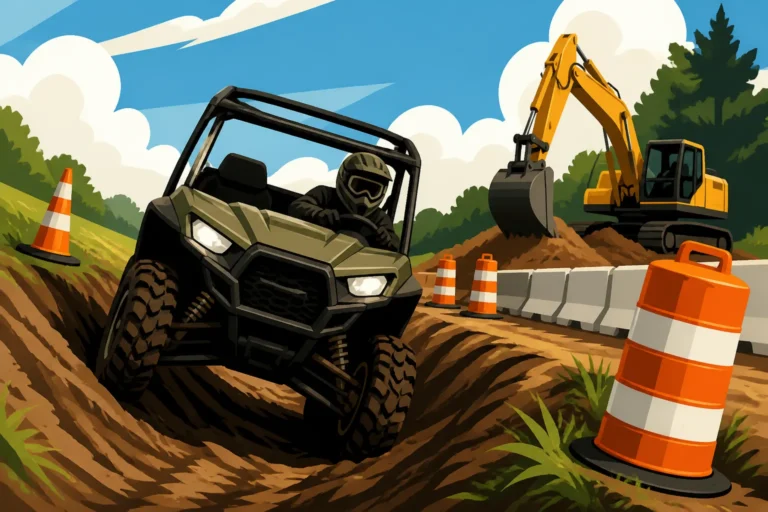
Ditch riding is a cornerstone of Minnesota's ATV laws because it attempts to create a buffer zone between off-highway vehicles and motor vehicle traffic. When you're riding in the ditch, you're expected to stay as far to the right as practicable, facing the same direction as adjacent traffic, and operating at a safe speed. The idea is to keep ATVs and UTVs out of the direct flow of cars and trucks, reducing the risk of collisions. This can feel counterintuitive, especially if the ditch is wet, rutted, or full of obstacles, making it less safe than the smooth, dry road surface. However, the law's intent is to create separation.
You’ll encounter situations where the ditch simply isn't navigable, perhaps due to deep water, dense brush, or obstacles like culverts and mailboxes. In some cases, the law allows you to temporarily use the shoulder or, as a last resort, the extreme right-hand portion of the road surface to pass an obstruction, but you must return to the ditch as soon as safely possible. For many riders, the preference would be to just use the gravel road surface, especially if it's low-traffic, but the "ditch riding imperative" means that's usually not an option unless a specific designation allows it.
Riding Gravel Roads Into Town: What's Actually Permitted
So, you've got a gravel road, and you need to get to town. Instead of just ditch-riding, which can be slow and rough, you're hoping to actually ride on the gravel road itself, like a car would. This is where "designated routes" become your best friend.
Designated ATV Routes and Local Ordinances
The golden ticket for riding your ATV or UTV on a gravel road into town in Minnesota is finding a designated ATV route. The state doesn't have a blanket rule that says all gravel roads are fair game. Instead, it delegates authority to local units of government—counties and townships—to designate specific roads or segments of roads for OHV use.
This means that while the gravel road you're eyeing might look identical to one a county over, the rules can be completely different. A township supervisor, with local resident input, might decide that a particular gravel road serves as a crucial link from a popular trail to a small town's gas station, and will then go through the process of officially designating it as an ATV route. When this happens, you'll typically see clear signage indicating that the road is open to OHVs. These signs are critical; they tell you you're on a legal route. Without them, assume the general ditch-riding rules (or outright prohibition) apply.
Many smaller communities, particularly those that embrace tourism and outdoor recreation, have actively worked to become "trail towns." Places like Appleton, Minnesota, have understood the economic benefit of allowing ATVs and UTVs on certain municipal streets and connecting gravel roads. You can often find maps or lists of these designated routes on a city's website, the county sheriff's office page, or even posted in local businesses. Knowing where these [Minnesota Cities That Allow ATVs on Streets] are can make a huge difference in planning your trips. If you're unsure about a specific road, it’s always best to check with the local city clerk, county sheriff, or DNR office rather than guessing.
Necessary Equipment and Operator Requirements
Even on a designated gravel road route, you're not entirely free from regulations. When operating an ATV or UTV on any public road or designated route, certain equipment and operator requirements come into play, aligning your machine more closely with typical vehicle standards.
-
Lighting: You'll need working headlights and taillights, especially if riding between sunset and sunrise, or during periods of reduced visibility. Many stock ATVs and UTVs come equipped, but it’s always smart to double-check their function. If you're outfitting your machine for more road time, consider auxiliary lighting from a brand like SuperATV to improve visibility to other drivers, particularly on dusty gravel roads where your stock lights might not cut it.
-
Mufflers: Your machine must have a functional muffler to reduce engine noise. Excessive noise can lead to complaints from residents and fines from law enforcement.
-
Brakes: Good working brakes are, of course, essential for safety, especially if you encounter unexpected traffic or hazards on a dusty gravel road.
-
Mirrors: While not always strictly required for off-road use, mirrors can be incredibly helpful for situational awareness on roads where you might encounter vehicles from behind.
-
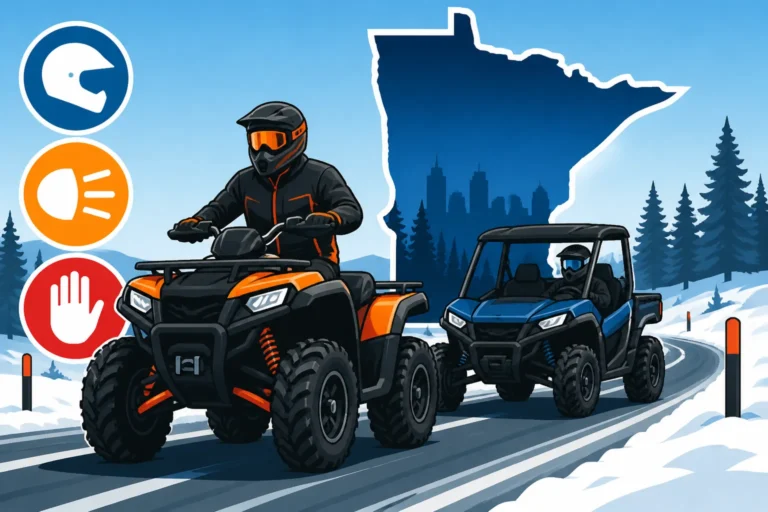
Helmet and Eye Protection: For operators and passengers under 18 years of age, a securely fastened helmet is mandatory in Minnesota. This rule applies whether you're on a trail, in a ditch, or on a designated gravel road. It's a non-negotiable safety measure. For those 18 and older, a helmet isn't legally required but is always a smart choice. Eye protection is also highly recommended for all riders to shield against dust, debris, and insects. You can read more about specific age rules in [Minnesota Helmet Rules for Riders Under 18].
-
Driver's License/Permit: For operating an ATV or UTV on designated road routes, the driver must generally hold a valid driver's license or permit. The specific requirements can vary based on age and whether you're crossing a road versus riding along it. It’s crucial to understand [Driver's License Rules for Minnesota Road Riding] before heading out.
-
Registration and Decals: Your ATV or UTV must be properly registered with the Minnesota DNR and display the current decals. Even if you're just riding a short distance into town, an unregistered machine can lead to fines. [Minnesota Penalties for an Unregistered ATV in Minnesota] can be a real headache.
Crossing Roads and Intersections
Even if you can't ride along a particular gravel road, you'll almost certainly need to cross one, or cross a paved road to continue on a trail or another gravel section. Minnesota has specific rules for these crossings to ensure safety.
-
Stop and Look: Before crossing any road, whether paved or gravel, you must come to a complete stop. Look both ways, yield to all oncoming traffic, and proceed only when it is safe to do so. This is not just a courtesy; it's a legal requirement and a fundamental safety practice.
-
90-Degree Angle: ATVs and UTVs are generally required to cross roads at a 90-degree angle to the roadway. This minimizes the time spent in the lane of travel and makes your intentions clearer to other drivers.
-
Controlled Intersections: At intersections with traffic signals or stop signs, you must obey all traffic control devices just like any other vehicle. Don't assume that because you're on an ATV, the rules don't apply.
-
State Highways: Crossing a state highway is often the most nerve-wracking for riders due to higher speed limits and traffic volume. Special care must be taken. The rules for [Crossing a Minnesota Highway Safely] emphasize stopping, yielding, and making a quick, decisive crossing. Never try to beat traffic.
| Road Type | Ditch Riding (Generally) | Surface Riding (Generally) | Special Rules/Considerations |
|---|---|---|---|
| State Highway | Restricted/Prohibited | Prohibited | Crossings only, 90-degree angle. High traffic, high risk. |
| County Road | Permitted (often) | Restricted | May be designated as ATV route by county. Check local ordinances. |
| Township Road | Permitted (often) | May be Permitted | Most likely to be designated ATV routes by township. Check signs. |
| City Street | Prohibited | Restricted | Only on specifically designated routes within city limits. |
Practical Considerations for Taking Gravel Roads
Beyond the legalities, there are practical aspects to consider when you take your machine onto gravel roads, especially when heading into a town. A little foresight can prevent a lot of headaches and ensure a more enjoyable, safer ride.
Speed Limits and Traffic Etiquette
Gravel roads often lull riders into a false sense of security regarding speed. While they might feel like an extension of the trail, they are still public roads.
-
Adhere to Posted Limits: Always observe posted speed limits. Even if a gravel road has a higher limit than you'd expect, exercising caution is always wise. Dust can reduce visibility for you and oncoming traffic, and sudden turns or blind hills can hide hazards.
-
Dust Control: Gravel roads can become incredibly dusty, especially in dry conditions. If you're riding in a group, spread out to allow dust to settle between machines. If approaching other vehicles or homes, slow down significantly to minimize kicking up dust. This isn't just common courtesy; it's also a safety measure to prevent obscuring vision.
-
Yield to Traffic: Assume other vehicles have the right-of-way. Be prepared to pull to the side and slow down or stop to let cars pass, especially if the road is narrow.
-
Residential Areas: As you approach and enter a town, be extra mindful. Slow down, keep noise to a minimum, and respect private property. The image of ATV riders in town can be a contentious one, so being a good ambassador for the sport is important.
Carrying What You Need
You wouldn't head out on a remote trail without essentials, and the same applies when you're taking a gravel road into town. Being prepared means having your documents and thinking ahead about supplies.
-
Proof of Ownership and Registration: Always carry your ATV or UTV registration and proof of ownership. A small pouch or waterproof document holder is invaluable for this. If a conservation officer or sheriff's deputy stops you, these are the first things they'll ask for. For more details on what you need, check out [Do You Carry Papers on a Minnesota Trail?].
-
Proof of Insurance: While not always universally required for all ATV use in Minnesota, if you're venturing onto designated road routes, having liability insurance is a smart move and can be a legal requirement in some specific scenarios. Carry proof of this.
-
Safety Certificate: If you were born after July 1, 1987, you need an ATV safety certificate to operate on public lands, which includes many designated road routes. Keep a copy with your other documents.
-
Fuel Planning: Many riders use gravel roads to access fuel in small towns. Make sure you've calculated your range and have enough fuel to get there and back, or at least enough to reach the gas station. Nothing ruins a ride faster than running out of gas miles from anywhere. Knowing how to find [Fueling an ATV in a Minnesota Small Town] is a crucial part of your trip planning. For extended rides on gravel roads or for carrying extra fuel for friends, a durable fuel pack or cargo box from a brand like SuperATV can be a real lifesaver, ensuring you always have enough to get where you're going.
Finding Designated Routes and Confirming Rules
The biggest hurdle for riders wanting to use gravel roads into town is knowing which roads are legal. The rules aren't always intuitively obvious.
-
Check Local Resources: Your first stop should be the website of the county or township you'll be riding in. Many will have maps or ordinances clearly outlining designated ATV routes. The Minnesota DNR website also often provides links or information about county and state forest trail systems, some of which include designated road segments.
-
Contact Local Authorities: If online resources are scarce or unclear, don't hesitate to call the local sheriff's department (non-emergency number), the county land department, or the city clerk's office in the town you plan to visit. They are the ultimate authority on local ordinances and can clarify specific routes. It can be frustrating to make multiple calls, but it's far better than getting a citation. For general ATV registration information and contacts, refer to [Minnesota DNR ATV Registration Explained].
-
Look for Signage: When you're out riding, always keep an eye out for official signage. Designated ATV routes are typically marked with specific signs indicating that OHV use is allowed. If you don't see signs, assume the default rules apply, which means ditch riding at best, or no access at all. Sometimes, an ATV club in the area might have local knowledge, as they often work with local governments to establish and maintain these routes.
-
GPS and Apps: Modern GPS devices and smartphone apps (like onX Offroad) often have layers that show designated ATV trails and routes. While incredibly useful, always cross-reference with local signage when possible, as maps can occasionally be out of date or misinterpret local nuances.
Knowing the rules and being prepared not only keeps you legal but also helps ensure a smooth and enjoyable transition from trail riding to getting supplies in town.
Disclaimer
This article is for general informational purposes only and does not constitute professional advice. Laws, prices and regulations vary by location and change over time. Consult a qualified professional for guidance on your specific situation.