Hazard Exceptions for Bridges and Culverts
Navigating the beautiful Minnesota landscape on an ATV or UTV offers an incredible sense of freedom, but let's be real, it also comes with a maze of rules, especially when you're riding alongside roads. One of the biggest head-scratchers for many riders is what to do when your ditch riding path suddenly hits a bridge or a massive culvert. It's a common frustration, feeling like you're stuck between a rock and a hard place, unsure if you're breaking the law by briefly hopping onto the pavement. This guide is here to clear up that confusion, diving deep into Minnesota's specific hazard exceptions for bridges and culverts, ensuring you can ride safely and legally.
Understanding Minnesota's General Ditch Riding Rules
Minnesota has carved out some unique allowances for off-highway vehicles (OHVs) to use public rights-of-way, primarily the ditches and shoulders of roads. It’s a privilege that expands access to trails and helps connect communities, but it’s crucial to understand the foundational rules before we get into the exceptions. Many riders assume "ditch riding" means just staying off the pavement, but there's more to it than that.
The Basic Premise of Off-Road Vehicle Use on Public Rights-of-Way
The general idea behind allowing ATVs and UTVs in road ditches across much of Minnesota is to provide connectivity where dedicated trails don't exist, especially in rural areas. Think about getting from your cabin to a local gas station, or linking up with a friend down the road to start a ride. The ditch provides a designated corridor that is separate from the main flow of motor vehicle traffic, aiming to reduce direct conflict and improve safety for all road users. It's a concession to the off-road community, recognizing that these machines are a part of rural life and recreation. However, this permission isn't a free pass to ride anywhere. It comes with the responsibility of knowing where you can ride within that right-of-way and, more importantly, how to do it safely and legally. The state's intent is to offer a functional route while keeping the integrity of the road system and the safety of the public paramount. You'll often find yourself riding in varied terrain, from grassy shoulders to gravel stretches, always with the understanding that you're operating outside the lanes of traditional vehicle traffic. This is a core concept that underpins [Minnesota's Ditch Riding Rules].
The "No Road Surface" Rule and Its Rationale
The bedrock principle of ditch riding in Minnesota is the strict "no road surface" rule. This means, quite simply, that your ATV or UTV is generally not permitted to operate on the graded, surfaced portion of the road itself – whether that's asphalt, concrete, or even a maintained gravel road. The rationale behind this rule is multi-faceted and deeply rooted in safety. Firstly, ATVs and UTVs, while capable, are designed for off-road conditions and often handle differently than traditional vehicles on paved surfaces, especially at higher speeds. This can create unpredictable situations for both the OHV operator and passing motorists. Secondly, the speed differentials between OHVs and cars/trucks can be significant, leading to dangerous overtaking scenarios. Imagine a large pickup truck coming up behind your ATV at 60 mph on a paved county road; the closing speed is immense, and the risk of a serious collision is high. Finally, allowing ATVs on the road surface would contribute to increased wear and tear on infrastructure not designed for constant, heavy OHV traffic, potentially leading to costly repairs and maintenance. This fundamental rule is in place to protect riders, motorists, and public infrastructure, making it a critical aspect of responsible riding. It's why you're always trying to stick to the outer edge, away from the painted lines, even if the ditch is a bit rougher.
The Specifics of Hazard Exceptions
Now, let's talk about those moments when sticking to the ditch just isn't feasible or safe. Minnesota law, thankfully, recognizes that the world isn't always perfectly flat and ditch-friendly. There are specific, limited exceptions to the "no road surface" rule, designed for situations where a natural or man-made obstacle makes continuous ditch riding impossible or highly dangerous. These exceptions are not loopholes to be exploited but rather necessary safety provisions.
Why Bridges and Culverts Present a Unique Challenge
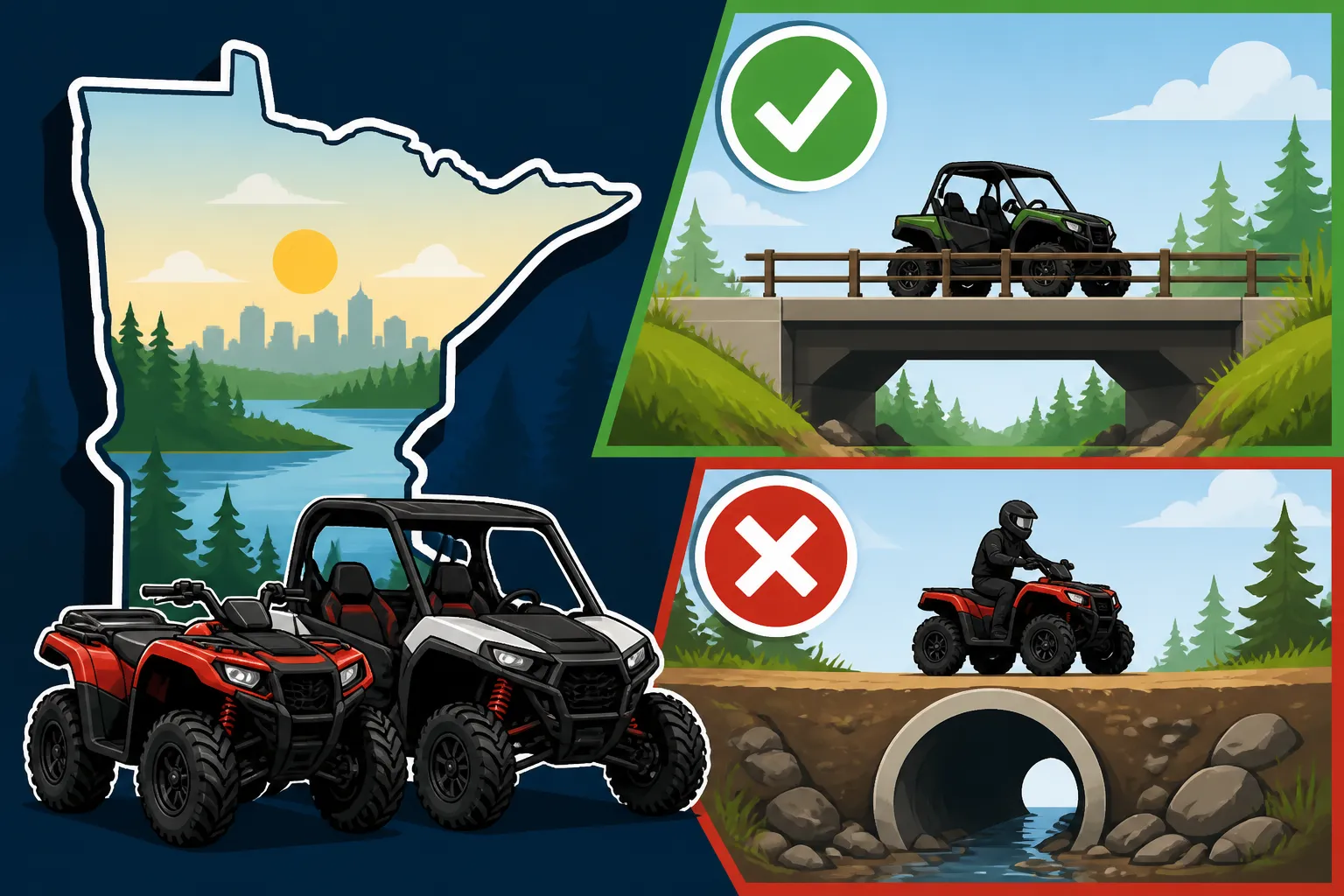
Imagine you're cruising along a beautiful ditch line, enjoying the scenery, and suddenly, you see a bridge looming ahead or a massive culvert running under the road. What do you do? For an OHV, these structures aren't just minor bumps; they represent significant, often impassable, barriers if you try to stay strictly within the ditch. Trying to navigate under a bridge in the ditch often means encountering deep, swift water, thick mud, or impenetrable brush. Attempting to drive through a large culvert can lead to your machine getting stuck, tipping over, or even seriously damaging it, not to mention the risk of drowning if water levels are high.
Many ditches simply disappear where a bridge or culvert crosses, leaving no safe path forward off the main road surface. Trying to force your machine through an unsafe area to avoid the road could result in injury, stranding, or environmental damage. It’s a genuine dilemma that riders face constantly, and it’s precisely why the state has made specific allowances. You simply cannot expect an ATV or UTV to magically float over these obstructions or to burrow through solid concrete. This reality highlights the common sense behind the exceptions to the general rule. For more on navigating such obstacles, consider [Passing a Culvert on a Minnesota Ditch Ride] or [Riding Over a Minnesota Bridge].
The Legal Provision for Brief Road Surface Access
This is where the law becomes your friend. Minnesota statute explicitly allows OHV operators to briefly enter the main traveled portion of a public road to safely bypass certain impassable obstacles, and bridges and culverts are chief among these. The key words here are "briefly," "safely," and "impassable." This isn't permission to ride a mile down the road because the ditch is a little bumpy. It's strictly for situations where staying in the ditch would be impossible, dangerous, or illegal.
When you encounter a bridge, a substantial culvert, or another similar hazard that genuinely blocks your path in the ditch, you are permitted to move onto the roadway surface. However, you must do so as briefly as possible to get around the obstruction and then immediately return to the ditch or shoulder. This means no detours, no extended cruising, and absolutely no using it as an excuse to avoid a slightly muddy section. The intent is solely for safe passage around a specific, unavoidable impediment. Always prioritize safety: check for traffic, signal your intentions, and execute the maneuver smoothly. This legal provision is a critical safety valve, preventing riders from attempting dangerous ditch maneuvers or being forced to turn around unnecessarily, ensuring connectivity for legal ditch riding. This exception is vital for machines like [Minnesota Class 1 Machines on the Right of Way] and Class 2 machines, allowing them to continue their journey safely.
Navigating Bridges Safely
Crossing bridges on an ATV or UTV requires particular attention and a clear understanding of the rules and best practices. While the exception allows you to use the road surface, how you approach, cross, and exit is paramount to safety. This isn't just about following the letter of the law; it's about minimizing risk for everyone on the road.
Approaching and Crossing Bridges
When you're approaching a bridge while riding in the ditch, your first priority is to slow down and assess the situation well in advance. Don't wait until the last second to make a decision. Look for signs of the ditch narrowing, becoming overgrown, or disappearing entirely. Before you even think about moving onto the road, you absolutely must check for oncoming traffic in both directions. Use your mirrors if you have them, and physically turn your head to check blind spots. It's a busy world out there, and cars move fast.
Once you've determined it's clear and safe to proceed, activate your turn signal (if equipped) or use appropriate hand signals to indicate your intention to merge onto the road. Merge smoothly and predictably, staying as far to the right side of the lane as possible. Maintain a safe, controlled speed—don't suddenly accelerate or brake erratically. You're not trying to set a land speed record; you're just getting over a temporary obstacle. Bridges often have narrow shoulders, if any, so be prepared to share the lane briefly with other traffic if necessary, though ideally, you'll cross when the road is clear. Remember, you're a guest on the roadway during this brief transition. For more information on road crossings, see [Crossing a Minnesota Highway Safely].
Re-entering the Ditch After a Bridge Crossing
The moment you clear the bridge and a safe ditch or shoulder reappears, your focus should immediately shift to returning to the right-of-way. Just like merging onto the road, re-entering the ditch requires careful observation and execution. Look for a safe, gradual slope to exit the roadway. Avoid steep drop-offs or areas with thick brush, large rocks, or soft, muddy ground that could cause you to lose control or get stuck.
Before moving back into the ditch, again, check your surroundings for any traffic approaching from behind or pulling out from side roads. Signal your intent to move right. Gently steer your machine off the paved surface, ensuring all four wheels are clear of the roadway. Be mindful of the ditch conditions—it might be wet, uneven, or have hidden obstacles. Some riders find that having a sturdy machine with good ground clearance, perhaps enhanced by a lift kit from a company like SuperATV, can make these transitions smoother, especially if the ditch re-entry point is a bit rugged. Good quality tires designed for mixed terrain will also provide better traction and control when moving from pavement to dirt. The goal is to make this transition as seamless and safe as possible, minimizing your time on the main road surface and getting back to your intended riding path quickly.
Handling Culverts and Other Impassable Obstacles
Culverts are perhaps even more common than bridges in ditch riding scenarios, ranging from small pipes you can barely see to massive concrete structures. Knowing when and how to navigate them legally and safely is a crucial skill for any Minnesota OHV rider.
Identifying When a Culvert Requires Road Access
Not all culverts are created equal, and it's important to distinguish between those you can safely cross in the ditch and those that necessitate a brief stint on the road. A small, buried culvert that simply carries water under a well-maintained ditch may be easily passable. You might feel a slight bump, but your machine can roll right over it without issue. These generally do not require you to leave the ditch.
However, many culverts, especially larger ones or those in less-maintained areas, present a genuine hazard. They might be large, open concrete or metal pipes, often accompanied by steep-sided ditches or deep erosions around them. Attempting to drive through or over such a culvert in the ditch can lead to a host of problems: your machine could get high-centered, wheels could drop into the pipe, or you could tip over if the banks are too steep or unstable. Furthermore, if the culvert is carrying a significant amount of water, trying to navigate it could result in getting swamped, damaging your engine, or even getting swept away. In these cases, where the culvert truly creates an impassable or dangerous obstacle in the ditch, that's when the hazard exception applies, and you should briefly utilize the road surface. For context on ditch obstacles, refer to [Driveway Culverts in a Roadside Ditch].
Safely Bypassing Culverts and Similar Structures
Once you've identified a culvert as an impassable obstacle, the process for bypassing it safely mirrors that of a bridge crossing. Again, the absolute priority is safety and minimizing your time on the road. As you approach the culvert, slow your machine down and carefully scan the road for any traffic. You need a clear window to merge onto the road surface without impeding or surprising other vehicles.
Signal your intentions clearly, either with your machine's turn signals or hand signals, and smoothly transition onto the paved or graveled portion of the roadway. Stay as far to the right as safely possible, maintaining a steady, controlled speed. Once you've moved past the point where the culvert is no longer an obstruction to your ditch path, and you see a safe place to re-enter the ditch, begin your transition back. Look for gentle slopes and clear ground, again checking for traffic before you move off the road.
Sometimes, obstacles in the ditch might not be culverts or bridges but rather large boulders, downed trees, or areas of extreme erosion that are genuinely impassable. The same principles apply: if the obstacle cannot be safely navigated in the ditch, you may briefly use the road surface to bypass it, always adhering to the "as briefly as possible" and "safely" mandates. While a good set of tires helps in rugged ditch conditions, like those from SuperATV, even the best tires won't help you if the culvert is too big to cross safely. If you ever find yourself getting stuck in a particularly nasty ditch situation and need to self-recover, a SuperATV winch can be a lifesaver, but the goal is to avoid those situations by using the road exception when appropriate.
Important Considerations and Best Practices
While knowing the specific rules for hazard exceptions is vital, successful and safe ditch riding, especially when encountering bridges and culverts, relies on a broader set of best practices. These considerations enhance safety, ensure compliance, and contribute to a positive public image for OHV riders.
The Importance of Visibility and Signaling
When you are briefly on a public roadway, even for a hazard exception, you instantly become part of the motor vehicle traffic ecosystem. This means you need to be seen and understood by other drivers. Visibility is paramount. Always ensure your ATV or UTV's headlights and taillights are functioning, especially if there's any chance you'll be riding near dawn, dusk, or in low-light conditions. Brightly colored riding gear, or even reflective tape on your machine, can significantly increase your presence on the road.
Signaling your intentions is equally critical. If your machine is equipped with turn signals, use them diligently when merging onto the road, exiting back into the ditch, or making any directional changes. If you don't have turn signals, educate yourself on the proper hand signals for turns and stops, and use them clearly and purposefully. Drivers of larger vehicles may not be expecting an ATV to be on the road, even briefly, so clear communication through lights and signals can prevent misunderstandings and potential accidents. Being visible and predictable makes you a safer road user, even for those short distances. For more on what's required, see [Lighting Rules for Minnesota Night Riding]. Also, ensuring you have [Eye Protection on a Minnesota Ditch Ride] is crucial, as dust and debris can impair vision.
Understanding Local Ordinances and Posted Restrictions
While Minnesota state law provides the general framework for ditch riding and these hazard exceptions, it's incredibly important to remember that local jurisdictions—counties, townships, and cities—often have the authority to implement their own, more restrictive ordinances. A county might prohibit ditch riding on certain county roads, or a township might have specific rules about hours of operation or speed limits in ditches. Cities, in particular, often have very strict rules, if they allow OHV use at all within their municipal limits.
Always be on the lookout for posted signs. These could be "No ATV/UTV" signs, specific restrictions on certain road segments, or signs indicating areas where ditch riding is not permitted. Ignorance of local ordinances is not an excuse. Before planning a route that involves significant ditch riding, especially through unfamiliar areas or near populated zones, it's wise to check with the local county sheriff's office or city hall for any specific OHV regulations. What might be perfectly legal on a remote township road could land you a ticket if you carry it into a designated restricted area. For more context on where riding is allowed, check [Minnesota Cities That Allow ATVs on Streets].
Consequences of Misinterpreting the Rules
Riding an ATV or UTV in Minnesota carries a lot of responsibility, and misinterpreting or deliberately bending the rules for hazard exceptions can lead to serious consequences, both legal and safety-related. The exception allowing brief road surface access is precisely that: brief. If you use it as an excuse to ride extended distances on the road because the ditch is wet, or because it's simply more convenient, you are violating the law. This isn't just a minor infraction; it puts you and others at significant risk.
Legally, you could face citations and fines for illegal road operation, trespassing, or reckless driving, depending on the severity of the violation. These fines can add up quickly, and repeated offenses could even lead to losing your riding privileges. For details on potential penalties, see [Minnesota Fines for Illegal Road Riding]. More importantly, from a safety standpoint, prolonged or improper use of the road surface increases your risk of a collision with a motor vehicle. OHVs are less visible, handle differently, and lack the safety features of a car. A momentary convenience is never worth the risk of serious injury or worse. Always err on the side of caution, understand the spirit of the law, and use these exceptions only when absolutely necessary and with the utmost care. Your safety, and the safety of others, depends on it.
| Action | Allowed When Encountering Bridges/Culverts | Not Allowed | Rationale |
|---|---|---|---|
| Briefly use road surface | YES (if ditch is impassable/dangerous) | NO (if ditch is merely inconvenient or bumpy) | Safety bypass for unavoidable obstacles. |
| Stay as far right as possible | YES | NO (riding in center lane) | Minimizes interference with motor vehicle traffic. |
| Signal intentions (turn signal/hand) | YES | NO (abruptly merge without warning) | Communicates intent to other drivers, enhances predictability. |
| Check for traffic | YES (before merging) | NO (assume road is clear) | Essential to prevent collisions. |
| Return to ditch immediately | YES (once hazard is cleared) | NO (continue riding on road for extended distance) | Exception is for brief passage, not sustained road use. |
| Navigate unsafe ditch portions | NO (if genuinely dangerous) | YES (if ditch is easily passable) | Prioritize safety; use road only when ditch is truly impassable or unsafe. |
| Ride on bridge/culvert structure | YES (on the road portion) | NO (attempting to ride through the ditch structure) | Structures are built for road traffic, not OHV ditch navigation. |
Disclaimer
This article is for general informational purposes only and does not constitute professional advice. Laws, prices and regulations vary by location and change over time. Consult a qualified professional for guidance on your specific situation.