Minnesota Cities That Allow ATVs on Streets
There's a special kind of frustration that bubbles up when you're out on your ATV, enjoying the trails, and then suddenly, the trail ends at a paved road, right on the edge of a charming little Minnesota town. Your stomach growls, your fuel gauge dips, and all you want is to roll right into town for a burger and some gas. But then reality hits: can you even ride your machine on these streets? For many riders, the answer has historically been a hard "no," leaving you to awkwardly trailer up for a five-minute drive. This guide is all about cutting through that confusion, helping you understand where you can legally ride your ATV or side-by-side on the streets of certain Minnesota cities, and what you need to know before you do.
The Frustration of the Pavement and Minnesota's General Rule
The allure of riding your ATV directly into a small town for amenities or to connect to another trail section is powerful. It’s a dream for many riders to simply pull off the dirt, hit the asphalt, and navigate to a gas station, restaurant, or even a local ice cream shop without the hassle of loading and unloading a trailer. This vision of seamless transition from trail to town often clashes with the reality of Minnesota's road rules, creating a genuine headache for riders who just want to enjoy their machines and support local businesses.
Why Street Riding Feels Like a Dream (and a Headache)
Imagine wrapping up a fantastic morning ride, perhaps on the Soo Line North Trail, and you're just a mile from the quaint downtown of a small community. The thought of cruising through the town square, parking at a diner, and grabbing a hot meal without having to find a parking spot for your truck and trailer, then unload your ATV, then reload it after lunch, feels like pure freedom. It’s not just about convenience; it’s about extending the adventure, making the machine a truly versatile part of your day. But all too often, this dream quickly dissolves into the frustrating reality that most paved streets are off-limits, forcing a premature end to the riding portion of your day or an inconvenient detour. That feeling of being so close, yet so restricted, is a common pain point for Minnesota ATV and UTV enthusiasts.
The Default Rule: ATVs Off the Road Surface
Minnesota's statewide regulations for ATVs and UTVs are pretty clear on one thing: generally, these machines are not permitted on the paved surface of public streets or highways. The core idea is to keep off-highway vehicles, well, off the highway. This is why you'll often hear about "ditch riding" as the primary way to legally navigate roadsides in many parts of the state. [Minnesota's Ditch Riding Rules] are designed to allow passage along roads without directly impacting vehicle traffic on the main surface. Riders are expected to stay in the right-of-way, usually the ditch or shoulder, and only cross the road surface under very specific conditions, such as crossing a bridge or culvert, or to access a driveway. This distinction between ditch and actual street riding is crucial, as the equipment and rules can be very different. What might be perfectly fine in a ditch might land you a ticket if you take it onto the paved street in a town that hasn't made specific allowances.
The Local Ordinance Exception
Here's where things get interesting and offer a glimmer of hope for that burger run. While the state has its default rules, Minnesota law also empowers individual cities and townships to enact their own ordinances regarding ATV and UTV use within their municipal boundaries. This means that a city council, recognizing the unique needs or economic opportunities of their community, can decide to open up certain streets—or even all city streets—to off-highway vehicle traffic. Why would a city do this? Often, it's a strategic move to boost local tourism, connect to popular trail systems, or simply accommodate local residents who use their machines for work or recreation around town. This local control means that the rules can vary dramatically from one town to the next, making it essential for riders to do their homework. What's legal in Appleton might not be legal just a few miles down the road in Benson.
Understanding What "Street Legal" Truly Means in Minnesota (and Why it's Different for ATVs)
When we talk about a car being "street legal," we generally think of it having a license plate, current registration, and passing certain safety inspections. For ATVs and UTVs in Minnesota, the concept of "street legal" takes on a slightly different, more nuanced meaning, especially when it comes to riding on city streets where local ordinances permit it. It's not as straightforward as just getting a license plate and hitting the road.
It's Not About License Plates (Usually)
One of the biggest misconceptions riders have is that if they just get a license plate for their ATV, they can ride it anywhere. In Minnesota, ATVs and UTVs don't typically get traditional, road-vehicle-style license plates from the Department of Motor Vehicles. Instead, they require DNR registration. [Minnesota DNR ATV Registration Explained] clarifies that this registration grants you privileges for trail and ditch riding, and provides a small decal or sticker with a registration number, which is usually affixed to the machine itself. This is distinctly different from the plates you see on cars, trucks, or motorcycles, which are designed for full public road use. Even in cities that allow ATVs on their streets, you generally won't be slapping a standard car license plate on your quad. The focus remains on DNR registration and adherence to local equipment rules, rather than a full "street legal" conversion in the automotive sense.
Essential Equipment for On-Street Use (Even in ATV-Friendly Towns)
Just because a city allows ATVs on its streets doesn't mean it's a free-for-all. Many ordinances come with specific equipment requirements designed to make these machines safer for operation alongside traditional vehicles. You'll often find mandates for things like working headlights (usually required to be on at all times), taillights, brake lights, and a horn. What often surprises riders are requirements for rearview mirrors and turn signals. While a mirror might be useful on a trail, it becomes critical for situational awareness in traffic. Similarly, turn signals, which are almost unheard of on many stock ATVs, are a basic safety expectation for road travel.
This is where aftermarket accessories come into play. Companies like SuperATV offer a wide range of products, from universal turn signal kits and DOT-approved rearview mirrors to horn kits and even full street legal kits designed to help you meet these municipal requirements. Investing in these upgrades isn't just about compliance; it's about making your ride genuinely safer and more predictable for other road users. Always check the specific city ordinance, as requirements can vary. Some towns might only ask for a single rearview mirror, while others might mandate two, plus front and rear turn signals.
Driver's License and Age Requirements
Even in ATV-friendly cities, the operator still needs to meet certain qualifications. Minnesota state law has specific rules about who can operate an ATV, and these generally extend to municipal streets. For instance, [Driver's License Rules for Minnesota Road Riding] outlines that if you're 16 or older, you need a valid driver's license to operate an ATV on a public road or street where permitted. For younger riders, the rules become more complex, often involving safety training certification and adult supervision. [Minnesota Road Rules for a 15-Year-Old] illustrates how age, training, and supervision are intertwined.
Cities might adopt these state rules directly or, in some cases, add their own more restrictive requirements, especially concerning minors. It's not uncommon for cities to prohibit operators under a certain age from street use, even if they'd be allowed to ride on a trail or in a ditch with proper certification and supervision. Always assume that the most restrictive rule applies when mixing state law with local ordinances.
Spotlight on ATV-Friendly Minnesota Cities: Where to Ride In Town
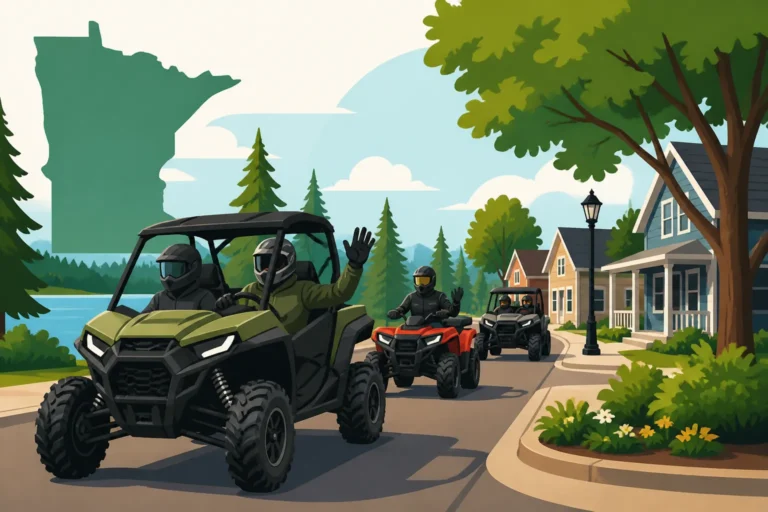
For years, the idea of riding an ATV on a city street in Minnesota seemed almost mythical. But thanks to progressive local leadership and a growing recognition of the economic benefits of OHV tourism, a number of Minnesota cities have embraced ATVs and UTVs, welcoming riders onto their streets. These towns are carving out new opportunities for riders and showing how motorized recreation can coexist with urban life. [Appleton and Other ATV-Friendly Minnesota Cities] are leading the charge.
Appleton: A Pioneering Example
Nestled in western Minnesota, Appleton has earned a reputation as one of the state's pioneering ATV-friendly communities. For years, riders here have been able to experience the convenience of cruising directly through town. The city saw the potential to attract riders, recognizing that if they could easily access fuel, food, and lodging, they would come and spend money. Appleton's ordinances allow ATVs and UTVs on essentially all city streets, unless specifically posted otherwise, making it incredibly convenient for riders. This means you can roll off a connecting trail, head straight to a local gas station, park your side-by-side right outside a cafe for lunch, and then continue your ride.
This policy has transformed Appleton into a hub for riders exploring the region's trails and ditches. It's a prime example of how local communities can directly benefit from embracing motorized recreation, fostering a positive relationship between riders and residents. [Riding an ATV Into Appleton] isn't just a fantasy; it's a daily reality for many.
Gilbert: The Iron Range OHV Hub
Head north to Minnesota's historic Iron Range, and you'll find Gilbert, a city that has truly built its identity around off-highway vehicles. Gilbert is home to the renowned Iron Range OHV Park, a sprawling network of trails, rock crawls, and mud pits. Recognizing that riders traveling to and from the park needed easy access to amenities, Gilbert wisely opened up many of its city streets to ATVs and UTVs. This means riders can leave the park, travel directly to gas stations, restaurants, hotels, and local businesses without having to load their machines back onto a trailer.
The streets in Gilbert act as crucial connectors, allowing riders to seamlessly transition from the intense terrain of the OHV park to the comforts of town. This strategic approach has cemented Gilbert's status as a premier destination for OHV enthusiasts, offering a comprehensive riding experience from challenging trails to convenient in-town access. The city openly embraces riders, and it's common to see side-by-sides parked outside various establishments, adding to the vibrant atmosphere.
Other Notable Cities and Emerging Trends
While Appleton and Gilbert are often cited as prime examples, the trend of cities opening their streets to ATVs and UTVs is quietly growing across Minnesota. Many smaller communities, especially those located along major Grant-in-Aid trail systems or in popular recreational areas like the Park Rapids "Off-Road Triangle," are beginning to see the value in allowing limited street access. These cities understand that a warm welcome to riders translates into increased business for local shops, restaurants, and lodging establishments. You'll find communities that allow ATVs on certain designated routes, typically linking trails to essential services like gas stations or motels, or providing access to popular trailheads. [Minnesota Cities With Posted ATV Routes] are becoming more common, offering specific pathways rather than blanket street access.
The movement is often driven by local ATV clubs and advocates who work closely with city councils, presenting the economic benefits and safety considerations. It’s a positive trend, but it also means that riders must stay vigilant, as specific allowances and restrictions will continue to vary widely from one jurisdiction to the next.
| City Example | General ATV/UTV Street Policy | Common Restrictions/Notes |
|---|---|---|
| Appleton | Most city streets open, unless posted. | Must be DNR registered, likely requires lights, horn, mirror(s). Speed limits apply. |
| Gilbert | Designated routes connect to OHV park and amenities. | Specific routes, not all streets. Equipment requirements apply. |
| Trail Towns (General) | Often specific routes to services (gas, food, lodging). | Check specific ordinance, may have limited hours or days of operation. |
Navigating City Ordinances: How to Research and Understand Local Rules
The biggest hurdle for riders wanting to take their ATVs or UTVs onto city streets isn't always finding a city that allows it; it's understanding the exact, often intricate, rules of that specific city. Each municipality has the power to craft its own ordinance, and these can vary wildly. What's allowed in one town might be strictly prohibited in the next, even if they're close neighbors. The responsibility, ultimately, falls on the rider to know the local law before turning a wheel onto city pavement.
The Importance of "Knowing Before You Go"
I can't stress this enough: showing up in a town assuming you can ride your ATV on its streets without doing your homework is a recipe for a bad day, and potentially an expensive ticket. Imagine you've driven two hours to a charming town, unloaded your machine, and geared up, only to be pulled over by local law enforcement just two blocks from your planned lunch stop because you're riding on a prohibited street or lack a required piece of equipment. That's not just a buzzkill; it's a waste of time, fuel, and can quickly erode the positive image that responsible riders try so hard to maintain.
Even if a city is widely known as "ATV-friendly," the specifics of that friendliness matter. Are all streets open, or just certain routes? Are there time restrictions? What about equipment? It's far better to spend a few minutes researching online or making a phone call beforehand than to face the frustration and potential penalties of an unexpected enforcement action.
Where to Find City Ordinances
Finding a city's specific ATV ordinance can sometimes feel like a treasure hunt, but there are reliable places to look:
- City Website: Most municipalities maintain an official website, and often their city ordinances are published there. Look for sections like "City Code," "Ordinances," or "Public Safety." You might need to use the site's search function for keywords like "ATV," "OHV," "off-highway vehicle," or "motorized vehicle."
- City Clerk's Office: If you can't find it online, a quick phone call to the city clerk's office is your next best bet. These individuals are typically very knowledgeable about local laws and can often direct you to the specific ordinance or even email you a copy.
- Local Police Department or Sheriff's Office: While they might not be able to provide the full legal text, local law enforcement can certainly tell you whether ATVs are generally allowed on city streets and often highlight the most common restrictions or requirements they enforce. They can also point you to the city's official sources.
- Local ATV Clubs: Many areas have active ATV clubs that work directly with local governments. They often have the most up-to-date information on local ordinances and designated routes.
What to Look For in an Ordinance
Once you get your hands on a city's ATV ordinance, read it carefully. Don't just skim for the "yes" or "no." Pay close attention to these key details:
- Allowed vs. Prohibited Roads: Does it permit ATVs on "all city streets" or only "designated routes" or "specific roadways"? Just as importantly, does it prohibit them from certain areas, like state highways passing through town, or specific residential zones?
- Hours of Operation: Some cities might restrict ATV use on streets to certain hours (e.g., no riding after dark or before a certain morning hour).
- Speed Limits: While it might seem obvious, explicitly confirm that normal city speed limits apply, and be aware if any special, lower ATV-specific speed limits are enacted.
- Equipment Requirements: This is critical. Look for specifics on headlights, taillights, brake lights, horn, rearview mirrors (how many?), and turn signals. This is where you might find that you need to invest in aftermarket parts.
- Age and License Restrictions: Confirm if the city has any age requirements that differ from state law, or if it specifically reiterates the need for a valid driver's license.
- Insurance: While [Insuring an ATV in Minnesota] is a good idea for anyone, some city ordinances might explicitly require liability insurance for street operation.
- Passengers: If you operate a side-by-side or a two-up ATV, check for rules regarding passengers, seatbelts, and seating capacity.
Remember, the nuances matter. A city allowing ATVs for "ingress and egress to a trail" might be very different from one allowing "general use on all streets."
Equipment Considerations for City Street Riding
When you transition from the open trail or the roadside ditch to the asphalt streets of a Minnesota town, your machine’s equipment needs often change dramatically. What might be perfectly adequate for off-road use suddenly falls short of the expectations, and often the legal requirements, for sharing the road with cars, bicycles, and pedestrians. Making your machine safe and compliant for city street riding is about more than just avoiding a ticket; it's about making yourself and others safer.
Making Your Machine Visible and Audible
Visibility is paramount when you're operating an ATV or UTV in an urban environment. Unlike a trail, where you might be the only one for miles, city streets are bustling with activity.
- Headlights: Most city ordinances will require your headlights to be on, even during daylight hours. This isn't just for you to see; it's so others can see you. Ensure your headlights are functional, properly aimed, and bright enough to be noticed. For some machines, upgrading to brighter LED lights can make a significant difference.
- Taillights and Brake Lights: These are non-negotiable. Other drivers need to know when you're present behind them and, critically, when you're slowing down or stopping. Test your brake lights regularly to ensure they illuminate promptly when you apply the brakes.
- Horn: A horn is a fundamental piece of safety equipment for any road-going vehicle, allowing you to alert pedestrians or other drivers to your presence if they don't see you. Many stock ATVs have rudimentary horns or none at all, making a dedicated aftermarket horn a wise investment. It needs to be audible enough to be effective in traffic.
- Flags: While often associated with dune riding, tall whip flags can also significantly increase your visibility in town, especially for machines that might be smaller and harder to spot amidst larger vehicles. They provide an extra vertical marker that catches the eye.
Mirrors, Turn Signals, and Other "Road" Necessities
These are the items that truly begin to differentiate a trail machine from one ready for street use.
- Rearview Mirrors: Most state motor vehicle codes, which city ordinances often mirror, require at least one, if not two, functional rearview mirrors for any vehicle operating on a public road. A single mirror on the handlebar might suffice in some ordinances, but a pair of side mirrors on a UTV or a properly positioned handlebar mirror on an ATV dramatically improves your ability to monitor traffic behind and to your sides. SuperATV, for instance, offers various mirror options, from universal clamp-on designs for ATVs to specific side mirrors for UTVs, often designed for durability and a wide field of view.
- Turn Signals: This is perhaps the most significant addition for street riding. Unlike hand signals, which can be awkward and unsafe on an ATV, proper front and rear turn signals allow you to clearly communicate your intentions to other drivers without compromising control of your machine. Many manufacturers, including SuperATV, provide universal turn signal kits that include everything you need—lights, wiring, a switch, and sometimes a flasher relay—to equip your machine for this vital function. These kits are often adaptable to a wide range of ATV and UTV models.
- Fenders/Mud Flaps: While not always explicitly stated, some ordinances might have general provisions about preventing debris from being thrown by tires. Fenders and mud flaps, especially on a UTV, help keep mud and rocks off other vehicles and pedestrians, which is simply good road etiquette.
The Helmet Question and Passenger Rules
Even when operating on city streets, helmet and passenger rules remain critical for safety and compliance.
- Helmets: Minnesota state law generally requires all ATV and UTV riders under the age of 18 to wear a DOT-approved helmet. [Minnesota Helmet Rules for Riders Under 18] makes this clear. While adults over 18 are not typically required by state law to wear a helmet on trails or in ditches, individual city ordinances might extend the helmet requirement to all operators and passengers within city limits, regardless of age, especially if they are trying to prioritize safety in higher-traffic areas. Always verify the local rules.
- Eye Protection: For all riders, whether on trails or roads, eye protection is strongly recommended and often legally required. Wind, dust, and debris are hazards regardless of where you're riding.
- Passenger Rules: If your machine is designed for a single rider, attempting to carry a passenger on city streets will almost certainly be illegal and incredibly unsafe. For machines designed for multiple occupants (two-up ATVs or multi-seat UTVs), ensure that all passengers have designated seating and, for UTVs, are properly belted in. Cities may have additional restrictions on the age or size of passengers, particularly for youth. Doubling up on a one-seat machine, even for a short hop to the store, is generally a big no-no.
Best Practices for Riding in ATV-Friendly Communities
Being granted the privilege to ride your ATV or UTV on city streets comes with a significant responsibility. The continued acceptance and expansion of these opportunities depend entirely on how riders conduct themselves. Every time you ride through a town, you're an ambassador for the entire sport. Adhering to best practices isn't just about avoiding tickets; it's about fostering positive relationships with residents and local businesses, ensuring these privileges continue for all.
Be a Good Ambassador for the Sport
This is perhaps the most crucial "rule" of all. When you're in town, you are on display, and local residents, who may or may not be enthusiasts themselves, are watching.
- Respect Residents and Property: Drive courteously. Avoid revving your engine unnecessarily, especially near homes, churches, or schools. Be mindful of noise levels; aftermarket exhausts that might sound cool on the trail can be perceived as extremely disruptive in a residential area. [Minnesota Noise Rules Near Lake Homes] can offer insight into how noise is generally regulated in sensitive areas, a principle that often extends to towns.
- Obey All Traffic Laws: This is non-negotiable. Stop at stop signs, yield to pedestrians, use your turn signals (if equipped and required), and follow posted speed limits. Remember, you are now a part of the regular traffic flow, and you are expected to behave exactly as a car or truck would. Cutting corners, speeding through intersections, or riding aggressively will quickly lead to negative perceptions and calls to local authorities.
- Keep it Clean: Avoid tracking excessive mud or dirt onto paved streets. While a little dust is inevitable, making an effort to clean off heavy mud before entering town shows respect for the community's cleanliness.
Stick to Designated Routes and Observe Speed Limits
If a city ordinance specifies certain routes, adhere to them strictly. Don't venture off onto prohibited streets, even if it seems like a shortcut. The designated routes are often chosen for safety, minimal residential impact, or to connect logical points of interest. Veering off course can lead to fines and, more importantly, can jeopardize the city's willingness to maintain or expand ATV access.
Speed limits in town are almost always lower than what you might be accustomed to on a trail or even a gravel road. Pay close attention to posted speed limits, which are often 25 mph or less in residential or downtown areas. Speeding not only increases the risk of an accident but also generates noise and dust, making your presence more disruptive. Remember, children, pets, and distracted drivers are common in urban settings, so maintaining a safe, controlled speed is essential.
Where to Fuel, Eat, and Park
The convenience of pulling right up to a gas station or a restaurant is a major benefit of ATV-friendly towns. Embrace it, but do so thoughtfully.
- Fueling Up: When you roll into a gas station, be mindful of other vehicles. Pull up to a pump, fuel your machine, and then move it to a less congested area if you need to go inside for snacks or to use the restroom. Don't block access for cars or trucks. [Fueling an ATV in a Minnesota Small Town] is part of the experience, just be considerate.
- Eating Out: Many restaurants in ATV-friendly towns welcome riders. If you're parking in a shared lot, choose a spot that doesn't take up excessive space or block traffic flow. If the business has dedicated ATV parking, use it. Some towns even have specific areas or wider shoulders where ATVs can park without impeding vehicle or pedestrian traffic.
- General Parking: Avoid parking on sidewalks, blocking driveways, or obstructing store entrances. Treat your ATV like any other vehicle in terms of parking etiquette. If you're staying overnight, confirm that your lodging establishment allows ATV parking and has secure options.
The Future of ATV Access on Minnesota Streets
The movement to allow ATVs and UTVs on municipal streets in Minnesota is still relatively young, but it's a trend that appears to be gaining momentum. As more communities witness the positive impact on local economies and see how responsible riders behave, the landscape of ATV access could continue to evolve. However, this evolution is not without its challenges and requires ongoing advocacy and careful consideration from both riders and local governments.
The Economic Impact and Growing Acceptance
One of the most compelling arguments for cities to open their streets to ATVs and UTVs is the undeniable economic boost they can provide. When riders can access town amenities directly, they spend money on gas, food, lodging, and other retail purchases. This influx of tourism dollars can be a lifeline for small, rural communities that might otherwise struggle. Businesses that were once overlooked might suddenly find a new customer base. City councils and local chambers of commerce are increasingly recognizing this direct correlation between rider access and economic vitality.
Furthermore, the growing acceptance isn't just about money. It's also about communities embracing their identity as recreational hubs and fostering a welcoming atmosphere for outdoor enthusiasts. Local ATV clubs often play a pivotal role in advocating for these changes, working with city officials to demonstrate the benefits and address potential concerns.
Challenges and Concerns
Despite the positives, expanding ATV access on city streets is not without its challenges. Local residents, particularly those who live in quiet neighborhoods, may express concerns about:
- Noise: The sound of multiple ATVs or UTVs, especially those with aftermarket exhausts, can be disruptive in residential areas. This is why adherence to [Minnesota Muffler and Noise Limits] and simply being respectful of volume is so important.
- Safety: Concerns about the safety of ATVs mixing with pedestrian and vehicular traffic are valid. Accidents, even minor ones, can quickly turn public opinion against broader access.
- Dust and Environmental Impact: While less of an issue on paved streets, the perception of ATVs causing dust or environmental damage can influence public opinion.
- Property Values: Some residents may worry about the impact of increased ATV traffic on their property values or the overall character of their neighborhood.
City councils often have to weigh these legitimate concerns against the economic benefits and the desires of the riding community. This delicate balancing act requires thoughtful planning and clear communication from all sides.
How Riders Can Advocate for More Access
If you're passionate about expanding ATV access to more Minnesota cities, there are concrete steps you can take to become an effective advocate:
- Join and Support Local ATV Clubs: These organizations are often at the forefront of working with local governments. They have established relationships, understand the legislative process, and can amplify your voice. They also organize work events to maintain trails, showing a commitment to the community.
- Attend City Council Meetings: When proposals for ATV access are being discussed, show up. Your presence demonstrates the community's interest. When speaking, be respectful, articulate the economic benefits, and emphasize responsible riding practices.
- Write Letters or Emails: Share your positive experiences of visiting ATV-friendly towns and express your desire for similar access in other communities. Focus on the potential for tourism and local business support.
- Be a Model Rider: Every time you ride in a city where it's allowed, you are proving that it can be done safely and respectfully. Your actions speak volumes and are the best form of advocacy. Obey all rules, be courteous, and set a good example. [Minnesota Road Rules Riders Get Wrong] are common pitfalls to avoid, as mistakes reflect poorly on the entire riding community.
By actively participating and demonstrating responsible behavior, riders can help shape a future where Minnesota's charming small towns are even more accessible to the ATV and UTV community.
Disclaimer
This article is for general informational purposes only and does not constitute professional advice. Laws, prices and regulations vary by location and change over time. Consult a qualified professional for guidance on your specific situation.