Registering a Machine Used Only for Ice Fishing
There's a common misconception among Minnesota ATV and UTV owners, especially those who primarily use their machines for ice fishing: if it's only on the lake for fishing, does it really need to be registered? It's a question that pops up a lot, often leading to confusion and, sometimes, an unwelcome conversation with a conservation officer. This guide is here to clear up that murky ice, walking you through the ins and outs of Minnesota's ATV registration requirements for machines used specifically for drilling holes and chasing walleyes.
The General Rule: Why Registration Matters (Even for Ice Fishing)
It’s easy to think that if your ATV or UTV is only going from your truck to your ice house, it’s somehow exempt from the same rules as a machine tearing up a state trail. But the reality in Minnesota is often quite different, and understanding the core principle of "public use" is key to staying out of hot water – or rather, cold water.
Public Access Versus Private Property on the Ice
Let's get this straight from the start: once the lakes, rivers, and ponds in Minnesota freeze over, the ice surface becomes a de facto extension of public land. It's public access, plain and simple. Think about it: anyone can walk out there, set up a spearing shack, or drive their rig across the frozen expanse, provided it's safe. This means that when you drive your ATV or UTV onto that frozen surface, you are, by definition, operating it in a public use area. It doesn't matter if you're just driving a few yards from the public access ramp to your fishing spot or traversing miles across a massive lake; it's considered public use. This is a crucial distinction, as operating any ATV or UTV on public land or public waters in Minnesota generally triggers the need for registration.
This can be a point of frustration for many, especially if their machine spends 90% of its life parked in a garage, only seeing the light of day a dozen times a winter for a fishing trip. "Why should I have to register it if it's just going on the lake?" is a sentiment we hear often. The state's view, however, is that the public nature of the ice means everyone needs to be identifiable and accountable, just like on a public trail system. The exception, of course, would be a truly private pond entirely contained within your own property, never accessed by anyone else, and never requiring you to leave your land to reach it. But for the vast majority of ice anglers, public waters are the destination, and that means public rules apply. You can learn more about this nuance in [Minnesota Public Use Versus Private Use Registration].
Understanding Minnesota's ATV Registration System
Minnesota's Department of Natural Resources (DNR) oversees the registration of off-highway vehicles, including ATVs and UTVs. The system is designed to identify machines operating on public lands and provide funding for trail maintenance and other programs benefiting riders. When you register your machine, you're issued a set of decals – a larger sticker for the machine itself and a smaller plate that usually goes on the rear. These decals carry your unique registration number, which conservation officers use for identification.
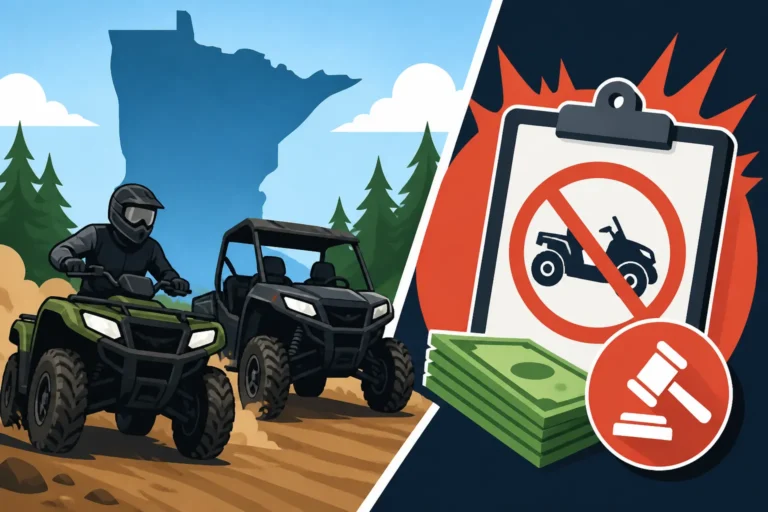
The process typically involves proving ownership, paying a fee, and ensuring your machine meets certain requirements. Many riders find the system straightforward once they understand it, but the initial hurdle of figuring out if and how to register can feel like a bureaucratic headache, especially for a machine that seems to have such limited, specialized use. However, these regulations are enforced. Minnesota conservation officers are very active during ice fishing season, checking registrations, safety equipment, and compliance with other rules. If you're caught operating an unregistered machine on public ice, you could face [Penalties for an Unregistered ATV in Minnesota]. It's a situation no one wants to find themselves in when all they want to do is enjoy a peaceful day on the ice.
When Your Ice Fishing Machine Needs Full Minnesota Registration
So, let's get down to the brass tacks: when precisely does that ice fishing rig absolutely need to be registered in Minnesota? It boils down to where you take it and how you get there.
Traveling to the Lake on Public Roads or Ditches
Here's where many people stumble. You might live just down the road from your favorite lake, thinking it's "just a short hop" from your driveway to the public access point. But that short hop, even if it's entirely within the road ditch or involves crossing a public road, counts as public use. Minnesota law is quite clear: operating an ATV or UTV on any public right-of-way, including road ditches, or crossing a public road, requires the machine to be properly registered.
Imagine this scenario: you load your ice fishing gear into your side-by-side, fire it up, and drive it directly from your garage, down your driveway, and onto the road shoulder or into the ditch to reach the public access. Even if you're only on the ditch for a hundred feet, that's enough to trigger the registration requirement. The same goes for crossing a county road to get to an adjacent ditch or accessing the lake. There's no special exemption for "just getting to the lake." Your machine is interacting with public infrastructure and public pathways, and thus, it needs to be registered. This is where a lot of ice anglers get caught, simply unaware that their quick dash to the lake falls under the public use umbrella.
Riding on Frozen Public Waters
Once you've navigated any public land or rights-of-way to reach the lake access, the rules don't suddenly change when you hit the ice. As we discussed, Minnesota's frozen lakes, rivers, and ponds are considered public waters. This means that driving your ATV or UTV across that frozen surface, whether you're heading straight for your permanent house or just cruising to a new spot, requires your machine to be registered.
Think of the ice as another type of "trail" system, albeit a temporary and ever-changing one. The same principles that apply to riding on a designated grant-in-aid trail in a state forest apply to navigating the vast white expanse of Lake of the Woods or Mille Lacs. Your registration sticker and plate need to be prominently displayed on your machine, just as they would if you were riding a summer trail. Conservation officers routinely patrol the lakes during ice fishing season, and one of their primary duties is ensuring machines are legally registered. This is especially true on popular lakes where hundreds, if not thousands, of machines can be found on any given winter weekend. [Minnesota Rules on Frozen Lakes] provides more detail on specific regulations for operating on ice.
The Exception: Truly Private Ice and Your Own Land
Now, there is one rare scenario where an ATV or UTV used for ice fishing might not need to be registered: if it never, ever leaves truly private land. This means if you have a private pond entirely on your property, you launch your machine directly from your own shoreline, and you never have to cross or even touch any public land or public waters to get there, then your machine would be exempt from registration.
However, for the vast majority of Minnesota ice anglers, this scenario is simply not realistic. Most people access public lakes, rivers, or ponds, which means traversing public access points, road ditches, or the public frozen water itself. Even if you only ride your machine on a friend's private land, if that land requires you to cross any public access or road to get to it, then registration is typically required. The "private use only" exemption is very specific and applies almost exclusively to machines that literally never leave the boundaries of private property and never interact with any public domain. For a more in-depth look at this, check out [Do You Need Registration on Your Own Minnesota Land?]. In almost every practical ice fishing situation on Minnesota's lakes, your ATV or UTV will need a current registration.
What You Need to Register Your Ice Fishing ATV
Okay, so you've accepted that your ice fishing rig needs to be registered. Now what? The process itself is fairly straightforward, but it does require some organization and the right documentation. Don't let the paperwork intimidate you; it's a routine procedure for thousands of Minnesota riders every year.
Gathering Your Paperwork
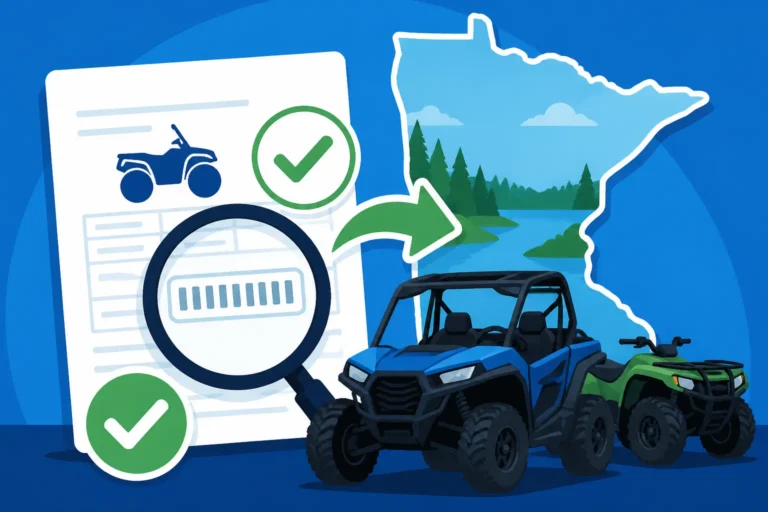
Before you head to the deputy registrar or jump online, you'll need to pull together some essential documents. The most critical piece of paper is proof of ownership.
- Bill of Sale: If you bought your ATV or UTV from a private party, a bill of sale is crucial. This document proves you are the new owner. It needs to clearly identify the machine (make, model, year, and especially the VIN), the buyer and seller's information, the date of sale, and the purchase price. A well-drafted bill of sale can prevent a lot of headaches later on. If you're looking for a solid template, resources like LawDepot offer comprehensive forms that can ensure you cover all the necessary details. You can find more specific guidance on what this document should contain in [What a Minnesota Bill of Sale Should Carry].
- Previous Registration or Title: If the machine was previously registered in Minnesota or had a title (which is common for UTVs and some older ATVs), bring that paperwork. This helps establish a clear chain of ownership.
- Manufacturer's Statement of Origin (MSO): For a brand-new machine, the dealer will provide you with an MSO. This is the initial ownership document from the manufacturer.
- Identification: Bring your valid driver's license or state ID.
Having all these documents organized and readily accessible will make the registration process much smoother. If there's any confusion about previous ownership, especially for older machines, you might need to involve a VIN verification process, but for most straightforward sales, a clear bill of sale and previous registration should suffice. Making sure your documentation is clear and legally sound from the start, perhaps by using a robust bill of sale from a reputable source like LawDepot, can save you headaches down the road.
The Registration Process (Online or In Person)
Once your documents are in order, you have two primary options for registering your ice fishing machine:
- In Person at a Deputy Registrar Office: This is often the preferred method for first-time registrations or if you have any questions about your paperwork. Deputy registrars are located throughout the state, often within county service centers or DMV offices. They handle vehicle registrations of all types, including ATVs and UTVs. The staff can review your documents, verify your information, and issue your registration sticker and plate on the spot, assuming everything is in order. You'll pay the registration fee, which covers a three-year period. For a clear idea of how much to budget, consult [Minnesota ATV Registration Fee for Three Years]. To find a location near you, check out [Deputy Registrars That Handle ATV Registration].
- Online Through Minnesota eLicense: For renewals or sometimes for initial registrations when ownership is extremely clear (e.g., a brand new machine from a dealer where all info is electronically submitted), you might be able to use the Minnesota eLicense system. This online portal allows you to manage various state licenses and registrations from the comfort of your home. It's convenient, but make sure you have all the necessary information, including the VIN, readily available. It’s also good practice to confirm that your specific scenario is eligible for online initial registration to avoid any delays. For details on how this works, see [Registering Online Through Minnesota eLicense].
Regardless of whether you go in person or online, the [Minnesota ATV Registration Fee for Three Years] is a standard charge that supports the state's off-highway vehicle programs, including trail maintenance.
Displaying Your Registration Properly
Getting the registration done is only half the battle; you also need to ensure it's displayed correctly on your machine. Minnesota law is specific about where your registration decal and plate should be placed.
- Registration Sticker/Decal: The larger, rectangular registration sticker must be affixed to the left side of the machine, forward of the handle bars or seat. It needs to be clearly visible and permanently attached. This is often on the front fender, fairing, or side panel. The goal is for it to be easily read by a conservation officer during an inspection.
- Registration Plate: The smaller, square registration plate (often a metal plate, similar to a mini license plate) typically needs to be securely mounted to the rear of the machine. It should be visible from the rear, often attached to the grab bar, cargo rack, or a dedicated bracket.
Improper display of your registration can lead to a citation, even if your machine is technically registered. The law requires visible placement so that enforcement can be efficient and straightforward. Always double-check your placement after applying the sticker or mounting the plate. If you’re unsure, resources like [Where a Minnesota ATV Registration Sticker Goes] or [Sticker Placement on a Minnesota Machine] offer visual guidance to ensure you’re compliant.
Beyond Registration: Other Considerations for Ice Fishing ATVs
While getting your ATV or UTV registered is a major step for responsible ice fishing, there are a few other important considerations that can enhance your safety, protect your investment, and ensure compliance with all Minnesota regulations.
Safety Training and Helmet Laws
Just because you're driving at low speeds on a frozen lake doesn't mean safety goes out the window. Minnesota has specific safety training requirements for ATV and UTV operators, particularly for younger riders.
- Youth Riders: If a rider is under 16, they generally need to complete an approved ATV safety course before operating on public lands or waters, including frozen lakes. There are exemptions for private land, but as we've established, most ice fishing happens on public waters. These courses teach critical safety skills, vehicle operation, and knowledge of state laws, making for a safer experience for everyone.
- Helmet Laws: All ATV and UTV riders under the age of 18 are required to wear a DOT-approved helmet when operating on public lands or waters. This includes while ice fishing. While many adults choose not to wear a helmet, it's a wise precaution for all riders, regardless of age, given the potential for unexpected bumps, ice cracks, or collisions.
Taking the time to complete a safety course or ensuring any young riders in your group are compliant isn't just about avoiding a ticket; it's about fostering a culture of safety on the ice.
Insurance for Peace of Mind
Here's a common question: "Do I need insurance for my ATV or UTV if I'm only using it for ice fishing?" In Minnesota, liability insurance for ATVs and UTVs isn't typically mandated for registration. However, that doesn't mean it's not a good idea.
- Protection Against Accidents: Accidents can and do happen on the ice. A collision with another machine, a fishing shelter, or even an unexpected encounter with thin ice can result in significant damage or injury. Without insurance, you could be personally liable for these costs.
- Theft and Damage: Ice fishing machines, especially side-by-sides, are valuable assets. They can be stolen from the lake, from your truck, or even from your garage. Comprehensive insurance can cover theft, fire, and other types of damage to your machine.
- Peace of Mind: For a relatively small annual premium, having an ATV/UTV insurance policy offers significant peace of mind. You can focus on catching fish instead of worrying about financial repercussions if something goes wrong.
While it might not be a legal requirement for registration, considering an insurance policy is a smart financial decision for any ATV or UTV owner, including those who use their machines primarily for ice fishing. Learn more about your options in [Insuring an ATV in Minnesota].
Maintaining Your Registration and Staying Current
Once you've gone through the effort of registering your ice fishing machine, don't let it lapse! Minnesota ATV and UTV registrations are valid for three years.
- Renewal Notices: The Minnesota DNR typically sends out renewal notices by mail or email as your registration expiry date approaches. Pay attention to these reminders!
- Easy Renewal: Renewing your registration is usually much simpler than the initial process. You can often do it online through the eLicense system or at any deputy registrar office.
- Displaying New Decals: Once you receive your new registration sticker and plate, make sure to apply them promptly, removing any old, expired decals. An expired sticker is just as problematic as no sticker at all in the eyes of a conservation officer.
Staying on top of your registration ensures you can hit the ice legally and confidently every winter without having to scramble at the last minute. This cyclical process is explained in more detail in [Minnesota Registration Renewal Every Three Years]. Beyond registration, having access to reliable legal forms for things like sales agreements or even permission to ride on private land can be incredibly helpful for any machine owner. Online platforms like LawDepot provide a range of templates that Minnesota riders often find useful for various legal document needs related to their machines.
| Scenario for Ice Fishing ATV Use | Minnesota Registration Required? | Notes |
|---|---|---|
| Driving on a public frozen lake | Yes | Public waters are considered public use areas. |
| Driving in a public road ditch to access lake | Yes | Public rights-of-way require registration. |
| Crossing a public road to get to the lake | Yes | Even short road crossings trigger registration. |
| Riding only on a private pond on your land | No | Must never leave your private property boundaries; no public access involved. |
| Trailering to a public access, then riding | Yes | Machine is operated on public frozen water. |
| Machine used for farm work and ice fishing | Yes | Farm exemptions typically don't cover recreational use on public waters. |
Disclaimer
This article is for general informational purposes only and does not constitute professional advice. Laws, prices and regulations vary by location and change over time. Consult a qualified professional for guidance on your specific situation.