Questions Buyers Skip and Later Regret
Oh, the thrill of finding that perfect used ATV or side-by-side! The shine, the roar of the engine (even if it's just in your imagination), and the promise of open trails and crisp Minnesota air. It’s easy to get swept up in the excitement, to overlook the nitty-gritty details that can turn a dream machine into a bureaucratic nightmare or a money pit. Many buyers jump into a private sale, hand over their hard-earned cash, and only later discover a mountain of problems they wish they'd known about beforehand. This guide is here to walk you through those crucial questions buyers often skip and later deeply regret, helping you ensure your next off-highway vehicle purchase is smooth sailing.
Unearthing the Machine's True History Before You Buy
When you're buying a used ATV or UTV, especially from a private seller, you're not just buying a machine; you're buying its history. And sometimes, that history can be as muddy as a springtime trail after a heavy rain. Skipping the investigative work at this stage is a common pitfall that can lead to significant headaches down the road, from ownership disputes to legal woes. You need to understand who truly owns the machine, if it's got any baggage, and where it's been.
The Elusive Ownership Trail and Why It Matters
Imagine buying a machine, taking it home, and then finding out the person who sold it to you wasn't actually the legal owner. It sounds like a bad movie plot, but it happens. Minnesota requires proof of ownership for registration, and if you can't provide a clear, unbroken chain, you'll be stuck. A complete ownership history, typically shown through previous registration cards or titles, ensures that the seller has the legal right to transfer the machine to you. Without this, you might find yourself with a yard ornament that can't legally hit the trails.
Sometimes, a seller might claim they never registered the machine because they only rode it on private land. While this is a plausible scenario for some, it still means there's less official paperwork to trace its past. Always ask for whatever documentation they do have – even old bills of sale or expired registrations. If a seller is cagey or claims they lost "everything," it should raise a red flag. Digging into [Registering a Machine With No Ownership History] can give you a real appreciation for the challenges you might face if you skip this vital step. You want to make sure the VIN on the paperwork matches the machine precisely.
Uncovering Liens and Past Financial Encumbrances
Another critical, and often overlooked, question is whether there's a lien on the machine. A lien means someone else, usually a bank or a credit union, has a financial claim to the ATV or UTV until a loan is fully paid off. If you buy a machine with an outstanding lien, you could inadvertently become responsible for that debt, or worse, the lienholder could repossess the machine from you! This is particularly important for higher-value side-by-sides where financing is common.
Always ask the seller directly if there's a loan on the machine and if they can provide a lien release or proof of payoff before you complete the sale. You can also perform a lien search through the Minnesota Department of Natural Resources (DNR) or a deputy registrar's office. It might cost a small fee, but it's a minimal price to pay for peace of mind. Learning about [Liens on a Minnesota ATV Record] can prepare you for what to look for and how to protect yourself. Never assume the seller will be upfront about this detail if they're in a tough spot.
Was This Machine Ever Reported Stolen or Salvaged?
This is where your inner detective truly comes out. Buying a stolen ATV is a nightmare scenario; you lose your money and the machine, with no recourse. Similarly, a salvage or rebuilt title indicates the machine has been extensively damaged in the past, often making it less safe and significantly reducing its value, even if it appears fixed. These are not things a casual glance will reveal, and many sellers might conveniently "forget" to mention them.
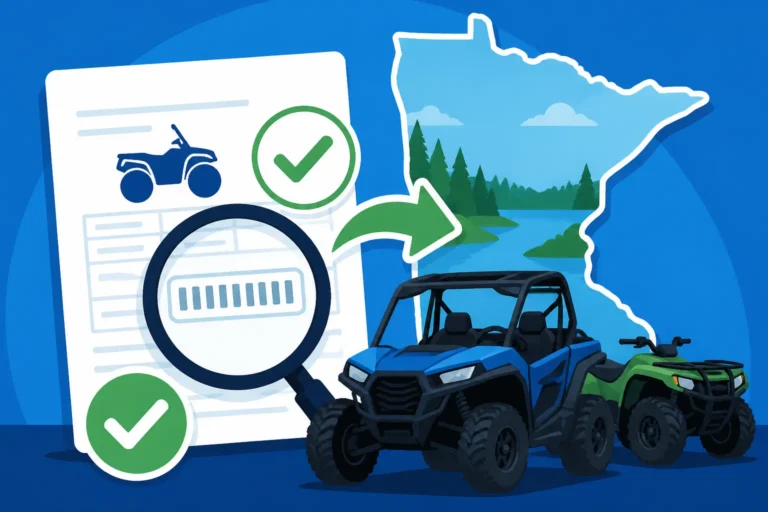
Always insist on checking the Vehicle Identification Number (VIN) against national databases. The Minnesota DNR also keeps records. You can look up the VIN to see if it's been reported stolen or if it carries a salvage designation. This simple check can save you from a world of trouble. Learning about [Checking Whether a Quad Was Reported Stolen] and understanding [Salvage and Rebuilt Machines in Minnesota] is crucial. Make sure the VIN on the machine hasn't been tampered with; it should be clearly stamped, not scratched or re-stamped.
Diving Deep into the Machine's Mechanical and Registration Status
Beyond the paper trail, the physical condition and current legal status of the machine itself are paramount. It’s easy to be distracted by a shiny paint job or a seller’s smooth pitch, but what truly matters is the machine’s reliability and whether it’s even legal for you to ride where you plan to. Don't let cosmetic appeal overshadow practical realities.
Beyond a Quick Glance: Mechanical Red Flags You Can't Ignore
When you're looking at a used ATV or UTV, it’s not enough to just kick the tires. You need to scrutinize its mechanical health. Many buyers overlook the smaller, subtler signs of wear and tear that can quickly turn into major repair bills. For instance, have you checked the brakes, not just for engagement, but for pad thickness and rotor condition? How about the suspension for worn bushings or leaking shocks? These are crucial components for safety and ride quality.
Always start the machine cold to hear how it idles and whether there are any unusual noises. Take it for a test ride if at all possible, and listen for clunks, grinding, or hesitation. Inspect the tires for even wear and cracks, and check the axle boots for tears, which indicate potential issues with the CV joints. Even asking about the last oil change or spark plug replacement can give you insight into how well the machine has been maintained. Getting tips from [Inspecting a Used Machine in Minnesota] can help you focus on the right areas, and make sure you verify the VIN on the machine matches any provided paperwork by reading [Checking a Serial Number Before You Pay].
The Critical Check: Is This ATV Even Registered for Public Use?
This is a big one in Minnesota, and it's frequently missed. Many people assume if a machine runs, you can just hop on it and hit any public trail. Not so! In Minnesota, if you plan to ride on state trails or any public land designated for ATVs, your machine must be registered for public use with the DNR. A common misconception is that if you only ride on private land, you don't need to worry about registration. While it's true you don't need DNR registration for private property, if your plans include state trails, this is a non-negotiable step.
Make sure to ask the seller about the machine's current registration status and when it expires. If it's not currently registered for public use, you'll need to factor in the time and cost to do so yourself. For many new buyers, the nuances of [Minnesota Public Use Versus Private Use Registration] can be confusing, but it's vital to clarify before purchase. You don't want to get pulled over on your first ride on a public trail only to find out your new toy is illegal there.
Understanding Different Machine Classes and Their Limitations
Not all ATVs and UTVs are created equal, especially when it comes to Minnesota's rules. Did you know that the state classifies off-highway vehicles, and these classifications dictate where and how you can ride them? For instance, a Class 1 ATV is generally smaller and narrower than a Class 2, which includes many side-by-sides. These distinctions are not just bureaucratic; they have real-world implications for trail access and road-ditch riding.
Failing to understand the class of the machine you're buying could mean you purchase an ATV that's too wide for the trails you want to ride, or one that has different rules for road crossing or ditch access. Always ask the seller what class their machine falls under and research [Minnesota ATV Classes and What They Mean] to align with your riding plans. Don't just assume a big, powerful UTV can go anywhere a smaller quad can.
Protecting Your Investment: Paperwork, Taxes, and What Comes Next
You've found the machine, you've checked its history and condition, and you're ready to make it yours. But before any money changes hands, you need to ensure all the necessary paperwork is in order and that you understand your post-purchase responsibilities. This phase is about securing your legal ownership and preventing future financial surprises.
The Bill of Sale: Your Proof of Ownership and Future Headaches Avoided
Many private sales happen with a handshake and a cash exchange, maybe a quick note on a napkin. This is a recipe for disaster. A proper bill of sale is your absolute proof that you purchased the machine and who you purchased it from. It's not just a formality; it's a critical legal document that protects both buyer and seller. Without it, proving ownership for registration, in case of theft, or in a dispute, becomes incredibly difficult.
A good bill of sale should include the full names and addresses of both buyer and seller, the date of sale, the purchase price, the machine's make, model, year, and crucially, its VIN. It should also state that the machine is sold "as-is," which protects the seller from later claims about mechanical issues, and it should be signed by both parties. You can find excellent templates online – a service like LawDepot, for example, offers customizable bill of sale forms that can cover all these essential points. This crucial piece of paper is detailed further in [What a Minnesota Bill of Sale Should Carry].
Navigating Minnesota Sales Tax on a Private ATV Sale
Here’s another common surprise for unsuspecting buyers: sales tax. Many people assume that if you buy an ATV or UTV from a private seller, you don't owe sales tax. In Minnesota, that's often not the case. Even private sales of off-highway vehicles are subject to Minnesota sales tax, which you'll typically pay when you go to register the machine at a deputy registrar's office. The tax is usually calculated on the purchase price, though the DNR does have ways to assess fair market value if the stated price seems unusually low.
Understanding this beforehand means you can budget for it and avoid an unwelcome surprise when you're at the counter, ready to get your registration. If you've been putting money aside just for the machine, remember there's an extra percentage coming out for the state. Make sure you understand the nuances by looking into [Minnesota Sales Tax on a Private ATV Sale] so you're not caught off guard. LawDepot's resources, while not tax advice, can sometimes highlight important fields to complete on a bill of sale that may be cross-referenced for tax purposes.
What Happens After the Sale: Your Responsibility to Register
The ink is dry on the bill of sale, the money has changed hands, and the machine is in your driveway. Now what? Your journey isn't over yet. As the new owner, you have a responsibility to register the machine in your name within a specific timeframe in Minnesota, typically within 14 days of purchase. Delaying this step can lead to penalties and, more importantly, means you can't legally ride on public trails.
This is where you'll need all the paperwork you diligently collected: the bill of sale, any previous registration cards, and potentially a signed-off title if one existed. You'll head to a deputy registrar's office, pay the registration fees (and sales tax, if applicable), and they'll issue you a new registration card and those all-important decals. For a complete understanding of what to expect, refer to [Minnesota Registration After a Private Sale] and [Documents a Minnesota Registrar Wants]. Making sure you have everything in order makes the registration process much smoother. LawDepot can assist with generating the initial private sale agreement that ensures you have the proper documentation to then register your machine.
Here's a quick checklist of crucial questions and items to consider:
| Category | Key Questions/Items to Verify | Why It Matters |
|---|---|---|
| Ownership History | Can the seller provide a clear chain of ownership documents? | Essential for legal registration and proving you own the machine. |
| Is there a title, or only a registration card? | Titles offer stronger proof of ownership in some states, helpful for transfer. | |
| Does the VIN on the paperwork match the machine's VIN? | Discrepancies could mean a stolen machine or tampered documents. | |
| Financial Status | Is there an outstanding loan or lien on the machine? | You could be liable for the debt or lose the machine to a repossession. |
| Can the seller provide proof of lien release? | Confirms the machine is free and clear of debt. | |
| Machine History | Has the machine ever been reported stolen? | Buying stolen property leads to loss of money and machine. |
| Does it have a salvage or rebuilt title? | Indicates severe prior damage, affecting safety and value. | |
| Mechanical Condition | When was the last service? Are maintenance records available? | Shows if the machine was cared for; helps predict future repairs. |
| Are there any known mechanical issues (engine, transmission, brakes, suspension)? | Prevents immediate, costly repairs after purchase. | |
| Can you take it for a test ride (cold start)? | Crucial for identifying noises, vibrations, or performance issues. | |
| Registration & Class | Is the machine currently registered for public use in Minnesota? | Required for legal riding on state trails and public lands. |
| What class is the machine (Class 1 or Class 2)? | Determines where and how you can legally ride it in Minnesota. | |
| Sales Process | Do you have a comprehensive bill of sale, signed by both parties? | Your legal proof of purchase; essential for registration and tax purposes. |
| Have you budgeted for Minnesota sales tax on the purchase price? | Avoids unexpected costs at the deputy registrar's office. | |
| Do you understand the timeframe for registering in your name? | Prevents penalties and ensures legal public trail access. |
Disclaimer
This article is for general informational purposes only and does not constitute professional advice. Laws, prices and regulations vary by location and change over time. Consult a qualified professional for guidance on your specific situation.