Buying From a Seller With Nothing on Paper
Oh, the classic scenario! You've found what seems like a fantastic deal on an ATV or UTV – maybe it's a trusty older quad, a machine used strictly for ice fishing, or a side-by-side that's only ever seen farm fields. The only catch? The seller doesn't have a shred of paperwork to go with it. No title, no old registration, not even a simple bill of sale. It's a frustrating, stomach-dropping moment for many Minnesota buyers, and it leaves you wondering: can I even register this thing? This guide is here to walk you through the labyrinth of registering a machine in Minnesota when it feels like you're starting from scratch with "nothing on paper." We'll cover the pitfalls, the protections you need, and the steps you can take to make that quad legally yours.
The Paperwork Predicament: Why "Nothing on Paper" Is a Huge Red Flag
Let's be real: when a seller tells you they have no paperwork, a little alarm bell should go off in your head. It's not always a deal-breaker, but it's definitely a sign that you need to slow down and do your homework. In Minnesota, the DNR takes ATV and UTV registration seriously, and for good reason. Proper documentation protects both buyers and sellers, helps track ownership, and ensures machines aren't stolen or involved in other legal issues.
Understanding Minnesota's ATV Registration and Titling Requirements
Minnesota has a pretty straightforward system for off-highway vehicles (OHVs). For most ATVs and UTVs, you're required to register them with the Department of Natural Resources (DNR) if you plan to operate them on public trails, frozen waters, or public lands. Even if you're only riding on your own deeded land, you'll still want proof of ownership for a whole host of reasons beyond just registration. You can find more general information in our guide on [Registering an ATV in Minnesota].
The cornerstone of this system is proof of ownership. This typically comes in a few forms:
- Manufacturer's Statement of Origin (MSO) or Certificate of Origin (MCO): For brand new machines, this is the original "birth certificate."
- Previous Registration Card: If the machine was previously registered in Minnesota (or another state), a copy of the old registration card, especially with the seller's name on it, is incredibly helpful.
- Bill of Sale: This is critical for any private sale, detailing the transaction, the machine's information (like the VIN), and the signatures of both buyer and seller. Our article on [What a Minnesota Bill of Sale Should Carry] delves into the specifics.
- Title: For newer machines (generally 2017 and newer for ATVs, 2015 and newer for UTVs), Minnesota requires a title, much like a car. This document is absolute proof of ownership and is essential for transfer.
So, when a seller offers "nothing on paper," it means you're missing one or more of these crucial pieces. This isn't just a bureaucratic hurdle; it opens you up to significant risks. You could unknowingly buy a stolen machine, a machine with an outstanding lien against it (meaning someone else legally owns a piece of it), or a machine that has been involved in unreported accidents or damage. Without proper documentation, proving you are the rightful owner can become an uphill battle.
Common Scenarios Leading to Missing Paperwork
It's easy to assume the worst when paperwork is absent, but sometimes there are legitimate, albeit inconvenient, reasons. Understanding these can help you approach the situation more pragmatically, though never with less caution.
One common scenario involves inherited machines. Grandma passed away, and her old quad sat in the barn for years. The family wants to sell it, but nobody can find her original purchase receipt, and she never bothered to register it because she only drove it around the farm. The person selling it might genuinely not have any idea what paperwork is needed or where to find it. [Transferring a Minnesota ATV After a Death] is a good read if you're ever on the other side of an inherited machine.
Another frequent situation arises with older machines. Many years ago, especially before Minnesota's titling laws expanded, paperwork for ATVs wasn't always as meticulously kept as it is today. Someone might have bought a machine in the 90s, used it for a decade, and simply discarded the original bill of sale or registration card because they never rode on public trails. They might have used it exclusively on their [Registering a Machine Kept Only on Your Land] or their cabin property. For them, it was just a tool, and paper wasn't a priority.
Then there's the owner who never registered it because they only used it on private property. They might have genuinely believed they didn't need to register it (which is often true for machines only on private land, but you still need proof of ownership). Now, years later, they want to sell, and all those original papers are long gone. This doesn't make the machine illegal, but it does make the transfer of ownership more complicated.
Finally, there's the more concerning possibility: the seller is trying to hide something. This could be a stolen machine, a machine with major undisclosed mechanical issues, or one with an outstanding loan that hasn't been paid off. This is why your due diligence is absolutely paramount before handing over any cash.
Your Due Diligence: Protecting Yourself Before the Purchase
When there's no paper trail, your detective skills need to kick into high gear. This is where you protect yourself from potential headaches, financial loss, or even legal trouble down the road. Never rush this step.
The VIN Is Your Best Friend: What to Check and How
The Vehicle Identification Number (VIN) is the unique identifier for every ATV and UTV, much like a fingerprint. It's a 17-character code that tells you a lot about the machine and its history. This is the most important piece of information you need from a seller with no paperwork.
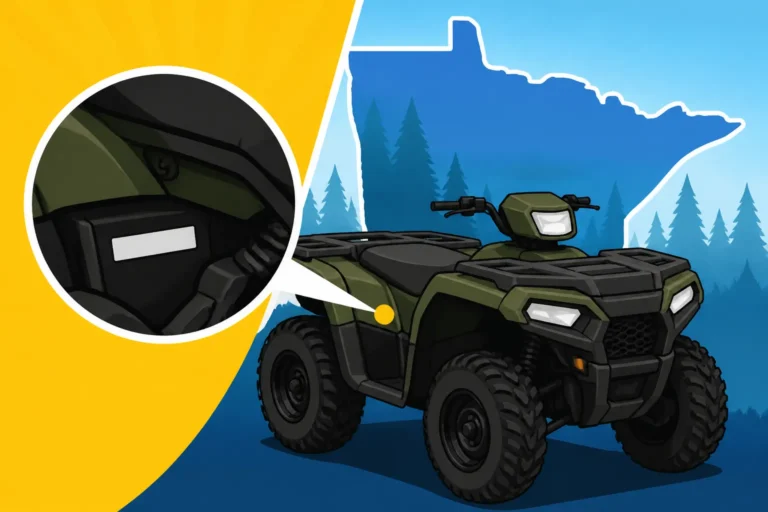
Locating the VIN: The VIN is typically stamped directly onto the frame of the machine. Its exact location can vary by manufacturer and model, but common spots include:
- On the front frame tube, often near the steering stem.
- On the left-hand side of the frame, usually under the footpeg or near the engine mount.
- On the right-hand side of the frame, sometimes near the rear axle or beneath the seat.
- On the engine casing itself (though this might be an engine serial number, not the full VIN, so look for the frame stamping first).
What to do with the VIN: Once you have the VIN, do not proceed with the purchase until you've performed these crucial checks:
- Check for Theft: This is non-negotiable. You can contact your local law enforcement agency's non-emergency line or visit a Deputy Registrar office to inquire if the VIN is listed as stolen. They have access to national databases that track stolen vehicles. Our guide [Checking Whether a Quad Was Reported Stolen] has more details on this. If the machine comes back as stolen, walk away immediately and report the seller. Do not become an unwitting participant in a crime.
- Check for Liens: A lien means someone else has a financial interest in the machine, typically a bank or credit union that financed the original purchase. If there's an active lien, the machine isn't truly the seller's to sell outright until that debt is cleared. The Minnesota DNR or a Deputy Registrar might be able to help you check for registered liens against the VIN. This is a vital step because if you buy a machine with a lien, the lender could repossess it, and you'd be out of luck and out of your money. Our article on [Liens on a Minnesota ATV Record] can give you more insight.
- Check Previous Registrations: While not always possible, sometimes a Deputy Registrar can look up past registration records associated with that VIN in Minnesota. This might reveal who the last registered owner was, giving you a lead to contact them and potentially get a copy of the old registration or a proper bill of sale. This is explained further in [Looking Up a Minnesota ATV Registration].
If the seller hesitates or refuses to provide the VIN, or if they claim it's "worn off" or "can't be found," consider that a massive red flag. Walk away. It's just not worth the risk.
Insisting on a Bill of Sale – Even Without a Title
Even if the machine is ancient, has no previous registration, and never had a title, you must have a bill of sale. This document, while simple, serves as your initial and most vital proof that you legally acquired the machine from someone. It's your foundational paperwork.
What to include on the bill of sale: A thorough bill of sale should contain:
- Full legal names and current addresses of both the buyer and the seller.
- Date of the transaction.
- Complete description of the ATV/UTV: make, model, year, and most importantly, the full VIN. Include any specific features, accessories, or known issues.
- Purchase price: Clearly state the agreed-upon price.
- A statement of ownership: The seller should affirm that they are the legal owner of the machine and have the right to sell it, and that it is free of all liens, encumbrances, and claims (even if you've done your own lien check, getting this in writing protects you).
- Signatures: Both the buyer and the seller must sign and date the document. Having a witness (or two) sign and date it can add an extra layer of protection, especially if you're dealing with cash.
You can find templates online that help ensure you don't miss any critical details. Services like LawDepot offer customizable bill of sale forms that you can adapt for off-highway vehicles, ensuring all the necessary legal language is included. Using a structured template helps prevent omissions and makes the document more professional and acceptable to authorities.
Remember, this bill of sale is your proof of purchase. It shows where the machine came from, who you bought it from, and when. Without it, you truly have "nothing on paper" to prove it's yours.
Navigating Registration When Paperwork Is Scarce
Okay, you've done your due diligence, the VIN checks out, and you have a solid bill of sale. Now comes the trickier part: convincing the state of Minnesota that this machine is legitimately yours and should be registered. It can be a challenge, but it's often doable with patience and persistence.
The Affidavit Process: When It Might Be an Option
In certain situations where standard proof of ownership (like a title or previous registration) is genuinely unavailable, Minnesota may allow you to register a machine using an affidavit of ownership. This isn't a guaranteed path, and it's certainly not the easiest, but it's there for legitimate cases. Our article on [Registering a Minnesota ATV With No Ownership History] discusses this in more detail.
An affidavit is a sworn statement, made under oath, detailing how you came to possess the machine and why standard ownership documents are missing. It essentially tells the machine's story and attests to your ownership. You'll typically have to explain:
- Who you bought it from (the seller's name and contact info from your bill of sale).
- When and where you bought it.
- Why there's no title or previous registration (e.g., "The seller stated they bought it many years ago, only used it on private land, and no longer had any paperwork.").
- A clear statement that you believe the machine is not stolen and has no outstanding liens.
The DNR or a Deputy Registrar office will review your affidavit and all supporting documentation. They are looking for a plausible, consistent story that doesn't raise any red flags about the machine's true ownership or legality. They are the gatekeepers, and they have the final say on whether your affidavit is sufficient.
Gathering Supporting Evidence
To make your affidavit as strong as possible, you need to gather any piece of evidence that can support your claim of ownership and the machine's history. Think broadly here:
- Photos of the machine: Especially if you have any from before your purchase, or if the seller provided them.
- Repair receipts: Did the seller have any old repair receipts with their name on them? Even if they're for minor work, it helps establish a history of possession.
- Old insurance cards: If the seller ever insured the machine, an old insurance card can tie them to the VIN.
- Communication records: Text messages, emails, or even a detailed record of phone calls with the seller discussing the purchase can serve as supplemental proof.
- Witness statements: If anyone else was present during the sale, their written statement can be valuable.
The stronger your case, the more likely you are to succeed. This means your bill of sale, perhaps drafted using a comprehensive template from LawDepot, becomes even more crucial. A detailed, legally sound bill of sale helps solidify the narrative presented in your affidavit. Without any previous owner's signature on a title or registration, you're leaning heavily on this new documentation. Our guide [Registering Without the Previous Owner's Signature] also offers further advice on this specific challenge.
Working with a Deputy Registrar
Your best resource in this tricky situation is a Deputy Registrar office. These are the folks who process vehicle registrations and titles for the state, and they have the most direct experience with these kinds of unique scenarios. Our article [Deputy Registrars That Handle ATV Registration] explains their role.
Don't just send paperwork in the mail; make an appointment and go in person. Bring everything you have:
- Your meticulously filled-out bill of sale.
- Any supporting evidence you've gathered (photos, receipts, etc.).
- The VIN.
- A clear, written account of the machine's history and why traditional paperwork is missing. You might even draft your affidavit ahead of time.
Be prepared to explain your situation clearly and calmly. The Deputy Registrar will guide you through Minnesota's specific requirements. They might have a particular affidavit form you need to use, or they may ask for additional information. Their goal is to ensure legitimate machines get registered while preventing fraud. Be honest, be thorough, and be patient. Our guide [Documents a Minnesota Registrar Wants] can give you an idea of what they usually ask for.
Potential Pitfalls and Legal Considerations
Even with the best intentions and diligent efforts, there are some serious risks involved when you buy a machine with no prior paperwork. It's crucial to understand these so you can make an informed decision.
The Risk of Buying a Stolen Machine
This is the biggest nightmare scenario. Despite your VIN check, there's always a slight chance a stolen machine might not yet be in the database, or the VIN could be altered. If you buy a machine that is later identified as stolen, you will lose the machine, and you will not get your money back. In some cases, depending on the circumstances, you could even face legal questioning yourself as a receiver of stolen property, even if you were completely innocent.
This is why the VIN check is so important, and why you should be incredibly wary if the seller seems evasive about the VIN or its location. Our guide [Recovering a Stolen Machine in Minnesota] outlines what happens when a machine is reported stolen. Better to walk away from a "too good to be true" deal than end up in this situation.
Unpaid Liens or Debts
As mentioned earlier, a machine can have an outstanding loan or lien against it even if there's no physical title or registration to show it. If you buy the machine, you might inadvertently inherit responsibility for that debt, or the lender could repossess the machine from you. This happened to a friend of mine once with an old snowmobile – he bought it cheap, fixed it up, and a year later, a bank called, saying they had a lien on it from the original owner. He lost the machine and the money he'd put into it.
This risk underscores the importance of a thorough VIN check for liens, and also having a strong bill of sale where the seller explicitly states the machine is free and clear of all encumbrances. A detailed LawDepot bill of sale template can help ensure this critical clause is included.
When All Else Fails: Legal Advice
If you've gone through all the steps – VIN check, robust bill of sale, attempts at a Deputy Registrar office with an affidavit – and you're still hitting brick walls, it might be time to consider consulting with a legal professional. An attorney specializing in property law, vehicle law, or consumer protection in Minnesota can review your specific situation, interpret the nuances of state law, and advise you on any further recourse.
While hiring a lawyer adds to the cost, it could save you from a much larger financial loss or ongoing legal headache if you're dealing with a truly complicated case or a particularly uncooperative previous owner (or lack thereof). This is especially true if the machine is valuable or if you've already invested significant funds in it.
Here's a quick reference table summarizing key actions and documents when buying a machine with no paperwork:
| Action to Take | Document to Obtain/Use | Purpose |
|---|---|---|
| Locate and verify the VIN | VIN from the machine's frame | Essential for all checks and official documentation |
| Check VIN for theft and liens | Law enforcement/Deputy Registrar records | Confirm machine is not stolen and free of debt |
| Draft a comprehensive Bill of Sale | LawDepot or similar template | Your primary proof of purchase and transfer of ownership from the seller |
| Gather all available supporting evidence | Old receipts, photos, communication | Strengthens your claim of legitimate ownership for affidavit process |
| Prepare an Affidavit of Ownership | Minnesota DNR/Deputy Registrar form | Sworn statement explaining ownership history and missing documents |
| Visit a Deputy Registrar office in person | All collected documents, detailed explanation | Guidance on specific requirements, review of your case, and processing of registration |
| Consult legal counsel (if necessary) | Attorney specializing in property/vehicle law | Expert advice for complex or unresolvable situations |
Buying an ATV or UTV with "nothing on paper" in Minnesota is certainly a challenging endeavor, but it's not always an impossible one. The key is to proceed with extreme caution, thoroughness, and a healthy dose of skepticism. By diligently checking the VIN, securing a detailed bill of sale, gathering any and all supporting evidence, and working closely with a Deputy Registrar, you significantly increase your chances of successfully registering your machine and enjoying those beautiful Minnesota trails.
Disclaimer
This article is for general informational purposes only and does not constitute professional advice. Laws, prices and regulations vary by location and change over time. Consult a qualified professional for guidance on your specific situation.