Fines for Riding Minnesota Unregistered
There's nothing quite like the freedom of hitting a Minnesota trail or cruising down a ditch, but that feeling can vanish in a heartbeat if a conservation officer or local law enforcement pulls you over and discovers your ATV isn't registered. It's an easy mistake to make or overlook, especially if you're new to the off-road scene or just bought a machine. This guide will walk you through the very real fines and consequences you could face for riding an unregistered ATV or UTV in Minnesota, and how you can avoid these costly pitfalls.
Why Registration Matters in Minnesota
Before we dive into the nitty-gritty of fines, it's important to understand why Minnesota has these registration requirements in the first place. It's not just about collecting fees; it's about funding the trails you love, identifying machines for safety, and ensuring responsible use of our beautiful outdoor spaces. Ignoring registration isn't just breaking a rule; it's opting out of supporting the very infrastructure that makes your riding possible.
Funding Our Trails and Resources
Every dollar collected from ATV and UTV registrations in Minnesota goes directly back into the state's Off-Highway Vehicle (OHV) program. This money is absolutely crucial for maintaining the vast network of grant-in-aid trails that crisscross our state, building new ones, and providing access to our public lands. Without these funds, our trails would quickly fall into disrepair, bridges wouldn't get fixed, and new opportunities for riders would dry up.
Think of it this way: when you pay your registration fee, you're investing in your own enjoyment and the future of the sport here in Minnesota. It helps keep the dust down, the signs clear, and the overall riding experience top-notch for everyone. It's a small price to pay for the incredible access we have to hundreds of miles of diverse terrain, from the rocky Iron Range to the forested paths of Nemadji.
Accountability and Identification
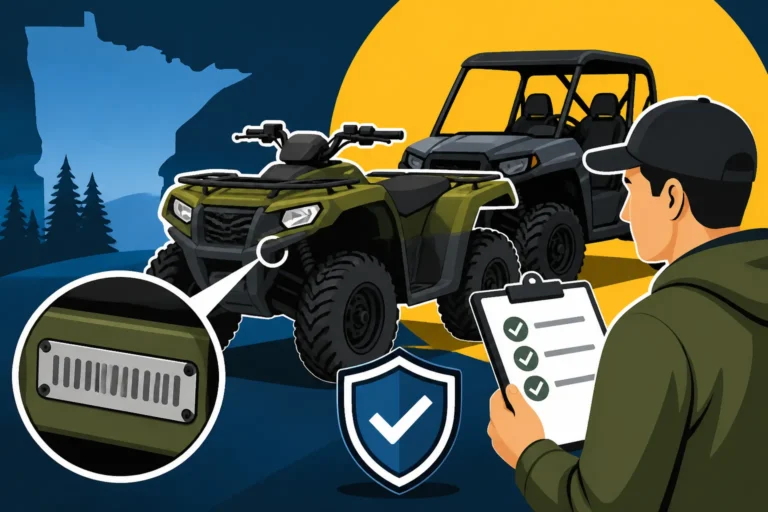
Registration also serves a practical purpose for law enforcement and emergency services. Each registered machine gets a unique number, which is posted on a sticker that must be displayed clearly. This sticker placement helps identify who owns a machine if it's involved in an accident, stolen, or found abandoned. Imagine trying to recover your stolen quad if there's no official record of its ownership or identifying number!
It's also a way to track the number of machines using our public lands, which in turn helps the Minnesota Department of Natural Resources (DNR) plan for future trail development and resource management. Having an accurate count ensures that the state can make informed decisions about where to allocate funds and how to best serve the riding community. This accountability benefits everyone, ensuring that Minnesota remains a premier destination for ATV and UTV enthusiasts. You can learn more about this process in [Minnesota DNR ATV Registration Explained].
The Cold, Hard Truth: What Fines Look Like for an Unregistered ATV in Minnesota
Let's face it, getting a ticket is never fun, and it can definitely put a damper on your riding day (or week, or month, depending on the severity). Riding an unregistered ATV or UTV in Minnesota carries specific penalties, and ignoring these rules can quickly become an expensive mistake. It’s important to understand that these aren’t just minor slaps on the wrist; they are designed to encourage compliance and support the OHV system.
Base Fine for Unregistered Operation
The most direct consequence of being caught on public land with an unregistered machine is a monetary fine. While specific amounts can change and often involve court surcharges and other fees, you should prepare for a significant hit to your wallet. It's not usually just a couple of dollars. Law enforcement, whether it's a DNR conservation officer, county sheriff, or local police, treats unregistered operation as a serious offense.
This fine can easily be several times the cost of the actual registration fee, making it a very poor financial decision to skip the process. Imagine paying, say, five times what it would have cost to register your machine correctly in the first place! Plus, the inconvenience of dealing with the court system and the time spent is often more frustrating than the fine itself. It's a classic example of "an ounce of prevention is worth a pound of cure."
Additional Penalties and Citations
Beyond the base fine for an unregistered machine, you might find yourself facing additional citations depending on the circumstances. For example, if you're unable to provide any proof of ownership, or if the officer suspects other issues with the machine or your operation of it, more tickets could be issued. An officer might also want to see your [Proof of Ownership for a Minnesota ATV] or even inspect the VIN.
It's also common for officers to check for other violations, such as not carrying your paperwork with the machine, lacking proper safety equipment (like a helmet for riders under 18), or operating in an unauthorized area. An unregistered machine often serves as a red flag, prompting a more thorough inspection of your compliance with all ATV laws. This can quickly escalate a single issue into multiple, compounding fines.
Here’s a simplified breakdown of potential costs compared to the registration fee:
| Item | Typical Cost Shape | Impact on Rider |
|---|---|---|
| 3-Year Registration | A reasonable fee, often less than a hundred dollars | Funds trails, legal riding |
| Base Fine | Significantly higher than registration, multiple hundreds | Monetary loss, no riding rights |
| Court Surcharges | Added percentage of fine, or flat fee | Increases total cost |
| Lost Wages/Time | Hours spent in court, or dealing with bureaucracy | Opportunity cost, frustration |
| Towing/Impoundment | Can be hundreds, if machine is not allowed to be ridden off | Major inconvenience and cost |
| Additional Citations | Each adds to the total fine, e.g., for missing helmet | Compounding financial burden |
Note: Specific figures for fines and fees are not provided here as they can change. Always check current Minnesota statutes or consult a legal professional for the most up-to-date information.
Beyond the Ticket: Other Consequences You Might Face
While the financial hit from a fine is certainly unpleasant, getting caught with an unregistered ATV can lead to other headaches and inconveniences that extend beyond just paying a ticket. These additional consequences can disrupt your plans, create lasting records, and even affect your ability to ride in the future.
Impoundment or Immediate Halt to Riding
One of the most immediate and disruptive consequences is the possibility of your machine being impounded, or at the very least, you being instructed that you cannot continue your ride. Imagine you're deep on a trail, miles from your truck and trailer, and an officer tells you that your unregistered ATV can't move another inch. You're then faced with the dilemma of how to get your machine off the trail, which could involve calling a friend with a truck, a tow service, or even leaving it behind temporarily, all of which come with their own set of costs and hassles.
In many cases, law enforcement has the authority to seize and impound an unregistered vehicle, especially if there are other contributing factors like unsafe operation or lack of proper identification. The fees for towing, storage, and retrieval from an impound lot can quickly add up to hundreds of dollars, far exceeding the initial registration fee. This scenario alone makes skipping registration a gamble with incredibly high stakes for your day out.
Creation of an Enforcement Record
Getting a citation for an unregistered ATV creates an official enforcement record. While this might not appear on your standard driving record in the same way a speeding ticket in your car would, it goes into a database that conservation officers and other law enforcement agencies can access. This means that if you are stopped again, the officer will know about your previous violation. This history can influence how future infractions are handled, potentially leading to stiffer penalties or less leniency.
Repeated offenses could also lead to more serious legal consequences, moving beyond simple fines to potential misdemeanor charges, especially if paired with other violations. While rare for a single unregistered offense, it's a slippery slope. This record can also impact any future attempts to register machines or interact with the DNR regarding permits or other recreational activities. It's best to maintain a clean slate and adhere to the regulations.
Restricted Access to Trails and Public Land
Minnesota has specific rules about where and when you can operate your ATV or UTV. Public lands, including the popular grant-in-aid trail system and state forests, almost universally require registration. If your machine isn't registered, you're essentially barred from legally enjoying these areas. This means your access to vast networks of [Where to Ride an ATV in Minnesota] is severely curtailed.
Even private land access can be tricky. While registration isn't usually required to ride on your own private property, if you trailer your machine to a friend's land, or cross any public right-of-way to get there, you'll need to be registered. [Do You Need Registration on Your Own Minnesota Land?] might provide more context, but the moment your wheels touch public ground, the rules apply. Avoiding registration effectively limits your riding opportunities to a very small subset of places, which defeats much of the purpose of owning an ATV in Minnesota.
How to Avoid the Headache: Ensuring Your ATV is Properly Registered
The good news is that avoiding fines and all these other frustrations is incredibly straightforward: register your machine! Minnesota has a clear process in place, designed to be accessible to everyone. Taking the time to do it right from the start will save you a lot of grief (and money) down the road.
Understanding the Registration Process
First things first, familiarize yourself with the requirements for [Registering an ATV in Minnesota]. Generally, you'll need proof of ownership, such as a title or a bill of sale, and basic information about your machine (make, model, VIN). Whether you're buying a brand-new machine from a dealer or a used one from a private seller, the paperwork is paramount. For private sales, having a solid [What a Minnesota Bill of Sale Should Carry] is crucial for both buyer and seller. You can even use services like LawDepot to generate a professional, legally sound bill of sale, ensuring all the necessary details are captured accurately, which is a major step in correctly registering your machine and avoiding issues later.
Once you have your documents in order, you can visit a Deputy Registrar office that handles ATV registration, or in some cases, register online through the Minnesota eLicense system. Be sure to understand the [Minnesota ATV Registration Fee for Three Years] and plan for renewal every three years. It’s a simple process that sets you up for years of legal riding.
Keeping Your Paperwork and Decals Up-to-Date
Registration isn't a one-and-done deal. Your registration is typically valid for three years, and it's your responsibility to renew it when the time comes. The DNR usually sends out renewal reminders, but it's always a good idea to mark your calendar. You can even handle [Renewing a Minnesota Registration Online] for convenience. Make sure to place your new decal correctly; there are specific rules about [Where a Minnesota ATV Registration Sticker Goes].
Additionally, it's vital to [Keeping the Paperwork With the Machine] when you ride. This means carrying your registration card (or a copy of it) whenever you're out on the trails or ditches. A conservation officer will typically ask to see it if you're stopped. Being prepared with your current registration and understanding what [What a Minnesota Conservation Officer Asks For] will help ensure a smooth interaction and keep you on the right side of the law. Should you purchase a used machine, ensuring the previous owner properly transferred ownership is key. If you are ever in a situation where you need a formal agreement to confirm the sale, tools like those offered by LawDepot can help you draft the necessary documents to secure your proof of ownership, thereby simplifying the registration process.
Utilizing Exemptions and Special Circumstances
While the general rule is "register your ATV for public use," Minnesota does have a few exemptions. For instance, machines used exclusively for agricultural purposes on private land and not operated on public roads or trails might be exempt. Also, Minnesota has a "No Registration Weekend" once a year, during which you can ride unregistered on public lands, provided you meet other requirements. This is a great opportunity to try out a new machine or introduce a friend to the sport without the immediate need for full registration. You can find more details on [Minnesota's No Registration Weekend].
However, these exemptions are specific and limited. Don't assume your situation qualifies without checking the official DNR guidelines. When in doubt, it’s always safest and wisest to register your machine. The peace of mind that comes from knowing you're fully compliant with Minnesota's laws is well worth the registration fee and the minimal effort required. Ultimately, legal and responsible riding contributes to the sustainability of our sport for years to come.
Disclaimer
This article is for general informational purposes only and does not constitute professional advice. Laws, prices and regulations vary by location and change over time. Consult a qualified professional for guidance on your specific situation.