Minnesota Title Rules for an Off-Highway Vehicle
Navigating the world of off-highway vehicles (OHVs) in Minnesota can sometimes feel like trying to find your way through a dense forest without a map. One of the most common points of confusion for many riders, especially new ones or those buying used machines, revolves around the seemingly simple question: "Does my ATV or UTV need a title in Minnesota?" This guide is here to untangle the complexities of Minnesota's titling requirements for your beloved quad or side-by-side, helping you understand when a title is necessary, how to get one, and what to do when things get a little complicated.
Understanding the Basics: What is a Minnesota OHV Title?
Before we dive into the nitty-gritty, it's really important to grasp what a title actually is and why it matters in the world of ATVs and UTVs. Many folks lump "title" and "registration" into the same mental bucket, but they serve distinct purposes, and understanding the difference is key to staying on the right side of Minnesota's regulations.
The Purpose of a Title Document
Think of an OHV title as the ultimate proof of ownership for your machine. It's a legal document issued by the state of Minnesota, specifically through the Department of Natural Resources (DNR), that formally identifies who the legal owner of a particular all-terrain vehicle (ATV) or utility terrain vehicle (UTV) is. This piece of paper isn't just a formality; it's what truly establishes your claim to the machine. It carries vital information about the vehicle, like its unique Vehicle Identification Number (VIN), make, model, and year, along with the names of any lienholders (like a bank if you have a loan) and, of course, the owner.
Without a clear and correct title, proving you own your ATV or UTV can be incredibly difficult, especially if you ever need to sell it, finance it, or even if it's unfortunately stolen and recovered. It's your peace of mind and your legal backing all in one document. This is particularly important when dealing with law enforcement or insurance companies, as they'll invariably look to the title to confirm ownership.
Title vs. Registration: A Key Distinction
This is where a lot of people get tripped up. While both are issued by the state and are crucial for legal operation, a title and registration are not the same thing. The title, as we just discussed, is about ownership. It's a one-time document that changes hands only when the machine is sold or legally transferred. It's like the deed to your house or the title to your car.
Registration, on the other hand, is about the privilege to operate your machine on public lands and trails. It's usually renewed periodically – in Minnesota, it's every three years – and it indicates that your machine meets certain operational standards and that you've paid the necessary fees to use the public trail system. You receive a registration card and a sticker to display on your machine, proving its current registration status. You can learn more about this whole process by checking out [Minnesota DNR ATV Registration Explained].
You can have a title without registration (if you only ride on private land, for example), and you might even temporarily operate a machine that's registered but where the title transfer is still pending. However, to legally ride on public trails, you absolutely need both proper ownership established through a title and valid registration. One confirms who owns it, the other confirms it can be ridden publicly.
Here's a quick table to help clarify the differences:
| Feature | OHV Title | OHV Registration |
|---|---|---|
| Purpose | Proves legal ownership of the machine | Authorizes legal operation on public lands/trails |
| Issued By | Minnesota DNR (via Deputy Registrar) | Minnesota DNR (via Deputy Registrar) |
| Frequency | One-time, transferred upon sale | Renews every three years |
| What it shows | Owner's name, VIN, make, model, lienholder | Owner's name, machine details, expiration date |
| Physical form | Paper document, sometimes a digital record | Paper card and sticker for display |
| Necessity | Crucial for proving ownership, selling, financing | Required for public trail use |
When Minnesota Requires an OHV Title
It's tempting to think that every single ATV or UTV rolling around in Minnesota needs a title, but the reality is a little more nuanced. While the state strongly encourages titling for all machines to establish clear ownership, there are specific situations where it's legally mandated and others where it's optional but highly recommended.
New Machine Purchases and Dealer Filings
When you buy a brand-new ATV or UTV from a licensed dealer here in Minnesota, the titling process is usually handled directly by the dealer. They're often required to process the initial title application on your behalf, along with your first registration. This is generally a smooth process, as the dealer will have all the manufacturer's Certificates of Origin (MCOs) and the necessary forms to get everything filed correctly with the DNR. They'll collect all applicable fees, including Minnesota sales tax on an ATV purchase, and submit the paperwork.
You’ll typically walk away with temporary registration and then receive your official title and registration card in the mail a few weeks later. The beauty of buying from a dealer is that they are well-versed in the intricate paperwork, ensuring that your machine is properly documented from day one. You can think of them as your first point of contact for getting everything squared away, from the initial bill of sale to the final title in your name.
Private Sales and Title Transfer Obligations
This is where things can get a bit more hands-on for you, the buyer or seller. When you purchase a used ATV or UTV from a private individual, the responsibility for transferring the title falls squarely on the buyer and seller. For the seller, their obligation is to sign over the existing title to the new owner. This signature, often notarized, is absolutely critical. For the buyer, you then take that signed-over title (along with a [Minnesota Bill of Sale Should Carry] for good measure, which you can easily create using services like LawDepot) to a deputy registrar office to apply for a new title in your name. This process solidifies your ownership.
It's imperative that this transfer happens promptly. Minnesota law generally requires title transfers to be completed within a certain timeframe after the sale to avoid potential penalties. Failing to transfer the title means that, legally, the machine might still belong to the previous owner, which can create a huge headache down the line if there's an accident, a dispute, or if you simply try to sell it yourself later. If you're going through a private sale, make sure you understand [Transferring a Minnesota ATV After a Sale] fully before shaking hands.
Bringing an Out-of-State Machine to Minnesota
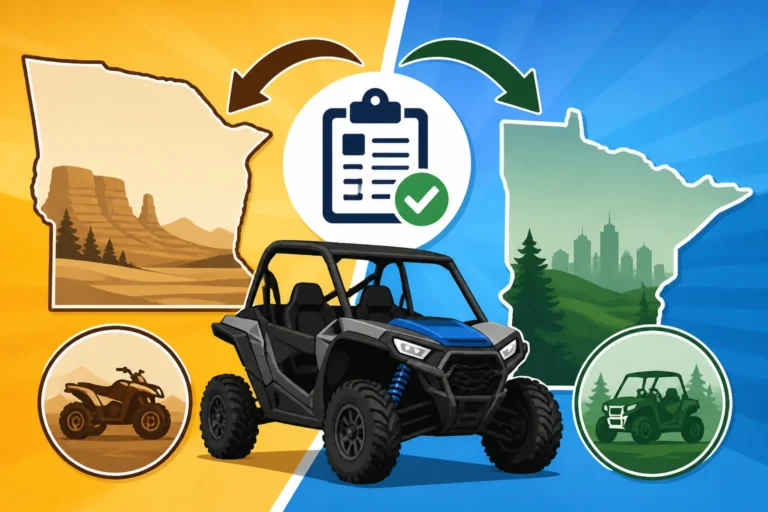
If you're moving to Minnesota from another state and bringing your OHV with you, or if you've purchased a machine from a private seller or dealer outside of Minnesota, you'll need to transfer it to a Minnesota title. This process is similar to a private sale within the state, but with an added layer of scrutiny. You'll need the original title from the previous state, properly signed over to you.
The deputy registrar will verify the VIN and ensure all paperwork is in order. Be prepared to pay Minnesota sales tax or use tax if you haven't already paid a comparable sales tax in the state where you purchased the machine. The state is keen to ensure that all machines operating here are properly accounted for and that the necessary taxes are collected. This is also the procedure you would follow for [Minnesota Registration for a New Resident] who wants to bring their machine into the state. Make sure all your ducks are in a row, including the bill of sale, especially if the machine is coming from a state with less stringent titling requirements.
The Process of Obtaining or Transferring a Minnesota OHV Title
So, you've figured out that your machine needs a title, or you need to transfer one. What's next? The process isn't overly complicated, but it does require attention to detail and having the right documents on hand. Skipping a step can lead to frustrating delays.
Required Documents for Title Application
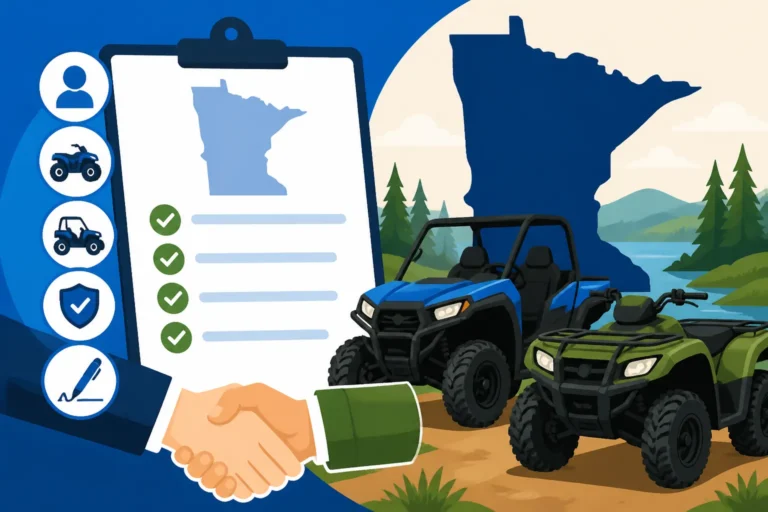
When you head to the deputy registrar's office, they're going to ask for a specific set of documents to prove ownership and complete the title application. The exact requirements can vary slightly depending on whether it's a new machine, a used machine from a private sale, or an out-of-state transfer. However, the core documents almost always include:
- The previous title, properly signed and dated: This is the most crucial document for a used machine. The seller's signature, often along with a lien release if there was a loan, must be present.
- A Bill of Sale: Even if not strictly required by law in every scenario for titling, a comprehensive bill of sale is highly recommended. It details the purchase price, date of sale, and identifies both buyer and seller, which can be invaluable for calculating sales tax and preventing future disputes. You can find excellent templates for this on platforms like LawDepot.
- Proof of Identification: Your valid driver's license or state ID will be needed.
- Proof of Minnesota Residency: If you're new to the state, this might be required.
- Application for Title and Registration: This form will be available at the deputy registrar's office, or sometimes online.
- Payment for fees and taxes: This includes the title application fee, registration fees (if applying for both), and any applicable sales or use tax. For information on the sales tax aspect, see [Minnesota Sales Tax on an ATV Purchase].
Always call ahead to your chosen deputy registrar's office or check the Minnesota DNR website to confirm the exact documents needed for your specific situation. This can save you a wasted trip!
Navigating the Deputy Registrar's Office
Once you have all your documents assembled, your next stop is a deputy registrar's office. These are the same offices that handle vehicle licenses and registration, and many of them are authorized to handle OHV titles and registrations. You can find a list of [Deputy Registrars That Handle ATV Registration] on the Minnesota DNR website.
When you arrive, inform the clerk that you need to apply for or transfer an OHV title. They will review your documents, verify the information, and assist you in completing the necessary forms. This is also where you'll pay the required fees. Be prepared for potential wait times, especially during busy periods. The staff there are generally very helpful and can answer any questions you might have about the process. They're your go-to experts for ensuring everything is correctly submitted to the DNR.
Handling Special Circumstances Liens
Sometimes, the titling process isn't as straightforward as simply signing over a clean title. One common special circumstance involves liens. If the previous owner had a loan on the ATV or UTV, the bank or lender would have been listed as a lienholder on the title. Before the title can be transferred to you, that lien must be released.
Typically, when the loan is paid off, the lienholder will send a lien release document or sign off on the title itself. If you're buying a machine that still has a lien on it, you need to be very careful. Ensure that the seller pays off the loan and provides proof of the lien release before you hand over full payment or attempt to transfer the title. The deputy registrar cannot transfer a title with an active lien to a new owner without the proper release. Understanding [Liens on a Minnesota ATV Record] is crucial to avoid a costly mistake. Always verify the lien status before completing a purchase.
Common Title-Related Challenges and How to Overcome Them
Despite our best efforts, sometimes unforeseen issues pop up when dealing with OHV titles. It's frustrating when you're ready to hit the trails, but a paperwork snag holds you back. Knowing how to tackle these common problems can save you a lot of grief.
Lost or Damaged Titles
What happens if the seller can't find the title, or it's been damaged beyond recognition? This is a surprisingly common issue. If you're the seller, and your title is lost or destroyed, you'll need to apply for a duplicate title yourself before you can sell the machine. This usually involves filling out a specific form (often called an Application for Duplicate Title) at a deputy registrar's office and paying a small fee. Once you have the duplicate, you can then proceed with the sale and transfer to the buyer.
If you're the buyer and the seller claims the title is lost, do not complete the purchase until they provide a duplicate title. Buying a machine without a valid title, even with a bill of sale, can leave you without legal proof of ownership and a huge headache down the road. It might even prevent you from being able to register the machine in your name, severely limiting where you can ride. This is especially true if you're trying to prove [Proof of Ownership for a Minnesota ATV].
Dealing with Liens on a Machine
As mentioned earlier, liens can complicate a title transfer significantly. If you're buying a used OHV, it's absolutely critical to verify that there are no active liens against the machine before you hand over any money. You can often do a lien search through the Minnesota DNR or by asking the seller for a copy of their title and looking for a listed lienholder.
If a lien exists, the seller must provide a written release from the lienholder (the bank or financing company) stating that the loan has been paid in full and the lien is satisfied. This release should be presented to the deputy registrar along with the title when you go to transfer ownership. Without this official release, you could end up owning a machine that still has a debt attached to it, a situation you definitely want to avoid. Always get official documentation that the lien is cleared.
When the Seller Doesn't Have a Title (or Paperwork)
This is perhaps one of the trickiest situations a buyer can encounter. Sometimes, a seller genuinely doesn't have a title for various reasons – maybe it was never titled in Minnesota, or they bought it from someone else who didn't have one, or perhaps it's an older machine from a state that didn't require titling for OHVs. While a legitimate [Minnesota Bill of Sale Should Carry] is always a good start, it's not a substitute for a title.
In Minnesota, if a machine was never titled, you might be able to apply for an initial title by providing strong alternative proof of ownership, such as a certified bill of sale, notarized statements, or manufacturer's certificates. However, this is not a guaranteed path, and it can be a lengthy process, often requiring additional scrutiny by the DNR. It's significantly more challenging to register a machine that has no ownership history. If you find yourself in this situation, specifically consult with a deputy registrar or the DNR for guidance on [Registering a Minnesota ATV With No Ownership History]. Be wary of deals that seem too good to be true if critical paperwork is missing. For any private sale, using a reliable template from a service like LawDepot for your bill of sale adds a layer of professionalism and clarity.
Titling Your OHV for Specific Use Cases
Not every ATV or UTV is bought purely for recreational trail riding. Some are workhorses, others are project machines. Minnesota's titling rules try to account for these different uses, though some paths are clearer than others.
Farm and Utility Machine Exemptions
Minnesota recognizes that many ATVs and UTVs are primarily used for agricultural purposes or other utility work, often exclusively on private property. While all machines generally benefit from having a title, there are specific exemptions regarding registration for farm-use machines that operate only on private land or briefly cross public roads for farm-related tasks. For detailed information on these exemptions, refer to [Minnesota Rules for Farm and Utility Machines].
However, even if a machine qualifies for a registration exemption, having a title is still highly recommended for establishing clear ownership. This is especially true if the machine has significant value or if it's ever involved in an incident. A title protects your investment and simplifies any future sale. If you're using a side-by-side on a farm, for instance, a title ensures you can prove ownership should any questions arise, even if it never sees a public trail.
Titling a Machine for Business Use
If you're using an ATV or UTV as part of a business operation – perhaps for landscaping, construction, resort services, or guided tours – you'll need to consider how it's titled and registered. Typically, the machine would be titled and registered in the business name rather than an individual's name. This provides a clear legal distinction between personal and business assets and is often required for insurance purposes or business accounting.
The process for [Registering an ATV Under a Minnesota Business] is very similar to individual titling, but you'll need to provide business documentation, such as your Employer Identification Number (EIN) and proof of business registration with the state. This ensures that the machine is properly attributed to the entity that owns and operates it. It's a key step in ensuring your business assets are legally sound.
Salvage and Rebuilt Machine Considerations
Sometimes, a machine has been in a serious accident or sustained significant damage, leading to a "salvage" title designation. If you're looking at buying a machine with a salvage title, or if your machine receives one, know that this changes the titling process significantly. A salvage title indicates that the machine has been deemed a total loss by an insurance company.
To get a rebuilt machine back on the trails legally, you'll need to undertake a rigorous inspection process. This involves having the machine repaired to safe operating standards and then inspected by a qualified authority to ensure it's road-worthy (or trail-worthy, in this case). Only after passing this inspection can you apply for a "rebuilt" title, which then allows for registration. Be very cautious when buying a machine with a salvage title, as the cost and effort to convert it to a rebuilt title can be substantial. Thoroughly understanding [Salvage and Rebuilt Machines in Minnesota] is critical before making such a purchase. This is a situation where getting a good bill of sale via LawDepot and carefully documenting all repairs is even more vital.
Disclaimer
This article is for general informational purposes only and does not constitute professional advice. Laws, prices and regulations vary by location and change over time. Consult a qualified professional for guidance on your specific situation.