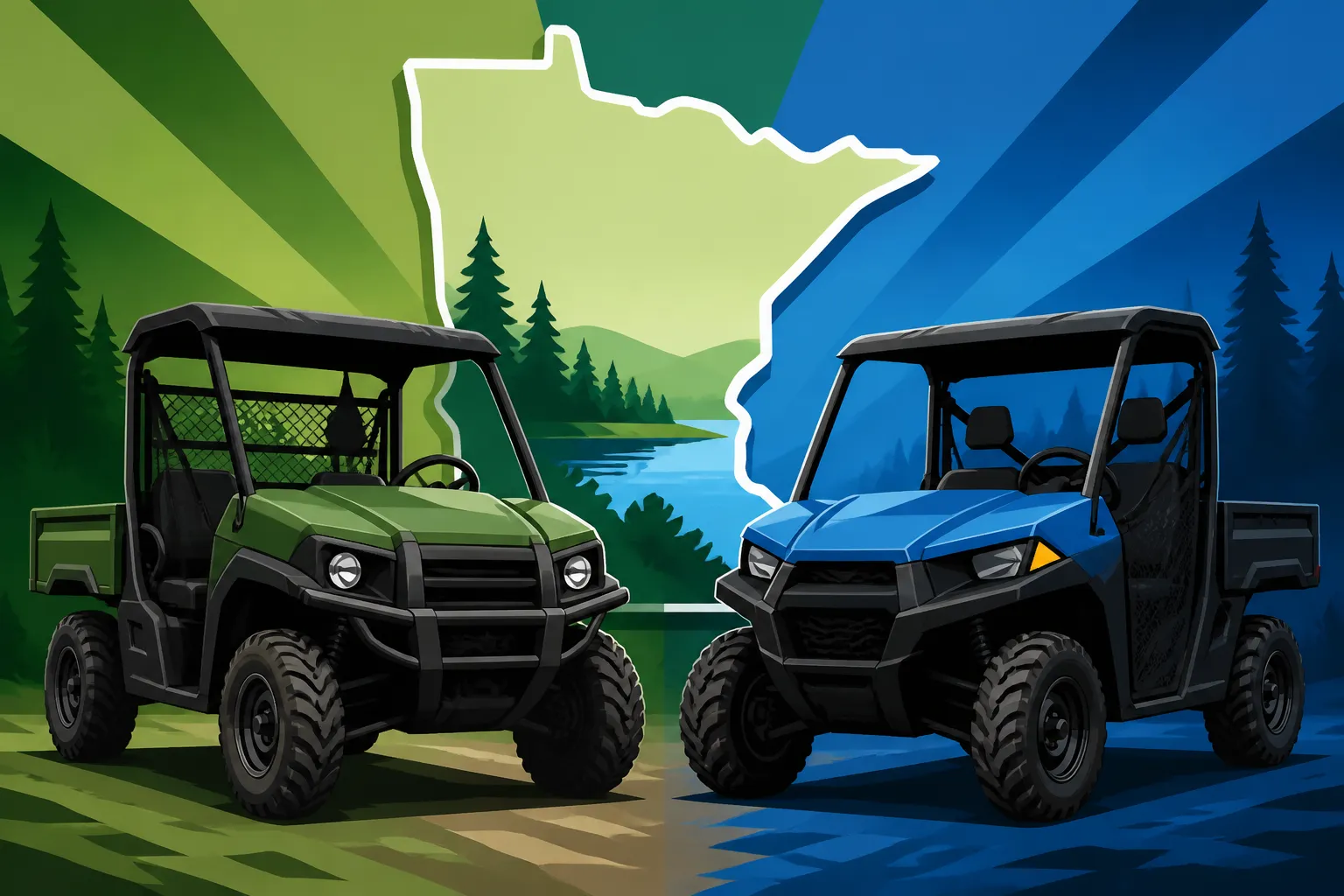
Kawasaki Mule and Polaris Ranger Entry Models
Kawasaki Mule and Polaris Ranger entry models appeal to Minnesota buyers who need a side-by-side for chores, property work, hunting or trail access without starting at the top of either lineup. The hard part is comparing more than a model name: seating, cargo capacity, dimensions and included equipment can vary by trim and model year. Focus on the work you need it to do, then compare exact configurations and ownership costs.
What counts as an entry model
“Entry model” is a useful shopping shortcut, not a promise that two machines are equivalent. A manufacturer may position a simpler trim as its starting point, but the included features, seating layout and equipment can differ from one model year to another. Even familiar names such as Kawasaki Mule SX and Polaris Ranger 500 can cover configurations that deserve a close, side-by-side comparison.
Start by defining the job. A machine used mostly to carry tools around a property has different priorities from one expected to haul a hunting party, plow a long driveway or spend weekends on public trails. For work, useful questions include how many people ride at once, what the cargo bed needs to carry, whether you need towing capability, and how often you’ll operate in snow, mud or tight spaces.
Then identify the exact model and trim you are comparing. Ask for the full designation, model year and factory equipment list in writing. A listing that says only “Mule” or “Ranger” leaves too much open to interpretation. Two machines with similar names can differ in cab protection, seating, storage, tires, bed configuration and other features. Dealer-installed accessories can further blur the difference between factory equipment and extras.
The right comparison is not automatically “cheapest Mule versus cheapest Ranger.” Compare machines that can do the same tasks in a similar configuration. If one has a different seating layout or equipment package, decide whether that difference matters to your use before judging the trade-off.
For background on the broader category and how it fits Minnesota use, see Buying Your First Side-by-Side in Minnesota and Minnesota ATV Classes and What They Mean. The machine’s intended use and the routes you plan to ride are as important as its badge.
Kawasaki Mule versus Polaris Ranger for everyday work
Both model families are associated with utility use, but the best fit depends on the exact version and the way you work. Instead of assuming one brand is universally tougher, faster or more capable, compare the specifications and equipment for the particular machines on the dealer’s floor.
| What to compare | Why it matters | What to verify on the exact model |
|---|---|---|
| Seating layout | Determines who can ride and how the cabin works for your crew | Number and arrangement of seats, seat belts and passenger space |
| Overall dimensions | Affects fit in sheds, trailers, gates and narrow work areas | Width, length, height and turning space |
| Cargo bed | Determines whether tools, feed or supplies fit securely | Bed dimensions, stated load capacity and any limits on cargo placement |
| Towing | Matters for hauling a small trailer or moving equipment | Manufacturer’s towing rating and any required equipment |
| Ground clearance and tires | Affect clearance over ruts, rocks and uneven ground | Published measurements, tire type and the terrain each model is intended for |
| Protection and comfort | Changes how practical the machine is in wind, rain, dust and cold | What is standard, optional or dealer-installed |
| Controls and visibility | Affects confidence when maneuvering or backing with a load | Seat position, mirrors, sightlines, display and control layout |
| Service and parts access | Can influence convenience over the life of the machine | Local service support, maintenance schedule and parts availability |
Seating and passenger comfort
Do not rely on a broad description such as “two-person” or “crew.” Sit in the machine with the people who will use it. Check whether passengers have adequate space, whether seat belts are easy to reach, and whether the layout makes it awkward to get in and out while wearing winter clothing.
If you expect to carry more than one passenger, check the seating arrangement and approved capacity for the exact configuration. Never assume that an open bench, an added seat or a dealer-installed accessory makes a machine suitable for extra passengers. Follow the manufacturer’s instructions and applicable riding rules.
For property work, seating can also affect how easily the operator can reach controls and see the cargo bed. If someone will drive while wearing bulky outerwear or gloves, test the controls in that condition rather than relying on a quick showroom sit.
Cargo and towing needs
A cargo bed may look large enough in a photo yet be too short or awkwardly shaped for the loads you actually carry. Bring measurements of common items: a feed container, tool case, chainsaw, hunting gear or the materials you need to move around your property. Check both the bed’s stated capacity and its usable dimensions. A load that fits is not automatically a load the machine can carry safely.
Towing ratings are also specific to the machine and should not be inferred from the brand or family name. If you expect to pull a trailer, confirm the published rating and ask what hitch or other equipment is required. Consider where the trailer will travel, how it will be loaded and whether the route includes slopes, soft ground or tight turns.
A work-focused model may be a better match than a sport-oriented machine for frequent hauling, but that doesn’t mean every utility model is interchangeable. Compare the manufacturer’s specifications for each candidate and be realistic about the heaviest load you expect to move.
Size, access and storage
Measure the narrowest gate, shed opening, trailer deck or trail connection the machine must pass through. A small difference in width can matter more than a feature you may use only occasionally. Check height as well if the machine will be stored in a garage or transported beneath a cover.
When assessing a trailer, account for the ramps, tie-down points and available deck space. Compare the machine’s actual dimensions with the trailer’s usable area, not just the advertised trailer size. Trailer Registration for Hauling ATVs in Minnesota and Tying a Machine Down for the Interstate can help with the transportation side of ownership.
For trail riding, confirm the machine is permitted on the routes you intend to use. Trail rules and width limits can vary by location, and a machine that fits on private property may not qualify for every public trail. Check the route’s current rules before buying on the assumption that a particular model will be allowed.
The real cost goes beyond the machine
A dealer’s advertised figure is only one part of the ownership calculation. Your total outlay may include taxes, dealer charges, setup, registration, insurance, safety equipment, a trailer, accessories and regular maintenance. Those costs depend on the purchase, location and configuration, so request an itemized, current quote rather than relying on a general estimate.
When comparing Kawasaki and Polaris, ask both dealers to price the same practical package. If one quote includes a windshield, roof, winch or other equipment and the other does not, the headline figures are not a fair comparison. Ask which items are factory-installed, which are dealer-installed, and whether each item is included in the quoted total.
Think through the first year as well as the day of purchase. A machine used for plowing, hunting or frequent trail trips may need equipment you do not need for occasional yard work. Build a list of must-haves and nice-to-haves before discussing add-ons. That makes it easier to avoid paying for accessories that look useful in the showroom but do not solve a real problem for you.
For a broader way to plan ownership costs, see What a Minnesota Family Spends in a Season, Minnesota Sales Tax and Dealer Fees on a Machine and Financing a Machine at a Minnesota Dealer. Costs and available financing terms vary, so confirm current details with the dealer and any lender.
Equipment to budget for
Consider which items are necessary for the work and weather you expect:
- Roof or cab protection: Can make operation more comfortable in rain, wind and cold, but a roof alone is not the same as an enclosed, heated cab.
- Windshield: Ask whether it is fixed, folding or removable, and how it affects airflow, visibility and cleaning.
- Winch: Match it to the machine and the recovery or work tasks you actually expect. A winch is not a substitute for safe recovery practices.
- Plow equipment: Check whether the blade, mount and other required parts are included. A plow can change how the machine is used and maintained.
- Tires: Consider the surfaces you ride on. Aggressive tread may not suit every worksite or trail, and changing tires later adds expense.
- Storage and protection: A cover, secure storage and battery care can help protect a machine when it sits unused.
- Safety gear: Helmets and other protective equipment remain part of the budget, particularly when the machine will be used on public routes.
Amazon may be convenient for comparing general gear such as storage covers or tie-downs, but fitment is the important part for machine-specific accessories. Check the exact model year, trim and mounting requirements before ordering. For ideas on what to prioritize, see Accessories Minnesota Riders Buy First and Minnesota Machines Best Suited to Plowing Snow.
Buying new or used
A new entry model offers a clear starting point for condition and equipment, but the exact trim may not include everything you want. A used machine may come with useful accessories, yet those additions do not automatically make it a better value. The condition, maintenance history and quality of the installation matter.
For a used Mule or Ranger, inspect the machine rather than relying on the seller’s description. Check the frame and underbody for damage, look for signs of hard impacts, examine tires and suspension components, and test the controls and safety equipment. Look for fluid leaks, unusual noises and evidence of poorly repaired wiring or accessories. If you are not comfortable evaluating mechanical condition, arrange an inspection by a qualified technician before completing the purchase.
Ask how the machine was used. A unit used mainly for light property chores may have a different wear pattern from one used for repeated towing, plowing or rough trail riding. Hours can help provide context, but they do not tell the whole story. A machine with fewer hours can still have been neglected, while regular maintenance and careful use matter even on a higher-hour example. Reading a Used Machine’s Hours and Inspecting a Used Machine in Minnesota offer more detail on evaluating condition.
Check that the paperwork and machine identification details match. Confirm the seller can provide the documentation needed for the transaction and that the identifying number on the machine is legible and consistent with the records. If anything is unclear, resolve it before money changes hands. See Buying a Used ATV in Minnesota: The Paperwork and Proof of Ownership for a Minnesota ATV for related paperwork questions.
A test drive should match the intended use as closely as is practical and safe. Try steering, braking and reversing. Listen for unusual drivetrain sounds, check that the machine starts and idles normally, and assess visibility from the driver’s seat. If you need it to maneuver around buildings or back up to a trailer, practice those tasks in a suitable area.
Before choosing a used machine based on added equipment, ask who installed it and whether the installation is documented. A winch, plow or cab accessory can be useful, but poorly fitted equipment may create problems or need replacement. Compare the total cost of the used machine plus any repairs or missing equipment with the cost of a new, similarly equipped model.
How to make a fair Mule and Ranger comparison
A short, repeatable process helps keep the choice grounded in your needs instead of dealer presentation.
- Write down your main jobs. Rank the tasks you expect to do most often: carrying passengers, hauling supplies, towing, plowing, hunting access or recreational riding.
- Set minimum requirements. Note the seating arrangement, cargo needs, dimensions and equipment you cannot compromise on.
- Choose exact configurations. Record the model year, full trim name and included features for each Kawasaki Mule and Polaris Ranger you are considering.
- Compare published specifications. Use the manufacturer’s information for load limits, towing, dimensions and other rated capabilities. If a figure is unclear, ask the dealer to identify the source.
- Inspect and sit in both machines. Check fit, visibility, controls and access. Bring the people who will ride and measurements of the spaces the machine must fit.
- Request itemized quotes. Compare the same equipment and ask which costs are included. Verify current tax, registration and other charges with the relevant provider.
- Check local service support. Ask about maintenance, parts ordering and repair access for each brand near your home or cabin.
- Confirm how you can use it in Minnesota. Registration, trail access and operating rules depend on the machine and where you ride. See Registering a Machine for Public Use in Minnesota and confirm requirements before assuming a purchase is ready for a particular route.
A dealer conversation should leave you with specifics, not just broad claims. Ask for the exact model designation, equipment list, owner’s manual and written quote. If the dealer says two trims are “basically the same,” ask what differs and whether the difference affects your intended tasks.
When a feature is important, verify it directly. For example, if you need a machine to carry a particular load, confirm the rating and how the load must be distributed. If you need a particular overall width, measure the machine or consult the official specification. If you expect to drive on public routes, check the rules for those routes rather than relying on a general statement that the machine is “trail legal.”
Which one makes more sense for you
There is no universal winner between Kawasaki Mule and Polaris Ranger entry models. The better purchase is the exact configuration that fits your work, passengers, storage and transportation needs without pushing you into unnecessary equipment or leaving you short of a required capability.
A practical way to decide is to score each candidate against your priorities. Give the most weight to requirements that are hard to change later, such as size, seating layout and the machine’s rated capacity. Give less weight to features that can be added later, but include the cost and compatibility of those additions in your comparison.
If one machine fits your garage and trailer while the other does not, that may settle the decision. If both fit, compare seating comfort, cargo-bed usability, visibility and service access. If you plan to plow or tow, focus on the relevant ratings and equipment rather than a general impression of which machine looks more rugged.
A “base” model can be a sound choice if it already meets your needs. But it may not be the least costly option after adding essential equipment. Conversely, a more equipped package can be poor value if it includes features you will rarely use. The right comparison is the total cost of a machine configured for your actual tasks, not the model name or the first number on a window sticker.
For a new machine, prioritize a clear written quote and a realistic list of included equipment. For a used machine, condition and documentation should take precedence over accessories. Either way, verify Minnesota requirements for registration and intended use, then make sure the machine fits your trailer, storage space and daily routine.
Frequently Asked Questions
Are Kawasaki Mule and Polaris Ranger entry models intended for the same jobs?
They are both utility side-by-side families, but specific trims can differ in seating, dimensions, equipment and rated capabilities. Compare exact configurations against the tasks you expect to do rather than assuming similarly positioned models are interchangeable.
Is the cheapest trim always the best value?
No. A lower starting cost may not include equipment you need, while a higher package may include extras you will not use. Compare itemized quotes for machines configured as similarly as possible.
Can I use either machine on Minnesota ATV trails?
Do not assume trail access from the brand or model name. Confirm the exact machine’s dimensions and applicable rules for each trail or route you plan to ride. Requirements can differ across locations.
Should I buy a used Mule or Ranger with accessories already installed?
Only if the machine’s condition, paperwork and equipment check out. Verify accessory fitment and installation, and include likely repairs or missing equipment when comparing the total cost with a new machine.
Disclaimer
This article is for general informational purposes only and does not constitute professional advice. Laws, prices and regulations vary by location and change over time. Consult a qualified professional for guidance on your specific situation.