Taking Minnesota ATV Training Online
Taking Minnesota ATV training online can be a convenient way to complete safety instruction, but finishing a course is not the same as having permission to ride everywhere. The key is to use a course accepted in Minnesota, meet the rules that apply to your age and birth date, and keep proof of certification available.
What online ATV training in Minnesota involves
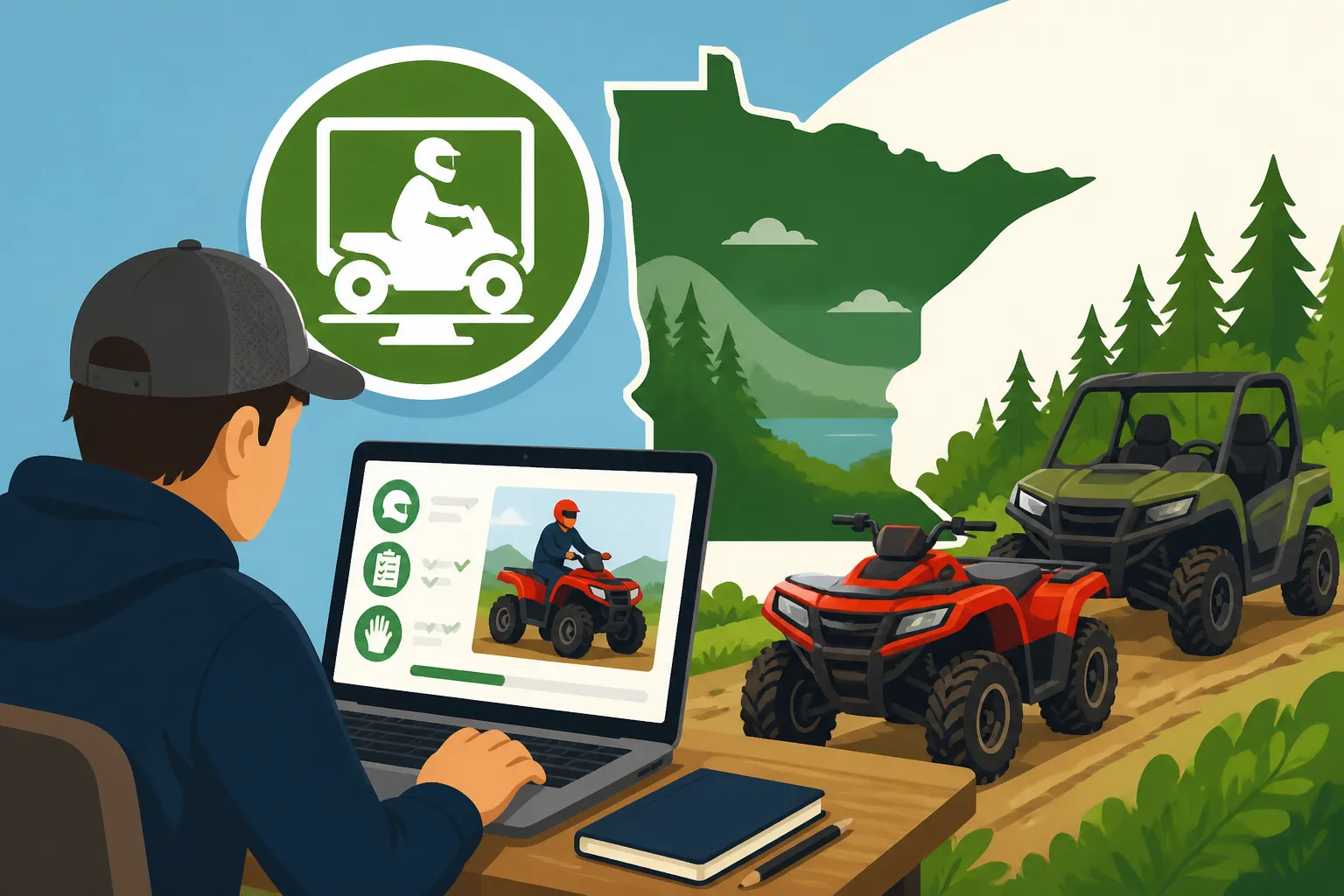
Online ATV safety training introduces riders to the decisions and habits that help prevent crashes and protect trails. Course topics commonly include safe operation, protective equipment, riding with others, basic machine handling, and how to respond to hazards. You can usually work through the material at your own pace, but the exact lessons, tests, and completion steps depend on the course provider.
Before enrolling, confirm that the course is accepted for Minnesota ATV safety certification. A course that discusses general off-road safety, or one accepted in another state, does not automatically meet Minnesota’s requirements. Start with the state’s current training information and check the provider’s instructions before paying or beginning. The overview in Minnesota ATV Safety Training Requirements can help you understand the broader certification rules.
Online instruction is useful for learning safety concepts and checking your understanding. It cannot recreate every part of riding: judging a slope, keeping control on uneven ground, or choosing a safe line around an obstacle takes practice on a machine. Depending on the option you choose and the current state process, there may be an additional knowledge test, riding component, or other step. Read the full course description rather than assuming that “online” means the entire process is completed on a screen.
| Before you begin | What to check |
|---|---|
| Course acceptance | Confirm the course is accepted for Minnesota certification |
| Rider eligibility | Check the minimum age to take the course and any age limits for certification |
| Completion steps | Look for required quizzes, exams, or hands-on components |
| Proof of completion | Find out how the certificate is issued and how to retrieve it later |
| Riding rules | Check whether the rider also needs a trail pass, registration, or adult supervision |
The online format can suit a family that wants to review the material together, a rider who prefers to study in shorter sessions, or someone who lives far from an in-person class. It may be less suitable for a learner who needs coaching with the controls or who benefits from practicing skills with an instructor. In that case, look into Minnesota Hands-On Riding Clinics as well as online instruction.
A parent or supervising adult can help a young rider understand course material, but that does not replace the rider’s own required training or make an otherwise ineligible rider eligible. If a course account must be created in the student’s name, follow the provider’s directions carefully. Use accurate personal details so the certificate can be matched to the rider who completed the course.
Who needs Minnesota ATV safety certification
Minnesota’s certification rules depend on both a rider’s age and birth date. In general, a person who is at least 12 and was born after July 1, 1987, must have ATV safety certification to operate where Minnesota requires it, including applicable public riding areas. The exact places and circumstances covered can depend on the type of land or route, so check the current rule before a trip. The July 1987 Birthdate Rule explains why a rider’s birth date matters.
A rider who is younger than 12, or who was born before the cutoff, should not assume that there are no rules to follow. Age limits, adult supervision requirements, machine size restrictions, and the rules for the location can still apply. A certificate also does not grant permission to ride on private land without the owner’s consent or on a public route where ATV use is not allowed. For age-specific requirements, see Safety Certification for Riders Twelve and Over and Minnesota Age Rules for Young Riders.
A quick way to think about the main questions is:
- Does this rider meet the age and birth-date conditions? Check both, not just the rider’s age.
- Is the planned riding area one where certification is required? Public trails, roads, and land can have different rules.
- Does the rider need an adult with them? A certificate does not remove age-based supervision requirements.
- Does the machine need separate paperwork or a pass? Training does not register a machine or replace a trail pass.
The training requirement and the riding rules are related, but they are not interchangeable. A safety certificate is proof of training; it is not a registration document, ownership record, or trail pass. Before heading out, check the separate requirements for the machine and the route. What Minnesota Riders Need Before They Ride provides a useful overview of the other items to sort out.
If you are visiting Minnesota from another state, do not assume that any out-of-state course card is automatically accepted. Recognition can depend on the certificate and the requirements in effect. Check Out-of-State Certificates Minnesota Accepts and the current state guidance before relying on a certificate from elsewhere. Visitors should also check whether their machine needs a Minnesota trail pass; Minnesota Rules for Visiting Riders covers that separate issue.
How to complete an online course
The safest approach is to confirm the course and its requirements before you start. Course providers can differ in how they handle registration, study materials, tests, identity details, and certificates. Follow the current instructions for the specific course rather than relying on a friend’s experience with a different provider or an older course.
- Check Minnesota’s current course information. Find the current state guidance on ATV safety training and accepted course options. If the provider is not clearly identified as an option for Minnesota riders, verify its status before enrolling.
- Confirm who is taking the course. Use the rider’s correct name and birth information, especially when a parent is helping a child register. Check the minimum age to take the course and whether a certificate can be issued before the rider reaches the age required to operate.
- Read the full course description. Look for the required lessons, tests, completion standards, and any in-person or riding component. Do not stop at a short advertisement or a page that only describes the online portion.
- Set aside time to learn, not just click through. Work through the safety material carefully. Pay attention to operating conditions, protective gear, passengers, and how to avoid damage to trails and natural areas.
- Complete each required assessment. Pass the quizzes or exams specified by the provider. If the process includes a hands-on step, follow the provider’s instructions for completing it.
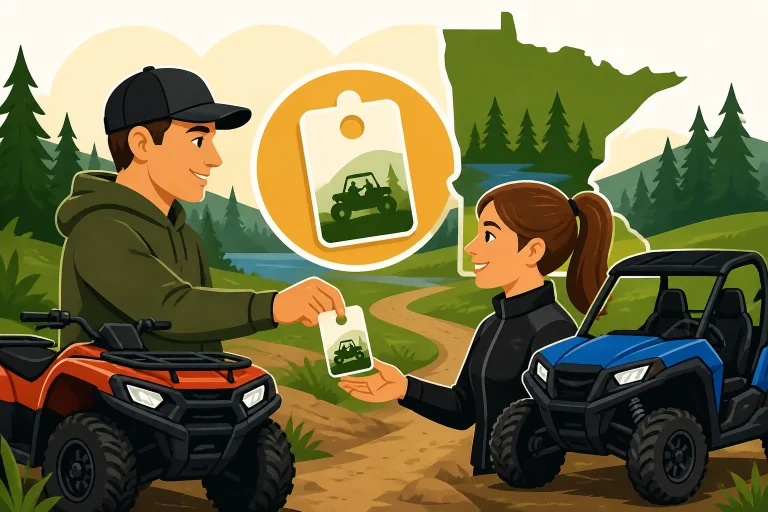
- Save proof of completion. Download or print the certificate if that option is available, and store a digital copy where you can retrieve it. Check that the information on it is accurate.
- Review the rules for the actual ride. Confirm the rider meets any supervision requirements and the machine has the required registration or pass for the planned location.
For more detail about the online portion, see Minnesota Online Safety Training. The provider’s completion page is important: a course may require several steps, and simply opening the lessons or finishing the reading may not mean the rider has earned a certificate.
Keep the certificate information accessible after the course. If it is lost, first check the provider’s account or support instructions for retrieving a copy. If you notice an error in the rider’s name or other details, ask the provider how to correct the record rather than trying to alter the document yourself. If you are unsure whether a certificate remains valid, check Does a Minnesota Certificate Expire? instead of assuming that it does or does not.
What training does not replace
Finishing online ATV training is one part of preparing for a ride. It does not give a rider permission to use a closed trail, cross private property without permission, or operate a machine in a place where ATVs are prohibited. It also does not cover every practical skill a rider may need in changing conditions.
A certificate does not substitute for machine registration. Registration requirements depend on the machine and how it is used, and some situations have different rules. If you are unsure whether your machine needs registration, review Registering an ATV in Minnesota. Similarly, a training certificate is not a trail pass. Visitors and some Minnesota riders may need a separate pass for certain trails; confirm the requirement for the route you plan to ride.
It is worth matching training to the actual rider and machine. A child who can pass an online assessment may still need close supervision and more practice before riding independently. A new adult rider may also benefit from practicing basic controls in a safe, permitted area before attempting a busy trail or difficult terrain. Online instruction can help build knowledge, but it cannot establish that a rider is ready for every condition.
Before leaving, check the current rules for the specific route, the rider’s age, and the machine. Carry proof of certification in the form accepted by the relevant authority, and keep any separate registration or trail-pass information available as required. If course details or legal requirements are unclear, ask the state or course provider to clarify them before riding. A short check beforehand is easier than discovering at a trailhead that the course, certificate, or paperwork does not meet the requirement.
Disclaimer
This article is for general informational purposes only and does not constitute professional advice. Laws, prices and regulations vary by location and change over time. Consult a qualified professional for guidance on your specific situation.