Signing Up for a Club Work Day
A Minnesota trail can look ready for riding while hiding a washed-out culvert, a muddy rut, or a trail marker knocked down over winter. If you want to help but aren’t sure whom to contact, what to bring, or whether you need to be an experienced rider, this guide walks you through finding and joining an ATV club work day—and showing up prepared.
How Minnesota ATV club work days are organized
Find the club responsible for the trail
Many Minnesota ATV trails are maintained through partnerships involving local clubs, land managers, and public agencies. A club may organize volunteer days to clear brush, repair signs, check drainage, pick up litter, or prepare a route for the riding season. The first step is to identify which club works on the trail or area where you want to volunteer.
Start with the trail’s name and nearby town. For example, if you’re interested in routes around Gilbert, the Soo Line, or the Nemadji State Forest area, look for ATV clubs serving that region and check their official websites or social media pages for volunteer announcements. You can also ask at a local trailhead, dealership, or visitor information desk whether they know which club maintains the route. A club that works near your cabin may not be responsible for the trail you ride most often, so match the group to the area rather than choosing the first club you find.
If you’re unsure where to begin, Minnesota’s broader trail network can provide useful context. Minnesota ATV Clubs and the Trails They Keep explains the connection between clubs and trail maintenance, while Grant-in-Aid Trails and Who Maintains Them can help you understand why a route may involve more than one organization. For a route you plan to ride, Finding a Minnesota DNR Trail Map is a useful companion when you’re figuring out the trail’s location and access points.
Ask what the work day involves before you commit
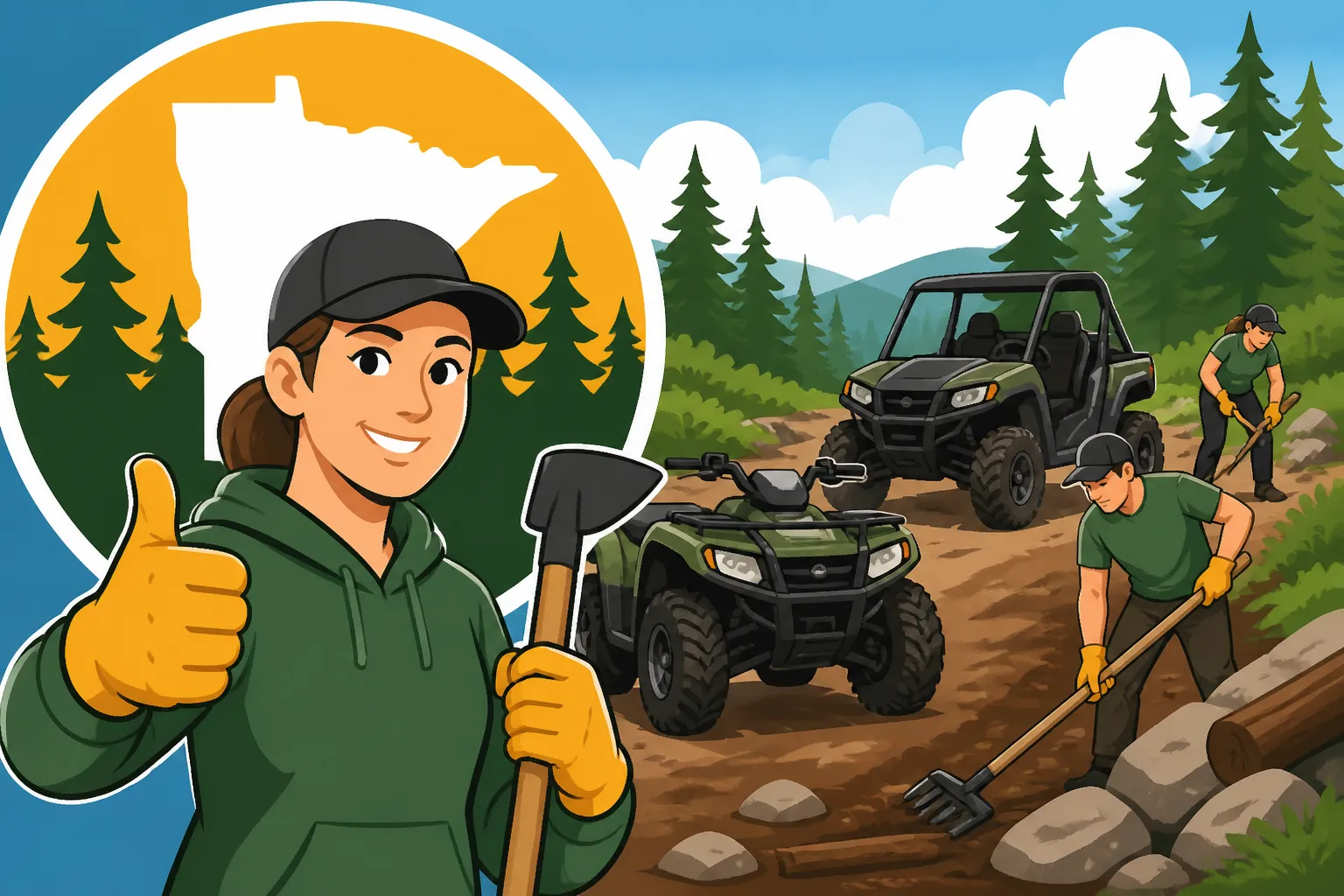
A “work day” can mean very different things. One outing might be a short trail inspection and litter pickup; another could involve carrying tools, clearing brush, or helping repair drainage features. Ask the organizer what tasks are planned, how strenuous they are, how long volunteers should expect to be out, and whether tools or protective equipment are supplied.
Be honest about your comfort and physical limits. If you have a bad knee, can’t lift heavy items, or prefer not to use powered equipment, say so when you contact the club. There may be useful jobs such as recording damaged signs, handing out supplies, checking a section of trail, or taking notes for the crew leader. You don’t need to pretend to be a chainsaw operator to be helpful.
Work days may be scheduled around weather, trail conditions, or the availability of volunteers and equipment. Confirm the meeting location and check for last-minute changes before leaving home. If the club hasn’t posted a public event, send a brief message asking whether volunteers can join an upcoming maintenance day or be added to an email list. Don’t assume that arriving at a trailhead means you can join a crew already working there; the organizer may need to account for access, safety, and the specific task.
Sign up, confirm details, and choose a suitable task
What to include when you contact a club
A short, specific message makes it easier for a volunteer coordinator to respond. Mention the trail or region you’re interested in, the date you saw advertised, how many people hope to attend, and whether anyone in your group has relevant experience. If you’re bringing a teenager, ask about age requirements and supervision before making plans.
You might write: “Hi, I’m interested in helping with a trail work day near Pine River. I’m available on the date listed and can help with general cleanup or carrying supplies. Is there still room, and what should I bring?” That gives the organizer enough information to suggest a task without making you feel as though you need a formal résumé.
If you don’t hear back, try another official contact method or ask the club when its next meeting is. A message can get buried during busy riding seasons, and volunteers may be out on the trail rather than checking email. Follow up politely after a few days, but avoid showing up at a private meeting or work site without an invitation.
Match the job to your experience and equipment
You do not need to own an ATV to volunteer. Some tasks are done on foot, and a club may have a designated vehicle or trailer for moving people and materials. If you expect to use your own machine, ask whether it is appropriate for the planned route and whether you need to bring registration, a trail pass, or other required documents. Requirements depend on where and how the machine will be used, so clarify them with the organizer rather than guessing.
Here is a practical way to think about common work-day tasks:
| Task | What it may involve | A good fit if you |
|---|---|---|
| Litter pickup | Walking a section and collecting refuse | Prefer a simple, lower-impact task |
| Sign inspection | Checking markers and reporting missing or damaged signs | Notice details and can follow a route |
| Brush clearing | Removing small branches or vegetation as directed | Are comfortable working outdoors |
| Drainage checks | Spotting standing water, erosion, or blocked culverts | Like careful observation and reporting |
| Tool or supply support | Carrying, sorting, or distributing materials | Want to help without operating equipment |
| Trail documentation | Recording locations and describing issues | Can take clear notes or use a map app |
If you use onX Offroad to review an area or keep track of where you noticed an issue, treat it as a navigation aid—not as permission to enter land or leave an open route. A trail line on a digital map does not replace local signs, land-manager instructions, or the crew leader’s directions. It can still be handy for describing a problem location to the organizer, especially when a trail has several access points.
Prepare for the day and work safely
What to bring and wear
Follow the club’s instructions first. If the event announcement gives a specific equipment list, use that rather than relying on a generic checklist. For a basic outdoor work day, consider sturdy closed-toe footwear, work gloves, weather-appropriate layers, drinking water, snacks, and any personal medication you may need. Minnesota conditions can change quickly, so bring rain protection or an extra warm layer when the forecast and season call for it.
Ask before bringing power tools, a chainsaw, a tractor, or any other equipment. A crew may already have the tools it needs, and powered equipment should only be used by people who are authorized and trained for that task. Likewise, don’t bring a child or pet without checking whether the work site is suitable. Moving machines, cutting tools, uneven ground, and limited cell coverage can make a work area unsafe for visitors who aren’t part of the crew.
If the work day includes riding to a site, ask the organizer what machine requirements apply and where to park or unload. You may also want to read Minnesota ATV Clubs and the Trails They Keep alongside Minnesota Trailhead Parking and Staging if you’re unfamiliar with the area. Arriving with enough time to unload, get instructions, and sign in is much less stressful than trying to find the group after it has started moving.
Follow the crew leader’s instructions
At the start of the day, listen for a briefing about the work area, hazards, tools, and communication plan. Ask questions if you don’t understand a task. For example, if the crew is clearing brush near a drainage feature, don’t cut vegetation or move material until someone explains what needs to stay in place. What looks like a simple cleanup job can affect water flow, trail boundaries, or nearby vegetation.
Stay with your assigned group and let the leader know before stepping away. Don’t ride around a closed or restricted section to reach a work site unless the organizer has told you that access is allowed. If you notice a hazard outside your assigned area, report its location rather than improvising a repair. Minnesota State Forest Rules Minnesota Riders Follow offers helpful background for understanding why access rules and posted restrictions matter, and Reporting Trail Damage in Minnesota is relevant when you spot an issue that needs follow-up beyond the day’s assigned work.
Work days are also a good time to learn how trail maintenance works. Ask how the club reports damage, who handles major repairs, and what conditions can delay reopening a route. Trail crews may need to coordinate with land managers or wait for suitable ground conditions. A volunteer group can care deeply about its route and still need to leave a section alone until it is safe and authorized to work there.
Make the experience worthwhile and stay involved
Be realistic about what a first work day can accomplish
It’s easy to arrive expecting to transform a whole trail in one afternoon. In reality, the crew may focus on one small stretch, inspect several problem areas, or complete a job that riders barely notice once it’s done. Clearing a blocked sign or documenting a washed-out section may not look dramatic, but it can help riders follow the route and help the club plan future work.
Take cues from the group. Some work days move steadily through a defined list, while others change direction when volunteers find a new problem. If the task turns out to be more physical than expected, tell the leader early and ask whether there’s another way to contribute. A good volunteer day should be useful, but you shouldn’t feel pressured to take on work you can’t do safely.
After the work is finished, help return borrowed tools, dispose of collected litter as directed, and check out with the organizer. If you used an app such as onX Offroad to note a location, share the useful details with the club rather than assuming everyone can see your map. A clear description—such as the nearest access point, sign number, or recognizable junction—is often more useful than a vague report that “the trail is muddy.”
Keep in touch without overcommitting
Before heading home, ask how the club announces future volunteer days. Some groups use a mailing list, social media, regular meetings, or event pages. You can decide later whether you want to join the club, attend another work day, or simply help when your schedule allows. One volunteer shift is still worthwhile; you don’t have to promise a full season before you know what the work involves.
If you had a positive experience, tell the club what you liked and what tasks you might be comfortable doing next time. Perhaps you’re happy to walk a route and report sign damage but don’t want to operate tools. Or maybe you have a trailer that could help move supplies, subject to the organizer’s plan and safety requirements. Sharing those details helps coordinators match people to work without assuming everyone has the same skills or equipment.
You can also learn more about how volunteers fit into the wider trail system through [Minnesota Grant-in-Aid Club Funding] and Trail Crews and Culvert Repairs. These topics help explain why volunteer maintenance may involve planning, reporting, and coordination in addition to hands-on work. If a work day inspires you to explore another region, Planning a Minnesota Riding Trip can help you think through trail access and logistics before your next ride.
Disclaimer
This article is for general informational purposes only and does not constitute professional advice. Laws, prices and regulations vary by location and change over time. Consult a qualified professional for guidance on your specific situation.