Minnesota’s $31 Non-Resident ATV Trail Pass Explained
A Minnesota ATV trip can involve one easily missed requirement: a machine registered in another state may need a Minnesota trail pass before it uses certain public trails. The “$31” in this pass’s name can make it sound like a fixed, simple charge, but the fee and requirements should be checked before you travel. Here’s what the pass is for, when it applies, and how to avoid confusing it with registration or road access.
What the non-resident trail pass does
Minnesota’s non-resident ATV trail pass is an access requirement for qualifying ATVs registered outside Minnesota when they are operated on trails where Minnesota requires the pass. It is not a Minnesota registration, a substitute for your home-state registration, or permission to ride wherever an ATV can physically go.
Think of it as one part of a trip’s paperwork:
- Your home-state registration or other required operating credentials establish the machine’s registration status.
- The Minnesota trail pass covers access to trails where the pass is required.
- Local signs, land rules, trail closures, age restrictions, and equipment requirements still apply.
That distinction matters because riders sometimes assume an out-of-state registration automatically carries over to Minnesota trails. It does not necessarily do so. Minnesota does not offer blanket reciprocity that lets every visitor rely on their home-state paperwork for every Minnesota trail. If you are unsure how your state registration interacts with Minnesota’s rules, start with Reciprocity Minnesota Does Not Offer and Minnesota Rules for Visiting Riders.
The pass is generally tied to the machine using the trail, rather than being a general pass that one person can use for any ATV in a group. Plan to check the requirement for each machine, including a machine you borrow or rent. A pass on one ATV does not automatically cover a second ATV riding alongside it.
Also check how Minnesota classifies your machine. A side-by-side may be treated under ATV rules depending on its specifications and registration, but “UTV” is a broad everyday term, not a reliable answer to every legal question. If you are bringing a side-by-side, confirm its classification and whether the pass requirement applies before you set out.
The useful question is not just, “Do I need a Minnesota pass?” It is: “Is this machine covered by Minnesota’s pass requirement, and will I ride it on a trail where the requirement applies?” The answer depends on the machine’s registration and the route.
When the pass is required and when it may not be
A non-resident pass is relevant when an out-of-state ATV will be used on Minnesota trails that require it, including applicable state and grant-in-aid trails. A grant-in-aid trail is a trail supported through Minnesota’s trail program and maintained by a local government or club under that program. A trail’s public access does not, by itself, tell you whether a pass is required.
The pass requirement is not a blanket rule for every place an ATV might be used in the state. Riding on private land with the owner’s permission is different from riding a designated public trail. A ride along a road right-of-way, on a frozen lake, or on a route within a city can involve separate rules. A trail pass does not create permission to ride on land or roads that are otherwise closed to ATVs.
| Where you plan to ride | What to check |
|---|---|
| A Minnesota state or grant-in-aid ATV trail | Whether the trail requires a Minnesota non-resident pass and whether it is open to your machine |
| Private land with permission | Whether the pass applies to your activity and whether the landowner has additional conditions |
| A road, ditch, or city route | Local authorization and road-riding rules; a trail pass does not authorize road use |
| A trail system near a state forest, park, or other managed land | The managing agency’s rules, machine restrictions, closures, and any separate permit requirements |
| A route crossing different land types | The rules for each section, not just the route’s starting point |
For trail-system specifics, use Which Minnesota Trails Require a Pass as a starting point. Then check current trail maps and notices. A map may show a route, but it cannot guarantee the trail is open on the day of your ride or establish that your particular machine is allowed.
Some riders may not need the non-resident pass because of the way their machine is registered or because an exception applies to their use. Do not assume an exception based on a brief description of your situation. For example, an ATV registered in Minnesota is treated differently from an out-of-state machine, and a limited exemption for a particular use does not necessarily carry over to recreational trail riding. See Machines Registered in Minnesota and the Pass if your machine has Minnesota registration.
If your itinerary includes a mix of trail and non-trail riding, work out the requirements for the trail portions separately. A weekend at a cabin, an ice-fishing trip, or a ride across a private property does not automatically exempt you once you enter a trail system where the pass is required. Likewise, having a pass does not permit access to a closed trail or a trail that excludes your machine’s class or width.
If you are traveling with a group, make a small list of the machines and their registration states before buying passes. That catches common oversights: one friend has a Minnesota-registered ATV, another has an out-of-state machine, and a third is borrowing a side-by-side. Their requirements may not be identical.
What the “$31” means and how to confirm the current fee
The dollar amount in the article title is a useful reference point, not a promise that the pass will always cost exactly that amount. Trail-pass fees and available options can change. Before purchasing, check the current Minnesota Department of Natural Resources information or ask an authorized license agent. For a broader explanation of the pass and its cost, see What Minnesota Charges an Out-of-State Rider.
Budget for the pass as a distinct trip expense. Do not combine it mentally with the cost of registering the ATV, renewing registration in your home state, buying insurance, or paying for trailhead parking. Those are separate matters, and one payment does not replace another requirement.
When you check the current listing, confirm more than the price. Look for:
- The pass type that applies to your machine
- How long the pass is valid
- The date on which validity begins, if the pass is time-limited
- Whether you need a separate pass for each machine
- Where and how the pass must be displayed
- Whether your home-state registration or ownership documents need to be carried
- What to do if the decal is damaged, lost, or not received before your trip
Do not rely only on an old receipt, a forum post, or a screenshot from a prior season. Even if a friend bought the same pass recently, check that the pass type and machine category match your situation. A small difference in registration status or vehicle classification can change what you need.
A sensible approach is to verify the current information before you leave home, then save your confirmation somewhere accessible. If you purchase online, keep the receipt or confirmation with your trip documents until you know the required pass has been issued and displayed correctly. If you buy through a license agent, ask what proof you should keep and how to handle the pass if the decal is delayed.
The title’s dollar figure can also lead visitors to think there is only one possible cost for every rider. In practice, the total cost of riding may include other items, such as fuel, trailering, insurance, or the machine’s home-state registration. Those costs are not part of the Minnesota trail pass, and none should be treated as included unless the provider specifically says so.
How to get the pass and prepare the machine
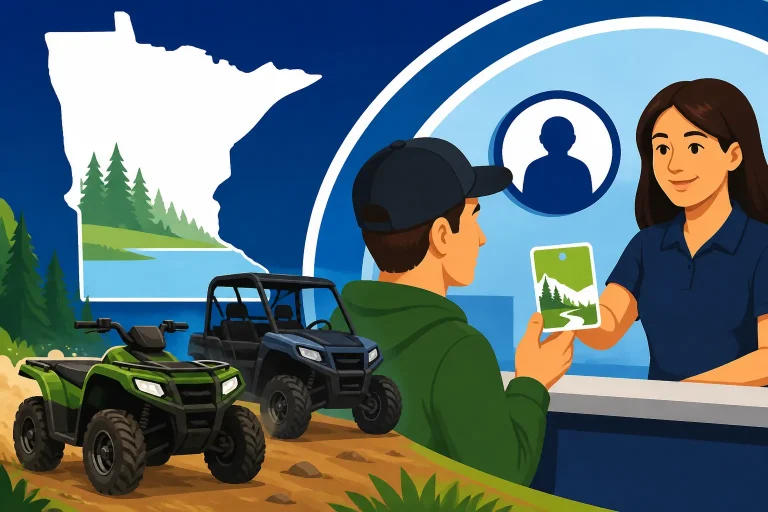
Minnesota offers ways to obtain licenses and permits through its licensing system and through authorized agents. Check the current instructions for the pass before buying, especially if you are close to your travel date. The details on Buying a Minnesota Trail Pass Online and Minnesota License Agents That Sell Passes can help you compare the available purchase routes.
Use this simple process:
- Identify the machine. Note whether it is an ATV or side-by-side, its registration state, and the information shown on its registration documents.
- Confirm the route. Identify the trails and land managers you expect to use. Check whether each trail is open and whether your machine is allowed.
- Verify the pass requirement. Use current Minnesota DNR guidance or contact an authorized agent if the machine’s category or registration situation is unclear.
- Check the fee and validity. Confirm the current amount, pass duration, purchase conditions, and any requirements for each machine.
- Buy through an authorized channel. Keep the confirmation or receipt until the pass has been issued as required.
- Display it as directed. Follow the official placement instructions rather than improvising or covering the pass in a way that makes it hard to inspect.
- Carry your other documents. Keep the machine’s registration and any other required paperwork available during the ride.
The displayed pass is not a replacement for carrying required registration documents. Decide in advance where those papers will be kept so they stay dry and can be found quickly. A waterproof document pouch can help; if you order one through Amazon, choose a closure that will not come open in mud or rain and keep it somewhere secure rather than loose in a storage bin.
Don’t wait until you reach the trailhead to sort out display instructions. A pass that is valid but not displayed as required can still create an avoidable problem during a check. If the decal arrives damaged, is difficult to read, or does not match the purchase confirmation, contact the issuing channel for instructions before riding.
For groups, have each rider confirm their own machine’s status. One person can handle the shared route research, but the person responsible for each ATV should know where its pass and registration documents are. This is especially useful when machines are arriving on separate trailers or when riders plan to split off and take different routes.
A phone is useful for maps and confirmation records, but do not make it your only plan. Download or save route information before entering areas with weak service, and consider bringing a paper map in a waterproof sleeve. If you buy a sleeve through Amazon, check that it is large enough for the map you actually plan to carry. A small power bank from Amazon can also help keep a phone available for navigation, but it does not replace a paper backup or a charged GPS unit.
Common mistakes and a practical pre-ride checklist
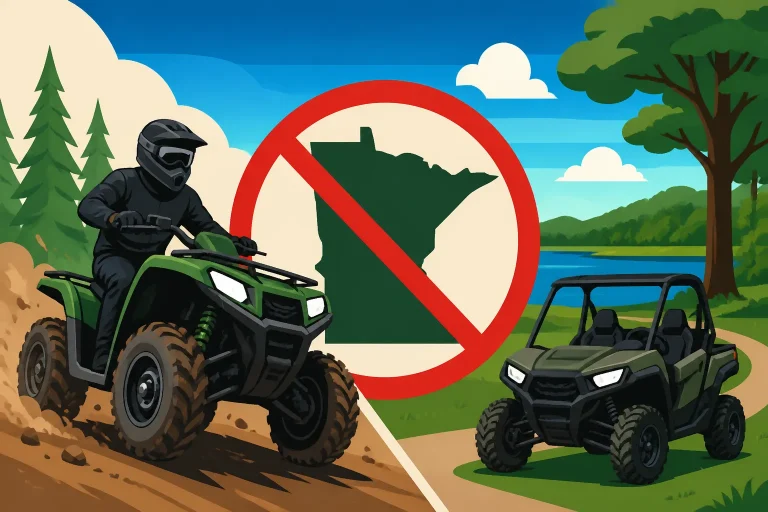
The easiest mistakes are usually caused by treating the pass as a general riding permit. It is not. A pass does not override a closure, authorize trespass, allow a machine on a restricted trail, or grant permission to use a public road. It also does not make an ATV legal for road riding if the separate requirements are not met.
Visitors should watch for these assumptions:
- “My state registration is enough everywhere.” It may establish the machine’s registration status, but Minnesota trail-access requirements can still apply.
- “One pass covers the group.” Check the requirement for each machine; do not assume a rider’s pass transfers to another ATV.
- “A trail on the map must be open.” Seasonal closures, wet conditions, maintenance, and local restrictions can affect access.
- “The pass lets me ride on roads.” Trail access and road use are separate issues. For road-specific questions, see Riding an ATV on the Road in Minnesota.
- “A side-by-side is automatically treated like my ATV.” Confirm the machine’s category and registration rather than relying on its nickname.
- “If I bought the pass, I do not need to display it.” Follow the current instructions for displaying the pass and carrying documents.
- “The amount in the title is guaranteed.” Confirm the current fee and pass terms with an official source before purchase.
Before loading up, run through this checklist:
- Every machine’s registration is current and matches the machine.
- You have checked whether each machine needs a Minnesota non-resident pass.
- The current fee and validity period have been verified.
- The pass has been issued and displayed as directed.
- You know which trails are open and allowed for your machine.
- You have checked restrictions for state forests, parks, private land, and local routes on your itinerary.
- Registration and purchase records are stored where you can reach them.
- Riders know that a trail pass does not authorize road riding or access to closed land.
- Your map or navigation information is saved for areas with limited cell service.
For a short visit, this preparation may feel like more paperwork than the ride deserves. In practice, checking the registration, route, and pass requirement before departure is easier than trying to resolve a mismatch at a trailhead. It also helps you avoid buying the wrong pass or assuming that a document from another state settles a Minnesota-specific access question.
If you still cannot tell whether your machine needs the pass, ask Minnesota DNR or an authorized agent with the machine’s registration details in front of you. Describe where you intend to ride and whether the machine is an ATV or side-by-side. A specific question is more likely to get a useful answer than asking only whether “visitors need a pass.”
Disclaimer
This article is for general informational purposes only and does not constitute professional advice. Laws, prices and regulations vary by location and change over time. Consult a qualified professional for guidance on your specific situation.