Trail Crews and Culvert Repairs
A washed-out culvert can turn a familiar Minnesota ATV trail into a muddy dead end, and it may not be obvious whether the route is closed or simply rough. This guide explains who maintains trails, how crews repair culverts, what riders should do when they spot damage, and how to check for closures before heading out.
Who maintains Minnesota ATV trails
Grant-in-aid trails and local trail clubs
Many Minnesota ATV routes are part of the grant-in-aid trail system. Their upkeep often involves local clubs working with public agencies, such as the Minnesota Department of Natural Resources or a county, depending on the trail and the land it crosses. That means the people maintaining a route may be volunteers who know its wet spots, drainage issues, and usual problem areas especially well.
Trail work can include clearing brush, repairing erosion, maintaining signs, and addressing drainage. Culverts are a particularly important part of that work: when they are blocked, damaged, or overwhelmed by water, they can contribute to washouts and unsafe crossings. If you want a broader picture of how trail responsibilities are shared, Grant-in-Aid Trails and Who Maintains Them and Minnesota’s Grant-in-Aid Trail System are useful starting points.
A route may cross different types of land or involve more than one responsible organization. So the club that maintains one section may not be the right contact for damage farther along the trail. When reporting a problem, provide the trail name and the closest recognizable access point or landmark rather than assuming the whole route has one maintenance contact.
Why culvert repairs matter
A culvert carries water beneath a trail or access route. If it becomes blocked by sediment, branches, or other debris, water may pool or flow across the trail. If the culvert is damaged or the surrounding soil erodes, the crossing can become unstable, rutted, or impassable.
The issue is not always visible from a distance. A puddle can conceal a deep rut, a soft shoulder, or a washed-out edge. Riding through it may make the damage worse, and turning around on a narrow or steep trail can create its own risk. Crews may need to assess the site, determine how water is moving, and coordinate the repair with whoever manages the land or route.
How crews approach trail and culvert repairs
Assessing the damage before work begins
A crew typically needs a clear picture of what has failed before choosing a repair. Is water flowing over the trail, or is it being held back? Is the culvert blocked, damaged, or simply too small for the flow at that location? Has water eroded the trail surface or undermined the edges? These details influence what equipment and materials may be needed.
Conditions can change quickly after heavy rain or snowmelt. A crossing that looked passable during one visit may become unsafe later, while a reported problem might improve as water levels drop. Crews may also need to wait for suitable ground conditions or coordinate access before bringing equipment in. A repair that seems simple from the seat of an ATV may involve substantial work around drainage and soil stability.
Repair work and temporary closures
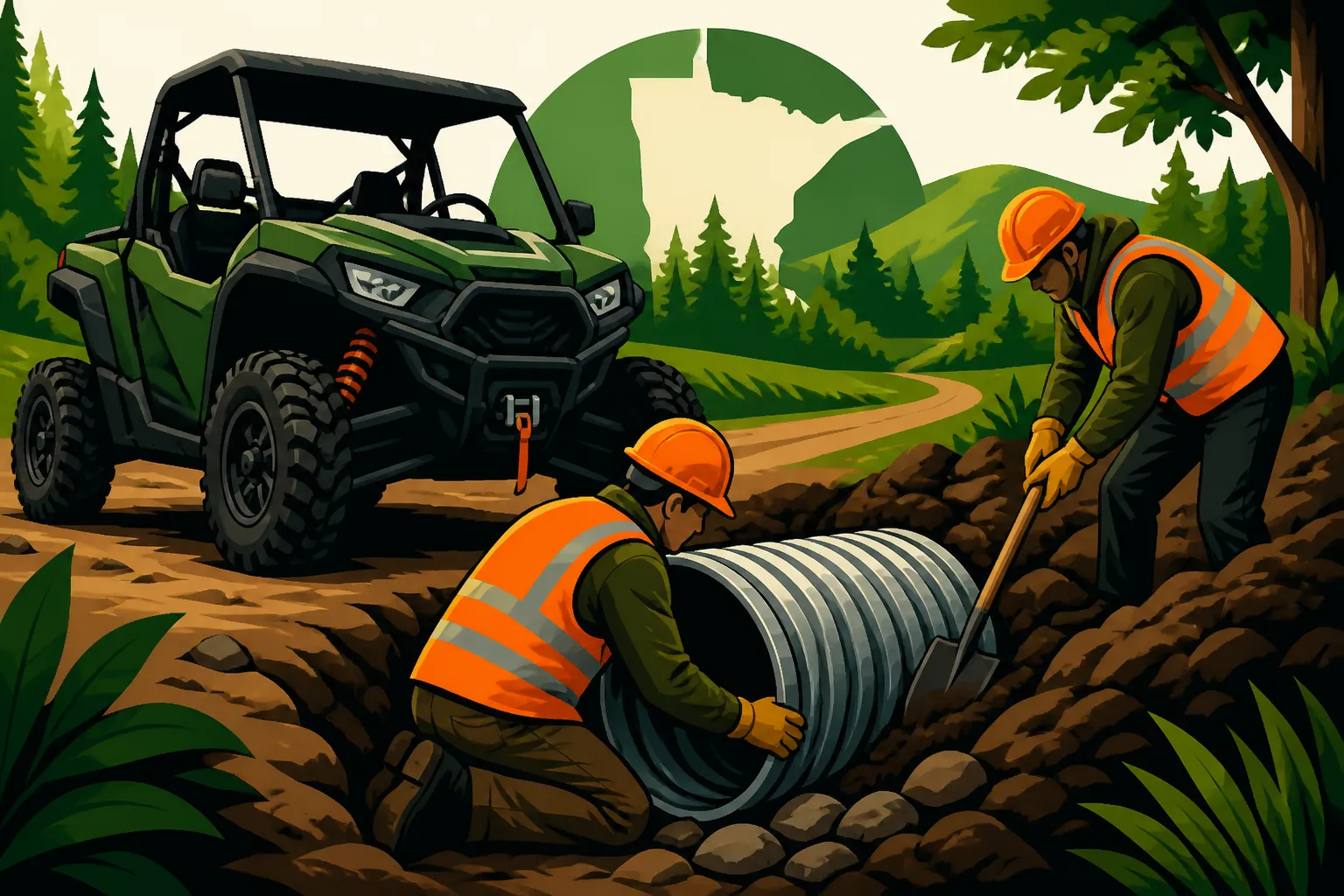
Depending on the problem, maintenance may involve clearing a blockage, repairing the trail surface, stabilizing an eroded area, or replacing or adjusting a drainage structure. Work can require machinery and a safe space for crews to operate. In some cases, the responsible agency or club may close the affected section temporarily to protect riders and allow the work to be completed.
Do not assume a trail is open just because you do not see workers at the crossing. A closure may remain in place while the ground settles or while crews finish other work. Follow posted signs and barriers, and do not go around them. Riding around a closure can damage vegetation, widen the trail, or put you on land or a route that is not open to motorized use.
For a route such as the Nemadji State Forest Trail Network, conditions may vary from one section to another, so check the status of the specific trail or access area you plan to ride. That same habit is helpful on any Minnesota route after a wet spell.
What riders should do when they find damage
Make a useful, safe report
A helpful report gives the trail manager enough information to locate and understand the issue. Note the trail name, the nearest trailhead or access point, and a clear description of what you saw. For example, say that water is flowing across the route at a particular crossing or that the trail edge appears to have washed away. If you can safely identify a nearby sign, junction, or other landmark, include it.
Do not put yourself at risk to get a closer look. Stay on stable ground, avoid entering fast-moving or deep water, and do not walk across a suspected washout. Photos can help explain what is happening, but only take them from a safe place. If the damage creates an immediate hazard, contact the responsible trail manager or agency as promptly as practical. Reporting Trail Damage in Minnesota offers more guidance on sharing trail problems with the right people.
A mapping app such as onX Offroad can help you identify where you are and describe a location, especially when trail junctions are hard to distinguish. Treat it as a navigation aid, not confirmation that a trail is open or that a route is safe. Include a recognizable trail name or access point in your report when possible, and use official notices or local trail contacts to confirm current closures.
Avoid making the problem worse
When you reach a damaged or closed section, stop before the hazard and assess whether you can turn around safely. Do not ride through water if you cannot see the surface or judge its depth. Do not drive around a barrier by cutting through brush or creating a new path. A detour made by one rider can become a wider, lasting impact on surrounding land.
If other riders are behind you, let them know what you have found and give them room to stop. On a busy route, a calm warning can prevent someone from arriving at a blind crossing too quickly. If the trail is blocked, turn back when safe and use a route that is open rather than improvising a shortcut.
| What you notice | Safer response | Helpful details to report |
|---|---|---|
| Water flowing over the trail | Stop at a safe distance and do not cross blindly | Trail name, nearby crossing or landmark, direction of water |
| A blocked or damaged culvert | Avoid disturbing the site or moving debris | What appears blocked or damaged and the nearest access point |
| A washed-out edge or deep rut | Keep clear of the unstable area and turn back if needed | Approximate length and which side of the trail is affected |
| A closure sign or barrier | Follow it and do not ride around it | Location and any posted route or closure information |
| A new obstacle after a storm | Proceed only if the route remains safe and open | Obstacle type, location, and whether it blocks passage |
Checking trail conditions before and during a ride
Look for current closure information
Before loading the trailer, check the trail’s official information and any notices from the agency, county, or club responsible for that route. Closure details and updates can come from different local sources, so do not rely on a single old post or a map downloaded for an earlier trip. Where Minnesota Closure Notices Are Posted can help you think through where to look, and Checking Minnesota Trail Status Before You Drive is a useful pre-trip reference.
Weather matters, too. Heavy rain, spring thaw, and high water can change trail conditions and increase the risk of erosion. A route that was fine on your last visit may have a soft shoulder or a damaged crossing after a storm. For more context, see Minnesota Trail Conditions After a Wet Spring and Why Minnesota Trails Close for Thaw.
onX Offroad can be useful for route planning and for keeping track of your position, but a displayed route should not override a posted closure or an official trail update. Before leaving home, save or note the names of the access points you plan to use and identify an alternate route in case a section is closed. If mobile service is limited, having that information available offline can make it easier to turn back without confusion.
Make a flexible ride plan
Build time into your day for a changed route. If a culvert repair closes a connector, your planned loop may no longer work, and trying to force the original plan can lead to rushed decisions. Tell your riding group where you intend to go, agree on a turnaround point, and make sure everyone knows what to do if the trail is blocked.
A flexible plan is especially helpful when riding unfamiliar areas. Check that your group has enough fuel, water, and basic recovery gear for the route you choose, and avoid relying on a narrow connector unless you have confirmed it is open. A map app such as onX Offroad can help you understand nearby trail options, but confirm those options against current official information before treating them as a usable detour.
Local ATV clubs are also a valuable source of trail knowledge. Their members may know which sections are being worked on or where recent drainage problems have appeared. Minnesota ATV Clubs and the Trails They Keep explains the role clubs can play, while Minnesota DNR OHV Contacts may help you identify an appropriate agency contact when you are unsure where to direct a question.
Disclaimer
This article is for general informational purposes only and does not constitute professional advice. Laws, prices and regulations vary by location and change over time. Consult a qualified professional for guidance on your specific situation.