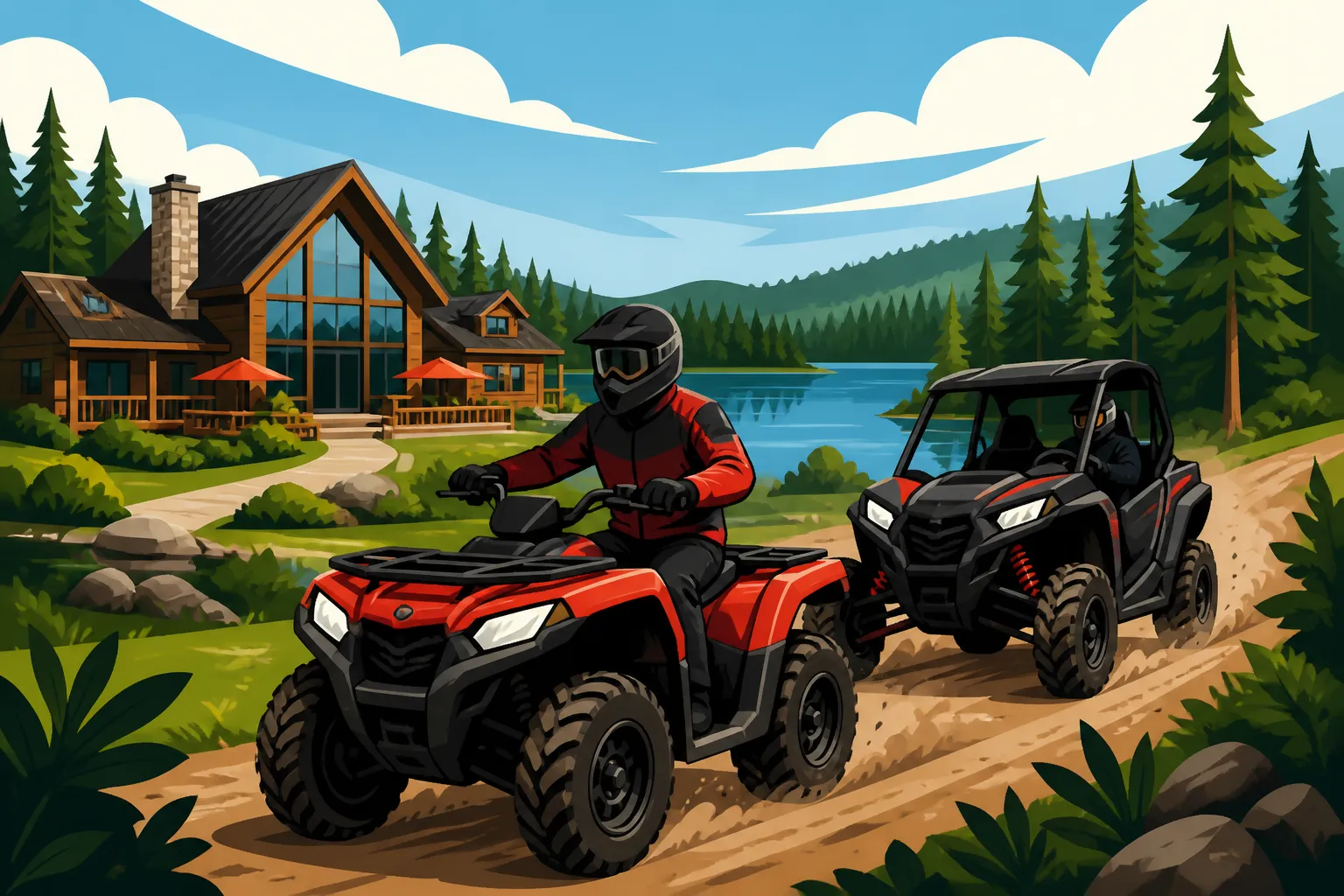
Resorts on the Minnesota Trail Network
A resort stay can make a Minnesota ATV trip easier, but “near the trail” does not always mean you can ride straight from your cabin to a legal route. Trail access, seasonal closures, machine rules, parking, and resort policies all matter. This guide explains how to choose a useful trail-town base, confirm what access really means, and plan the ride before you unload.
What “on the Minnesota trail network” means
Nearby trail access is not always ride-from-the-door access
A resort may be close to an ATV trail without sitting directly on it. The route might be a short trailer ride away, or there may be a legal connector from the property. In other cases, roads, private land, or a closed trail section separate the lodging from the route. Never assume that a visible trail on a map can be reached by riding across a resort driveway or neighboring property.
Ask the resort what “trail access” means in practical terms. Can you ride from your cabin to a marked, open trail without using a public road? Is there a designated connector, and is it currently open to your machine? If the answer involves riding on a road, ask which section is legal and what rules apply. Minnesota’s road rules are distinct from its trail rules, so “the trail is close” is not enough to establish that a road ride is permitted. See Riding an ATV on the Road in Minnesota for a separate look at those restrictions.
For example, a group staying near Gilbert might plan to ride the Iron Range OHV Area, while visitors near Park Rapids could use a resort as a base for exploring forest routes in the area. But the exact staging location, open routes, and connection from lodging can vary. Check the route and the property’s directions rather than relying on a general claim that a resort is “on the trail.”
Trail access can vary by machine and season
A route that works for one ATV may not suit every UTV. Trail width limits, vehicle type, posted restrictions, and local conditions can affect whether your machine is allowed. If you ride a side-by-side, ask about width limits and any trail-specific restrictions before booking. A resort’s general statement that riders are welcome does not necessarily mean every route nearby accommodates every machine.
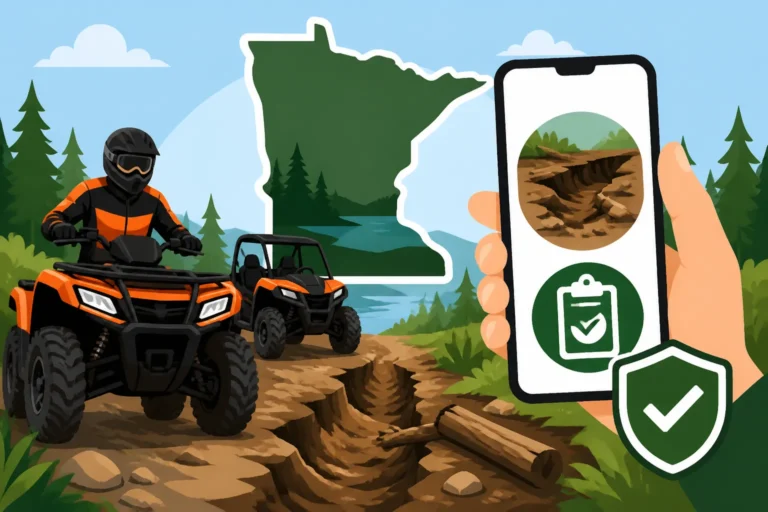
Season matters, too. Spring thaw, heavy rain, maintenance, logging activity, or other temporary conditions can change what is open. A route shown in a travel brochure or an older online map may not reflect current conditions. Before setting out, check the official trail-status information and the local conditions. For a broader overview of how Minnesota routes are organized, read Minnesota’s Grant-in-Aid Trail System.
How to choose a resort for an ATV or UTV trip
Compare the practical details, not just the scenery
A lakeside view can be lovely, but riders also need useful logistics: a safe place to park a truck and trailer, room to unload, a place to secure machines, and clear rules about fueling or washing equipment. Ask whether the parking area can fit your trailer and whether it is suitable for leaving the trailer during the day. If you are arriving with more than one machine, confirm the total space rather than estimating from a listing photo.
Find out how the resort handles machines on the property. Some lodging operators may allow machines in a designated parking area but not near cabins, lawns, or walkways. Ask about quiet hours, engine use, washing muddy machines, and where to store riding gear. If you are traveling with children or a mixed group, check whether the property has a calm area away from trailer traffic and loading activity.
Use this comparison checklist when you contact potential places to stay:
| What to confirm | Why it matters | Useful question to ask |
|---|---|---|
| Trail connection | “Nearby” may still require a trailer or legal road route | Can we ride from the property to an open, legal trail? |
| Machine access | Some routes may not suit every ATV or UTV | Are there width or vehicle-type restrictions nearby? |
| Trailer parking | A tight lot can make arrival and departure stressful | Can you accommodate our truck, trailer, and machines? |
| Current trail conditions | Rain, thaw, and closures can change plans | Where should we check trail status before riding? |
| Resort rules | Policies may limit machine parking, washing, or noise | Where can we park and maintain the machines? |
| Staging options | A nearby trailhead can be a better start than riding from lodging | Where is the recommended public staging area? |
| Fuel and supplies | Remote routes can make a missed fuel stop inconvenient | What services are available near the route? |
If direct riding access is unclear, consider a resort with straightforward trailer access to a known trailhead. It may be less romantic than riding from the cabin, but a short tow can prevent an accidental trespass or an unlawful road ride.
Match your base to the kind of riding you want
A good base depends on the trip. A group looking for a full day on established routes may prefer lodging close to a major riding area and its staging facilities. Families planning shorter outings may value a comfortable place to return to, nearby food, and easy access to a half-day loop. Riders combining trail time with sightseeing may prefer a town with services rather than a more isolated property.
Think through the route before booking. How far do you want to ride in one day? Will you return to the same lodging each night, or travel between trail areas? Are you comfortable riding a long distance to reach a fuel stop, or would you rather stage near services? Planning a Minnesota Riding Trip can help you organize those decisions, while Minnesota Trailhead Parking and Staging covers the other half of the plan: where to start and how to manage the trailer.
For a northern trip, towns such as Crane Lake, Ely, and Two Harbors may appear on route-planning lists, but they should not be treated as interchangeable trail hubs. Distances, connections, permitted vehicle types, and access points differ. Choose a lodging location after identifying the specific routes you intend to ride, not simply because a place is in a well-known riding region.
Plan routes and logistics before arrival
Verify the map, then confirm the trail on the ground
A map is a planning tool, not permission to ride. Check route labels, connecting roads, access points, and any boundaries that could affect your trip. onX Offroad can help riders review mapped routes and orient themselves while planning, but use it alongside current official trail information and signs on site. A line on a screen does not override a closure sign, a private-property boundary, or a local restriction.
Before leaving the resort, know where you plan to start, where you can legally park, and what you will do if a section is closed. Save or download the information you need before entering an area with limited cell coverage. In parts of northern Minnesota, reception can be unreliable, so don’t make your entire navigation plan depend on a live phone connection. Cell Service in the Minnesota Northwoods and Carrying a Paper Map in the Northwoods offer useful preparation ideas.
When you reach a junction, follow posted signs even if your app shows a different route. Signs may reflect a closure, a reroute, a temporary restriction, or a local connection that was not obvious during trip planning. If a route appears to cross private land or a road, stop and confirm access rather than assuming the map settles the question.
Build a realistic day around fuel, weather, and support
A resort’s location does not guarantee that fuel, food, or repair help will be close to every trail section. Check the distance to fuel before you ride, especially if your route involves forest roads or a long loop. Start with a conservative plan: leave enough fuel and time to turn back if weather worsens, a machine develops a problem, or the route takes longer than expected.
Ask the resort whether staff can recommend a nearby repair shop or towing service, but identify your own backup plan as well. Carry basic tools, a first-aid kit, water, and a way to communicate. If your group spreads out, agree on meeting points and what to do if someone has to stop. The practical advice in What to Carry on a Remote Northwoods Ride and Fuel Planning for a Minnesota Trail Day is helpful even when you are staying in a comfortable lodge.
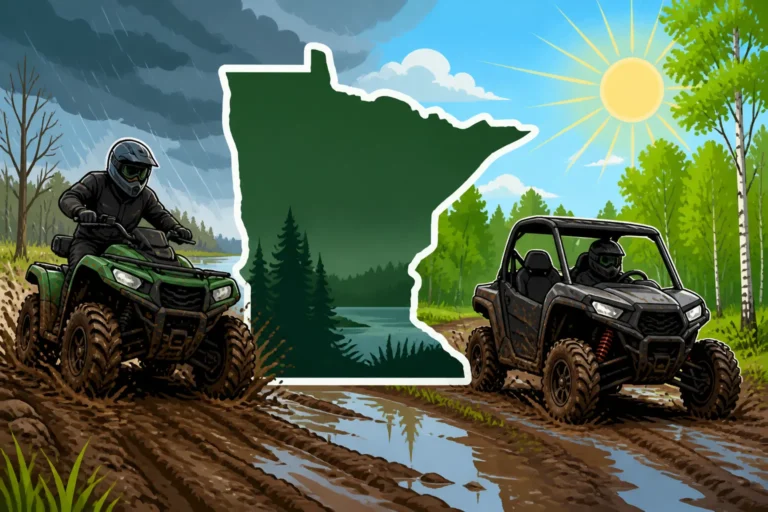
Weather can change a ride quickly. Rain may make some routes difficult or contribute to closures, while a warm spell during spring thaw can affect trail conditions. Check the status again on the morning of your ride, not only when you book. Minnesota Trail Conditions After a Wet Spring explains why a route that looked fine earlier may need a second look.
Book with clear questions and ride responsibly
Confirm details in writing before you reserve
When contacting a resort, describe your group plainly: how many machines you have, whether they are ATVs or UTVs, how long your trailer is, and whether you expect to ride directly from the property. Ask for the name or location of the recommended trailhead, not just a broad description such as “close to the trails.” If the resort says a route connects to the property, ask whether the connection is open to your machine and whether it involves a public road.
Confirm the lodging’s cancellation and arrival policies, along with the machine rules. Ask where you can park, whether a trailer can remain there while you ride, and whether there is a secure place for equipment. Policies can differ even between resorts in the same town, so a detail you heard from another rider may not apply to your booking.
It can help to make a short call checklist:
- What trail or riding area do guests usually use?
- Is there a legal ride-in connection, or should we trailer to a staging area?
- Are there machine-width or vehicle-type restrictions nearby?
- Where can we park the truck, trailer, and machines?
- Which official source should we check for closures and current conditions?
- What services are available nearby for fuel, food, or repairs?
Respect local rules and the people who live there
Trail towns depend on visitors and also have residents who need quiet streets, safe crossings, and access to their property. Keep machines on marked, permitted routes, ride at a considerate speed near homes and businesses, and avoid revving engines around lodging after hours. Do not use a ditch, alley, parking lot, or private lane as an informal trail connection.
Pay attention to route signs and stay within the marked corridor. If the trail is closed, choose another route rather than riding around a barrier. Closures protect trail surfaces, wetlands, and other resources, and riding around them can damage the land or put access at risk for everyone. For context on why temporary closures matter, see Why Minnesota Trails Close for Thaw.
Finally, keep the resort informed if your group changes plans or arrives with a different number of machines than expected. Clear communication helps the property manage parking and reduce conflicts with other guests. A little preparation makes the ride easier, but it also helps preserve the local access that makes Minnesota trail-town trips possible.
Disclaimer
This article is for general informational purposes only and does not constitute professional advice. Laws, prices and regulations vary by location and change over time. Consult a qualified professional for guidance on your specific situation.