Mechanics Near Minnesota Trailheads
A broken belt, flat tire, or dead battery can turn a Minnesota trail ride into a long wait, especially when the nearest town is miles away. Finding a mechanic near a trailhead takes more than searching for “ATV repair” once trouble starts. This guide explains how to plan ahead, choose the right kind of help, and handle a breakdown safely.
How to find ATV mechanics near Minnesota trailheads
Start with the nearest service towns
Many Minnesota riding areas sit outside town, so a shop described as “near the trail” may still require a trailer ride. For the Iron Range OHV Area near Gilbert, look for repair and dealer services in and around Gilbert, Virginia, and Eveleth. Riders using the Soo Line North Trail can plan around towns such as Moose Lake and Moose Lake’s surrounding communities, while the Spider Lake area is close to Pine River and Crosslake. These are useful starting points for a search, not a guarantee that a particular shop is open or can take your machine.
Before a trip, search for ATV, UTV, powersports, and small-engine repair in the towns along your route. Then call rather than relying on a listing alone. Ask whether the shop works on your make and model, handles the problem you expect, and can accept a machine that arrives by trailer. A shop may service ATVs but not have the parts, equipment, or staff available for your specific repair.
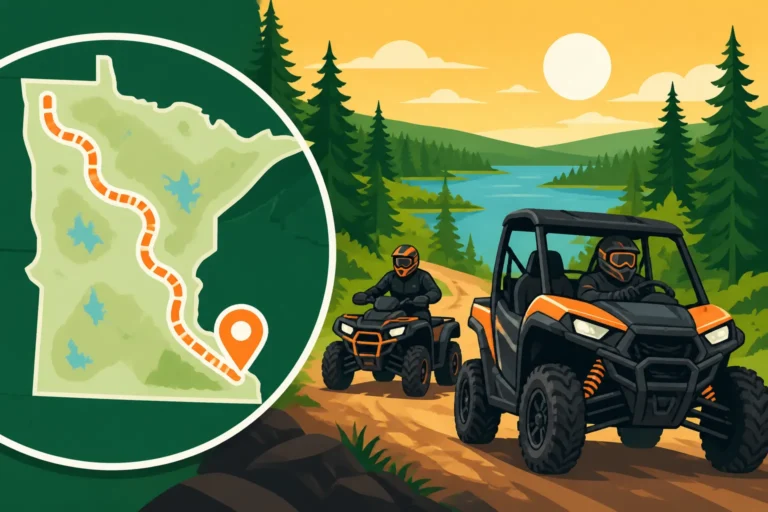
If you’re exploring an unfamiliar network, map your ride around likely service towns rather than choosing a trailhead in isolation. The Minnesota Trailhead Parking and Staging and Planning a Minnesota Riding Trip guides can help you think through access, staging, and the broader route. A map app such as onX Offroad can also help you understand where a route sits in relation to nearby roads and communities; check the actual repair options separately.
Search using the machine and the repair
A broad search for “mechanic near me” can return automotive shops that don’t work on off-highway vehicles. Try searches that include your machine type and the issue, such as “UTV belt repair near Gilbert” or “ATV tire repair near Pine River.” If you ride a less common brand, mention it in the first call. A shop’s general powersports experience doesn’t necessarily mean it services every model.
Explain the symptoms clearly. “It won’t move” could mean a drive belt problem, a brake issue, or something else entirely. Tell the mechanic what happened, what warning lights appeared, whether the engine still starts, and whether the machine is safe to load. If you have a photo of a damaged tire, belt, or warning display, it may help the shop decide whether it can assist.
Use onX Offroad or another mapping tool to orient yourself to the trail system and the closest road access, but don’t treat a map as a directory of open repair shops. Confirm the shop’s location, hours, capabilities, and willingness to receive a trail-recovered machine by phone. That small check can prevent a second frustrating trip after you’ve already arranged a tow.
Choose the right kind of repair help
Powersports dealers and independent repair shops
A powersports dealer may be a sensible first call when your machine needs brand-specific diagnosis, an uncommon part, or work covered by a warranty. Dealers may have experience with a particular manufacturer’s systems, but service availability can depend on workload and parts access. Call with the model, year, and symptoms, and ask whether the shop can inspect the machine within the timeframe that works for your trip.
Independent ATV and UTV repair shops can be a good fit for routine service and common mechanical problems. Their experience varies, so ask directly about the repair rather than assuming that a shop working on motorcycles or snowmobiles also handles your machine. If the issue is electrical, drivetrain-related, or tied to a model-specific system, describe that before you arrange transport.
Whether you choose a dealer or an independent mechanic, clarify what happens after the initial inspection. Ask whether the shop will contact you before proceeding with additional work, whether it needs the machine’s key or registration details, and how it prefers a disabled vehicle to be delivered. For a machine still under warranty, check the warranty terms before authorizing work elsewhere. The related guide Registering a Machine Still Under Warranty covers the paperwork side of ownership; repair and warranty questions should be confirmed with the provider that issued your coverage.
Tire, battery, and roadside assistance
Not every breakdown calls for a full shop repair. A puncture, loose battery connection, or simple issue may be manageable at a staging area if you have the right equipment and know how to use it. Still, don’t assume a nearby tire shop will work on ATV tires or that an automotive roadside provider will recover an off-road machine from a trail. Ask what the service actually covers before relying on it.
A shop may be able to repair a tire once the machine reaches town, but that doesn’t solve the problem of getting it off the trail. Likewise, a mobile mechanic might be able to come to a road-accessible location but not travel into a forest trail network. Ask whether the provider can reach the machine’s location, what information it needs to find you, and whether it can recover the machine or only perform repairs after recovery.
If the machine is unsafe to operate, don’t ride it to the shop simply because the distance looks short on a map. A damaged tire, failing steering component, or brake problem can worsen quickly and put you or other riders at risk. The Flat Tires on a Rocky Forest Trail guide offers practical context for preparing for one common trail problem, while Towing Off a Forest Trail addresses the separate challenge of getting a disabled machine out.
| Type of help | Often useful for | Ask before relying on it |
|---|---|---|
| Powersports dealer | Brand-specific diagnosis, parts, warranty-related questions | Does it service your model, and can it accept the machine? |
| Independent ATV or UTV shop | Common repairs and routine service | Does it handle your specific repair and machine type? |
| Tire service | Tire inspection or repair after the machine is accessible | Does it work on ATV or UTV tires? |
| Mobile mechanic | Certain repairs at a reachable roadside location | Can it reach the location, and what work can it perform? |
| Recovery or towing provider | Moving a disabled machine to a road or shop | Can it access the trail, and where can it take the machine? |
Plan for a breakdown before you ride
Save contacts and identify exit points
Save the phone numbers and addresses of a few possible shops before leaving home. Include a dealer or repair shop near your main trail system, another option in a nearby town, and a towing or recovery contact if you’ve found one that serves the area. A short call ahead can reveal whether a business is open to trail riders, whether it services your machine, and whether it has any limitations on intake.
Know the nearest road crossings, trail exits, and staging areas along your planned route. If a rider in your group has to stop, having a clear location helps you explain where you are to a recovery provider. onX Offroad can be useful for following a planned route and recognizing nearby access points, especially when you’ve prepared your map before the ride. Download or save the information you’ll need in advance if you expect limited service.
Keep the plan practical. A trail can pass near a town without offering a direct or legal route into it, and a road shown on a map may not be open to ATV use. Use official trail information for access rules, and don’t improvise a ride along a road or private route just to reach a mechanic. The Minnesota Trails That Link Two Towns and Reading a Minnesota OHV Trail Map guides can help you think about routes and connections without assuming every mapped road is rideable.
Pack basic tools and recovery information
Carry a small set of tools that matches your machine, along with a tire repair kit, inflation option, flashlight, gloves, and basic first-aid supplies. Bring the machine’s key information too: make, model, year, and any details about recent maintenance or modifications. If you’ve installed aftermarket parts, mention them when describing a problem, since they may affect diagnosis.
Share your route and expected return time with someone who isn’t riding with you. Agree on what that person should do if you don’t check in. If your phone has service, give a precise location using a trail name, nearby junction, or access point rather than saying only that you’re “in the woods.” In a dead zone, a prearranged check-in plan matters even more. See Cell Service in the Minnesota Northwoods and What to Carry on a Remote Northwoods Ride for more planning details.
Avoid attempting a repair that exceeds your tools or experience. A machine that starts again may still have a damaged belt, loose component, or unsafe tire. If a repair is temporary, treat it as a way to reach a safe exit only when the machine remains controllable and the route is appropriate. When in doubt, stop and arrange recovery instead of risking a more serious breakdown or injury.
What to do when your machine breaks down
Make the trail safe and assess the problem
Move off the trail if you can do so without making the problem worse. Keep the machine visible, turn it off if there’s smoke, a fuel smell, or another immediate concern, and make sure your group is out of the path of other riders. On a narrow trail, don’t leave people standing around a blind corner. Have someone warn approaching riders from a safe position if needed.
Check only what you can inspect safely. A flat tire, disconnected battery cable, or obvious loose item may be easy to identify, but avoid reaching near hot, moving, or damaged parts. Don’t keep trying to start an engine that is making unusual noises or showing signs of overheating. Repeated attempts can turn a manageable issue into a more expensive repair.
Once everyone is safe, decide whether the machine can be moved to a nearby staging area or needs recovery where it sits. Call your repair shop or recovery contact with the machine details, your exact location, the trail access point, and the symptoms. Ask whether the provider can reach that spot and whether it will transport the machine to a shop or only to a road-accessible location. If the trail is closed or conditions are poor, follow posted instructions and don’t create a new route around the problem.
Keep the next ride from becoming a repeat
After the repair, ask what caused the failure and whether anything else should be checked before you return to the trail. A replaced belt, for example, doesn’t automatically explain why the old one failed. Ask about any unusual wear, leaks, overheating, or warning signs that should prompt you to stop riding. Keep the repair paperwork and note the date, symptoms, and work completed.
Before heading back out, confirm that the machine is operating normally in a safe, controlled place. Check tires, brakes, steering, lights, and fluid levels as appropriate for your machine. If the repair involved a safety-critical component, follow the mechanic’s instructions about inspection or break-in before taking a long ride.
Use the experience to update your trip plan. Add the shop or recovery number that helped, note a reliable exit point, and replace any supplies you used. Check Checking Minnesota Trail Status Before You Drive before the next outing, because closures and trail conditions can affect which access routes are practical. A little preparation won’t prevent every mechanical problem, but it can turn a stressful breakdown into a manageable delay.
Disclaimer
This article is for general informational purposes only and does not constitute professional advice. Laws, prices and regulations vary by location and change over time. Consult a qualified professional for guidance on your specific situation.