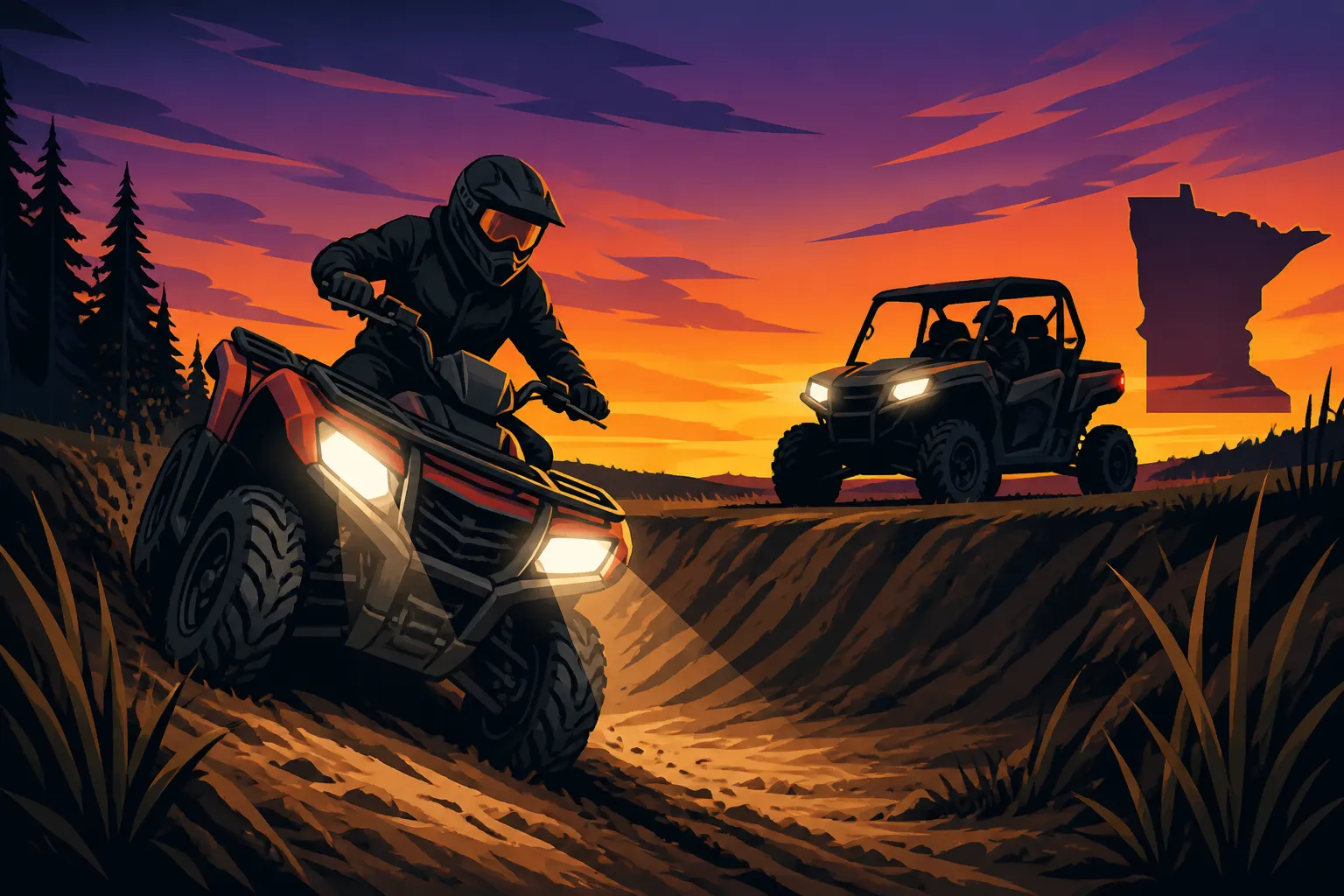
Riding a Ditch After Sundown
There’s nothing quite like the freedom of hopping on your ATV or UTV and hitting a Minnesota ditch for a ride, especially when the sun starts to dip below the horizon and the air cools down. But that golden hour quickly fades, and before you know it, you might find yourself navigating those familiar paths in the dark, wondering exactly what the rules are once sundown arrives. This guide is here to shed some light on the specific regulations, safety considerations, and common-sense practices you need to know to safely and legally enjoy riding a ditch after sundown in Minnesota, helping you avoid a run-in with a conservation officer or, worse, an accident.
The Unique Challenges of Night Ditch Riding in Minnesota
Riding an ATV or UTV in the ditch during daylight hours presents its own set of challenges, from unpredictable terrain to traffic. But when darkness falls, these challenges are amplified exponentially. It's not just about flipping on your headlights; it's about a complete shift in perception and risk.
Reduced Visibility and Depth Perception
Think about how much you rely on your eyes during the day. Every bump, every rut, every subtle change in the ditch's contour is usually visible. At night, even with good lights, your field of vision narrows dramatically. Shadows play tricks on your eyes, making small dips look like huge craters and vice versa. It's incredibly difficult to judge distances and the true nature of the ground ahead. A seemingly flat stretch could suddenly drop off, or a hidden rock could be waiting to throw you off balance. This reduced depth perception is a major reason why many nighttime accidents occur, not because riders are necessarily reckless, but because they simply cannot see what's coming. The familiar ditch becomes an entirely different beast when you can't rely on your natural vision to map out the terrain.
Imagine a situation where you're riding a ditch that runs alongside a field. During the day, you'd easily spot the transition from mowed grass to taller weeds, or the small washouts from recent rain. At night, these subtle indicators vanish. Your headlights might illuminate a narrow cone directly in front of you, but the periphery is often swallowed by darkness, leaving you vulnerable to unseen obstacles or sudden changes in the ditch's path. This is particularly true when navigating turns or areas where the ditch might narrow or meet a culvert.
Increased Risk of Encounters
Night riding often feels more isolated, but that doesn't mean you're alone. In fact, you might encounter things you wouldn't during the day, or simply not see them coming until it's too late. Wildlife, for instance, becomes far more active and unpredictable after dark. Deer, raccoons, and even smaller critters like rabbits can dart out from seemingly nowhere, startled by your lights or the sound of your machine. A collision with a deer, especially at ditch speeds, can be devastating for both you and your machine.
Beyond wildlife, you also have the added concern of other people. While ditch riding is a popular pastime, you could encounter others who are also out after dark, whether they're in another ATV, a UTV, or even on foot (though this is less common in ditches, it's not impossible, especially near rural homes). Furthermore, passing vehicles on the adjacent road might have their high beams on, momentarily blinding you and making an already challenging situation even more precarious. You’re also sharing that right-of-way with farm equipment, which might be out late during harvest or planting season, often moving much slower and being less maneuverable. These larger machines can be harder to spot, especially if they don't have adequate lighting on their extremities. For more on the specifics of [Minnesota's Ditch Riding Rules], it's always good to review the foundational regulations.
Minnesota's Lighting and Equipment Rules for Night Operations
Minnesota law is quite clear about what your ATV or UTV needs to be equipped with if you're going to operate it after dark, especially in public areas like road ditches. These aren't just suggestions; they're legal requirements designed to ensure your safety and the safety of others. Ignoring them can lead to tickets and dangerous situations.
Headlights and Taillights: The Bare Minimum
According to Minnesota statutes, if you're operating an ATV or UTV between the hours of sunset and sunrise, or at any time when visibility is less than 500 feet, your machine must be equipped with working headlights and taillights. This isn't just for you to see; it's so others can see you.
Your headlight needs to be capable of illuminating objects at least 200 feet ahead. This isn't a suggestion for optimal riding; it’s the legal minimum. For most recreational riders, especially in ditches where the terrain is uneven and objects can pop up quickly, 200 feet of illumination might feel pretty limited. The taillight needs to be visible from a distance of 500 feet to the rear. This is crucial for anyone approaching you from behind, whether it's another ATV, a vehicle on the adjacent road, or a conservation officer.
It's important to remember that these are minimum requirements. Many stock machines meet these, but often just barely. For serious night riding, especially in varied ditch terrain, you'll likely want to exceed these standards. This is where investing in aftermarket lighting can make a huge difference. Companies like SuperATV offer a wide range of LED light bars and auxiliary lights that can vastly improve your visibility and your ability to see the path ahead. These aren't just about brightness; they're about spreading light more effectively and further down the trail.
Reflectors and Other Visibility Enhancements
While headlights and taillights are the primary requirements, Minnesota law also typically requires ATVs and UTVs to have certain reflectors to enhance visibility. These are passive safety features that can make a big difference if your active lights somehow fail or if you're approached from an angle not covered by your primary lights.
Generally, a machine must have at least one rear reflector, visible from a distance of 500 feet. Additionally, side reflectors are often required, typically one on each side, visible from 200 feet. These reflectors might seem like minor details, but they provide an extra layer of protection, particularly if your machine loses power or your lights are obscured for a moment. You might also consider adding reflective tape to your machine, helmet, or riding gear. This greatly increases your profile to other operators and vehicles, bouncing light back at its source. It's a cheap and effective way to make yourself more noticeable in low-light conditions.
Consider the practical implications: imagine your ATV breaks down in a ditch after dark. Your headlights might be out, but those reflectors will still catch the light from an approaching vehicle or another rider, signaling your presence. This can be critical for safety and recovery. For detailed information on what Minnesota law requires, especially regarding [Lighting Rules for Minnesota Night Riding], a quick look at the DNR's resources is always a smart move.
| Lighting Component | Legal Requirement (Minimum) | Recommended for Night Ditch Riding | Benefits |
|---|---|---|---|
| Headlight | Illuminates 200 feet forward | LED Light Bar (Spot/Flood Combo) | Superior distance & spread, better obstacle identification |
| Taillight | Visible 500 feet to rear | Bright LED Taillights | Enhanced visibility to rear traffic, modern aesthetic |
| Rear Reflector | Visible 500 feet to rear | Multiple Reflectors, Reflective Tape | Passive safety, highly visible even if power fails |
| Side Reflectors | Visible 200 feet from side | Additional Side Markers/Tape | Increases side profile, crucial at intersections/turns |
| Eye Protection | Yes, if no windshield | Clear/Yellow Lens Goggles | Protects eyes, enhances contrast in low light |
| Whip Flag | Not legally required at night | Lighted Whip Flag | Adds vertical visibility, signals presence over rises |
Safety Considerations and Best Practices for After-Dark Ditch Rides
Beyond just meeting the legal minimums, truly safe night riding in a Minnesota ditch requires a proactive approach to safety. You can't just ride the same way you do in broad daylight. A shift in mindset and a few strategic adjustments can make all the difference.
Slow Down and Adjust Your Speed
This might seem obvious, but it's probably the most critical piece of advice for riding after sundown. Your visibility is compromised, your reaction time needs to be quicker, and obstacles are harder to identify. Therefore, you simply cannot maintain the same speeds you would during the day. Reduce your speed significantly, especially when approaching curves, crests, culverts, or any area where the ditch changes character. This gives you more time to react to unexpected hazards, whether it's a deer, a large rock, or a wash-out.
Think of it this way: your stopping distance is directly related to your speed. If you can only see 50 feet ahead clearly with your lights, you need to be able to stop your machine within that 50 feet. If you're going too fast, you'll "outrun your lights," meaning you'll hit an obstacle before you even have a chance to see it. It's frustrating to go slower, especially if you're used to picking up speed, but it's an absolute must for safety at night. Even a seasoned rider can be caught off guard by a hidden obstacle in the dark. Taking it easy is the best way to ensure you make it home safely. You can always pick up speed when the sun is back up.
Enhance Your Own Visibility and Gear
While your machine needs to be visible, you also need to be visible. This means paying attention to your personal riding gear.
- Helmet and Eye Protection: Always wear a helmet. If you're riding after dark, a clear or yellow-tinted visor or goggles are essential. Tinted visors or sunglasses from daytime riding will severely impair your vision. Yellow lenses can often enhance contrast in low-light conditions, making it easier to pick out details on the ground. For rules on what specific gear to carry, check out [Do You Carry Papers on a Minnesota Trail?].
- Reflective Clothing: Wear bright, reflective clothing. A reflective vest or jacket is a smart investment. The more reflective material you have on, the easier it is for others to see you, especially if their lights sweep across you. Some modern riding gear even incorporates reflective panels directly into the design.
- Whip Flags: While not always legally required for ditch riding at night, a lighted whip flag is an excellent safety addition. This vertical marker can be seen from a much greater distance and over small rises, letting other riders or even passing motorists know you're there. Many SuperATV machines come with options for lighted whips, and they are a highly recommended upgrade for anyone doing a lot of night riding.
Remember, the goal is to make yourself as conspicuous as possible. The more light you reflect, and the more distinctive your profile, the lower your risk of an unseen encounter.
Pre-Ride Inspection and Route Planning
A thorough pre-ride inspection is always good practice, but it's absolutely non-negotiable before a night ride.
- Check Lights: Ensure all your lights – headlights, taillights, brake lights, and any auxiliary lights – are clean and fully functional. Even a slightly dirty lens can significantly reduce light output. Carry spare bulbs if your machine uses them, or at least a headlamp for yourself in case of a breakdown.
- Tire Pressure and Condition: Verify your tire pressure and inspect for any damage. Running a slightly lower pressure might offer a bit more cushion for unseen bumps.
- Fuel: Make sure you have plenty of fuel. Breaking down in the dark is far more inconvenient and potentially dangerous.
- Communication: Always let someone know your planned route and estimated return time. Cell service can be spotty in some rural Minnesota areas, so don't rely solely on your phone.
- Know Your Route: Stick to familiar ditches that you've ridden many times in daylight. Exploring new terrain in the dark is inviting trouble. Even familiar routes can change due to weather, so be prepared for the unexpected. Understanding [Minnesota's Ditch Riding Rules] in general will also help you plan a safe and legal route.
Avoiding Common Pitfalls and Penalties When Riding After Sundown
Riding at night in Minnesota ditches comes with specific risks, both physical and legal. Being aware of these common traps can help you stay safe and out of trouble.
Understanding "Sunset to Sunrise" Enforcement
The period from "sunset to sunrise" is a strict legal definition for when your machine's lighting must be active. This isn't just a casual guideline. Law enforcement, including Minnesota Conservation Officers and local sheriff's deputies, are very aware of these regulations. Getting caught without proper lighting during this time can result in a citation. These aren't just minor inconveniences; [Minnesota Fines for Illegal Road Riding] can add up, and they're meant to be a deterrent to unsafe operation.
It's tempting to think you can just make it back to the truck before it gets really dark, but the law doesn't care about "really dark." It cares about sunset. If you're out past sunset, your lights need to be on. And it's not enough for them to be on; they need to meet the legal requirements for visibility and brightness. Don't push your luck by trying to squeeze in those last few minutes of fading light without activating your full lighting system.
The Dangers of Fatigue and Impairment
Night riding, even at slower speeds, is mentally more demanding than daytime riding. Your eyes are constantly working harder to pick out details, your brain is processing more ambiguous information, and the cool air can sometimes lull you into a false sense of alertness. Fatigue sets in faster at night, and a tired rider is a dangerous rider. Your reaction times slow, your judgment becomes impaired, and you're more prone to making mistakes.
Equally, or even more, dangerous is riding under the influence of alcohol or drugs. Minnesota has very strict laws regarding operating ATVs and UTVs while impaired. An "OUI" (Operating Under the Influence) on an ATV is treated just as seriously as a DWI in a car, carrying severe penalties including fines, loss of driving privileges, and even jail time. The notion that "it's just a ditch" or "I'm not on a road" offers no protection from these laws. [Minnesota Alcohol Limits for ATV Operators] are the same as for operating a motor vehicle. Adding alcohol to the already challenging conditions of night riding in a ditch is a recipe for disaster, not only for your safety but also for your legal record. Always designate a sober operator, or simply save the celebratory drinks for after the ride.
Respecting Noise Regulations and Private Property
While noise regulations are often more strictly enforced in residential or trail town areas, they still apply when riding ditches after dark. Many ditches run alongside private property, and residents have a right to peace and quiet, especially during evening hours. Loud exhaust systems, particularly aftermarket ones that don't have spark arresters or proper muffling, can be incredibly disruptive. [Minnesota Noise Rules Near Lake Homes] can apply to rural properties adjacent to ditches. Even if you're not near a home, excessive noise can be jarring to wildlife and contribute to a negative image of ATV riders.
Always be mindful of where you're riding. While ditch riding is generally permitted along public rights-of-way, veering onto private land, even accidentally in the dark, constitutes trespassing. In the daytime, you might easily spot a "No Trespassing" sign or a property marker. At night, these can be completely invisible. Stick strictly to the public ditch line, and if you're unsure, it's better to turn back or find an alternative route. Always ensure you're on a legal route, and if possible, plan your night rides to avoid areas with dense residential populations. For further reading on other important operating rules, consider reviewing [Minnesota Road Rules Riders Get Wrong].
Disclaimer
This article is for general informational purposes only and does not constitute professional advice. Laws, prices and regulations vary by location and change over time. Consult a qualified professional for guidance on your specific situation.