Deputy Patrols on Ditch Routes
There’s nothing quite like hitting the ditch routes in Minnesota on your ATV or side-by-side. The wind in your face, the roar of the engine, the feeling of freedom—it’s a big part of why we love this sport. But let’s be honest, that feeling can quickly turn to anxiety when you see red and blue lights flashing in your rearview. Understanding why county deputies patrol these routes, what they’re looking for, and how to handle a stop can help you stay safe, legal, and stress-free on your next ride. This guide is all about demystifying those roadside encounters and equipping you with the knowledge to ride responsibly.
Understanding Why Deputies Patrol Minnesota Ditch Routes
It's a common misconception among some riders that once you're off the main road and onto a ditch route or a designated trail, you're somehow outside the normal realm of law enforcement. The reality in Minnesota is quite different. While the Department of Natural Resources (DNR) plays a significant role in ATV and UTV enforcement, local law enforcement—like county sheriff’s deputies—also have full jurisdiction over public rights-of-way, including those ditch routes many of us use.
The DNR's Role vs. Local Law Enforcement
Think of it as shared oversight, with each agency having its own focus but often overlapping. DNR conservation officers are deeply involved in enforcing ATV laws, particularly on state trails, public lands, and waterways. They're often out there specifically because they're part of the DNR's mission to protect natural resources and ensure safe recreational use. You might encounter a DNR officer checking for proper registration on a remote forest trail or ensuring riders are sticking to designated routes.
County sheriff's deputies, on the other hand, are tasked with upholding all state laws and county ordinances within their jurisdiction. When you're riding a ditch route, you're often on a county road right-of-way, even if you're not on the paved surface. This means deputies can and do patrol these areas, especially if there have been complaints or incidents. They're looking out for public safety, reckless behavior, and adherence to general traffic laws that apply even to off-highway vehicles in these specific contexts. It's not uncommon for a rider to be checked by a DNR officer one day and a county deputy the next.
Common Reasons for Increased Patrols
Deputies don't just randomly appear on ditch routes; there are usually specific reasons for their presence, and often these reasons stem from community concerns. One of the biggest drivers for increased patrols is noise complaints. Many ditch routes pass by rural homes, cabins, or quiet communities, and excessive ATV noise can be a major source of frustration for residents, especially late at night or early in the morning. A deputy might be specifically dispatched to an area after receiving several calls about loud machines.
Another significant factor is reckless driving or unsafe operation. If there have been reports of riders speeding excessively, doing "donuts," riding aggressively, or endangering others (pedestrians, cyclists, or other motorists when crossing roads), deputies are likely to increase their presence. This isn't about targeting ATV riders; it's about addressing specific behaviors that pose a risk to the community and other users of the right-of-way. Sometimes, patrols also increase around popular riding weekends or special events where more machines are out, simply as a proactive measure to ensure everyone's safety.
Community Concerns and Enforcement Hotspots
Certain areas become "hotspots" for enforcement due to their proximity to residential zones or sensitive environmental areas. Imagine a ditch route that runs alongside a small, quiet lake community. If residents are constantly dealing with machines kicking up dust, making too much noise, or even trespassing onto private property from the ditch, they will likely call the sheriff's department. Deputies will respond to these specific areas, often at times when complaints are most frequent.
Similarly, if a ditch route is known to be a convenient shortcut for people trying to avoid a longer road, and that shortcut puts them dangerously close to schools, parks, or busy intersections, law enforcement might focus their efforts there. It's all about balancing the recreational opportunities ATVs provide with the safety and peace of mind of other citizens. Understanding these community dynamics can help riders recognize why certain areas might see more deputy presence and encourage more respectful riding habits.
What Deputies Look For During a Stop on a Ditch Route
When a county deputy pulls you over on a ditch route, it’s not usually a personal attack on your hobby. They have a job to do, and that often involves verifying that you and your machine are compliant with Minnesota's laws. Knowing what they're looking for can help you be prepared and ensure the interaction goes smoothly. It's all about demonstrating that you're a responsible operator.
Essential Paperwork and Machine Compliance
First and foremost, a deputy will want to see your registration and trail pass. In Minnesota, virtually all ATVs and UTVs operated on public lands, including ditch routes, need to be registered with the DNR. This usually involves a visible sticker on your machine. Don't forget that if you're riding on grant-in-aid trails, a separate [Minnesota's Non-Resident ATV Trail Pass Explained] might be required, even if your machine is registered. It's also critical to have proof of ownership handy, which might be your registration card or, if you just bought it, a bill of sale. For a deeper dive into what’s needed, check out [Minnesota DNR ATV Registration Explained].
Beyond the machine itself, they'll check your driver's license or permit. While you don't always need a standard driver's license to operate an ATV off-road, if you're riding on a public right-of-way like a ditch route, the rules can get a bit more complex, especially for minors. It's always a good idea to carry appropriate identification and any ATV safety certificates you might have. Finally, although not strictly required for all off-road operation, insurance is a smart thing to carry, and a deputy might ask for it, particularly if there's been an incident.
Rider Behavior and Safety Gear
Deputies are highly trained to observe rider behavior and ensure safety. They'll be looking for signs of reckless operation, such as excessive speed, weaving, or dangerous maneuvers that could endanger yourself or others. Remember, ditch routes are often shared spaces, and treating them like a personal racetrack can quickly lead to trouble. They're also attentive to helmet use, especially for riders under 18, who are legally required to wear a DOT-approved helmet. For more information, you can read [Minnesota Helmet Rules for Riders Under 18]. Beyond helmets, proper eye protection is also essential.
Perhaps one of the most serious violations they look for is operating under the influence of alcohol or drugs. Minnesota has strict laws regarding alcohol and ATV operation, similar to those for cars. An open container in the ditch, slurred speech, or erratic riding are all red flags that will lead to serious consequences. Read [Minnesota Alcohol Limits for ATV Operators] for details. Deputies are trained to spot these indicators and will not hesitate to investigate further if they suspect impairment. Your ability to operate safely is paramount, and demonstrating sober, responsible riding is key.
Machine Modifications and Equipment
The physical condition and legal compliance of your ATV or UTV are also on a deputy's checklist. They'll inspect your muffler and spark arrester to ensure they meet legal noise limits and prevent wildfires, especially crucial in dry conditions. Many aftermarket exhausts can be louder than stock, so it's vital to ensure compliance. You can learn more about this in [Mufflers and Spark Arresters in Minnesota]. Lighting is another important safety feature, particularly if you're riding at dusk or after dark; proper headlights and taillights are a must. Check out [Lighting Rules for Minnesota Night Riding].
They may also be checking the width of your machine. Minnesota has different rules for Class 1 (50 inches or less) and Class 2 (over 50 inches wide) machines when it comes to riding on certain rights-of-way. Understanding [Minnesota Class 1 Machines on the Right of Way] can help you know where your specific UTV or wider ATV is allowed. If you've modified your machine with aftermarket parts like wider A-arms or lift kits, like those offered by companies such as SuperATV, it's your responsibility to know if these changes still keep your machine compliant with the regulations for the areas you plan to ride. It's worth ensuring any upgrades you make, even from reputable brands like SuperATV, still align with local laws, especially regarding width and noise.
Navigating a Deputy Stop Safely and Respectfully
Getting pulled over by law enforcement can be nerve-wracking, no matter what you're driving or riding. On an ATV or UTV, especially in a less conventional setting like a ditch route, it can feel even more unexpected. The good news is that by knowing what to do and maintaining a respectful attitude, you can make the interaction as smooth and quick as possible. Remember, a deputy's primary goal is to ensure public safety and enforce laws, not necessarily to ruin your day.
What to Do When Signaled to Stop
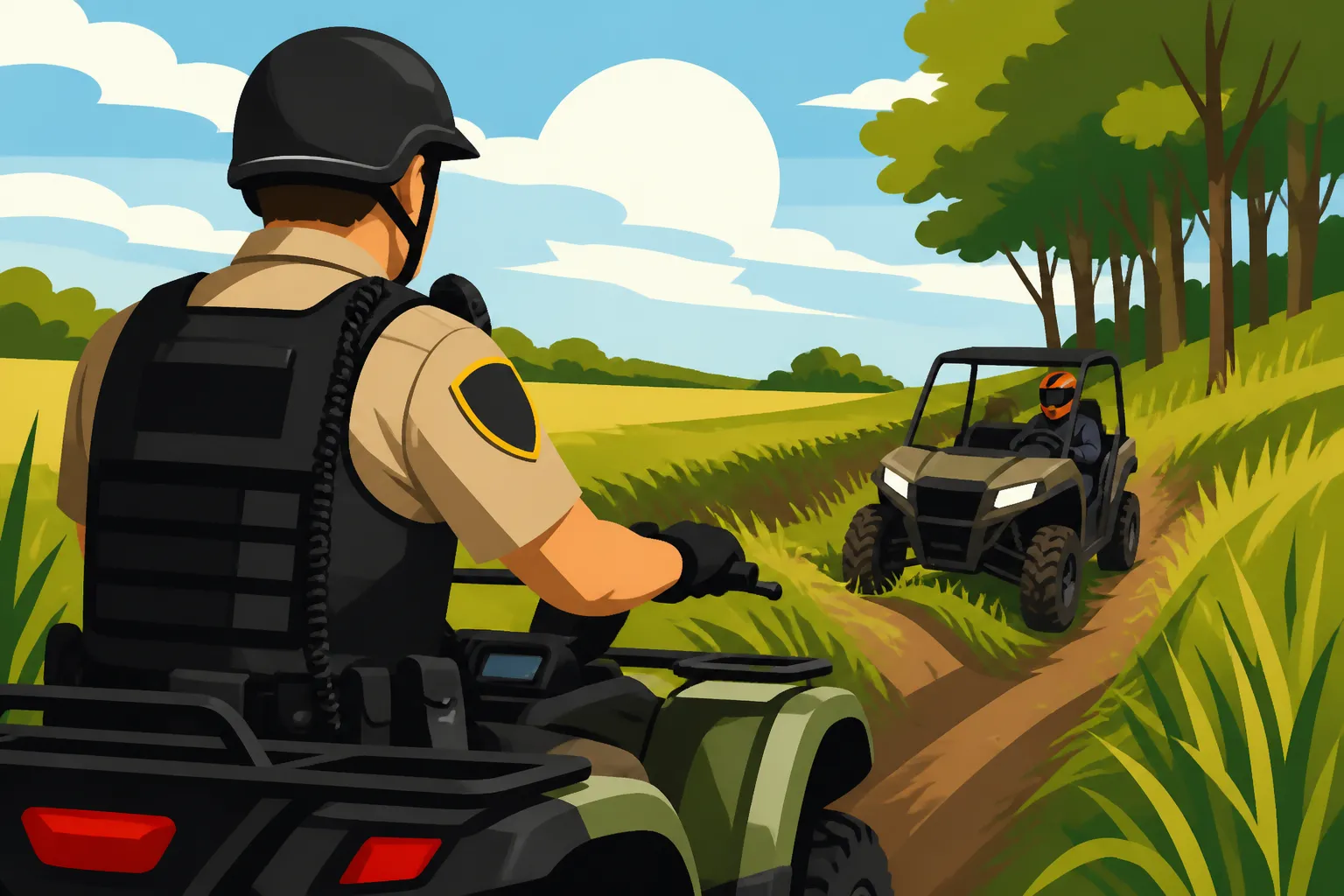
The moment you see those flashing lights, your first priority is safety. Don't panic. Look for a safe place to pull your machine over off the main flow of traffic, ideally on the far right side of the ditch or shoulder where it’s stable and out of the way. Bring your machine to a complete stop and, if possible, turn off your engine. This shows respect and makes it easier for both you and the deputy to communicate.
Keep your hands visible on the handlebars or steering wheel, and avoid sudden movements. Reaching into a storage compartment or under your seat before being asked can be misinterpreted. Wait for the deputy to approach your machine and explain the reason for the stop. This calm, compliant approach sets a positive tone for the entire interaction. For example, if you're stopped because a deputy noticed a missing registration sticker, and you respond calmly, it’s much more likely to result in a warning than a combative stance would.
Common Questions and Providing Information
Once the deputy approaches, they will typically ask for your driver's license, ATV registration, and potentially proof of insurance. Have these documents readily accessible in a waterproof pouch or secure pocket. When they ask for them, clearly state what you are reaching for. For example, "My license is in my left pocket, and my registration is in this bag." This transparency helps them feel safe and reassures them you're cooperating.
Be polite and respectful. Answer their questions clearly and truthfully. Avoid arguing, making excuses, or becoming defensive. If you don't understand a question, politely ask for clarification. Remember, you can always explain your side of the story or ask questions after you've provided the requested documents. A deputy might ask about your destination, where you started, or if you've consumed any alcohol. Be honest. A calm, cooperative demeanor goes a long way.
Understanding Potential Outcomes: Warnings, Citations, or Impoundment
Depending on the nature of the stop and the deputy's discretion, the outcome can vary. For minor infractions, like a slightly expired registration or a missing trail pass that you genuinely overlooked, you might receive a warning. This is often an opportunity to correct the issue and learn from it. However, repeated warnings for the same offense or more serious violations will lead to a citation (a ticket).
Fines for ATV violations in Minnesota can vary significantly depending on the offense. For instance, [Minnesota ATV Ticket Amounts] can range from relatively minor for equipment violations to substantial for reckless driving or operating under the influence. In severe cases, particularly for egregious safety violations, multiple serious offenses, or operating a machine that is unregistered and uninsured after repeated warnings, your ATV or UTV could even be impounded. This is a last resort, but it highlights the importance of keeping your machine and riding habits within legal boundaries. If you do receive a citation, you'll be given instructions on how to pay the fine or how to contest it in court. It’s crucial to take any citation seriously and address it promptly. Some riders even enhance their machines with safety and compliance features from brands like SuperATV, like better lighting or compliant exhausts, precisely to avoid these kinds of issues.
| Violation Type | Examples | Potential Outcome |
|---|---|---|
| Administrative/Paperwork | Expired/missing registration, no trail pass, no proof of ownership | Warning, Citation |
| Equipment Issues | Missing spark arrester, non-compliant muffler, improper lighting | Warning, Citation |
| Safety Violations | No helmet (under 18), unsafe riding behavior, excessive speed | Citation, Increased fines |
| Serious Violations | Operating Under Influence (OUI), reckless endangerment, felony trespass | Citation, Arrest, Impoundment, Loss of privileges |
Staying Informed and Riding Responsibly
Responsible ATV and UTV riding in Minnesota isn't just about knowing the rules; it's about being proactive, staying informed, and contributing positively to the riding community. Law enforcement patrols on ditch routes serve as a reminder that off-road vehicles operate within a broader set of regulations, and our actions impact how our sport is perceived by others. By being a good steward of the trails and routes, we help ensure these opportunities remain open for everyone.
Resources for Minnesota ATV Laws and Updates
The best defense against an unexpected deputy stop is being well-informed. The primary source for all Minnesota ATV and UTV laws is the Minnesota Department of Natural Resources (DNR) website. They publish comprehensive guides, FAQs, and updates on regulations. Regularly checking their site for new laws, rule changes, or seasonal restrictions (like fire bans or spring thaw closures) is paramount. You can typically find detailed information on [Minnesota DNR ATV Registration Explained] and other topics directly on their site.
Beyond the DNR, local county sheriff's department websites or municipal offices might publish specific ordinances that apply to ditch routes or specific roads within their jurisdiction. What's permissible in one county might have slight variations in another, so it's always smart to do a quick check if you're venturing into a new area. Finally, joining a local ATV or UTV club can be an invaluable resource. Club members are often highly knowledgeable about local rules, trail conditions, and can share insights from their own experiences with law enforcement. They’re a fantastic network for staying updated and getting practical advice.
The Importance of Community Engagement
Being a responsible rider extends beyond just following the letter of the law. It involves being a good neighbor and actively participating in the community that supports our sport. When residents living along ditch routes see riders respecting property, controlling noise, and slowing down near homes, it builds goodwill. This positive perception is crucial for maintaining and expanding riding opportunities. If communities feel their peace and safety are constantly being disrupted, they are more likely to push for stricter enforcement or even closures.
Consider getting involved with an ATV club. Many clubs dedicate significant time to trail maintenance, advocacy, and education. By working alongside them, you can help address concerns before they escalate into enforcement actions. For example, a local club might organize clean-up days, build bridges over sensitive areas, or even patrol trails themselves to educate new riders on proper etiquette. This kind of proactive engagement helps solidify the reputation of ATV riders as responsible outdoor enthusiasts, rather than nuisances, making a huge difference in the long run for all of us who enjoy riding.
Equipping Your Machine for Compliance and Safety
Before every ride, perform a quick pre-ride check to ensure your machine is in top shape and fully compliant. This means verifying your registration sticker is current and clearly visible, checking that all lights are functioning, and confirming your muffler and spark arrester are in good working order. Companies like SuperATV offer a vast array of aftermarket accessories, from windshields to winches, that can enhance your riding experience. While many of these products are designed for performance and durability, it’s always on the rider to ensure that any modifications, even from reputable brands like SuperATV, don't accidentally put you out of compliance with Minnesota's laws for noise, width, or other regulations, especially when riding on public rights-of-way.
This preparation can save you a lot of hassle and potential fines during a deputy stop. Knowing your machine is legal and safe provides peace of mind. Investing in quality safety gear, maintaining your machine regularly, and choosing compliant aftermarket parts are all part of being a smart, responsible Minnesota rider. While a [What a Minnesota Family Spends in a Season] on their ATV might seem like a lot, a portion of that budget dedicated to maintenance and safety equipment is money well spent, ensuring you can enjoy many years of stress-free riding on Minnesota's fantastic ditch routes and trails.
Disclaimer
This article is for general informational purposes only and does not constitute professional advice. Laws, prices and regulations vary by location and change over time. Consult a qualified professional for guidance on your specific situation.