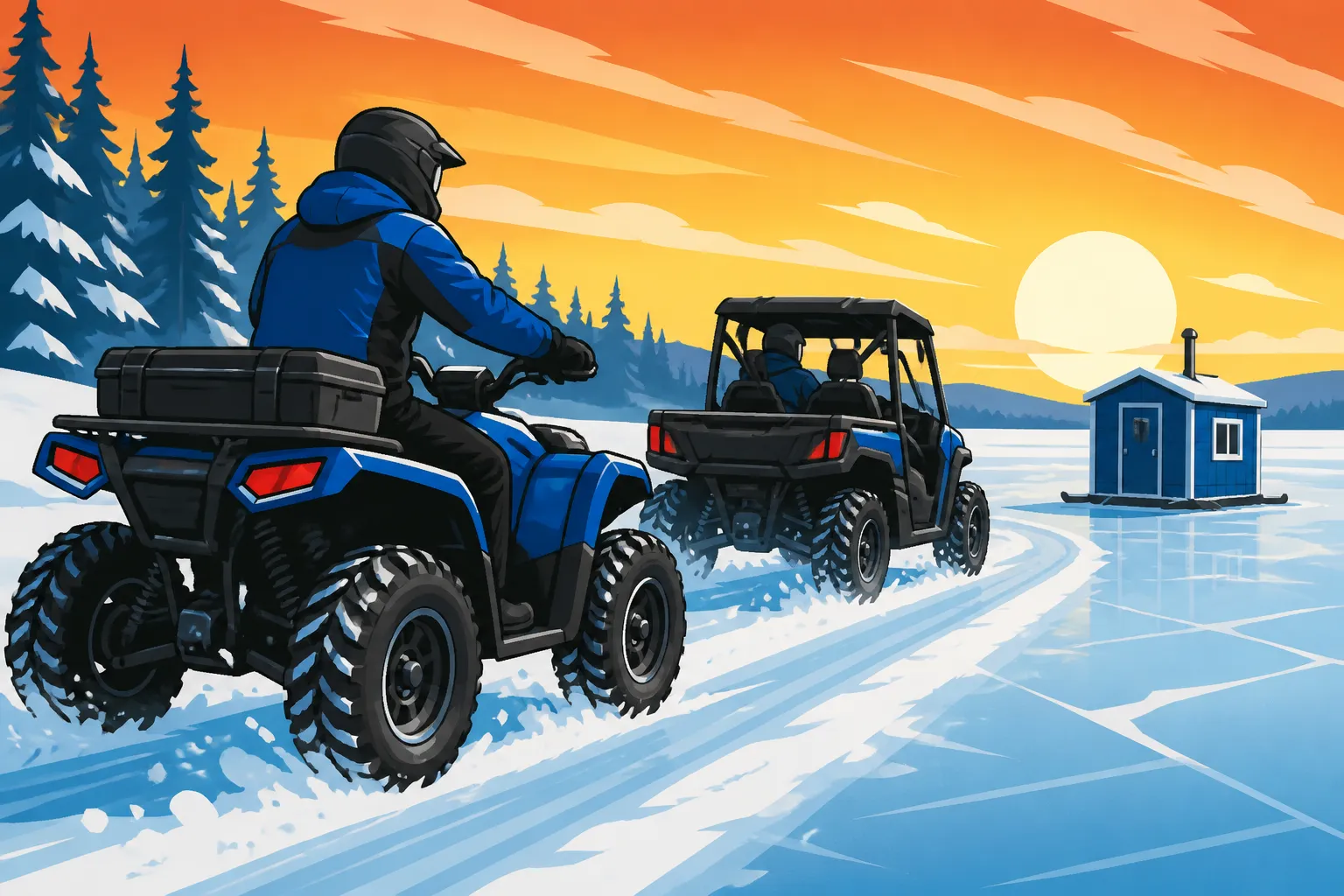
Riding Out to a Fish House
The lure of a Minnesota winter, especially with a line in the ice and good company in a fish house, is practically irresistible. But getting yourself, your gear, and that cozy portable palace out onto the frozen lake with your ATV or UTV can feel like navigating a legal and logistical maze. This guide is here to untangle the complexities, offering clear, actionable advice on safely and legally using your off-highway vehicle (OHV) to enjoy one of Minnesota's most cherished winter pastimes.
Navigating Minnesota's Ice: Rules for ATVs and UTVs
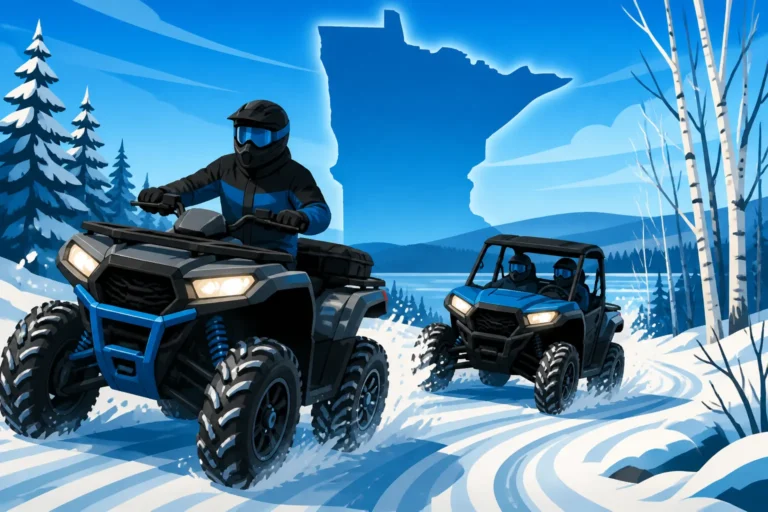
There's a special kind of freedom that comes with zipping across a frozen Minnesota lake on your ATV or UTV, the crisp air biting at your cheeks, and the promise of a big walleye or northern pike ahead. But with that freedom comes responsibility and a set of rules designed to keep everyone safe and preserve access for future seasons. It’s not just about getting out there; it’s about doing it right.
Understanding Public vs. Private Ice Access
One of the first things many new riders wonder about is where exactly they can ride on the ice. Minnesota's lakes are generally considered public waterways, meaning that once you're on the frozen surface, you usually have the right to travel across it. This is a crucial distinction, as it differs significantly from land-based riding, where private property laws strictly dictate access. However, getting onto the lake is where private property often comes into play. Most people access lakes via public boat landings, which are maintained for this very purpose. These spots are your safest bet, ensuring you're not inadvertently trespassing before you even hit the ice.
Imagine pulling up to a busy public landing on Mille Lacs or Lake of the Woods. You'll see a steady stream of trucks and trailers, and ATVs and UTVs heading out. That’s public access in action. But if you're trying to reach the ice from a friend's cabin that sits on a private lot, you're fine, as long as you have their permission to cross their land. The moment you consider crossing someone else's shoreline without explicit consent, even just to get to the public ice, you could be facing a trespass issue. Always be mindful of the boundaries and respect private land. Think of it like a public highway that you can only get on and off at designated exits. The lake is the highway, and the landings are your exits.
Minnesota's Rules for Operating on Frozen Lakes
Once you're actually out on the vast expanse of frozen water, specific rules kick in to ensure everyone's safety and enjoyment. While the open nature of a lake might tempt some to let loose, it's critical to remember that you're still operating a motorized vehicle in a shared space. Speed limits on Minnesota lake ice, while not always explicitly marked, are generally lower than on land trails, often around 30 mph for most machines. This isn't just a suggestion; it’s a vital safety measure, as visibility can be poor, and ice conditions can change rapidly. Reckless operation, such as spinning donuts near ice houses or driving erratically, is prohibited and can result in significant fines. Common sense and courtesy go a long way here.
Perhaps the most critical, unwritten rule of operating on frozen lakes is understanding and respecting [Ice Thickness a Machine Needs]. While the state doesn't typically post a definitive "legal" thickness for specific vehicles, there are well-established safety guidelines that conservation officers and experienced ice anglers adhere to. For instance, a single ATV or snowmobile generally needs at least 5-7 inches of clear, new ice to be considered safe. For a UTV, especially one loaded with gear or towing a fish house, you're looking at 8-12 inches or more. Always verify ice conditions before you venture out, especially early in the season or after warm spells. No fish is worth the risk of falling through. Beyond ice thickness, your machine needs to be properly lit. Just like on roads or trails, if you're out during times of reduced visibility, like dawn, dusk, or after dark, your ATV or UTV must have a functional headlight and taillight. These aren't just for your benefit; they make you visible to other ice travelers, preventing collisions. For more detailed insights into the specific rules governing ice travel, you can check out resources like [Minnesota Rules on Frozen Lakes].
Essential Gear and Safety Considerations for Ice House Expeditions
Taking your ATV or UTV out on the ice to tow a fish house isn't just a joyride; it's a serious expedition into a potentially harsh and unforgiving environment. Being prepared with the right gear for your machine and prioritizing personal safety are absolutely non-negotiable. Skipping these steps can turn a fun day into a dangerous ordeal faster than a walleye can swallow a shiner.
Equipping Your Machine for the Ice
Your ATV or UTV needs to be more than just a means of transport; it needs to be a reliable partner in the cold. First and foremost, let's talk about traction. Standard ATV tires might struggle on slick ice, especially when trying to stop or navigate across glare ice. Many serious ice anglers opt for [Studded Tires for Lake Ice]. These tires, equipped with metal studs, provide significantly better grip on frozen surfaces, making your ride much safer and more controlled. For machines that regularly encounter deeper snow drifts, an aggressive mud-and-snow tread can also be beneficial, but on pure ice, studs are king.
Beyond tires, consider a winch. This isn't just for muddy trails in the summer. On the ice, a winch can be a lifesaver, whether you're pulling your own machine out of a soft spot, assisting a buddy who’s stuck, or helping to set a fish house into a precise spot. Brands like SuperATV offer a range of robust winches and mounting kits designed to stand up to tough conditions. When you're out in the middle of a vast frozen lake, self-sufficiency is paramount, and a winch adds a critical layer of preparedness. Furthermore, attachments like plows can be invaluable for clearing a path to your fish house or maintaining a clear area around it. Many anglers also utilize specialized racks or carriers to transport augers, buckets, and propane tanks safely. For those long days out on the lake, especially in biting winds, a cab enclosure for your UTV can make a world of difference, keeping you warmer and more comfortable. Explore options like [Cab Enclosures for Minnesota Winters] to maximize your comfort and extend your time on the ice.
Prioritizing Personal Safety on the Ice
No matter how well-equipped your machine is, your personal safety should always be the top priority. The cold is relentless, and accidents can happen quickly. Always carry ice picks on your person – worn around your neck or in an easily accessible pocket – so you can pull yourself out if you break through. A throw rope is another must-have, allowing you to assist someone from a safe distance. Layers of warm, waterproof clothing are critical, as is a reliable communication device. Cell service can be spotty on large, remote lakes, so consider a satellite messenger if you plan to venture far from shore or known access points.
Never ride alone, especially in unfamiliar territory. The "buddy system" is not just for kids; it’s a fundamental safety principle on the ice. Before you head out, tell someone trustworthy your travel plans, including your destination and estimated return time. Continuously check ice conditions, even if you’ve been out before. What was safe yesterday might not be safe today, especially with fluctuating temperatures or new snow that can insulate the ice. Knowing basic first aid and carrying a well-stocked kit are also essential. Remember that help might be a long way off, so being prepared to handle minor injuries yourself can prevent them from becoming major problems. Finally, consider taking a specific course on ice safety, which can provide invaluable skills and knowledge for handling emergencies on the frozen water.
Logistics: Transporting Your Fish House and Gear
Hauling a fish house, whether it's a lightweight portable shelter or a heavy skid house, along with all your ice fishing gear, presents its own set of challenges. It's not just about attaching it to your machine; it's about doing it safely, legally, and without damaging your valuable equipment or the lake itself.
Towing Your Fish House Legally and Safely
When it comes to towing your fish house, many people think of a full-size pickup truck. But for shorter distances on the lake, especially across uneven snow or slush, an ATV or UTV can be far more agile and efficient. If your fish house is mounted on a conventional trailer with wheels, remember that trailer itself might need registration, especially if you plan to tow it on public roads to get to the lake. The rules for [Trailer Registration for Hauling ATVs in Minnesota] are generally straightforward, but it's always good to confirm. Once on the ice, ensure your ATV or UTV is rated for the weight you're towing. Overloading your machine can strain the engine, transmission, and suspension, and severely compromise your ability to brake or steer effectively.
Safe towing on ice requires a gentle touch. Accelerate slowly, make wide, gradual turns, and anticipate stops far in advance. Sudden movements can cause your fish house to swing wildly, potentially jackknifing or even breaking through weaker ice. Always secure your fish house to the hitch properly, ensuring all connections are tight. If you're using chains, make sure they're not dragging. Even if your fish house is a skid-style model that slides directly on the ice, the principles of careful towing still apply. Consider using a heavy-duty tow strap or specialized hitch extension from a company like SuperATV, designed to handle the stresses of towing heavy loads in challenging conditions. Proper [Tying a Machine Down for the Interstate] techniques, though typically for trailering your ATV/UTV, also apply in principle to securing a fish house to its tow bar, ensuring nothing comes loose on bumpy ice or deep snow.
Managing Gear and Supplies
Beyond the fish house itself, you'll have a myriad of other gear to transport: an auger, bait buckets, propane tanks, heaters, chairs, fishing rods, coolers, and more. Tossing everything haphazardly onto the back of your ATV or into your UTV's bed is a recipe for disaster, with items potentially flying out or shifting dangerously. Utilizing cargo boxes, secure racks, or dedicated sleds towed behind your machine is key. Many UTVs come with spacious cargo beds that are perfect for this, and aftermarket accessories can expand their capacity and organization.
For ATVs, cargo baskets that mount to the front and rear racks are excellent for carrying smaller, lighter items. Larger, heavier items, especially those that need to be kept upright like propane tanks, should be secured with bungee cords or ratchet straps to prevent them from tipping. Augers, a perennial problem for transport, can often be mounted to specialized carriers that keep the blades safely covered and away from passengers. Avoid overloading your machine to the point where visibility is compromised or the center of gravity is too high. A well-organized load means less fumbling on the ice, quicker setup, and a safer journey overall. When considering [Buying a Machine for Minnesota Ice Fishing], think about its cargo capacity and available accessories to make your life easier when hauling all that essential gear.
Registration, Permits, and Staying Legal
It's tempting to think that once you're on the ice, you're in a wild, lawless frontier. While the landscape is certainly vast, the laws of Minnesota still apply, especially regarding your machine's registration and any necessary permits. Ignoring these details can lead to fines and spoil your winter escape.
ATV/UTV Registration for Ice Riding
Let's be absolutely clear: if you are operating your ATV or UTV on public Minnesota lake ice, your machine must be properly registered with the state DNR. There are no special "ice-only" exemptions. The same rules that apply to riding on designated trails or ditches also apply to frozen lakes. This means your machine needs current registration stickers displayed prominently and your registration card handy. Public lakes are considered public land for recreational purposes, and an unregistered machine is subject to citations and fines.
For new riders, or those new to Minnesota, the process for [Registering an ATV in Minnesota] is relatively straightforward, typically handled through a deputy registrar office or online via the Minnesota eLicense system. It's a three-year registration, and the fees contribute to the maintenance and expansion of Minnesota's vast OHV network, even if you’re only using it for ice fishing. If you're caught operating an unregistered machine, the [Penalties for an Unregistered ATV in Minnesota] can be steep, quickly outweighing the cost of registration. Make sure you understand all the requirements for [Minnesota DNR ATV Registration Explained] to avoid any unpleasant surprises from a conservation officer.
Understanding Trail Passes (or lack thereof) on Lake Ice
This is a common point of confusion for many riders. While Minnesota requires an OHV trail pass for non-residents and for certain resident uses on designated Grant-in-Aid trails, the vast majority of Minnesota lake ice does not fall under the Grant-in-Aid trail system. Therefore, if you are simply riding directly on the frozen surface of a public lake to get to your fish house, a separate trail pass is generally not required. Your standard Minnesota ATV or UTV registration covers this use.
However, there's a critical nuance: if you access the lake via a designated OHV trail, or if the lake itself is part of a mapped trail system, then a trail pass might indeed be necessary. For example, if you ride a state forest trail that happens to cross a small lake, and that lake section is part of the designated trail, then a pass would apply to that specific segment. For most major ice fishing lakes, however, the direct travel across the ice is considered part of the general public use covered by your machine's registration. If you're an out-of-state visitor, while you'll need to understand Minnesota's general ATV registration rules (and potentially register your machine here if it's staying for an extended period), the [Minnesota's Non-Resident ATV Trail Pass] typically applies to designated trail riding, not just cruising across a lake. When in doubt, it’s always best to consult the Minnesota DNR website or a local conservation officer. But for the most part, you can rest easy knowing that your standard registration covers your ride out to the fish house, making it one of the times [When a Minnesota Rider Needs No Trail Pass].
| Safety Gear Category | Essential Item | Why It's Critical on the Ice |
|---|---|---|
| Personal Safety | Ice Picks (worn on person) | Immediate self-rescue if you fall through. |
| Throw Rope (25-50 ft) | Rescuing others from a safe distance. | |
| Warm, Layered Clothing | Protection against hypothermia in extreme cold. | |
| Waterproof Outerwear | Stays dry from snow, slush, and splashes. | |
| Communication Device (Sat. Msg) | Emergency contact where cell service is unreliable. | |
| First-Aid Kit | Addressing injuries quickly in a remote environment. | |
| Machine Prep | Studded Tires | Superior traction on ice for safety and control. |
| Winch | Self-recovery from stuck situations or assisting others. | |
| Heavy-Duty Tow Strap/Hitch | Secure and safe towing of fish houses and gear. | |
| Functional Lights (Head/Tail) | Visibility for yourself and others, especially in low light. | |
| Cab Enclosure (UTV) | Protection from wind and cold, enhancing comfort. | |
| Navigation/Info | GPS/Offline Maps | Navigating large lakes, finding hazards, avoiding getting lost. |
| Ice Condition Information | Essential for safety; knowing current thickness and weak spots. |
Disclaimer
This article is for general informational purposes only and does not constitute professional advice. Laws, prices and regulations vary by location and change over time. Consult a qualified professional for guidance on your specific situation.