Two Quads on One Trailer Deck
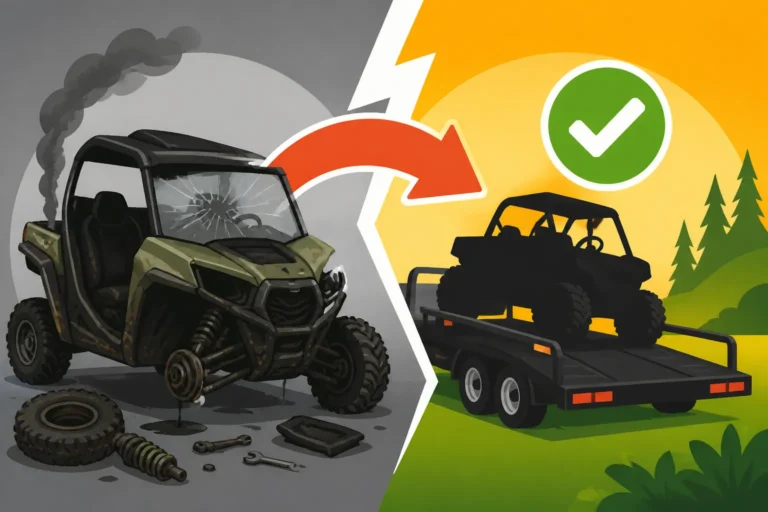
Trying to haul two ATVs or UTVs on a single trailer deck can feel like a game of Tetris, especially when you're itching to get to your favorite Minnesota trails or hunting spot but can't quite figure out how to safely and legally load everything. Many of us have been there, staring at a trailer and two machines, wondering if it's even possible without risking damage or a roadside headache. This guide is here to walk you through the practicalities and best practices for getting two quads on one trailer deck, ensuring a smooth and safe journey.
The Challenges of Hauling Two Machines on One Trailer
Hauling a single ATV is often straightforward enough for most riders, but doubling up on the trailer deck brings a whole new set of considerations. It's not just about fitting them on; it's about doing so safely, legally, and without putting undue stress on your equipment or yourself. The frustrations often start even before you back up the trailer.
Weight Distribution and Overload Risks
The most immediate concern when loading two machines is the combined weight. Each ATV, especially a larger utility model or a side-by-side, can weigh hundreds or even over a thousand pounds. Putting two on a trailer can quickly push you past the trailer's Gross Vehicle Weight Rating (GVWR) or the towing capacity of your vehicle. Overloading isn't just illegal; it's incredibly dangerous. It can lead to tire blowouts on the trailer, compromised braking performance for your tow vehicle, and instability at highway speeds. You might also find your trailer's suspension sagging severely, which changes its handling characteristics drastically.
Proper weight distribution is equally critical. You can't just throw them on any which way. Too much weight forward of the trailer axles (heavy tongue weight) can put excessive strain on your tow vehicle's hitch and rear suspension, making the steering feel light and imprecise. Conversely, too much weight behind the axles (light tongue weight) can lead to terrifying trailer sway, where the trailer oscillates violently from side to side, potentially causing you to lose control, especially in crosswinds or when passing semi-trucks. The goal is always to have around 10-15% of the total trailer weight resting on the hitch.
Space Constraints and Machine Damage
Another major hurdle is simply finding the physical space. Most standard utility trailers are designed for general cargo or perhaps one larger machine. Trying to shoehorn two ATVs can result in machines scraping against each other, handlebars getting bent, or bumpers colliding, leading to costly cosmetic and mechanical damage before you even hit the dirt.
The width of modern ATVs and side-by-sides has steadily increased, making side-by-side loading on narrower trailers nearly impossible. Length can also be an issue. If one machine hangs too far off the back, it might interfere with tail lights or require special flagging. Then there are the ramps – if your machines are too close, you might not have room to maneuver the ramps for safe loading and unloading, or you might find yourself in an awkward position trying to secure them once they're on. It's a puzzle that requires careful planning, not brute force.
Trailer Types and Loading Strategies for Multiple Machines
Successfully hauling two quads often comes down to having the right kind of trailer and a smart loading plan. There are several trailer types and configurations that can make this task much easier and safer.
Dedicated ATV/UTV Trailers
For those who frequently haul multiple off-road machines, a dedicated ATV or UTV trailer is often the best solution. These trailers are specifically designed with wider decks, multiple ramp options, and strategically placed tie-down points to accommodate two or more machines. Many feature side-loading ramps, allowing you to drive machines on from the side, effectively utilizing the full length of the trailer without needing excessive width. Some even have dovetail designs or tilt beds to make loading easier.
Another popular option is a "toy hauler" style enclosed trailer, which offers the ultimate protection from the elements and theft, along with living quarters in some models. While a significant investment, they provide unparalleled convenience for long trips with multiple machines. For those considering buying a used trailer, remember to check all the essential paperwork. You might also want to consult resources like [Do You Need a Trailer Title in Minnesota?] to understand the legal requirements.
Loading Configurations and Ramp Considerations
When it comes to getting two ATVs onto a single deck, you have a few primary configurations:
- Front-to-Back (Inline): This is common for longer utility trailers. One machine is driven on first, positioned at the front of the deck, and then the second machine is loaded behind it. This requires a trailer long enough to accommodate both, plus a bit of space in between. It's simple but limits overall length.
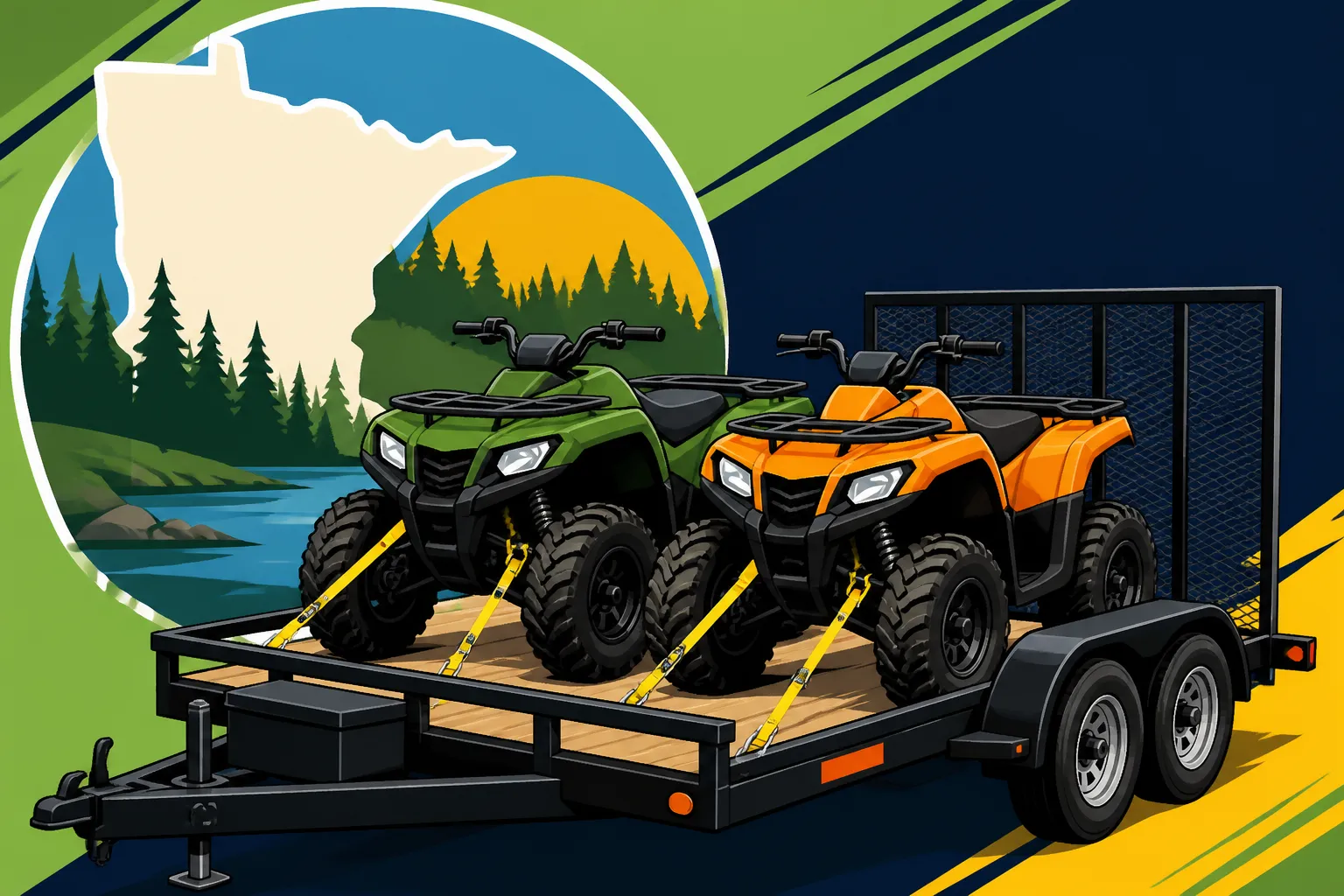
- Side-by-Side (Parallel): This configuration is ideal for wide flatbed trailers. Both machines are driven on from the rear, side-by-side. This usually requires a trailer that is at least 8 to 10 feet wide, depending on the width of your ATVs. It's great for weight distribution if done carefully.
- Angled: For trailers that are wide but not quite wide enough for two machines perfectly parallel, some riders angle the machines slightly. This can gain a few precious inches, allowing you to fit two wider quads. However, it can make tie-down points a bit trickier to access and might not always distribute weight as evenly.
- Over-and-Under (Stacked): Less common for ATVs due to height and stability, but some specialized trailers or custom setups might allow for one smaller machine to be loaded on top of another using a second deck or rack system. This is typically reserved for very specific, smaller machines and requires robust engineering.
Regardless of the configuration, good ramps are essential. Make sure they are rated for the combined weight of your machine and yourself, are wide enough, and have a secure attachment system to the trailer to prevent kick-out during loading. If your machines are particularly heavy or your trailer is tall, arched ramps can provide better clearance and a smoother loading angle.
Safety First: Securing Your Machines and Your Load
Getting your machines onto the trailer is only half the battle. The real work is in securing them properly so they don't shift, bounce, or worse, come off during transit. This is where meticulous attention to detail pays off.
Choosing the Right Tie-Downs
Not all tie-downs are created equal. For ATVs and UTVs, you'll want heavy-duty ratchet straps or cam buckle straps with a high working load limit (WLL) – not just the break strength. A good rule of thumb is to use straps with a WLL of at least one-third of your machine's weight. You should use at least four tie-downs per machine, ideally one at each corner, pulling outwards and downwards.
When selecting straps, consider the conditions. If you're often hauling through muddy fields or dusty trails, choose straps that are easy to clean and won't jam. Also, look for straps with robust hooks that can securely latch onto your trailer's anchor points and your machine's frame. Straps that have D-rings or other heavy-duty attachment points on the machine itself are always better than just hooking onto suspension components or plastic bodywork. For long trips, having a couple of spare straps is always a wise move. Don't forget, understanding things like [Tying a Machine Down for the Interstate] is crucial for ensuring everything stays put.
Securement Points and Methods
The key to preventing movement is to strap the machines down to solid points on both the ATV/UTV and the trailer.
- On the Machine: Look for the main frame, sturdy bumpers, or dedicated tie-down loops. Avoid hooking onto plastic body panels, axles, or control arms, as these can bend, break, or compress too much, allowing the machine to shift. Compress the suspension slightly as you ratchet down the straps – this pre-loads the suspension, reducing bounce and ensuring the straps stay taut over bumps.
- On the Trailer: Utilize welded D-rings, stake pockets, or C-channels designed for securement. If your trailer lacks sufficient anchor points, consider adding some. Just make sure they are properly welded or bolted to the trailer frame, not just the deck.
A good method involves crisscrossing straps where possible, as this creates lateral stability and prevents forward/backward movement. For example, a strap from the front left of the ATV to the front right of the trailer, and another from the front right of the ATV to the front left of the trailer. Repeat for the rear. This creates an X-pattern that locks the machine in place. Always double-check all straps before you leave, and re-check them after the first 10-15 miles of driving, as settling can cause straps to loosen.
Pre-Trip Inspection and Maintenance
Before every haul, especially with two machines, a thorough pre-trip inspection of your entire rig is non-negotiable.
- Trailer Tires: Check tire pressure, looking for proper inflation and any signs of wear, cracks, or bulges. Don't forget the spare!
- Trailer Lights: Verify all running lights, brake lights, and turn signals are working correctly. Faulty lights are a common reason for traffic stops.
- Hitch Connection: Ensure the coupler is securely latched onto the hitch ball, the safety pin is in place, and the safety chains are crossed and attached to your tow vehicle.
- Breakaway Cable: If your trailer has electric brakes, ensure the breakaway cable is connected to your tow vehicle, not wrapped around the hitch, so it will activate the trailer brakes if it separates.
- Tow Vehicle: Check your tow vehicle's tires, brakes, and fluid levels. Remember, you're putting extra strain on it.
By taking these proactive steps, you significantly reduce the risk of incidents on the road. For additional peace of mind, consider the benefits of [Insuring an ATV in Minnesota] not just for riding, but for coverage during transport as well.
Legal and Practical Considerations for Minnesota Haulers
While getting your machines loaded and secured is paramount, you also need to ensure you're operating within Minnesota's legal framework for towing and transport. Ignoring these details can lead to fines, safety issues, and headaches.
Trailer Registration and Licensing
In Minnesota, any trailer that is used on public roads typically requires registration and a license plate. The specifics can vary based on the trailer's weight and type, but for hauling two ATVs, your trailer will almost certainly need to be properly registered. This involves paying a fee and displaying a valid license plate. Failure to do so can result in a citation. It's always a good idea to keep your trailer's registration documents handy, just as you would with your ATV's registration. You can find more detailed information on topics such as [Minnesota Trailer Plate Cost] and [Trailer Registration for Hauling ATVs in Minnesota].
Also, remember that the Gross Combined Weight Rating (GCWR) – the combined weight of your tow vehicle, trailer, and all cargo – must be within the limits of your tow vehicle's capabilities and, in some cases, might require a commercial driver's license if exceeding certain thresholds, although this is rare for recreational ATV hauling. Always consult your vehicle's owner's manual for its specific towing capacities.
Visibility and Extended Loads
When you're hauling two machines, especially if they are large or positioned front-to-back, one might extend past the rear of your trailer. Minnesota law requires that any load extending four feet or more beyond the rear of the vehicle or trailer must have a red or orange flag attached during daylight hours. At night, a red light visible from 500 feet must be used. This is crucial for alerting other drivers to your extended load and preventing rear-end collisions.
Make sure your tail lights and turn signals are clearly visible and not obstructed by the machines. If they are, you may need to install auxiliary lights on the rear of your load or on an extension bar. This is especially true for side-by-sides, which can be quite wide and might block standard trailer lights.
Documentation and Ownership Proof
While you're focused on the physical act of hauling, don't forget the importance of having proper documentation for your ATVs. If you're hauling a machine that isn't registered in your name, or one you've just purchased, having proof of ownership is critical. This could be a bill of sale, a registration card, or a temporary permit. Law enforcement officers, especially DNR conservation officers, may ask for this documentation during routine checks or if there's any suspicion of theft. A simple, well-drafted bill of sale, perhaps created using a service like LawDepot, can save a lot of hassle.
If you're hauling machines for friends or family, especially if they're minors, it's a good idea to carry a letter of permission from the owner stating you have authorization to transport their ATV. This can help avoid misunderstandings and prove legitimate possession. Think of it as an extra layer of protection, just like carrying your own [Minnesota ATV Safety Training Requirements] certificate.
Table: Common Two-Quad Trailer Configurations
| Configuration | Trailer Type Recommended | Pros | Cons | Best Use Case |
|---|---|---|---|---|
| Front-to-Back | Long Utility, Tandem Axle | Simple loading, good for narrower trailers | Requires long trailer, limited total length if machines are large | Carrying two standard ATVs on a longer utility trailer |
| Side-by-Side | Wide Flatbed, Dedicated UTV | Even weight distribution, short overall length | Requires very wide trailer (8ft+), complex loading if not equipped with side ramps | Hauling two larger ATVs or UTVs efficiently |
| Angled | Medium-Wide Flatbed | Can fit slightly wider machines than parallel | Can be tricky to secure, uneven weight distribution if not planned | When side-by-side is almost, but not quite, possible |
| Stacked | Specialized, Custom-Built | Maximizes deck space for compact footprint | High center of gravity, complex loading/unloading, rare for ATVs | Very specific needs, usually for smaller, lighter machines |
In the end, successfully getting two quads on one trailer deck in Minnesota boils down to thoughtful preparation, the right equipment, and a healthy respect for safety and the law. Whether you're heading to the Iron Range OHV Area or a local grant-in-aid trail, knowing your limits and preparing properly will ensure your adventure starts and ends on a high note. Always prioritize safety over convenience, and you'll be hitting the trails in no time.
Disclaimer
This article is for general informational purposes only and does not constitute professional advice. Laws, prices and regulations vary by location and change over time. Consult a qualified professional for guidance on your specific situation.