Registering a Machine Still Under Warranty
It’s a truly exciting moment: you’ve just brought home a shiny, brand-new ATV or UTV, still smelling new, still under its factory warranty, and ready for adventure. But before you hit the trails or tackle that big chore list, there's that lingering question: "How do I register this thing when it's still so new and under warranty?" Don't worry, you're not alone in that thought. Many new owners wonder if the warranty somehow complicates the state's registration process. The good news is, registering a machine still under warranty in Minnesota is a straightforward process, and this guide will walk you through exactly what you need to do to get your new ride legally ready for action.
Understanding Your New Machine's Warranty and Minnesota Registration
Bringing home a new off-highway vehicle (OHV) is a big deal, and the manufacturer's warranty offers a comforting layer of protection for those initial years. However, it’s important to understand how this warranty interacts—or rather, doesn't directly interact—with your state registration requirements here in Minnesota. They are essentially two separate systems designed to serve different purposes.
The Basics: What a Warranty Covers and Doesn't Affect
When you purchase a new ATV or UTV, it typically comes with a manufacturer's warranty. This warranty is a promise from the manufacturer that they will stand behind their product for a specified period or mileage/hours, covering defects in materials and workmanship under normal use. Think of it as an assurance that if something goes wrong due to a manufacturing fault, you won't be on the hook for expensive repairs. This gives new owners incredible peace of mind, especially with the investment involved in a modern OHV.
What the warranty doesn't do, however, is dictate or influence the legal requirements for operating that machine. The warranty protects your investment from mechanical failures, but it doesn't grant you permission to ride on public lands, trails, or even on designated roadside ditches without proper state registration. The dealer will typically handle the initial warranty registration with the manufacturer as part of the sales process, ensuring your purchase is on record for any future claims. This is distinct from the state's registration process, which is about establishing your ownership with the Department of Natural Resources (DNR) and getting the necessary decals to legally operate on public access areas.
Why Minnesota Registration is Mandatory Regardless of Warranty Status
Minnesota's regulations are pretty clear: any ATV or UTV operated on public lands, frozen waters, or the shoulder/ditch of a public road must be registered with the Minnesota DNR. There are very limited exceptions, such as operating solely on your own private land (though even then, many people choose to register for identification purposes). The moment you decide to take that pristine, warrantied machine out to a state forest trail, explore a county trail system, or even drive it across a frozen lake for ice fishing, it needs to be properly registered.
The rationale behind this isn't to complicate your life as a new owner; it's about funding and accountability. The registration fees collected by the DNR directly support the maintenance and development of Minnesota's extensive ATV and UTV trail systems. This ensures that the beautiful places you want to ride are well-kept and accessible. Furthermore, registration helps conservation officers identify machines and owners in case of an accident, theft, or violation of riding rules. So, while your warranty protects your machine financially, your registration protects your right to ride legally and contributes to the overall OHV experience for everyone in the state. Even if you only plan to ride on family property, understanding [Minnesota Public Use Versus Private Use Registration] is important, as is knowing [Do You Need Registration on Your Own Minnesota Land?] if you primarily ride close to home.
The Registration Process for a Brand-New, Warrantied Machine
Registering a new ATV or UTV in Minnesota, even one fresh off the showroom floor with its warranty gleaming, is typically a smooth process. In fact, because it's a new machine, some of the paperwork is even more straightforward than dealing with a used machine that might have a complicated ownership history. The key is having the correct documents from your dealer and knowing where to go.
Essential Documents You'll Need from the Dealer
When you buy a new ATV or UTV from a licensed dealer in Minnesota, they are responsible for providing you with the critical paperwork needed for registration. This paperwork confirms the machine's origin and your legal ownership. Do not leave the dealership without these items:
- Manufacturer's Statement of Origin (MSO) or Certificate of Origin (COO): This is the single most important document for a new machine. It's like the birth certificate for your ATV or UTV, proving it's never been registered before and verifying its unique Vehicle Identification Number (VIN). The MSO or COO will be signed over to you by the dealer. Without this, you cannot register a new machine. It's absolutely foundational.
- Bill of Sale: While the MSO/COO establishes the machine's origin, the bill of sale confirms your purchase and the price you paid. This document will show the date of sale, your name as the buyer, the dealer's information, and the machine's VIN. This is also the document that proves you've paid Minnesota sales tax on the purchase, or that sales tax is due.
- Proof of Sales Tax Payment: Most Minnesota dealers will collect the state sales tax at the time of purchase. Your bill of sale should clearly indicate that sales tax has been paid. If for some reason the dealer didn't collect it (which is rare for new machines), you'll need to be prepared to pay it to the DNR or Deputy Registrar when you register. This is a crucial part of the process, and you can learn more about how [Buying From a Minnesota Dealer: What They File] handles this automatically for you, and what that means for [Minnesota Sales Tax on a Dealer Purchase].
Always double-check that the VIN on all your documents (MSO/COO, bill of sale) matches the VIN stamped on your actual machine before you leave the dealership. A discrepancy can cause significant headaches down the road.
Where to Register Your New ATV or UTV
Once you have all your documents in hand, you have a few options for getting your new, warrantied machine registered in Minnesota:
- Your Selling Dealer: Many reputable ATV/UTV dealers in Minnesota offer the convenience of handling the registration paperwork directly for you. They often have the necessary forms and direct access to the DNR's system (or work with a Deputy Registrar) to process the registration on your behalf. This is by far the easiest route, as they're familiar with the process and can ensure everything is correctly submitted. They'll collect the registration fee from you along with the sales tax, and often you'll receive your temporary permit and even your decals directly from them or in the mail shortly after.
- Deputy Registrar Offices: These are typically local motor vehicle service centers found throughout Minnesota. They handle all sorts of vehicle registrations, including OHVs. You can walk into any Deputy Registrar office, present your MSO/COO, bill of sale, and identification, and they will process your registration on the spot. You'll leave with a temporary registration certificate and often the permanent decals right then and there. If you prefer to do it yourself, finding a nearby office that handles [Deputy Registrars That Handle ATV Registration] is a great option.
- Minnesota DNR E-License System: For those who prefer to handle things online, the DNR's eLicense system can be an option, though new registrations can sometimes be more complex online than renewals, especially when dealing with the MSO/COO that needs to be officially processed. If you're comfortable with online portals and have digital copies of your documents, you may be able to complete a new registration this way. However, many find the in-person option simpler for first-time registrations of brand-new machines to ensure the MSO is correctly handled. If you're tech-savvy, you can explore [Registering Online Through Minnesota eLicense] to see if it's right for you.
Steps at the Registration Counter (or Online)
No matter if you visit a deputy registrar or if your dealer handles it, the core steps remain the same:
- Gather Your Documents: Ensure you have the original MSO/COO, your bill of sale, and a valid form of personal identification (like your driver's license).
- Complete the Application: You'll fill out a simple application form, providing your personal details and the machine's information (VIN, make, model, year).
- Pay the Fees: You will pay the three-year registration fee. This fee supports Minnesota's OHV trail system and covers the administrative costs of registration. Be aware that this is a separate fee from the sales tax you paid (or will pay) on the machine's purchase price. Knowing the [Minnesota ATV Registration Fee for Three Years] helps you budget.
- Receive Your Proof of Registration: Once processed, you'll receive a registration certificate. This certificate contains your registration number and other vital details. You will also be given your physical registration decals (stickers).
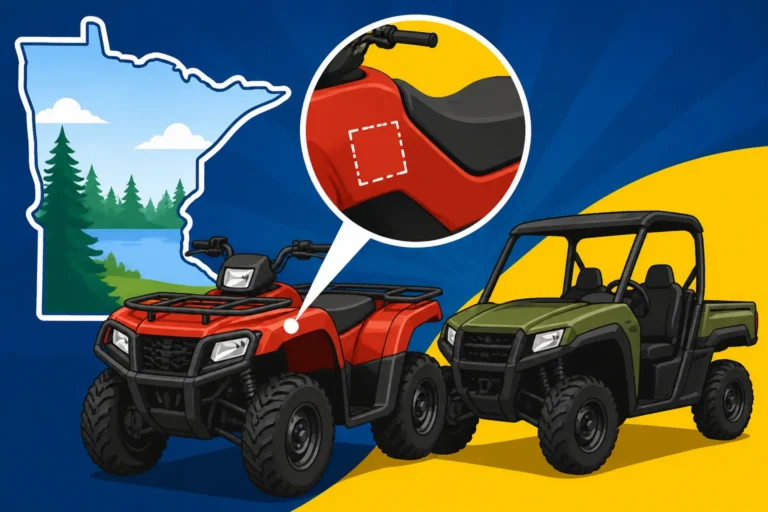
- Affix Your Decals: You'll need to place these decals on your machine in the specified location, typically on the front fender or another easily visible spot. We'll cover this in more detail later.
The registration is generally valid for three years from the date of issuance. You'll receive a reminder when it's time for renewal, which you can often do online. Learning about [Minnesota Registration Renewal Every Three Years] will be helpful down the line.
Here’s a quick overview of the essential documents:
| Document Type | Purpose | Source | Mandatory? |
|---|---|---|---|
| Manufacturer's Statement of Origin (MSO) / Certificate of Origin (COO) | Proof of manufacture and initial ownership transfer to buyer. | Selling Dealer | Yes |
| Bill of Sale | Proof of purchase, sale price, and sales tax payment. | Selling Dealer | Yes |
| Valid Photo Identification | To verify your identity as the registering owner. | Your Driver's License or State ID | Yes |
| Proof of Minnesota Sales Tax Payment | Ensures sales tax was paid or is collected at registration. | Indicated on Bill of Sale, or separate receipt | Yes |
Common Questions and Considerations for New Machine Owners
Even with the excitement of a new, warrantied machine, a few practical questions often pop up during the registration process. Let’s address some of the most common ones to ensure you're fully prepared.
Sales Tax, Use Tax, and Warranty Implications
One area that sometimes causes confusion is the interplay between sales tax, use tax, and the machine's warranty. It's crucial to understand that your warranty status has absolutely no bearing on your tax obligations to the state of Minnesota. These are entirely separate legal requirements.
When you purchase a new ATV or UTV from a licensed dealer in Minnesota, they are typically required to collect the Minnesota sales tax at the time of sale. This tax is a percentage of the purchase price and is remitted to the state by the dealer. Your bill of sale should clearly indicate that this tax has been paid. For example, if you buy a new machine, you'll pay [Minnesota Sales Tax on a $10,000 Machine] right there.
The use tax comes into play mainly when you purchase an OHV from an out-of-state dealer or a private party and then bring it into Minnesota. In such cases, if you didn't pay sales tax in that other state, or if the sales tax paid was less than Minnesota's rate, you'd owe the difference as a "use tax" when you register the machine in Minnesota. This usually isn't an issue for new machines bought directly from a Minnesota dealer, as they handle the sales tax upfront. However, it's good to be aware of the concept, especially if you ever consider purchasing from outside the state. You can learn more about [Minnesota Use Tax After an Out-of-State Buy] for future reference. The bottom line here is that your machine's warranty protects against defects; it doesn't exempt you from taxes!
Keeping Your Paperwork Safe and Accessible
Once your new ATV or UTV is registered, you'll receive a registration certificate and decals. The certificate is your proof of legal registration. Minnesota law requires that this certificate (or a copy) be carried with the machine whenever it is operated on public lands, frozen waters, or road rights-of-way. This is crucial for proving to a conservation officer or law enforcement that your machine is legally compliant. Carrying your certificate is just as important as knowing [Keeping the Paperwork With the Machine].
It’s a good practice to:
- Keep the original certificate in a safe place at home, like a fireproof safe or a secure file cabinet.
- Carry a copy of the certificate on your machine. Laminated copies are excellent for protecting against the elements. Many riders keep it in a waterproof compartment, a saddlebag, or even a ziplock bag tucked safely away on the machine itself.
- Consider digital backups: Snap a clear photo of your registration certificate and store it on your phone or in cloud storage. While a physical copy is preferred for official checks, a digital backup can be a lifesaver if the physical copy is lost or damaged.
- Organize all your machine's documents: This includes your MSO/COO, bill of sale, maintenance records, and, of course, your registration. Services like LawDepot can be useful for creating and organizing secure digital copies of important documents, including bills of sale or other legal forms, making it easier to keep track of everything related to your OHV.
Properly storing and accessing your paperwork not only keeps you compliant but also makes things much easier if you ever need to prove ownership, file an insurance claim, or renew your registration.
What Happens After Registration: Stickers and Riding Rules
Once your registration is complete and you have your decals, there's one final step: affixing those stickers to your machine. Minnesota law is quite specific about [Where a Minnesota ATV Registration Sticker Goes]. Generally, they need to be clearly displayed on the front of the machine, typically on the front fender or the front fairing, in a location that is visible and not easily obscured. The decal usually comes with instructions on precise placement. Make sure the surface is clean and dry before applying for good adhesion.
With your machine legally registered and stickered, you're now ready to hit the trails! However, remember that registration is just one part of responsible OHV ownership in Minnesota. It's also vital to:
- Understand and follow all riding rules and regulations: This includes speed limits, trail etiquette, environmental protection, and staying on marked trails.
- Ensure proper safety gear: Helmets are mandatory for riders under 18, and eye protection is always a good idea.
- Complete safety training: For riders born after July 1, 1987, formal ATV safety training is required to operate an ATV or UTV on public lands. There are online courses and hands-on options available. Learn more about the [Minnesota ATV Safety Training Requirement] and see if it applies to you or your younger family members.
Enjoy your new, warrantied, and now officially registered Minnesota ATV or UTV. Ride safely and responsibly!
Disclaimer
This article is for general informational purposes only and does not constitute professional advice. Laws, prices and regulations vary by location and change over time. Consult a qualified professional for guidance on your specific situation.