Minnesota Rules for Farm and Utility Machines
It’s a common conundrum for farmers and those using their ATV or UTV for daily chores: does this machine, which spends its life hauling feed or plowing snow, really need to be registered like a recreational trail rider’s quad? The lines can feel blurry, and navigating Minnesota’s regulations often leaves folks scratching their heads, worried about getting it wrong. This guide aims to clear up that confusion, diving deep into the specific rules that apply to farm and utility machines, so you can ride with confidence, knowing you’re on the right side of the law.
Understanding the Minnesota ATV Registration Landscape for Farm Use
Let’s be honest, for many rural Minnesotans, an ATV or UTV isn't just a toy; it's an indispensable tool, as crucial as a tractor or a pickup truck. It helps with everything from checking livestock in a back pasture to hauling tools for fence repair. Given this workhorse role, it's natural to question whether the same registration rules that apply to someone tearing up the trails on a Saturday afternoon should apply to your dedicated farm machine. The state of Minnesota recognizes these distinctions, but understanding the nuances is key.
The General Rule: Why Most ATVs Need Registration
At its core, Minnesota law generally requires all off-highway vehicles (OHVs), including ATVs and UTVs, to be registered if they are operated on public lands, public waters, or any trails that receive public funding. This means if you plan to hit any of the state's amazing [Minnesota's Grant-in-Aid Trail System] or even cross a public road, your machine usually needs to have a current registration. It’s a system designed to fund trail maintenance, promote safety, and help law enforcement identify machines.
It’s easy to think a quad is just for the farm, especially if most of its life is spent on private acreage. However, even brief ventures onto public rights-of-way, like crossing a road to get to another field, can trigger the requirement. This is where the confusion often begins, because while your primary use is agricultural, the moment you touch public ground, the rules can change. This isn't unique to Minnesota; many states have similar frameworks, acknowledging the dual nature of these versatile machines.
Specific Exemptions for Agricultural Operations
Here’s where the good news comes in for many Minnesota farmers: there are specific exemptions. A crucial part of Minnesota Statute 84.922 outlines that an ATV or UTV does not need to be registered if it is "used exclusively for agricultural purposes" and operated in specific ways. This "exclusively" is the critical word here. It means the machine is solely dedicated to tasks directly related to farming, like tending crops, caring for livestock, or maintaining agricultural property.
Furthermore, this exemption applies when the machine is operated on land owned or leased by the owner of the ATV, or on land adjacent to property owned or leased by the owner of the ATV, provided it's used only for agricultural purposes. It also extends to crossing a highway from one parcel of agricultural land to another parcel of agricultural land if the two parcels are owned or leased by the owner of the ATV. This is a huge relief for farmers who need to move their equipment between fields. However, if that "farm machine" ever gets used for a leisurely ride on a public trail, or for hunting purposes on public land, then the "exclusively" clause is broken, and registration becomes necessary. It's truly all or nothing when it comes to this specific exemption. You can find more detail on this under [Minnesota Exemptions for Farm Machines].
Defining "Agricultural Purposes" and "Utility Use" in Minnesota
When the law talks about "agricultural purposes," it’s not just referring to planting corn and milking cows. It encompasses a wide range of activities essential to running a farm. Understanding these definitions is vital for knowing whether your machine truly qualifies for an exemption or if you need to go through the [Registering an ATV in Minnesota] process.
What Qualifies as Agricultural Use?
For an ATV or UTV to qualify for the agricultural exemption in Minnesota, its use must be strictly tied to farm operations. This can include:
- Crop Management: Transporting seeds, fertilizers, or pesticides, and checking fields.
- Livestock Care: Hauling feed to pastures, moving animals, checking on herds, or transporting tools for veterinary care.
- Property Maintenance: Repairing fences, moving irrigation equipment, clearing brush on farm acreage, or even plowing private farm roads.
- Other Farm-Related Tasks: Anything directly related to the production of agricultural products, including horticulture, floriculture, and forestry operations on the farm itself.
The key takeaway is that the machine’s operation must be an integral part of generating agricultural income or maintaining the farm's productivity. If your quad is primarily used to check fences and haul supplies around your 80-acre cattle farm, and you only cross the county road to get to your back forty, you’re likely in the clear for the registration exemption. However, if that same quad is used to drive into the nearest town for errands, even if it’s an agricultural town, it steps outside the "exclusively agricultural" definition.
Utility Machine Distinctions
Now, what about "utility machines" that aren't necessarily on a farm? For example, someone who uses a UTV to maintain a large private property, like a resort, a private hunting preserve, or a commercial landscaping business. Or perhaps a homeowner using it extensively for yard work, plowing their own long driveway, or hauling firewood on their own large lot.
Generally, if a machine isn't used "exclusively for agricultural purposes" as defined by the statute, it typically falls under the broader rules for OHV registration. So, if you're a landscaper using a UTV to move plants and soil between clients' properties and occasionally cross public roads, that machine would likely need to be registered. The same goes for a resort owner using a UTV to ferry guests or supplies around their extensive property if it involves public access points or rights-of-way. The "utility" nature of the work doesn't automatically grant an exemption; the exemption is specifically for agriculture. For a deeper dive into these requirements, check out [Rules for Utility and Work Machines].
The state's perspective is generally that if you're operating outside the strict confines of private agricultural land (and its adjacent fields/road crossings), you need to be registered. This ensures all users of public land and resources contribute to their upkeep and are easily identifiable.
When a Farm or Utility Machine Does Need Registration
Even with the agricultural exemptions, there are critical situations where your farm or utility machine absolutely needs to be registered in Minnesota. Failing to understand these can lead to fines and legal headaches, which is the last thing any busy farmer or property manager needs.
Riding on Public Roads or Trails (Beyond Direct Field Access)
The moment your farm or utility machine ventures beyond the strict confines of its exempt use, registration becomes mandatory. This is often where confusion and unintentional violations occur. Here are some scenarios:
- Recreational Riding: If you decide to take your "farm quad" out for a joyride on a public ATV trail, through a state forest, or even just down a county road for fun, it must be registered. The agricultural exemption applies only to agricultural use.
- Accessing Public Land for Hunting/Fishing: Many farmers also use their ATVs for hunting or ice fishing. If you trailer your machine to a public hunting ground or drive it onto a frozen public lake for ice fishing access, it needs registration. The machine is no longer being used "exclusively for agricultural purposes."
- Non-Adjacent Road Crossings: While crossing a highway between adjacent parcels of your agricultural land is exempt, driving down a public road for any other reason – to get to the hardware store, visit a neighbor, or access a non-adjacent piece of land – requires registration. This includes riding in public ditches or road rights-of-way that aren't explicitly part of your direct field access route.
- Business Operations (Non-Agricultural): As discussed, if you're using a UTV for a commercial landscaping business, property management, or other non-agricultural enterprise that involves public road travel or access, registration is typically required.
It’s crucial to remember that a conservation officer or sheriff’s deputy won't just take your word for it. If they see you operating on public land or roads without a registration, you could face [Penalties for an Unregistered ATV in Minnesota]. These fines can be substantial, making the cost of registration a much more appealing option.
Carrying Equipment and Ensuring Compliance
Beyond just registration, if your farm or utility machine does require registration for any of the reasons above, it also needs to comply with other operational requirements for public use. This isn't just about sticking on a decal; it's about being safe and legal for shared spaces.
- Safety Equipment: When operated on public lands or trails, your ATV/UTV must meet certain safety standards. This often includes functioning headlights, taillights, a brake light, and a spark arrester on the exhaust system to prevent fires. Some areas might have additional requirements, so it's always good to check local ordinances.
- Proof of Ownership/Registration: You should always carry proof of ownership and, if registered, proof of that registration. While it might seem like a hassle to carry documents on a machine, it can save you a lot of trouble during an encounter with law enforcement. This often includes your registration card and potentially a [What a Minnesota Bill of Sale Should Carry] or a title if your machine has one. For quick reference on what to carry, check out [Do You Carry Papers on a Minnesota Trail?]. Having a clear bill of sale, perhaps using a template from a reputable source like LawDepot, can serve as excellent proof of ownership even if the machine is exempt from registration. This is especially important if you ever need to prove the machine is yours for insurance purposes or after a private sale.
- Operating Rules: When on public roads or trails, you're subject to all general ATV operating rules, including speed limits, age restrictions for operators, and helmet laws for minors. Even if you're just crossing a road, you need to obey traffic laws.
The bottom line is that while Minnesota makes reasonable allowances for genuine agricultural use, it expects compliance when machines venture into shared public spaces.
Registration Process for Farm or Utility Machines That Don't Qualify for Exemption
If, after reviewing the exemptions, you determine your farm or utility machine does need to be registered in Minnesota, don't fret. The process is straightforward, designed to get you legal and back to your work or play with minimal fuss.
Steps to Register Your Machine
The general process for registering an ATV or UTV in Minnesota is largely the same for a farm or utility machine as it is for a recreational one. Here’s a breakdown of what you’ll typically need to do:
-
Gather Your Documents:
- Proof of Ownership: This is paramount. If you bought your machine new from a dealer, you'll have a Manufacturer’s Statement of Origin (MSO) or Manufacturer’s Certificate of Origin (MCO). For a used machine, you'll need the previous owner's registration card, a bill of sale, or potentially a title if one was issued. [Proof of Ownership for a Minnesota ATV] is a critical step. If you purchased your machine via a private sale, a detailed bill of sale is indispensable. Many find using a standardized form, perhaps from a legal document provider like LawDepot, helpful for ensuring all necessary information is included.
- Identification: A valid driver's license or state ID.
- Payment for Fees: Be prepared to pay the registration fee, which covers a three-year period. The specific amount can vary, so it's always best to check the current rates on the Minnesota DNR website or with a deputy registrar.
-
Visit a Deputy Registrar or the DNR:
- You can register your ATV at any authorized Deputy Registrar office in Minnesota. These are often found in county service centers or DMV locations. You can find a list of these offices under [Deputy Registrars That Handle ATV Registration].
- Alternatively, you might be able to register through the Minnesota DNR directly, often through their eLicense system online for renewals, but initial registrations often require an in-person visit, especially if you have complex ownership documentation.
-
Complete the Application:
- The registrar will help you fill out the necessary application form, which will include details about your machine (make, model, VIN) and your personal information.
- They'll collect your fees and process your documents.
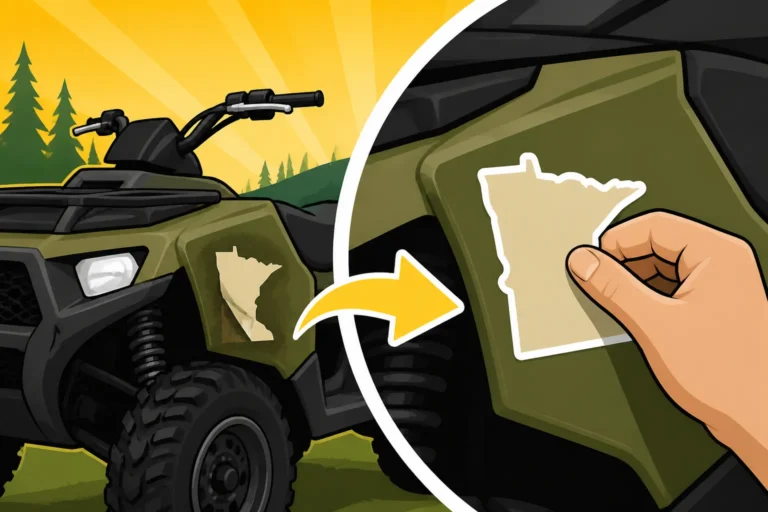
Once processed, you'll receive a registration card and a set of decals (stickers) that need to be affixed to your machine.
Renewal and Display Requirements
Once your farm or utility machine is registered, you'll need to keep that registration current and properly display the decals.
- Three-Year Renewal: Minnesota ATV registrations are valid for three years. The DNR typically sends out renewal reminders as your expiration date approaches, but it’s ultimately your responsibility to ensure it doesn’t lapse. For more information on the cycle, see [Minnesota Registration Renewal Every Three Years]. You can often renew online through the Minnesota DNR's eLicense system, making it quite convenient.
- Sticker Placement: The registration decals must be prominently displayed on your ATV or UTV. The specific placement requirements are usually detailed with the decals themselves, but generally, they go on the front and rear of the machine in a visible location. Incorrect placement can lead to questions from law enforcement, even if your machine is properly registered. To avoid issues, consult [Where a Minnesota ATV Registration Sticker Goes].
Keeping your registration up-to-date and correctly displayed ensures that if you ever need to operate your machine in a situation that requires it, you’re fully compliant and can avoid unnecessary fines or delays.
Scenarios and Common Misconceptions
The rules surrounding farm and utility machines can feel like a labyrinth, and it’s easy to fall prey to common misconceptions. Let's tackle some real-world scenarios that often trip up Minnesota ATV and UTV owners.
The "Dual Use" Dilemma
This is perhaps the biggest gray area and source of confusion: "I use my UTV for farm work almost all the time, but sometimes I also take it out on the local grant-in-aid trail for an hour with the kids." In this scenario, your machine falls into the "dual use" category, and here's the crucial point: if it's used at all for recreational purposes on public land or trails, it must be registered.
The Minnesota agricultural exemption hinges entirely on the word "exclusively." If your machine is ever used for anything beyond direct agricultural tasks, such as recreational riding, hunting on public land, or accessing public waters for fishing, then it does not meet the "exclusively agricultural purposes" requirement, and therefore, it needs to be registered. There's no partial exemption for a machine that's 95% farm work and 5% trail riding. That 5% makes it a recreational machine in the eyes of the law, triggering the registration requirement.
It’s an important distinction that many people miss. They might think, "Well, it's mostly for the farm," but the law doesn't offer that kind of flexibility. If you plan any public recreational use, even occasionally, get it registered. This will save you a lot of potential headaches and fines down the road.
What About Riding on Your Own Land?
Another common question is whether a machine needs to be registered if it's only ever ridden on private property. For example, a homeowner with a large lot who uses a UTV exclusively for moving firewood, plowing their private driveway, and occasional recreational rides within their own property boundaries.
Generally, no, if an ATV or UTV is used exclusively on private property and never touches public land, roads, or trails, it does not need to be registered in Minnesota. This applies whether it's for farm work, general utility, or purely recreational riding on your own deeded land. The state’s primary interest in registration is tied to the use of public resources and ensuring public safety on shared spaces.
The moment that machine rolls off your private property onto a public right-of-way, a public ditch, a snowmobile trail (where ATVs are sometimes allowed during specific seasons), or a designated ATV trail, the registration requirement typically kicks in. This includes situations where you might ride down the public ditch line to get to a neighbor's property, even with permission, as the ditch is usually considered a public right-of-way. For a detailed breakdown, explore [Do You Need Registration on Your Own Minnesota Land?]. Even if not registered, having strong proof of ownership is always a good idea, such as a bill of sale or title. Documenting such transactions, perhaps with a template from LawDepot, ensures you have legal recourse and clear records.
Legal Aspects and Documentation for Farm Machines
Beyond the practicalities of registration, understanding the legal underpinnings and the importance of solid documentation can prevent significant issues down the line for farm and utility machine owners.
Understanding Minnesota Statute 84.922
The exemptions and requirements for ATVs and UTVs in Minnesota don’t just appear out of thin air; they are codified in state law, specifically Minnesota Statute 84.922. This statute defines what an "off-highway vehicle" is, establishes the general registration requirement, and, crucially for our topic, lays out the conditions for the agricultural exemption.
The language in the statute is precise, using terms like "exclusively for agricultural purposes" and specifying operation "on land owned or leased by the owner of the all-terrain vehicle, or on land adjacent to property owned or leased by the owner of the all-terrain vehicle." It also details the conditions for "crossing a highway." While we won't dive into the full legal text here, understanding that these rules are firmly rooted in statute helps to explain why the distinctions are made and why terms like "exclusively" are so critical. It’s not just an arbitrary rule; it's a carefully defined legal parameter. This legal framework provides clarity for enforcement officers and ensures a consistent application of the law across the state.
Importance of Clear Ownership Records
Even if your farm or utility machine is fully exempt from registration and spends its entire life on your private property, clear proof of ownership is still absolutely essential. You might think, "It's mine, I bought it, that's enough," but without proper documentation, you could run into a host of problems:
- Theft: If your machine is stolen, proving ownership to law enforcement and your insurance company (if you have it) is much harder without a bill of sale, a previous registration card, or a title. [Recovering a Stolen Machine in Minnesota] relies heavily on clear records.
- Resale: When it comes time to sell your machine, a buyer will almost certainly want proof that you are the legal owner. A clean bill of sale from when you purchased it, and a new one generated for the buyer, is crucial. For this, a detailed document, perhaps utilizing a template from LawDepot, provides a professional and legally sound record of the transaction.
- Insurance: While not mandatory, many farm machines are insured against theft, damage, or liability. Your insurer will require proof of ownership to process any claims.
- Estate Planning: In the unfortunate event of your passing, clear ownership records simplify the process of transferring the machine to heirs. [Inheriting an ATV in Minnesota] can be much smoother with proper paperwork.
- Liens: If you purchased your machine with financing, the lender will likely hold a lien on it. Proper documentation of this lien and its eventual release is vital. For more on this, see [Liens on a Minnesota ATV Record].
Always keep your purchase receipts, bill of sale, and any previous registration documents in a safe place. These papers are your legal claim to the machine, whether it’s registered with the state or not.
Farm and Utility Machine Registration Scenarios
| Scenario | Primary Use | Public Access | Registration Required? | Key Consideration |
|---|---|---|---|---|
| Scenario 1: Dedicated Farm Work | Hauling feed, checking fences, field work | None | No | Must be exclusively agricultural use on private land. |
| Scenario 2: Farm with Road Crossing | Moving between adjacent farm parcels | Brief | No | Road crossing must be direct and between your farm parcels. |
| Scenario 3: Recreational & Farm Use | Farm work + occasional trail riding | Yes | Yes | "Exclusively" agricultural is broken; dual use triggers registration. |
| Scenario 4: Private Property Utility | Plowing driveway, yard work | None | No | Machine never leaves private land. |
| Scenario 5: Commercial Landscaping | Client property access via public roads | Yes | Yes | Not "agricultural" exemption; commercial use on public ways. |
| Scenario 6: Hunting/Fishing Access | Transport to public hunting grounds/lakes | Yes | Yes | Not "agricultural" exemption; public recreational use. |
Disclaimer
This article is for general informational purposes only and does not constitute professional advice. Laws, prices and regulations vary by location and change over time. Consult a qualified professional for guidance on your specific situation.