Minnesota’s Non-Resident ATV Trail Pass
A weekend ride can turn frustrating fast when an out-of-state registration, a Minnesota trail pass, and trail-specific rules get mixed together. This guide explains when visitors need a Minnesota non-resident ATV trail pass, how it differs from registration, what to check before riding, and how to avoid arriving at a trailhead with the wrong paperwork.
What Minnesota’s non-resident ATV trail pass does
A trail pass is not the same as registration
Registration identifies a machine within the registration system that applies to it. A trail pass, by contrast, relates to riding on trails where Minnesota requires one. They solve different paperwork problems, so an out-of-state registration should not automatically be treated as permission to use every Minnesota trail.
This distinction matters when you cross the state line with a machine that is properly registered at home. Registration may show that the vehicle is accounted for under your home state’s rules, but you still need to check whether Minnesota requires a separate pass for your planned ride. The reverse is also true: buying a trail pass does not replace registration or other documents that apply to your machine.
If you are unsure which document applies, start by identifying the vehicle’s registration status, your residency, and the type of riding area you plan to use. The overview Minnesota’s Non-Resident ATV Trail Pass Explained can help clarify the pass itself, while Minnesota Registration for an Out-of-State Machine addresses the separate registration question.
Where the pass fits into a ride
Think of trail access as a set of separate checks rather than one all-purpose permit. A pass may be required for certain trails, while registration, safety certification, age rules, and local access restrictions are handled separately. Satisfying one requirement does not necessarily satisfy the others.
For example, a visitor may have a valid registration from home and a Minnesota trail pass, but still need to confirm that the trail is open to the machine’s class and width. A route may also cross private land, a county road, a state forest, or another jurisdiction where additional rules affect where and how the machine can travel.
Before leaving home, write down the exact riding area and the access route you intend to use. Check the rules for that location, not just general information about Minnesota ATV riding. Minnesota Permit Rules on Grant-in-Aid Trails is a useful companion when your trip includes a grant-in-aid trail.
Who should check whether they need a pass
Visitors riding designated trails
If you live outside Minnesota and plan to ride an ATV on a Minnesota trail, treat the non-resident pass as a key item to verify before your trip. Minnesota’s requirements can depend on the machine’s registration, the type of area, and the specific activity. Do not assume that a pass is unnecessary simply because you are visiting for one day or because your machine is registered elsewhere.
This is especially important for riders planning to use a network of trails that links forest roads, club-maintained routes, and trail corridors. A route can change character as it passes through different land or management areas. Checking only the trailhead sign may leave you uncertain about requirements farther along the route.
Start with the Minnesota DNR’s current guidance for non-resident ATV trail passes, then confirm the local trail status and access rules. If you are bringing several machines, check each machine’s situation rather than assuming one pass or one document covers the entire group.
Riders using private land or non-trail areas
A ride entirely on private property is not the same as a ride on a public or grant-in-aid trail. However, the landowner’s permission does not make every nearby route private, and reaching private land may involve roads or trails with their own requirements. Be clear about where the machine will travel, not just where the day’s destination is.
A common example is a cabin owner who has permission to ride around a property but wants to use a connecting trail to reach a gas station or a neighboring parcel. That short connector can bring the rider into a different set of rules. The same issue can come up during a hunting trip, at a resort, or on land leased for seasonal use.
If your plans include private property, review both the land-access rules and the trail-pass rules for any public connections. These guides can help with edge cases: Do You Need a Pass on Deeded Minnesota Ground? and Riding a Friend’s Land by Permission. When in doubt, get clear permission from the landowner and verify the route with the relevant trail manager.
How an out-of-state registration affects the pass question
Registration at home does not answer every Minnesota question
Visitors often arrive with a title, registration card, or plate from their home state and reasonably expect those documents to cover the whole trip. They may establish important facts about the machine, but they do not necessarily settle whether a Minnesota trail pass is required. Trail-pass rules and registration rules are separate checks.
A rider from Wisconsin, Iowa, North Dakota, or another nearby state should look up the rules that apply to their exact machine and trip. Do not rely on a friend’s experience from a previous season or on a general statement that “out-of-state plates are fine.” The details may differ depending on whether you are riding on a designated trail, private land, a road right of way, or another type of route.
Keep your home-state registration information accessible, and make sure it matches the machine’s identifying details. If the machine was recently purchased, borrowed, or moved between owners, resolve any paperwork questions before the trip. Minnesota Rules for Visiting Riders offers a broader starting point for visitors planning to ride in the state.
Minnesota registration and non-resident status
A machine registered in Minnesota may be treated differently from a machine registered in another state for certain trail-pass questions. Because exceptions can depend on the exact rule and use, confirm the current requirement rather than relying on a blanket assumption. Residency, registration, and where the machine is being operated are all worth checking together.
The practical approach is to gather three pieces of information before deciding: where the machine is registered, whether the rider is a Minnesota resident, and whether the route includes a trail for which a pass is required. If any of those details are unusual—for example, a Minnesota resident is riding a machine registered elsewhere—ask the DNR or an authorized licensing agent how the rule applies.
For a multi-state trip, check reciprocity directly instead of assuming that Minnesota accepts every home-state document in every situation. Reciprocity Minnesota Does Not Offer and Does Any State Honor Minnesota Registration? can help frame the broader issue. When a rule is unclear, ask about the exact vehicle and riding area, and keep a note of the guidance you receive.
| Item to check | What it answers | What it does not automatically answer |
|---|---|---|
| Home-state registration | Whether the machine is registered under its home-state rules | Whether a Minnesota trail pass is required |
| Minnesota trail pass | Whether the pass requirement for a qualifying ride is met | Whether the machine is registered or the trail is open |
| Safety certification | Whether an operator meets applicable training rules | Whether the machine has the correct registration or pass |
| Landowner permission | Whether access to that private property is allowed | Whether public connecting routes may be used |
| Trail status and local rules | Whether a route is open and suitable for the machine | Whether the rider has completed every paperwork requirement |
Buying and carrying the pass
Choose a purchase method before travel
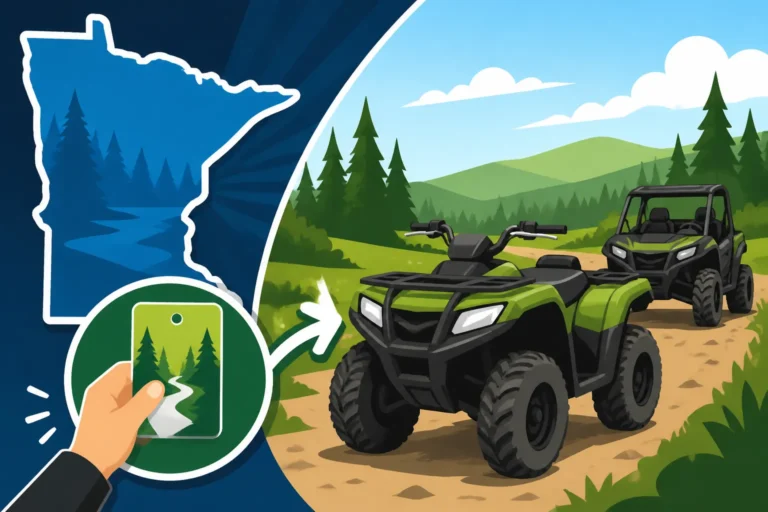
Minnesota’s eLicense system and authorized license agents are common places to check for available pass options. Decide how you plan to obtain the pass before setting out, especially if you are traveling to a rural trailhead where phone reception may be weak and nearby services may be limited.
When you purchase, carefully select the correct permit or pass for the type of machine and use. Read the displayed terms, including the validity period, required identifying information, and any instructions about how the pass must be displayed. Avoid choosing based only on a similar-looking option or a previous purchase.
Save the confirmation and follow the official instructions for the pass itself. A receipt can be useful, but it may not replace a decal or other display requirement. For purchase-specific steps, see Buying a Minnesota Trail Pass Online and Where Visitors Buy a Minnesota Pass. If you would rather ask a person in advance, Minnesota License Agents Near the Trails may help you locate an agent to contact.
Display and proof matter
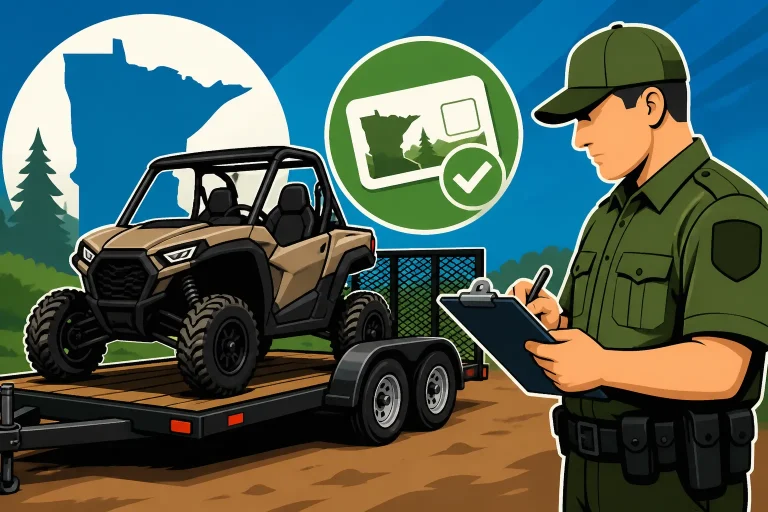
After purchase, check whether the pass must be affixed to the machine, carried as documentation, or handled in another way. Follow the instructions that come with the pass rather than choosing a convenient location based on guesswork. A pass that is valid but cannot be readily identified during an inspection can create avoidable confusion.
Keep your registration information and any purchase confirmation organized, but do not assume that storing everything on a phone is enough. A dead battery, poor service, a damaged device, or a wet trail day can make digital records harder to access. A small waterproof document pouch can keep paper copies together; riders who already shop on Amazon may find basic waterproof organizers there, but the pouch is only a storage aid, not proof that the documents meet Minnesota’s requirements.
Before riding, take a moment to compare the pass information with the machine and the official display instructions. Check that the identifying details are correct, the pass is not obscured, and any required sticker or decal is securely attached. If a pass is lost or damaged before the trip, ask the issuing channel how to replace it rather than improvising a substitute.
Check the trail, not just the pass
Confirm that the route is open
A valid pass does not guarantee that a trail is open on the day you arrive. Seasonal closures, wet conditions, maintenance, fire restrictions, and other local factors can affect access. These issues are especially frustrating when you have driven several hours with a trailer, so check route status before loading up and again before leaving for the trailhead.
Minnesota’s trail networks include different land managers and trail types. One trail segment may be open while a connecting segment is closed, or a route may allow one category of vehicle but not another. Do not assume that a route shown on an old map is still open or that every line on a map is an authorized ATV route.
Use current trail information from the relevant official source or trail manager. A map or navigation app can help you plan, but it should not be treated as the final authority on closures and access. Checking Minnesota Trail Status Before You Drive and Finding a Minnesota DNR Trail Map are useful resources to consult before you head north or make a long drive to a riding area.
Check machine class, width, and land access
The machine itself can determine whether a trail is a good fit. A narrow route may not accommodate a wide side-by-side, and a trail marked for a particular vehicle class may not allow every ATV or UTV. Verify width restrictions, trail designations, and local signage before committing to a route.
Land boundaries can also complicate a ride. A route may pass through state forest land, county land, private property, or a grant-in-aid corridor. Some trails depend on permission or agreements that can change, and a trail line on a consumer map does not necessarily grant permission to cross land. Follow posted signs and do not create a detour around a closure.
For route planning, begin with a known trailhead and a loop or out-and-back route that matches your machine. If the route crosses multiple jurisdictions, note where those changes happen and check the rules for each segment. Minnesota State Forest Riding and Minnesota’s Grant-in-Aid Trail System can help explain the different kinds of riding areas you may encounter.
Plan a smoother trip as a non-resident
Prepare documents and machine details
Before the trip, make a simple document checklist for each machine. Include the pass or proof of purchase, registration information, and any other documents applicable to your situation. Make sure the details on those records match the machine, especially if it was recently bought or borrowed.
Record the machine’s make, model, and VIN for your own reference, and know where the VIN is located. This is useful if you are asked to identify the vehicle or need assistance during the trip. If you are riding a borrowed machine, confirm who is responsible for the registration and pass requirements, and make sure you have permission to use it.
Keep the paperwork somewhere protected from mud and rain, but accessible enough to retrieve without emptying a packed trailer. Some riders keep a paper copy in a sealed pouch and a digital backup on a phone. A basic organizer sourced through Amazon can be convenient for keeping printed documents, but it does not replace the pass’s required display or any official record.
Build a practical trail-day plan
Plan fuel, food, weather protection, and a turnaround point in addition to paperwork. A route that looks short on a map can take longer than expected when the trail is muddy, busy, unfamiliar, or affected by a closure. Tell someone where you expect to ride and when you plan to return, particularly if you are traveling in an area with limited cell coverage.
Download or save the information you need before you lose service. Carry a map or a reliable offline navigation option, and confirm that it covers the actual trail system rather than nearby roads only. Riders who use Amazon for trip supplies may choose a waterproof map case or compact first-aid kit, but remember that navigation accessories do not establish legal trail access.
If the weather changes or a route becomes impassable, turn around rather than making an unauthorized detour. A closed segment may be protecting a wet trail, private property, or a maintenance area. A modest backup plan—a second legal route, a nearby staging area, or a shorter loop—can save the day without tempting the group to ignore signs.
Common mistakes and how to avoid them
Assuming one document covers everything
The most frequent paperwork mistake is treating registration, a trail pass, and safety certification as interchangeable. They are not. A rider may have one document in order and still need to verify another requirement before riding. Make a separate checklist for each category instead of relying on a single “papers are good” assumption.
Another common error is checking only the machine owner’s status. A pass or training rule may relate to the machine, the operator, or the riding area, depending on the requirement. If several people will share a vehicle or take turns operating, check the rules for every rider as well as the machine.
A useful final review is to ask four questions: Is the machine’s registration status clear? Does this ride require a Minnesota trail pass? Does the operator meet applicable training and age rules? Is the selected trail open and appropriate for this machine? If one answer is uncertain, resolve it before unloading.
Relying on old advice or a map alone
Rules, trail conditions, and access arrangements can change. A neighbor’s story from a past trip may be sincere and still not fit your route today. Likewise, an app can show a trail corridor that is closed, rerouted, or not suitable for the vehicle you are bringing.
Use maps to plan, then verify important details through the official information for the trail or area. Pay attention to signs at the trailhead and along the route. If local directions conflict with an old printed map, do not assume the map is right; stop and confirm before proceeding.
If you are unsure about a pass exemption or a route boundary, ask a specific question. Instead of asking, “Can I ride in Minnesota?” explain your residency, where the machine is registered, the machine type, and the trail or land you plan to use. Clear details make it easier for an authorized source to give relevant guidance.
A pre-ride checklist for visiting riders
Before leaving home
Confirm the pass requirement using Minnesota’s current official guidance, and purchase the correct pass through an approved channel if one is required. Check its validity terms and display instructions. Keep the receipt or confirmation available, but do not treat it as a substitute for any required decal or other form of display.
Review the machine’s registration status and carry the documents that apply. If the ATV or UTV is borrowed, newly purchased, or registered in a state different from where the rider lives, resolve that situation before travel. Confirm that every operator has any required safety certification and meets the applicable age rules.
Choose a trail system that fits the machine, review the current trail status, and check for closures or restrictions. Confirm the staging location, route access, fuel options, and backup plan. Save key information offline if the route enters an area with unreliable service.
At the trailhead and during the ride
Before unloading, look for current signs and notices. Recheck the pass display, confirm that the route is open, and make sure your planned direction does not lead onto a road or private connector with different rules. If a sign contradicts your plan, stop and get clarification rather than riding ahead.
Carry the documents and contact information you may need, while keeping them protected from weather. Operate within the trail’s vehicle limits, stay on designated routes, and respect closures. If the group separates or changes plans, make sure everyone understands where the pass and other paperwork are kept and which trails are approved.
A little preparation makes a non-resident ride much less stressful. The goal is not to carry every imaginable document; it is to know which rules apply to your machine, operator, and route, and to have the required proof ready when needed.
Disclaimer
This article is for general informational purposes only and does not constitute professional advice. Laws, prices and regulations vary by location and change over time. Consult a qualified professional for guidance on your specific situation.