Grant-in-Aid Trails and Who Maintains Them
A Minnesota grant-in-aid trail can cross land owned by several different people, so it is easy to assume the DNR maintains every mile. In practice, trail care is shared among state and local agencies, sponsoring governments, ATV clubs, and sometimes private landowners. This guide explains who does what, how maintenance is funded, and where to turn when a route needs attention.
How Minnesota’s Grant-in-Aid Trail System Works
A trail can cross several kinds of land
Grant-in-aid trails are public riding routes developed through Minnesota’s grant-in-aid program. A route may pass over public land, privately owned property, or a mix of both. That means the trail’s visible continuity on a map does not necessarily mean the land underneath it has one owner or one manager.
On private land, access depends on permission and agreements. A landowner may allow a trail across a portion of a property while retaining ownership and control of the land. Routes can also be affected by seasonal conditions, maintenance work, changing access arrangements, or closures. Riders should follow posted signs and current trail information rather than assuming a familiar route is open every time they visit.
The program’s broader structure is explained in [Minnesota's Grant-in-Aid Trail System]. The key distinction for riders is that a trail being part of the state’s grant-in-aid network does not mean that a state employee personally maintains every section. The program helps coordinate and support trail development and upkeep, while local organizations often do much of the on-the-ground work.
Local sponsors connect the trail to the program
A local government sponsor—often a county, city, or other eligible local public entity—typically provides the formal connection between a trail project and the grant program. The sponsor may help plan the route, coordinate approvals, work with landowners, prepare proposals, and oversee grant-related responsibilities.
The sponsor’s role matters because trail work generally needs to fit approved plans and program requirements. A volunteer club may have the people and equipment to clear brush, but it usually cannot simply change a route or build a new segment wherever it seems convenient. Land access, environmental considerations, safety, permits, and program approval may all be relevant.
For a rider, this helps explain why a seemingly simple request—such as moving a sign or repairing a washed-out section—may require coordination. The local club might identify the issue, the sponsor might help determine the approved response, and the landowner or managing agency may need to be involved before work begins.
The DNR administers the program, not every trail visit
The Minnesota Department of Natural Resources plays an administrative and oversight role in the grant-in-aid system. That can include program guidance, reviewing plans or applications, setting requirements, and coordinating state-level support. These responsibilities are different from sending a DNR crew out to inspect and repair every mile of every local route.
A useful way to understand the arrangement is to separate program administration from routine trail care. State-level administration helps keep the program organized and accountable. Local sponsors and clubs are often closer to day-to-day trail conditions and can respond to practical needs such as trimming, sign checks, or minor repairs.
That local knowledge is especially important in places where rain, spring thaw, logging activity, or heavy holiday traffic can change conditions quickly. A trail may be passable one week and muddy or damaged the next. Riders planning a trip should check [Checking Minnesota Trail Status Before You Drive] rather than treating a map as a guarantee of current conditions.
Who Maintains Grant-in-Aid Trails
ATV clubs often handle hands-on work
Local ATV clubs are a major part of trail maintenance in many areas. Members may clear vegetation, check signs, report hazards, help maintain trailheads, and assist with approved repairs. Some clubs also help with construction or larger improvement projects when the necessary permissions, plans, and resources are in place.
That work is often less visible than the ride itself. A well-marked trail with a clear corridor may look as though it simply exists, but keeping it usable can involve repeated visits throughout the riding season. A fallen tree, a damaged sign, or a clogged drainage feature can turn into a safety issue if nobody reports or addresses it.
Clubs do not necessarily maintain every trail in the same way. The division of work depends on the route, the local sponsor, available volunteers, land agreements, and the type of maintenance needed. [Minnesota ATV Clubs and the Trails They Keep] offers more context on the local organizations behind many routes, while [Minnesota Grant-in-Aid Club Funding] explains the connection between clubs and program support.
Sponsors and land managers handle oversight and coordination
The local sponsor generally has responsibilities beyond physical maintenance. It may coordinate with the DNR, manage grant-related tasks, work with clubs, and help ensure the route and proposed work follow the relevant approvals. A county or city may also have staff who help with planning, contracts, equipment, or more complicated repairs.
The land manager or property owner also matters. If a trail passes through a state forest, county property, or private land, the agency or owner responsible for that land may have a say in what work is allowed. For example, a volunteer crew should not assume it can widen a corridor, alter drainage, or reroute around a muddy section without authorization.
This can feel frustrating when a problem looks obvious from the trail. But a quick, unauthorized fix can create erosion, damage property, or conflict with an access agreement. Reporting the issue to the appropriate local contact is usually more useful than attempting repairs independently.
Maintenance responsibility depends on the problem
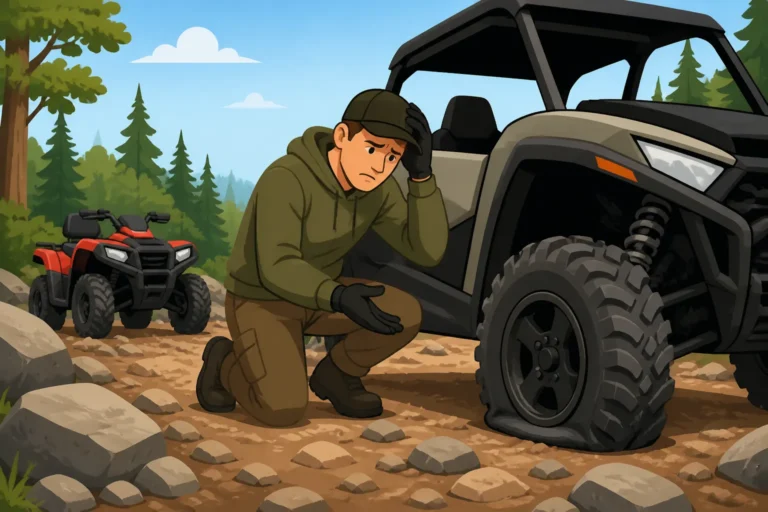
There is no single person riders can expect to fix every trail issue. A missing directional sign, a large tree across the path, a washed-out culvert, and a closure notice may each involve different people or approval steps.
| Trail issue | Who may be involved | What a rider can do |
|---|---|---|
| Small branches or brush | Local club or approved trail crew | Report the location and describe whether the route is blocked |
| Missing or confusing sign | Club, local sponsor, or land manager | Note the nearest junction or landmark |
| Damaged bridge or culvert | Sponsor, land manager, contractor, or approved crew | Avoid the hazard and report it promptly |
| Mud, washout, or erosion | Club, sponsor, land manager, or DNR program staff | Do not ride around the damaged area; report the condition |
| Temporary closure | Land manager, sponsor, or program administrator | Follow posted instructions and check for official updates |
| Access dispute or private-land concern | Sponsor and landowner | Stay on the marked route and contact the local sponsor |
The table describes common possibilities, not a fixed assignment for every trail. The fastest path is often to identify the trail segment and contact the local sponsor or club listed for that area. If you are unsure who that is, start with the county or city responsible for the trail region, or use the trail’s official information channels.
How Trail Maintenance Is Funded
Grants support approved work
Grant-in-aid funding helps eligible sponsors and trail organizations carry out approved trail work. Depending on the project and program requirements, supported work may include maintenance, signs, trail improvements, equipment, or other eligible expenses. A proposed project generally needs to fit the program’s rules and receive the required approvals; it is not simply an open pool of money for any work a club wants to do.
Funding and administrative requirements can shape the timeline. A club may identify a repair in the spring, but the work could require coordination with the sponsor, land manager, and program staff before it can proceed. Larger projects may need planning, estimates, environmental review, or other steps that are not obvious to riders passing through.
That gap between spotting a problem and seeing it repaired can be discouraging, especially when a damaged section affects a planned weekend ride. Still, the approval process helps ensure that work is carried out in a way that respects land agreements, trail standards, and public resources. [Grant-in-Aid Trails and the Trail Pass] explains how trail-pass requirements relate to the broader trail system.
Trail pass revenue helps support the network
Trail-pass revenue is one part of the funding picture for Minnesota’s off-highway vehicle trail system. It helps support trail-related programs, but it is not best understood as a direct payment to the club maintaining the particular stretch you ride that day. Program funds are subject to rules, eligible uses, and administrative processes.
That distinction can matter when riders assume that buying a pass means a specific trail must be maintained immediately. Passes help support the overall system, but local conditions and repair schedules vary. The route may also involve costs or responsibilities handled by a local sponsor, land manager, or other public funding source.
For a fuller explanation of how trail-related funds are used, see [Where Minnesota Trail Pass Money Goes]. If you are visiting from outside Minnesota, check the applicable pass requirements before riding; registration status and trail-pass requirements are not always interchangeable.
Volunteer time is valuable but not a substitute for program rules
Clubs contribute considerable time and local knowledge. Volunteers may notice problems early, organize workdays, and help keep routes welcoming and navigable. That contribution can make a real difference, particularly on long networks where a small number of staff could not reasonably monitor every section.
However, volunteer effort does not remove the need for permission, safety procedures, or approved work plans. A volunteer crew should follow the sponsor’s direction and the land manager’s requirements. Riders can support the system by respecting closures, staying on the marked trail, and avoiding behavior that creates extra repair work.
When you encounter a trail crew, slow down, follow any temporary directions, and give workers room. They may be operating equipment or dealing with hazards that are difficult to see from a distance. A little patience helps protect both the workers and the trail.
What Riders Can Do When a Trail Needs Attention
Report the location clearly
A useful report tells someone exactly where the problem is and what makes it a concern. “The trail is bad” is hard to act on. “A tree blocks the route just past the junction near the trailhead” or “the culvert is washed out at the low crossing north of the marked intersection” gives a club or sponsor a better starting point.
If you use a digital map, record the location or note nearby trail markers and landmarks. Tools such as onX Offroad can help riders understand where they are, but a map location should still be paired with a clear description. Trail names, junctions, mile markers, and nearby roads can all help narrow down the spot.
Do not put yourself in danger to get a better report. If a washout, unstable bridge, or other hazard is difficult to approach safely, keep your distance and report what you can observe. Avoid moving signs or making an informal detour, since other riders may interpret that change as an approved route.
Give the appropriate contact enough detail
Start with the trail’s local club or sponsoring government if those contacts are available. If a problem concerns land access, a closure, or a major safety hazard, the local sponsor may need to involve the land manager or state program staff. For a serious emergency, use emergency services rather than relying on an ordinary maintenance report.
Include the trail name or area, the nearest trailhead or junction, the direction you were traveling, and a short description of the issue. A photo can help when it is safe and practical to take one. Mention whether the route is completely blocked, passable with caution, or affected only at a specific point.
For issues involving drainage or damaged infrastructure, [Trail Crews and Culvert Repairs] provides related context. You can also review [Reporting Trail Damage in Minnesota] for practical reporting guidance. Until the hazard is addressed, do not ride around a blocked section through vegetation or onto nearby private property. That can widen the damage and create a new access problem.
Ride in a way that reduces avoidable damage
Trail maintenance is not only a matter of responding after something breaks. Rider choices can help prevent damage in the first place. Stay on the designated route, avoid cutting corners, and do not create bypasses around mud or standing water. A shortcut around a wet spot can widen the trail and damage vegetation or soil beside it.
Conditions can be especially vulnerable during spring thaw or after heavy rain. If a route is posted closed, or if local guidance says conditions are unsuitable, choose another place to ride. Check notices before leaving home, and be ready to adjust your plans if a trail is closed when you arrive.
Respecting closures and posting clear reports may not feel as satisfying as seeing a repair happen immediately, but both actions help the people responsible for the route respond safely. For trip planning, a map app such as onX Offroad can be useful alongside official trail updates, posted signs, and local information. No map should replace those current, on-the-ground notices.
Disclaimer
This article is for general informational purposes only and does not constitute professional advice. Laws, prices and regulations vary by location and change over time. Consult a qualified professional for guidance on your specific situation.