Riding Minnesota Trails in October
October can be a wonderful time to ride Minnesota’s ATV trails, but fall weather can turn a comfortable outing into a cold, muddy, or unexpectedly short day. Trail access may change with conditions, daylight fades earlier, and hunting activity adds another layer of planning. This guide covers how to choose a route, check access, prepare your machine, and ride considerately.
Plan around trail access and fall conditions
Check closures before you leave
A trail shown on a map is not necessarily open on the day you plan to ride. Minnesota trails can close or become difficult to use because of wet ground, maintenance, seasonal restrictions, or other local conditions. October weather can change quickly, so check current notices before loading your machine—not just when you first start planning.
Start with the relevant Minnesota DNR trail information and any updates from the land manager or local trail club. Check the specific trail system you intend to ride, such as the Iron Range OHV Area, Nemadji State Forest, or the Soo Line North Trail. Don’t assume that an open trailhead means every route in the network is open. If a closure or restriction is posted, respect it even if the trail looks rideable.
It helps to have a backup route in mind. A wet stretch, a closed connector, or an early snow can change your plans after you arrive. Guides such as [Checking Minnesota Trail Status Before You Drive] and [Where Minnesota Closure Notices Are Posted] can help you build trail-status checks into your routine. For a broader look at fall riding considerations, see [Minnesota Trail Conditions After a Wet Spring]—the conditions differ by season, but the same lesson applies: surface conditions matter.
Choose a route that suits October
A familiar trail may feel different in autumn. Leaves can hide rocks, roots, ruts, and drainage edges, while wet leaves can become slick under tires. Shorter daylight also makes a long route less forgiving: a slow section, mechanical issue, or missed turn can leave you riding back in fading light.
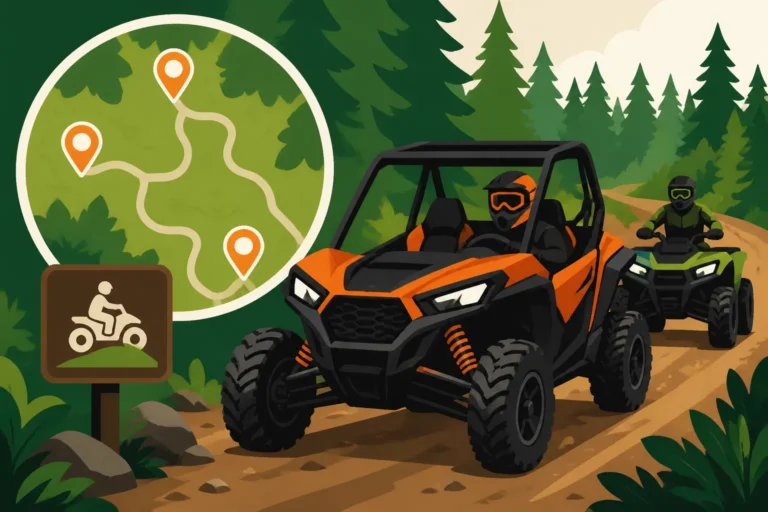
For a relaxed outing, choose a route with a clear turnaround point and enough flexibility to shorten the ride. If you’re visiting an unfamiliar area, look at a trail map before you go and note trailheads, intersections, and likely places to stop. onX Offroad can be one planning reference, but use it alongside official trail information and posted signs. An app should not override a closure notice or a land manager’s directions.
| October planning question | What to check | Why it matters |
|---|---|---|
| Is the route open? | Current notices from the land manager and trail system | Seasonal or condition-based closures may affect access |
| How long is the ride? | Distance, expected pace, and turnaround options | Shorter daylight leaves less room for delays |
| What will the surface be like? | Recent rain, standing water, leaves, and soft ground | Slippery or saturated trails can be hazardous and vulnerable to damage |
| Where can you navigate? | Trail signs, maps, and reliable offline backup | Cell service may be limited in wooded areas |
| Is hunting activity likely? | Local rules, public-land notices, and nearby access areas | Riders and hunters may share the landscape |
When comparing options, use [Minnesota Trails Rated for Full-Size Rigs] if you ride a wider machine, and [Minnesota Trails Suited to Beginners] if your group includes newer riders. Trail width and difficulty matter even more when leaves obscure the edges and visibility is reduced.
Prepare for cold, darkness, and changing surfaces
Pack for a longer day than you expect
October mornings can be cold even when the afternoon forecast looks mild. Dress in layers so you can adjust as the temperature changes, and bring gloves that still let you operate controls safely. A warm hat or neck covering, dry socks, and a weather-resistant outer layer can make a big difference if you’re stopped for a while.
Carry drinking water, food, a first-aid kit, and a basic tool kit appropriate to your machine. Add a flashlight or headlamp, a charged phone, and a way to keep essential items dry. If your group rides in a remote area, plan how you’ll communicate if someone has to stop or a machine becomes disabled. Cell coverage can be patchy in the Northwoods, so don’t make a phone signal the only part of your emergency plan.
Tell someone who is not riding where you’re going and when you expect to return. Share the trail system and your general route, then update that person if your plans change. This is a simple habit, but it matters when a group is delayed and cannot easily call for help. For more detailed packing guidance, review [What to Carry on a Remote Northwoods Ride].
Adjust your speed and riding style
Autumn trails ask for a little more patience. Slow down where leaves hide the ground, ease off before blind corners, and leave extra space between machines so dust, debris, or a sudden stop does not catch the rider behind you by surprise. Be especially cautious around shaded areas, where frost or dampness may linger after sunny sections have dried.
Avoid riding around puddles or soft spots if doing so would widen the trail or damage its edges. A muddy detour can look harmless in the moment but leave lasting ruts or push riders into vegetation. If the trail is becoming badly churned, turn around rather than trying to force your way through. [Minnesota Trail Closures in Spring Thaw] explains why vulnerable trail surfaces need protection; the same care is worthwhile whenever wet ground is soft.
As daylight fades, lower your pace and use the machine’s required lighting. Don’t count on reaching the trailhead just before dark if your route includes unfamiliar junctions or slow terrain. If you’re riding with a group, agree on a stopping point and a plan for anyone who falls behind. A comfortable pace is safer than trying to make up time late in the day.
Ride respectfully during hunting season
Share public land with care
October can overlap with hunting activity in parts of Minnesota. Riders and hunters may use the same general landscape, though they may be on different routes or have different access rules. Before you go, check local land information and follow posted restrictions. Stay on designated routes, respect gates and signs, and never assume a road, forest path, or field edge is open to motorized use just because you can see tire tracks.
Wear visible clothing appropriate to the conditions and local rules, particularly when riding in areas where hunting is taking place. Keep noise and speed under control near parking areas, access points, and places where people may be walking. If you encounter hunters, give them space and pass calmly; don’t stop nearby to investigate equipment or cross into an area where activity is underway.
Know that a trail may pass near private land, a wildlife area, or a hunting access route. Stay on the marked trail and avoid riding through posted ground. For related guidance, see [Minnesota Rules During Firearm Deer Season] and [Riding to a Minnesota Deer Camp]. Those topics can help clarify why it’s important to understand who has access to a particular place and under what conditions.
Follow signs and local directions
Trail signs are especially important when fallen leaves cover ground markings or make a junction less obvious. Slow down at intersections, read the signs, and confirm your direction before continuing. If signs are missing or unclear, stop in a safe place and check your map rather than guessing. onX Offroad may help you orient yourself, but compare the map with posted signs and official route information.
If you find a gate, barrier, or temporary closure, do not go around it. A route may be closed for repair, environmental protection, or a local restriction that is not obvious from the trail surface. Turning around can be frustrating, especially after a long drive, but riding past a closure can damage the trail or create problems for future access. When a route is open but visibly deteriorating, use sound judgment and consider choosing a firmer option.
Group leaders can help everyone ride responsibly by setting expectations before the first mile. Remind riders to stay single file where the trail narrows, keep a safe following distance, avoid unnecessary revving near homes or camps, and stop only where the group can pull fully off the route. For more on considerate group riding, see [Group Etiquette Through a Quiet Town].
Make a practical October ride plan
Use a simple pre-ride checklist
A good fall ride plan does not need to be complicated. It does need to account for conditions that can change between home and the trailhead. Before departure, confirm the route is open, check the forecast for the riding area, and make sure everyone understands the planned turnaround time. If the forecast suggests rain, snow, or a sharp temperature drop, choose a shorter route or postpone the ride.
Give the machine a basic inspection before loading it. Check tires, brakes, lights, fuel, and any controls or safety equipment required for your ride. Secure cargo so it cannot shift on rough ground, and make sure your phone and other essentials are protected from moisture. If you’re riding with someone new to the area, agree on what to do if the group gets separated.
A practical checklist might look like this:
- Confirm current trail access and any local restrictions.
- Choose a route with a realistic distance and an easy turnaround option.
- Check weather for the trail area, not only your home town.
- Pack warm layers, water, food, lights, first aid, and basic tools.
- Inspect the machine and secure loose cargo.
- Share the route and expected return time with someone at home.
- Recheck signs and conditions when you reach the trailhead.
For additional route-planning advice, [Planning a Minnesota Riding Trip] is a useful companion. If your group expects to ride into the evening, review [Riding a Ditch After Sundown] for related lighting and visibility considerations, while remembering that trail rules and road-right-of-way rules are not interchangeable.
Know when to change plans
The best fall ride is not always the one that follows the original plan. If rain has softened the trail, visibility is poor, or temperatures are dropping faster than expected, shorten the route or choose another day. If a rider is getting cold, tired, or uncomfortable, treat that as a real reason to stop. Fatigue can make it harder to notice hazards and react smoothly.
A common mistake is to keep going because the group has already driven a long way to reach the trail. That pressure can lead riders to ignore wet conditions, push into dusk, or continue after a machine starts handling differently. Give yourself permission to turn around. An incomplete ride is much better than getting stranded in a remote area or damaging a trail that needs to recover.
October rewards riders who stay flexible. Check access, ride at a pace that matches the surface, prepare for cold and shorter days, and share the trail with care. Those habits make it easier to enjoy Minnesota’s fall colors without letting a changing forecast or an unexpected closure turn the outing into a stressful one.
Disclaimer
This article is for general informational purposes only and does not constitute professional advice. Laws, prices and regulations vary by location and change over time. Consult a qualified professional for guidance on your specific situation.